HPU Students Present Impressive Summer Research
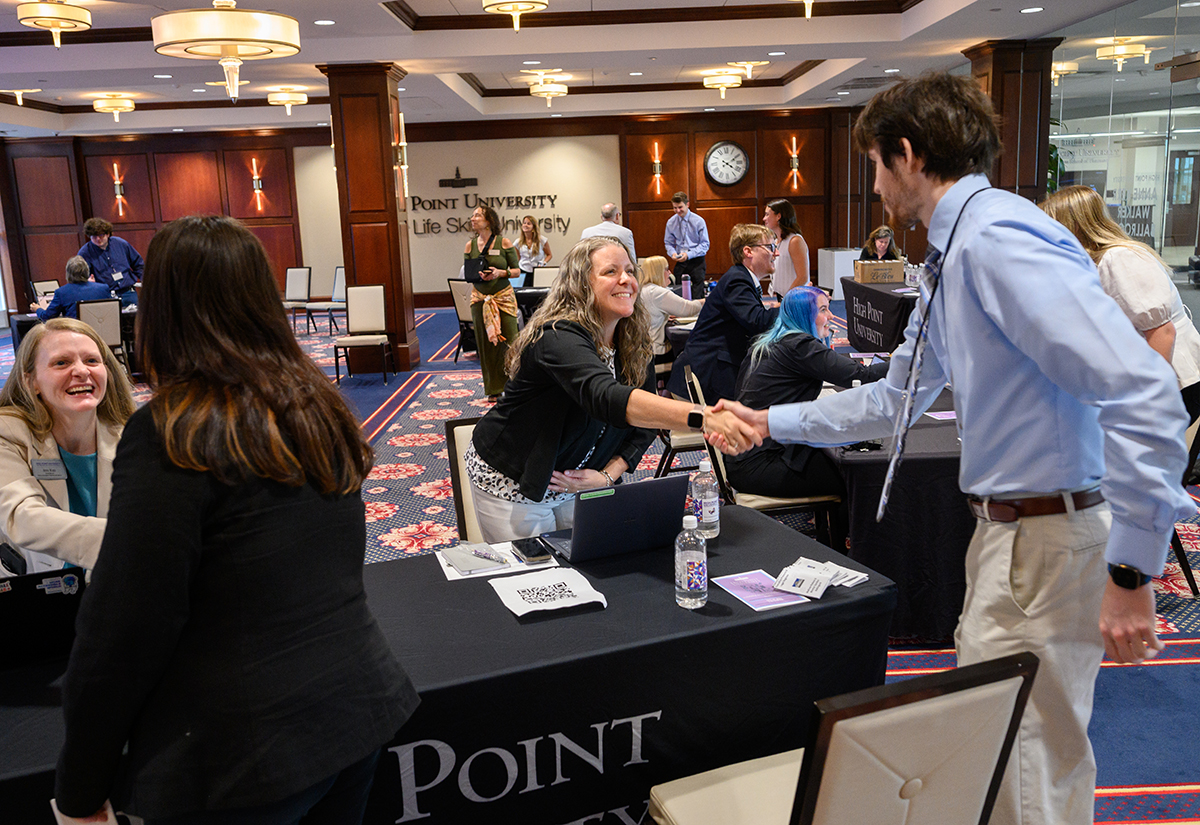
High Point University students recently wrapped up the innovative summer research projects that they conducted with faculty mentors. Pictured at center is Meghan Miles, HPU’s director of Title IX, greeting Mathew Robson, a senior political science major from West Caldwell, New Jersey.
HIGH POINT, N.C., Aug. 1, 2025 – High Point University students recently wrapped up the innovative summer research projects that they conducted with their faculty mentors. Students recently presented their findings at culminating events that focused on helping them build their presentation and communication skills.
The undergraduate programs — SuRI (Summer Research Institute), SuRPS (Summer Research Programs in the Sciences) and SuRF (Summer Research Fellowship) — support student-mentor collaborations in a variety of fields. Here is a glimpse of the final research presentations and how students grew personally and professionally from working closely with their faculty mentors:
Student Researchers Present at Elevator Pitch Competition
SuRI students took part in a competitive elevator pitch event on July 24 that included 90-second, one-on-one conversations between students and staff members from across campus. The range of majors that participated in the event included behavioral neuroscience, history, psychology, pre-pharmacy, philosophy, political science, hospitality management, finance and economics. The students needed to quickly convey the results and the relevance of their projects to people who are unfamiliar with that area of research.
Dr. Joanne Altman, professor of psychology and founding director of HPU’s Undergraduate Research and Creative Works (URCW), led students through the speed dating-style format. Each of the student researchers received feedback based on their pitch.
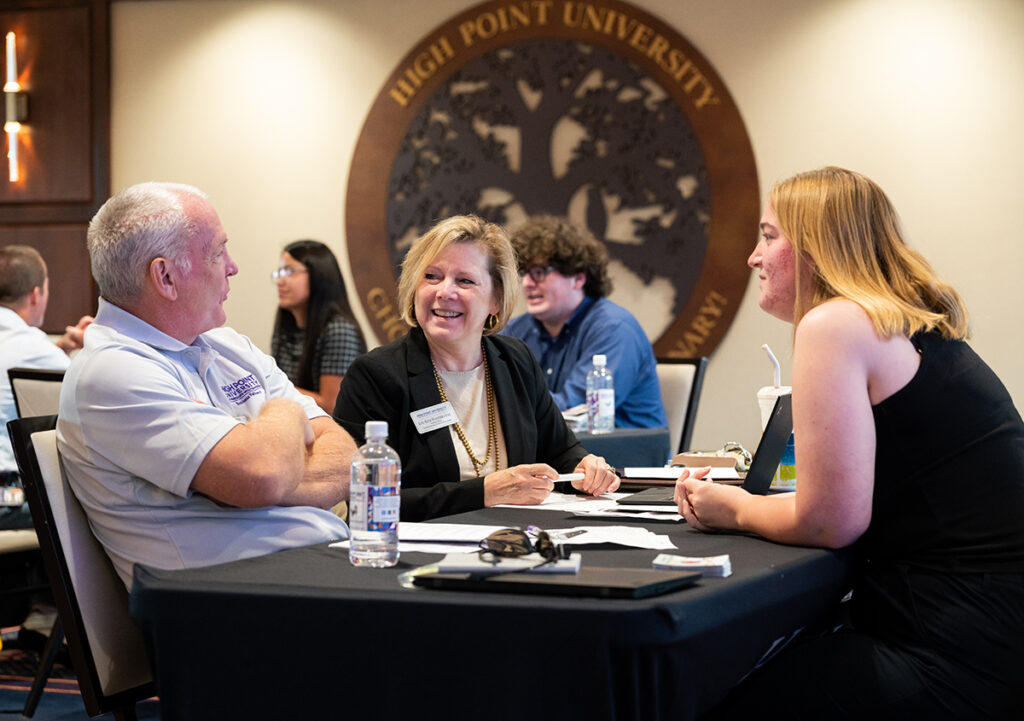
“When students participate in summer research, it gives them time to concentrate on the work they have chosen without the pressures of a regular semester,” said Altman. “The students learn most discoveries do not come easily, but that makes success in the end even more gratifying. Summer research helps students build resilience. We also have data to show that our SuRI and SuRF students improve in every skill set that we measure, and just in this short period of time.”
The judges selected Abby Fort, a senior psychology major from Baltimore, Maryland, as the winner of the elevator pitch competition. She started doing research in her first semester at HPU as part of the Research Rookies program and now takes on the role of coach to the Research Rookies. Dr. Martin Kifer, chair and associate professor of political science, mentored her summer research on evaluating biases in criminal profiling. Altman also worked with her this summer on finishing her first paper for publication as an undergraduate.
“I learned about the natural mistakes that I make so I can preemptively avoid them by taking a little more time at the beginning, so that in the end I’m just smooth coasting,” Fort said. “I learned more about sitting with a project to figure out what I want to do and where I want to go.”
James Fitzpatrick, a senior political science and media production major, expects his experience of conducting and presenting research about the economy and women trapped in “the glass ceiling” to help with his future higher education and career plans.
“I’m learning the process and how to push through roadblocks if things seem bad,” said Fitzpatrick, who is from Long Island, New York. “I had to pivot my entire project a couple of weeks in because I realized what I was studying wasn’t as interesting as something else. I completely changed everything on the fly but made a much better project because of it. Changing it up, I’m able to find out new things that may have some impact on my field.”
Gia Cicero, a junior behavioral neuroscience major, said she enjoyed seeing the inner workings of a research project and building it from the ground up.
“It was helpful to get that different perspective, to see just what it takes and everything that goes into a research project,” said Cicero, who is from Westchester County, New York. “I know that will help me going forward because I plan to go to graduate school.”
Jade Alston, a senior philosophy major, also enjoyed learning more about the research process.
“I’m pre-law so I felt like researching my topic of access to abortion care and autonomy helped me to improve my admiration for ethics. I think that’s going to help me when I am in law school because I think it’s very important to be an ethical person,” said Alston, who is from Winston-Salem, North Carolina.
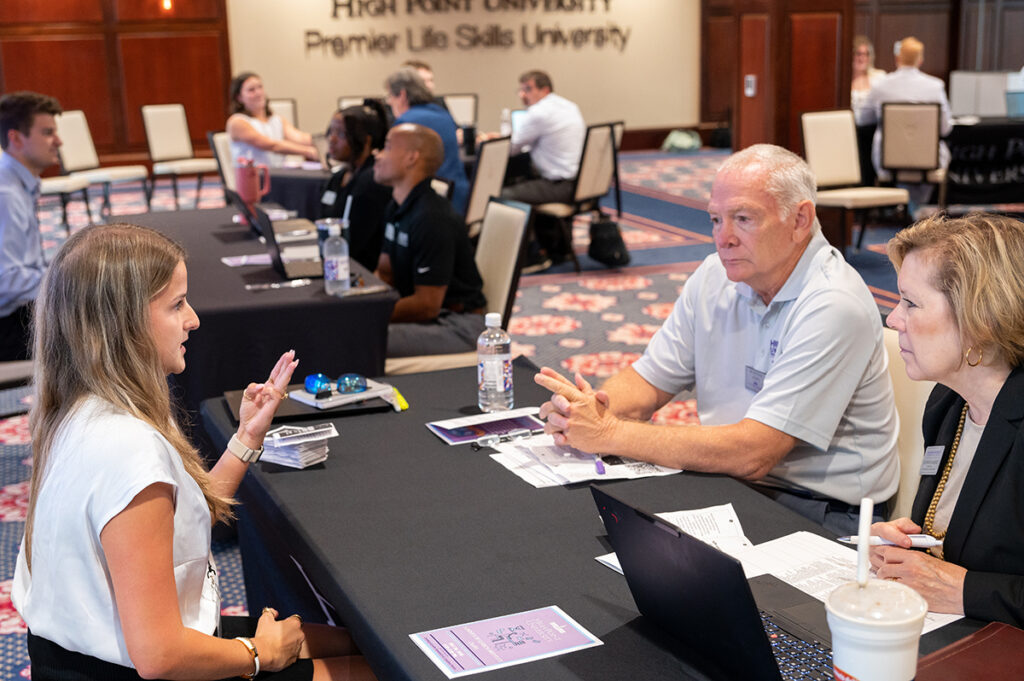
Paris Glover, a senior hospitality management major with a minor in criminal justice, said the SuRI elevator pitch helped refine her rapid presentation skills as she discussed her research on human trafficking and the service sector.
Working to Advance Research in the Lab
Heather Duensing, a rising first-year Doctor of Pharmacy student, presented her research about the treatment of cancerous nerve sheath tumors at the elevator pitch competition. She has been studying it in the Fred Wilson School of Pharmacy lab with Dr. Cale Fahrenholtz, assistant professor of basic pharmaceutical sciences.

Having Duensing to maintain the lab and perform most experiments was crucial because it allowed Fahrenholtz more time to publish their findings and seek additional funding to propel their project forward as they work toward clinical translation as a team. An article about their research, “Preclinical Evaluation of Repurposed Antimalarial Artemisinins for the Treatment of Malignant Peripheral Nerve Sheath Tumors,” was recently published in the International Journal of Molecular Sciences.
“I gained confidence and independence when my professor was away for two weeks at a conference, so I had to run experiments by myself, do cell culture and trust my intuition a lot of times,” said Duensing, who is from Trinity, North Carolina.
“Our lab is working to find new treatments for a rare cancer of the nervous system,” Fahrenholtz said. “We found that the tumors are more susceptible to drugs that induce oxidative stress compared to normal cells. We are repurposing anti-malarial drugs that can induce this oxidative stress and have a well-established safety profile on humans. We found that these antimalarials show promise as a new treatment for cancer and could be rapidly translated into the clinic.”
Jane Rainwater, a rising first-year Doctor of Pharmacy candidate from Kernersville, North Carolina, worked this summer in the drug discovery lab with Dr. Comfort Boateng, an associate professor of pharmaceutical sciences. Their research is aimed at the design of central nervous system drug compounds to treat neuropsychiatric disorders, including attention deficit hyperactivity disorder (ADHD).“We’re trying to discover new drugs for the brain, and our goal is to treat ADHD and other neuropsychiatric disorders,” Boateng said.
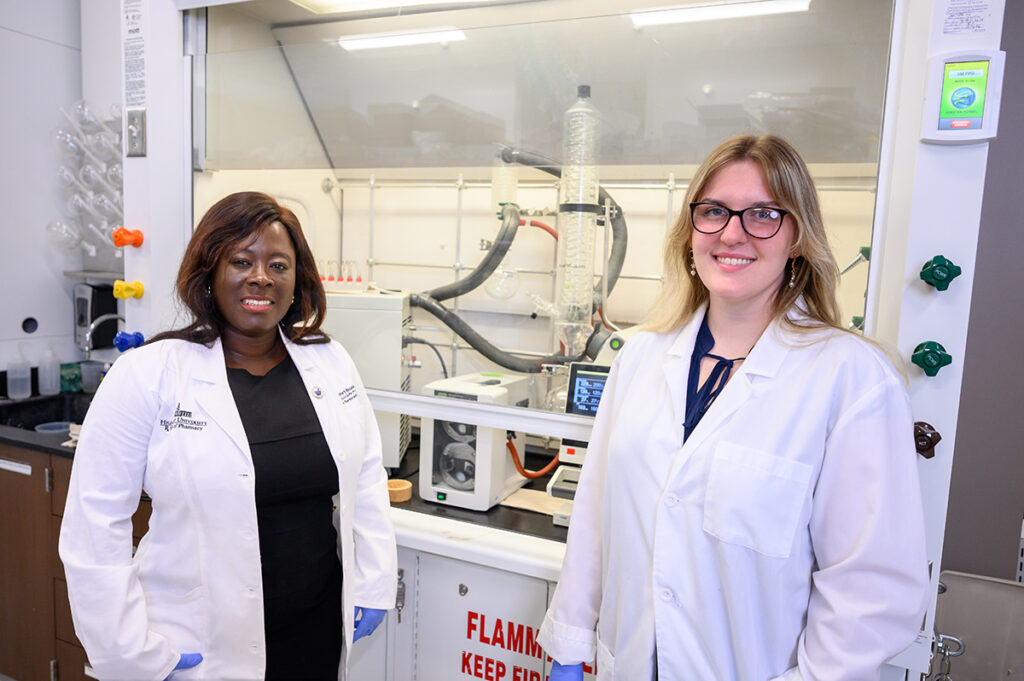
Boateng’s research targeting impulse control and memory is a continuation of the $2.2 million grant she received from the National Institutes of Health in 2020 to develop a medication to treat substance abuse, such as cocaine use addiction and relapses. She also recently received a North Carolina Biotechnology grant for $37,500. This research leads toward potential treatment medications for psychostimulant abuse and other neuropsychiatric disorders.
“Since I want to go into pharmacy and to work with patients, I want to have a better understanding of what goes into the drugs that we take,” Rainwater said. “Because I’m in the analytical scientific side, transferring that over to a more casual conversation is challenging. I had to tone down the amount of detail I go into and figure out how to get the bigger picture in there.”
Students Share Their Research in the Natural Sciences
Students in the SuRPS program presented their research in the Wanek School of Natural Sciences’ lobby and the Culp Planetarium. Fifteen faculty mentors and 33 students from various departments, including biology, chemistry, neuroscience, physics and electrical engineering, worked in labs for the past eight weeks.
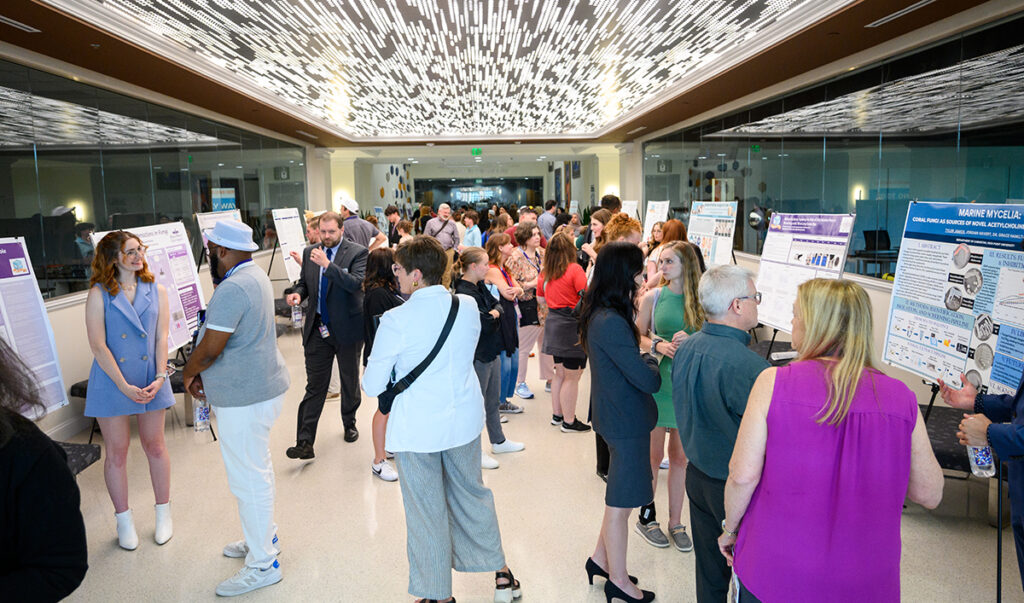
Projects ranged from micro- and molecular biology to fieldwork and nanotechnology. The program provides students with an immersive experience that supplements what they learn during the academic year, said Dr. Kelsey Kean, assistant professor of chemistry and director of SuRPS.
“Students arrive on the first day of SuRPS with a wide range of goals. Some want to improve technical skills like coding or dexterity, and others hope to make new friends or simply understand what research is really like,” Kean said. “At our kickoff meeting, each student shares one aspiration, and by the end of the summer, it’s remarkable to see how much progress they’ve made — often exceeding their own expectations. The immersive nature of summer research allows students and faculty to focus deeply. This dedicated time fosters not only scientific growth but also meaningful mentorship and collaboration that can shape a student’s academic and professional path.
“SuRPS provides HPU students with a transformative opportunity to engage in immersive, hands-on research that cultivates critical thinking, creativity and collaboration. Through this experience, students deepen their scientific understanding while actively contributing to ongoing faculty-led projects — many of which result in peer-reviewed publications and conference presentations. In doing so, SuRPS not only empowers students to grow as scientists but also advances HPU’s commitment to innovation, experiential learning and academic excellence.”
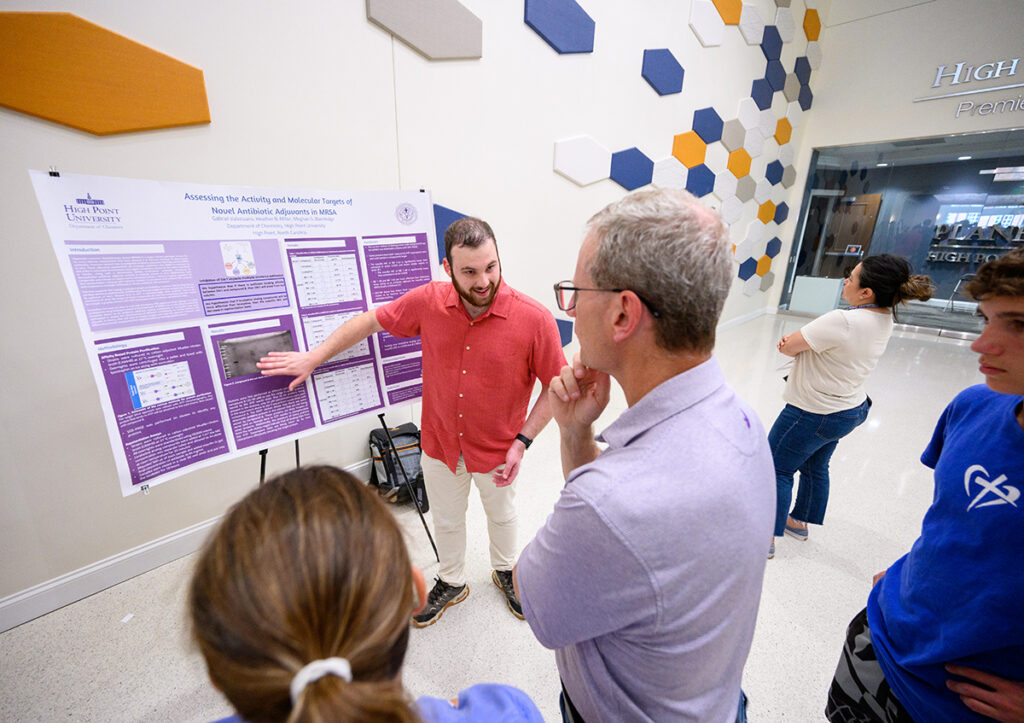
After participating in SuRPS for the first time, sophomore neurobiology major Chase Dillon said research is a career she may want to pursue after serving a commission in the U.S. Army. During the academic year, she worked in a lab with Dr. Heather Miller, an associate professor of chemistry, to continue researching the use of loratadine, a widely used antihistamine and the active ingredient in Claritin, to prevent infections caused by antibiotic resistant bacteria, such as methicillin-resistant Staphylococcus aureus (MRSA).
Miller’s research on MRSA with Dr. Meghan Blackledge, associate professor of chemistry, was awarded HPU’s first patent in 2024 and represented a significant milestone in the university’s research trajectory.
“This summer was a chance to expand on work we did during the semester and increase all of our knowledge,” said Dillon, who is from Leesburg, Virginia. “Early data are definitely showing that pre-treatment with loratadine is reducing the aggressiveness of the MRSA infection.”
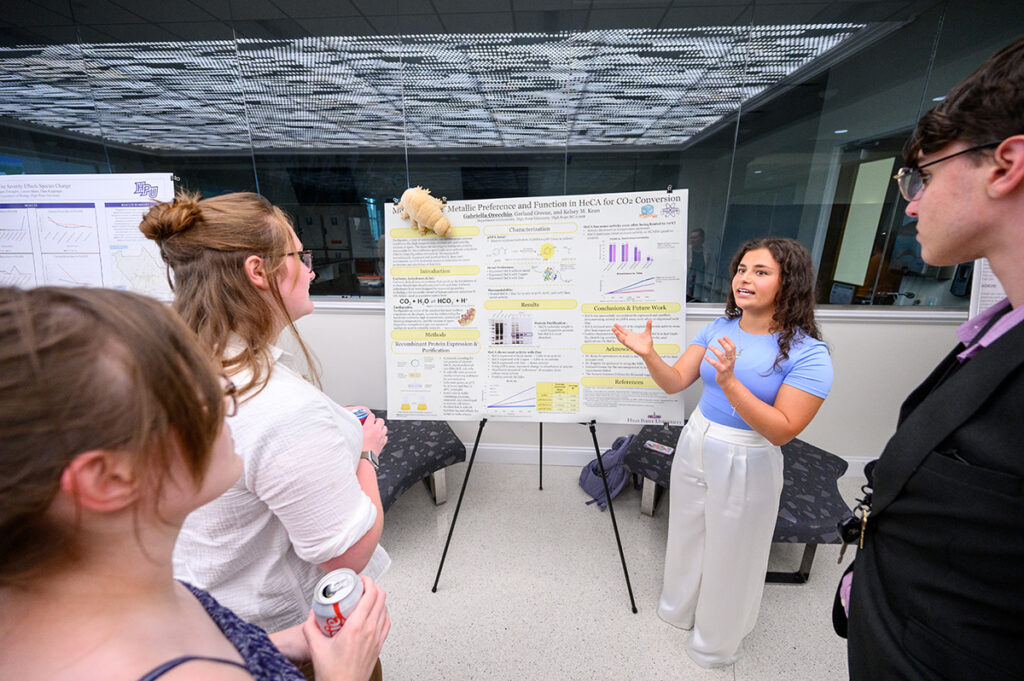
Bryce Grier, a sophomore chemistry major, also presented research related to MRSA resistance using an accumulation of loratadine in conjunction with Blackledge and Miller’s labs. The novel findings add to growing evidence that loratadine may help resist bacteria.
“I’ve learned so much about the proper procedures within a lab setting,” said Grier, who is from Baltimore, Maryland. “What I do is important to the progression of our research.”
Olivia “Liv” Armendarez, a Class of 2022 alumna who earned a degree in biochemistry and is a Ph.D. candidate in chemistry and chemical biology at Northeastern University, returned to campus as the 2025 SuRPS keynote speaker. She shared her research on adaptive light-sensing and color-changing animals and plants to create chemical-based light sensors and reusable, wearable materials to protect against skin cancers from ultraviolent light and radiation.
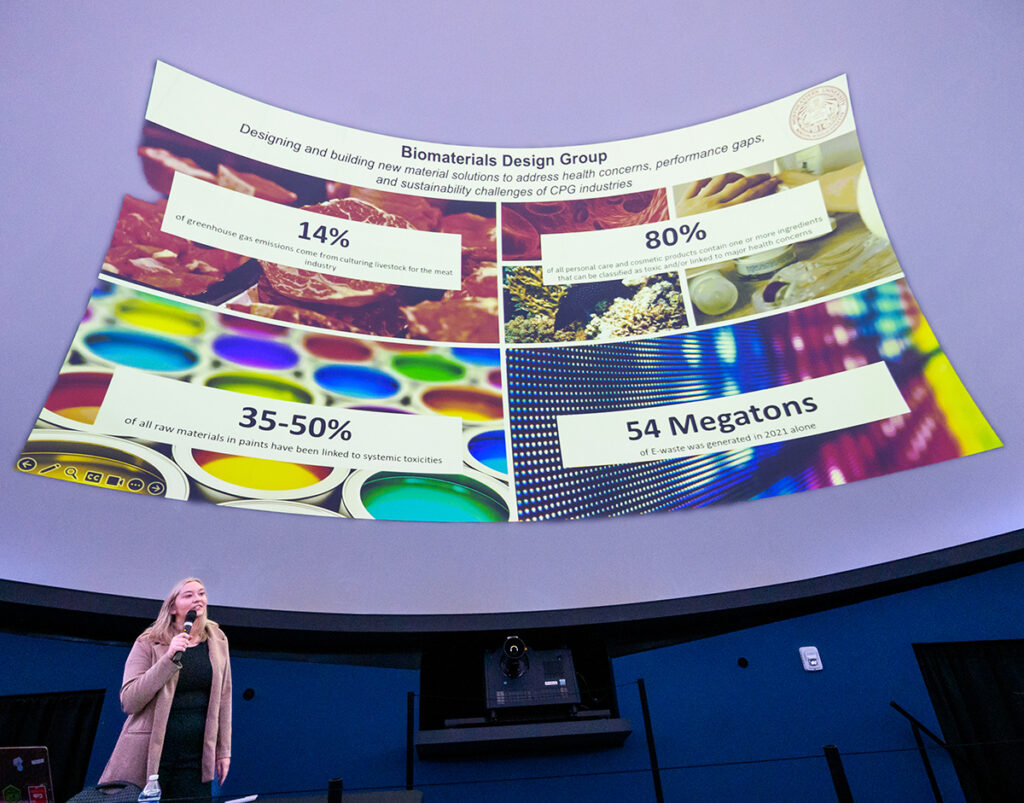
“It’s a full circle moment of being here doing this because I started with a random idea in one course and I ran with it as part of my thesis for graduate school,” Armendarez said. “I want to imprint on the students that you create your own path. It doesn’t matter what setbacks you have. I’m a first-generation student, and I’m also Hispanic, although with my skin color it’s hard to tell. I wanted to share my experience that you don’t have to be an A+ student to achieve your dreams.”