-Blog post by Laura Silva, Archives
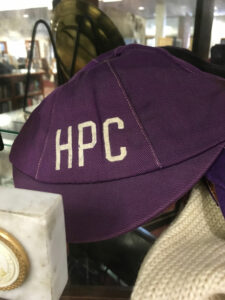
This post is a continuation of an earlier post, which described the early years of the “beanie tradition” at High Point College from 1924-1929. Click here to catch up if you missed Part 1.
To summarize: From High Point College’s founding in 1924 to the end of the decade, freshman were expected–even required–to wear an HPU “dink” or “beanie” at all times to differentiate them from upperclassman. Once considered an act of initiation, the caps quickly became controversial, viewed by many toward the end of the 1920s as a mild form of hazing.
Students simply became fed up with the caps and the sophomore court issuing punishments for non-compliance. Cap regulations were suspended in 1929, and thus began a roller coaster of waxing and waning popularity until the beanies permanently retired in the 1970s.
1955-1971: Return of the Beanie
In May 1955, after a 26 year hiatus, a bill was passed by the Student Legislature requiring freshmen to wear the beanie once again. Freshmen were required to wear the cap from orientation until Thanksgiving, at all times both on and off campus, and with a name tag for the first two weeks of the semester. At this time, HPC was home to just under 1000 total students; the name tags may not be as effective today with over 5000 students on campus. Veterans and married persons were exempt from the tradition.
The Hi-Po questioned students about their feelings toward the beanie tradition. Most agreed that wearing the beanie until Thanksgiving was far too long. If they knew their forerunners kept the dink until Easter they may have felt a little less resentful.
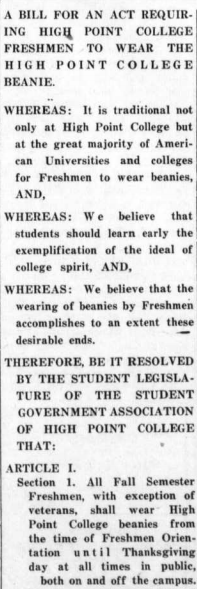
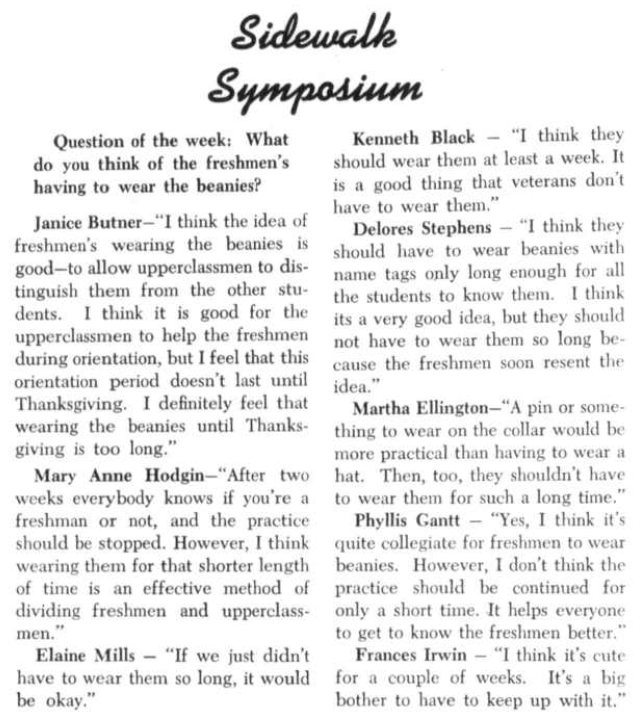
Despite the consensus that they were expected to wear the beanies “far too long,” several young women in the image below paused to pose happily for a photograph wearing their caps:

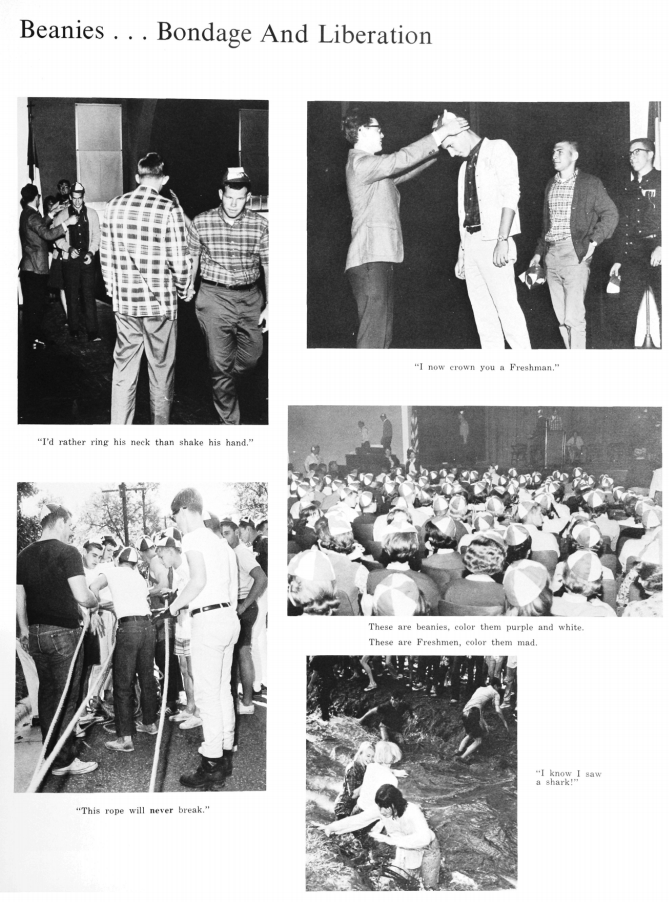
Short blurbs in the Hi-Po allow us to fill out the details of this tradition. Freshmen caught without their beanies were ticketed and the money collected was used to fund a dance after the freshman earned the right to bare their heads. Although freshman had the right to appeal their tickets in court, there was little justice to be found. An annual freshman-sophomore game of tug-of-war was a strong tradition on campus. If freshmen were victorious, they earned the right to lose their dinks. If not, the sophomores decided how much longer they’d be required to wear them. In some years, this orientation period was capped with a bonfire to give the freshman the opportunity to burn their well-worn caps.
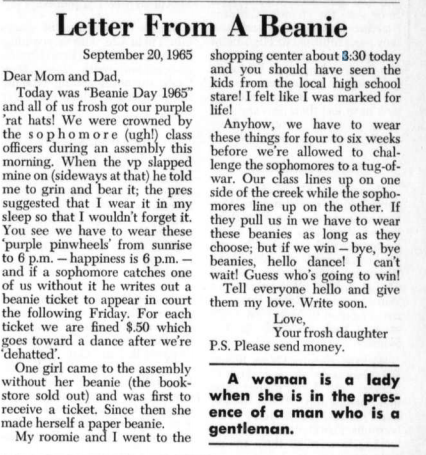
This page from the 1965 Zenith summarizes the tradition well:
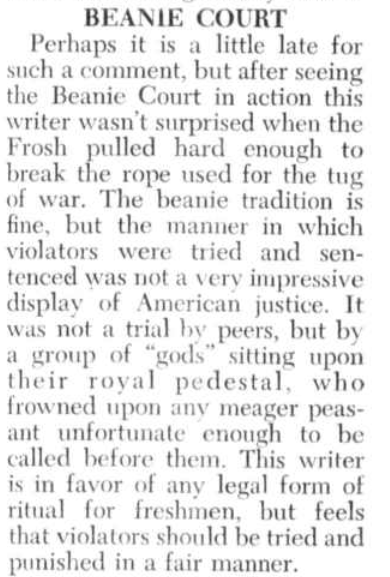
Further articles and images refer to the practice as “beanie torture”:

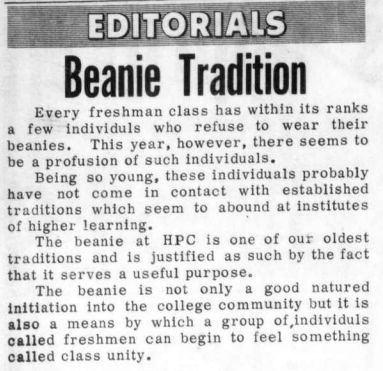
In the late 60s enthusiasm for the tradition began to wane. An editorial in the 1967 Hi-Po described a ‘profusion’ of freshman who refused to wear the beanie, and included a comic of two freshmen looking disdainfully at the cap. A response editorial placed the blame not with individualist freshman, but on the sophomores who delighted in writing tickets while protecting freshman within their circle from the consequences. An article from later that year declares somberly, “Let’s face it – the freshmen-sophomore tug of war tradition is DEAD. It’s time to give that ritual a speedy burial…”

November 9, 1971: “B-Day” and the Retirement of the Beanie
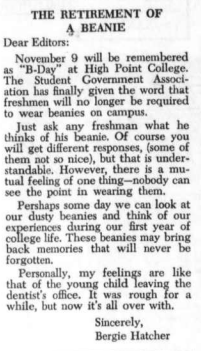 By 1971, however, the beanies no longer inspired the emotion they used to. In contrast to the emotion displayed in the 1965 Zenith, the 1971 edition read, “What used to be a ‘hated’ beanie held no emotional meaning for this year’s freshmen since beanie rules were totally unenforced.”
Bergie Hatcher wrote an article (left) to the Hi-Po editors in which she declares November 9th as “B-Day”–the day the SGA announced beanies were no longer required. Though she predicts the “dusty” caps may one day inspire nostalgia, she also acknowledges the “mutual feeling of one thing–nobody can see the point in wearing them.” Dinks fell out of fashion quickly and quietly. The January 1972 Hi-Po referred to them as ‘One of the many traditions which has been left by the wayside’.
Once a long-standing tradition at colleges across the country, the dink’s disappearance leaves us to wonder what other traditions might one day be left by the wayside.
-Blog post by Laura Silva, Archives