Dr. Kate Fowkes was still a girl when she sat cross-legged on the living room floor and watched her father on a black and white TV screen.
He was an actor in New York City – both of her parents were. And he had a square jaw that made him a good fit for a lawyer.
So he played one on the set of a 1960s gothic soap opera called “Dark Shadows.” Unlike other soaps, the show’s characters were haunted and usually vampires or werewolves masked as people. Conard Fowkes’ character represented them in the midst of their love triangles and family feuds. Sometimes, he was a part of those feuds.
In the limelight of her parents’ careers, it was natural for Fowkes to develop a love for the supernatural. Those days began the path to her career that would help explain to all of us why we find fantasy film so fascinating, especially in today’s world of Twilight, The Hunger Games and beyond.
The Road to Achievement
Fowkes’ teaching career brought her to HPU in 1993 with an undergraduate degree from Reed College and an M.A. and Ph.D. from the University of Texas at Austin. She was originally hired at HPU as a media studies professor in the English department, where she taught all of the media classes.
”Students used to joke that they majored in Dr. Fowkes – they took almost every class with me,” she says.
Since being promoted to full professor of communication in 2006, Fowkes has been instrumental in developing HPU’s program in media and popular culture studies, and has been a consistent and prolific scholar in media studies, focusing on fantasy films. She characterizes the supernatural as “the Fantastic,” a term she employs in several of her courses to describe fantasy, science fiction and gothic horror.
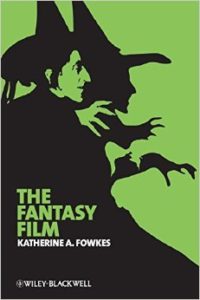 Fowkes first wrote “Giving up the Ghost,” a book about comedy ghost films, in 1998, followed by her most recent book, “The Fantasy Film,” in 2010. She has served on dozens of panels alongside other entertainment industry leaders, presented her research at numerous academic conferences, been honored as an expert in the New York Times, featured on radio programs, and more.
But what does her research have to do with what she teaches her students in the classroom?
Everything.
In the Classroom
When writing “The Fantasy Film,” Fowkes learned many things that she has since been able to share with her students. For example, while most film viewers refer to a movie’s genre to determine whether or not to go see it in theatres, movie studios actually tend to shy away from classifying their films as a certain genre to avoid potentially excluding audiences and critics.
 “The studios want every movie to be new and fresh in the mind of the audience,” says Fowkes. “They want you to think, ‘You’ve never seen anything like this movie before, so come and see it.’ That’s just a small example of something that I learned – and now teach – by researching and writing a book about movies classified in the fantasy genre.”
Fowkes doesn’t just weave into her lectures industry treasures like that – she often models entire courses off of her books and research.
In addition to teaching her research in her “COM 2234: Movies and Methods” class, Fowkes also teaches a course titled “COM 3324: Myth and Media.” Fowkes says she created the class because she had written “The Fantasy Film.” She found it fascinating to learn the extent that ancient myths, folktales and fairy tales have made their way into popular culture, books and movies. She created the course because she wanted her students to explore the subject too.
She has also recently written several essays on Tim Burton films, published in scholarly book anthologies, and now she includes a section in Myth and Media on Burton. Next semester, she’ll teach an entire course on Burton movies.
And it’s all because Fowkes bridges the gap between real-world research and classroom content.
Modern Day Relevance
Fowkes’ students are scholars. They’re deep into academic research and publishing findings of their own. At the same time, they live in a world consumed by popular culture. They watch and read popular books and films like “Twilight” and “The Hunger Games.”
She teaches them that these films aren’t just pure entertainment. They’re filled with messages, characters and stories to be studied, too.
Her courses shed light onto the relevance and value of popular culture research. Students analyze gender stereotypes, generation gaps, conventions of love, relationship dynamics, metaphors, source material, anachronisms, historical context and more in “Lord of the Rings,” “Star Wars,” “Shrek,” “Maleficent” and other live action and animated fantasy films. Students easily relate to the modern-day films while elevating their understanding of not only the fantastic, but also major theories and concepts in film studies overall. And researchers appreciate Fowkes’ scholarship on the subject – after all, she is considered one of the leading scholars in fantasy film.

A Teacher-Scholar
Fowkes’ hope is that through researching and writing about film, students will learn to understand the importance of mass media in our lives.
“This university values not only high quality research, but research that enriches our students,” says Fowkes. “I hope my students see me as both a student and a researcher/professor, because I’m modeling every day what I’m asking them to do: We look for ways in which movies and television don’t just mirror but also influence our personal lives and the culture in general. We research and analyze mass media texts, and we discuss them and write about them because they are so influential.”
Dr. Fowkes’ scholarship resulted in her receiving the Ruth Ridenhour Scholarly and Professional Achievement Award in 2011.
“She’s taught me to see film and storytelling from different perspectives and has opened my eyes to how the media operates within our society,” says Class of 2015 graduate Alex Mills. “She maintained an incredibly caring and thoughtful persona throughout my time with her as my professor. Through a shared passion for film, I’ve enjoyed discussing the industry with her in and outside of the classroom, where she continues to inspire me to delve into a career in film.”