
HPU Faculty Share Research and Education on Global and National Levels
Some of the 58 HPU physical therapy students who volunteered for an annual one-day adaptive surfing clinic for disabled people at Carolina Beach, North Carolina.
HIGH POINT, N.C., Aug. 22, 2023 – Members of the High Point University community frequently conduct, publish and share research and creative works in a variety of ways. Below is a recap of recent research and innovation initiatives.
Astrophysics Professor and Collaborators Discover 500 New Binary Star Systems
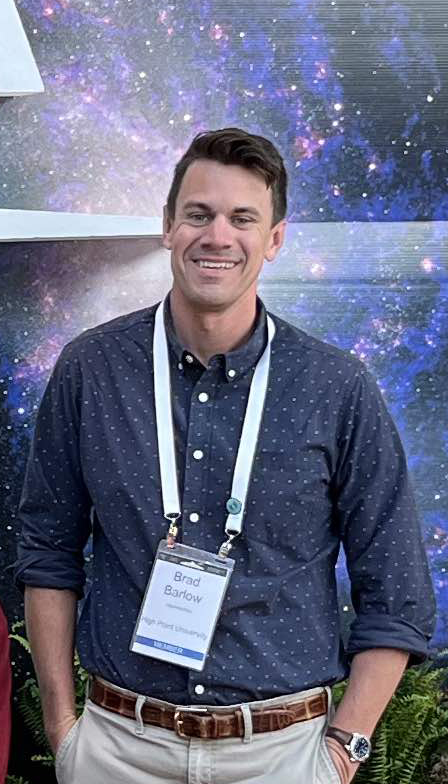
Dr. Brad Barlow, associate professor of astrophysics and director of Culp Planetarium, along with collaborators at Princeton University and the University of Hamburg in Germany, recently discovered nearly 500 new binary star systems. Their discoveries were announced earlier this year in an article entitled “Discovery of periodic hot subdwarf variables through a systematic search in Zwicky Transient Facility data” published in Monthly Notices of the Royal Astronomical Society, one of the world’s leading scientific journals in astronomy and astrophysics. To make the discoveries, the team used special processing techniques and data from the Zwicky Transient Facility, a wide-field sky astronomical survey conducted at Palomar Observatory in California.
“Over the past decade or so, astronomy has moved into an era of large-scale surveys,” said Barlow. “While dealing with such vast amounts of data can be overwhelming at times, it is fulfilling to see the fruits of your data-processing labor result in the discovery of so many exciting systems. Follow-up studies of these objects will keep us busy for years to come and undoubtedly lead to an improved understanding of how stellar evolution works in binaries.”
The systems found are interesting to astronomers because they are products of stellar evolution processes that were interrupted. In most cases, one of the stars was previously a red giant whose outer atmosphere was stripped away by gravitational interactions with a nearby companion star. Detailed studies of such systems can help scientists understand more clearly how stars live and die in the presence of other nearby gravitating objects.
Physical Therapy Students Aid Adaptive Surfing
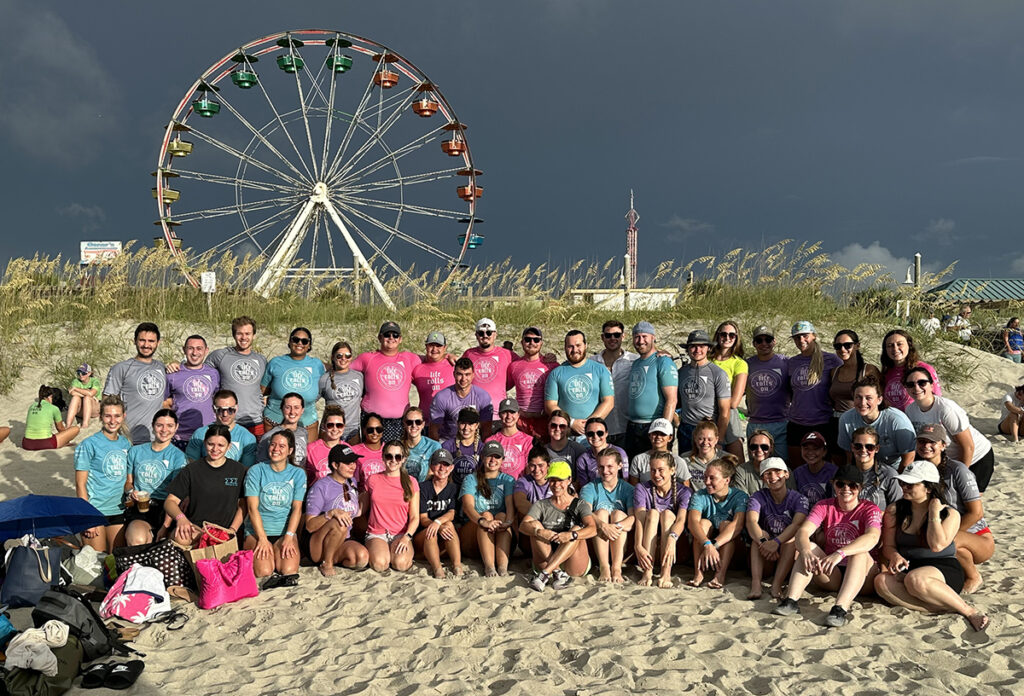
A total of 58 HPU Doctor of Physical Therapy Students recently joined 110 athletes and more than 500 volunteers for an annual one-day adaptive surfing clinic at Carolina Beach, North Carolina.
Teaming up with Ocean Cure and Life Rolls On, nonprofit partners who host adaptive events on the East and West Coasts presented an opportunity for HPU physical therapy students to get hands-on skills in the adaptive sporting community, said Dr. Rebecca Medendorp, assistant professor of physical therapy. This was the third year the HPU Doctor of Physical Therapy program participated in the event.
“It really reinforces that everyone can participate in sports, you just have to get creative and be passionate about making it happen,” said Medendorp. “It is amazing to see someone who can’t walk get onto a surfboard and participate in surfing in the water. The smiles in the pictures tell the whole story.”
Isabella Foss, a Class of 2025 Doctor of Physical Therapy student from Highlands Ranch, Colorado, participated in the adaptive surf camp for the first time and was HPU student coordinator of the event.
“I am very grateful for the opportunity to have worked with these athletes and experience the joy that this experience brought to each one,” said Foss. “It was also an amazing opportunity to not only learn about each athlete’s different impairments, but also note the ways in which surfing could be adapted to every individual. I admired the bravery and trust each athlete had in the team of volunteers taking them into the ocean, and I valued the opportunity to watch how happy and free it made each feel.”
HPU Co-Hosts International Higher Education Conference
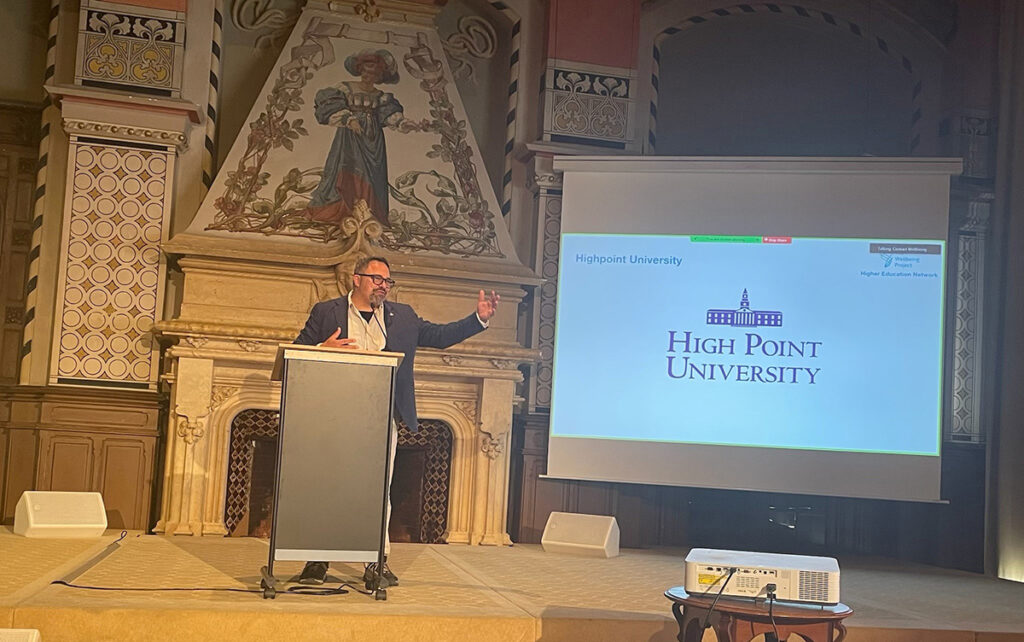
Ken D. Elston, dean of Humanities and Behavioral Sciences, was recently the U.S. co-leader of the Wellbeing Project’s Higher Education Network conference in Geneva, Switzerland. HPU co-hosted the July 6-9 gathering along with Georgetown University, Facens University Center and Mondragon University.
“Essentially, we are facing changes in higher education globally with the intention of building partnerships and collaborations with a commitment to catalyzing a culture of wellbeing within our student bodies, faculty and staff,” said Elston. “This network is at the forefront of a movement in higher education preparing people for a future shift in managing mental health and meeting social and global challenges.”
Representatives from 60 universities internationally met at Caux Palace, a former resort and army hospital now used as a center for world peace, with goals to:
- Foster community and collaboration
- Envision areas of interest around student flourishing, meeting the challenges of a mental health pandemic and developing literacy in this space, including meaningful curricula centering on wellbeing
- Strategize around shared leadership, governance and organizational priorities for the global network
Elston led portions of the conference to catalog the network’s organizational successes, map its members’ initiatives, determine organizational goals and establish shared aims shaping the agenda for the coming year. He also led a workshop based on applying acting exercises to determine and activate collaborative values.
Sharing Education in Nepal
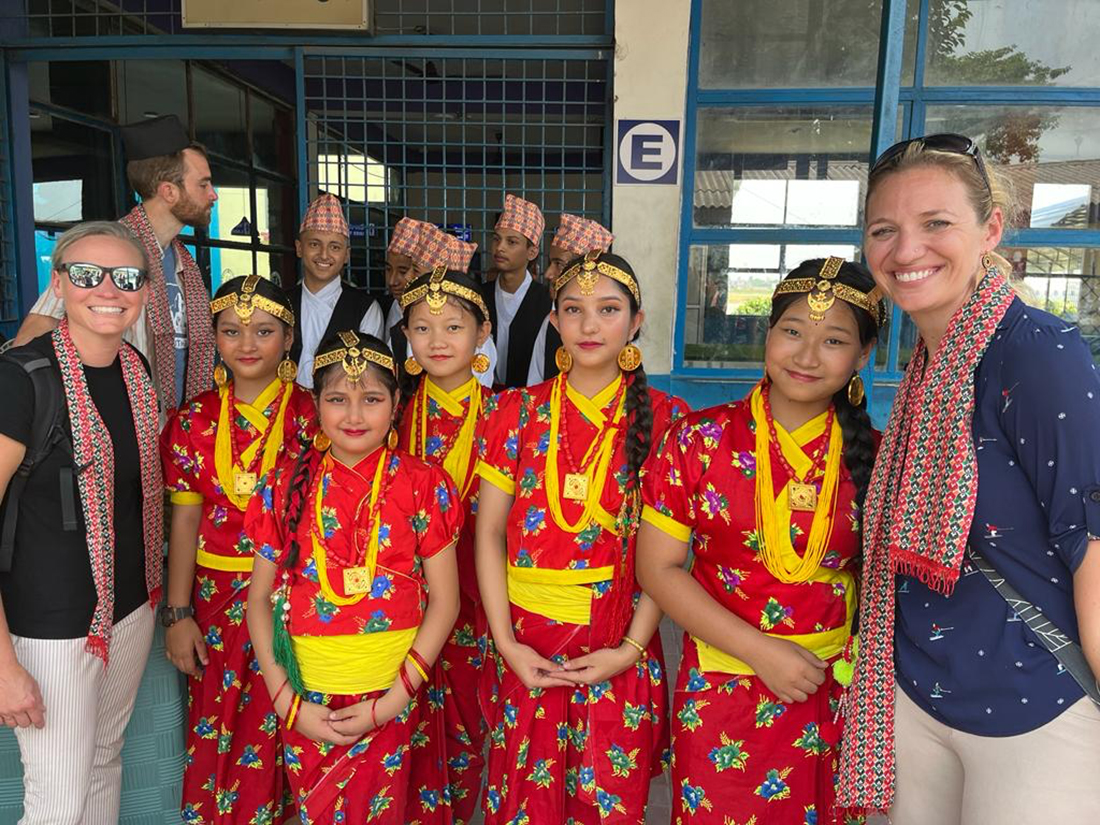
Dr. Hilary Tanck, assistant professor of educator preparation, recently traveled to Nepal to engage in mathematics education at the K-12 and university level. This was an impactful first step to establish relationships. Tanck’s hope is to bring HPU students to Nepal to experience a different education system and facilitate math camps with students.
Tanck connected with Dr. Sunil Pokhrel, a former graduate school colleague who arranged her visit to a small village school in the South Asian country. The school serves 20 students up to third grade who must walk to school because no transportation is provided. Tanck found the principal had improved the school’s desirability and increased enrollment from nine students when she arrived three years ago. Tanck also met with a group of academics on the University of Nepal Development Board.
“They are working to start a new university that embraces the liberal arts model, in an effort to address some of the challenges facing Nepal’s education system,” said Tanck. “I plan to consult with the board as they develop course and program designs.”
Tanck worked with a group of mathematics educators to present conferences in Itahari, Butwal and Kathmandu. The focus of each conference was to engage students in math. Her session asked teachers to solve an area task using a flood map to estimate the impacted area. This work was published in a special issue of “Mathematics Education Forum.” Tanck also met with deans at Tribhuvan University, where 95% of Nepal’s teachers are trained. Additionally, the group visited several K-12 schools for discussions with teachers, principals and Q&A sessions with students. Tanck plans to weave perspectives she gained through her work in Nepal into her courses.
Professor Presents New Testament Paper
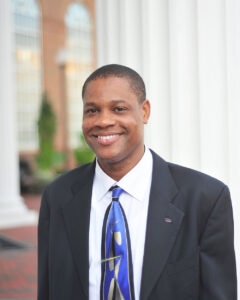
Dr. Robert Moses, associate professor of religion, presented a paper at the 77th general meeting of the Studiorum Novi Testamenti Societies in Vienna, Austria, July 25-29.
The paper was titled, “Made of Money: Currency in Matthew’s Gospel and the Community’s Socio-Economic Status.” The paper examined the use of currency in the first Gospel and addressed the long-held view that that the use of high currency in Matthew’s Gospel is evidence that the community enjoyed high socio-economic status. Moses challenged the latter view in the paper. The paper argued that while the use of currency in the first Gospel may reveal something about the author’s interest, or background, in financial affairs, it does not provide solid proof for the notion that the author’s community was affluent.
“The paper was very well received,” said Moses. “It opened avenues for fruitful conversations. It is an honor to be able to attend this conference and to have HPU represented in this international forum.”
Professor Presents NF1 Research at National Conferences
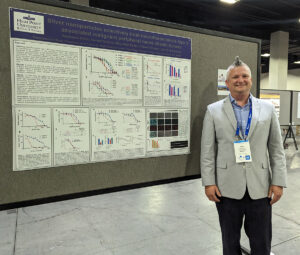
Dr. Cale Fahrenholtz, assistant professor of basic pharmaceutical sciences in the Fred Wilson School of Pharmacy, recently presented his laboratory’s research on neurofibromatosis type 1 (NF1) at two national conferences. He presented research at the 2023 Children’s Tumor Foundation annual meeting in Scottsdale, Arizona, and the American Association of Colleges of Pharmacy education meeting in Aurora, Colorado.
Fahrenholtz is one of a group of HPU professors researching treatments for this form of inherited cancer that often is diagnosed when patients are 8 to 14 years old. Fahrenholtz was awarded a N.C. Biotech Flash Grant in March for development of silver-based medicines for malignant peripheral nerve sheath tumors. These studies evaluate the effectiveness of silver-based medicines using mouse models to develop new therapies for NF1 tumors.
“Children with neurofibromatosis type 1 frequently develop benign tumors in the nerves which currently have limited treatment options,” said Fahrenholtz. “If these tumors are incompletely treated, these tumors can be debilitating and even deadly. My research focuses on developing new therapeutics to both safely and effectively treat these tumors at all stages.”
Dr. Robert Coover, assistant professor of basic pharmaceutical sciences, and students Bashnonoa Attiah, Garrett Alewine and Mary-Kate Easter were credited in the NF1 research Fahrenholtz presented.
Pharmacy Professors Publish Option for Obesity Management
Three professors at HPU’s Fred Wilson School of Pharmacy recently authored an article in the peer-reviewed journal, “Annals of Pharmacotherapy,” about a new option for the management of obesity, a chronic disease affecting about two-fifths of U.S. adults.


Dr. Christina H. Sherrill, assistant professor of ambulatory care and director of the clinical skills lab; Dr. Courtney L. Bradley, assistant professor of clinical sciences and director of teaching and learning; and Dr. Sara M. McMillin, assistant professor of basic pharmaceutical sciences, detailed the effectiveness and safety of using high-dose weekly injections of semaglutide for obesity management.
The article notes obesity is a major public health issue, with a rising prevalence among adults, and this treatment provides an additional option that is well tolerated, has cardiovascular benefits, can reduce weight and improve diabetes-related outcomes.
“This work is important because of the rising prevalence of diabetes and obesity, as well as the economic and patient-level burden of these conditions,” said Sherrill.
Sherrill and another research team recently concluded another study regarding real-world pharmacist-driven use of semaglutide injections in people without diabetes. Her team has submitted an abstract to the American College of Clinical Pharmacy for poster presentation at the annual meeting in November.