Record Number of HPU Students Present Innovative Research at Annual Symposium
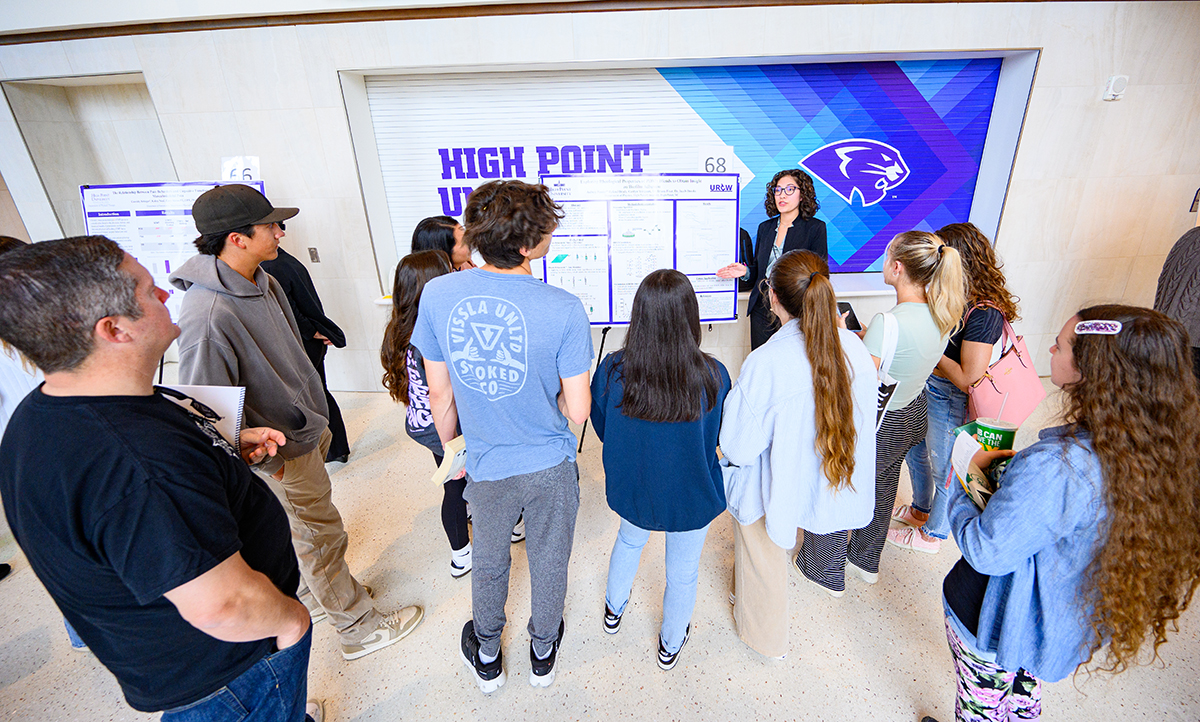
A record number of High Point University students shared the results of their original research projects at the university’s 13th annual Undergraduate Research and Creativity Symposium known as High-PURCS. Pictured are students who listened to a physics, astronomy and biology presentation from Aubrey Fessler, a freshman biology major from Placentia, California.
HIGH POINT, N.C., April 21, 2025 – A record number of High Point University students shared the results of their original research projects at the university’s 13th annual Undergraduate Research and Creativity Symposium known as High-PURCS. The day-long event took place on April 15 in the Nido and Mariana Qubein Arena and Conference Center.
More than 420 undergraduate students teamed up to create 241 presentations across 31 different fields. Poster displays highlighting their fact-finding investigations filled the arena’s concourse during the event, which also included oral presentations, art and technical exhibits, and music and dance performances.
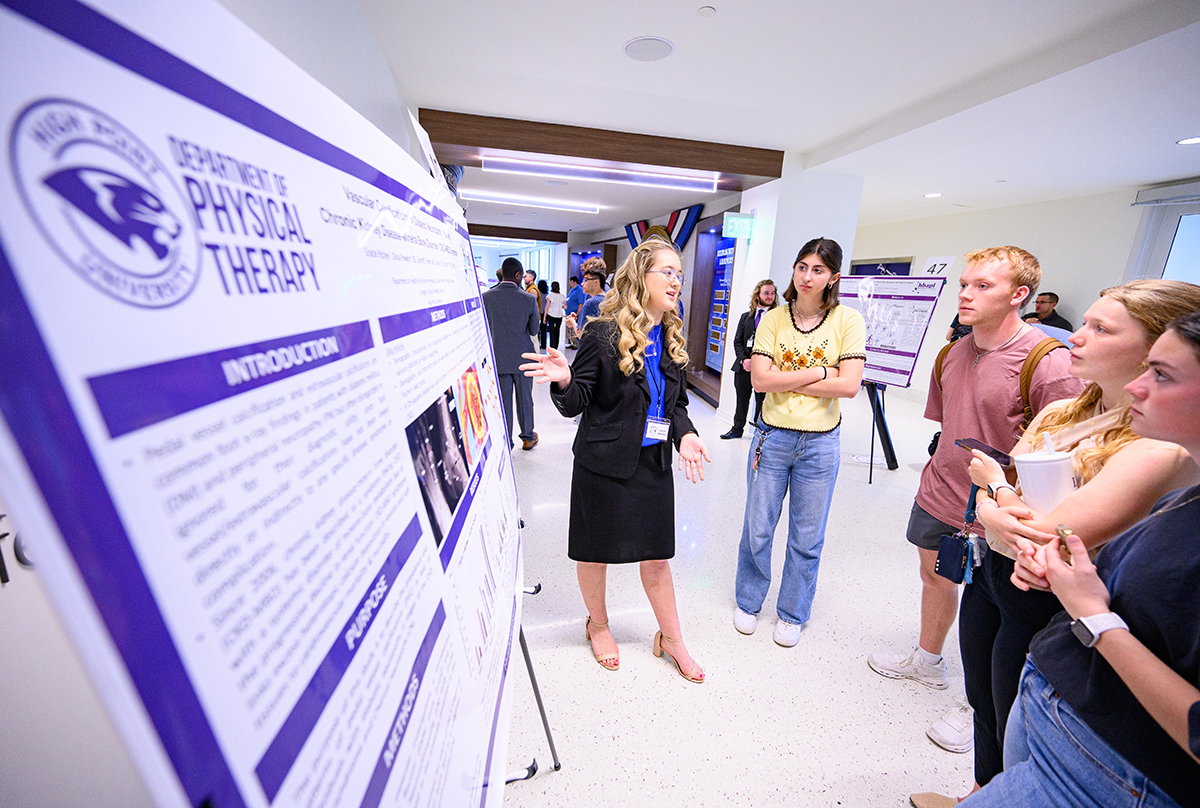
High-PURCS allows students to conduct year- and semester-long extracurricular research projects and share their results on campus with other students, faculty and staff. It also gives students an authentic venue to build and showcase their professional skills, said Dr. Joanne Altman, director of HPU’s Office of Undergraduate Research and Creative Works.
“We give our students the opportunity to get involved in research and creative work very early in their college careers,” Altman said. “For most of our students, this day isn’t just one opportunity to build their professional credentials, but one of many. Employers want to see that graduates can think critically, solve problems and communicate. This event shows they can, both to future employers and to the students themselves. High-PURCS is not only about being a stellar college student, but about being a great future employee.”
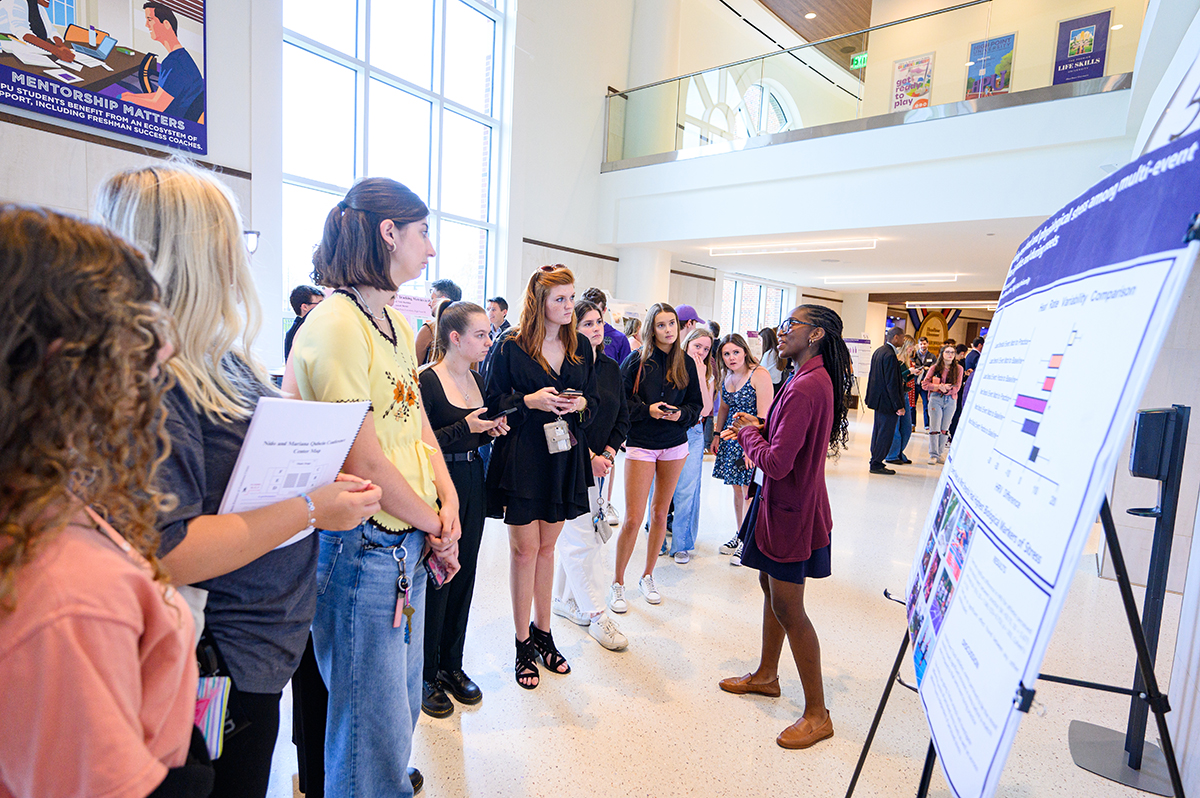
Examining both perceived and physiological stress among multi-event athletes was the research topic of Faith Bradley, a sophomore behavioral neuroscience major with double minors in sport management and musical theater.
“What I learned that I can take away, not just from the science world but for life in general, was the importance of time management,” said Bradley, who is from Woodbridge, Virginia. “I was working with a lot of athletes who had schedules and training regiments I had to work around, so being able to work efficiently with the time I had and developing a strong foundation and protocol of what I needed to do made me well-prepared for anything that came my way. Being able to go into anything with that foundation of knowledge, I can continue moving forward with efficiency and accuracy.”
Physics, astronomy and biology students collaborated to research the behavior of materials under stress to learn more about biofilm adhesion. They worked under the direction of Dr. Jacob Brooks, assistant professor of physics, and Dr. Briana Fiser, dean of the Wanek School of Natural Sciences.
“The best thing I learned is how different parts of research can interplay with other parts of research,” said Aubrey Fessler, a freshman biology major from Placentia, California. “Also, I’m learning about the teamwork aspect of it as I’m working on the biology portion of this physics lab.”
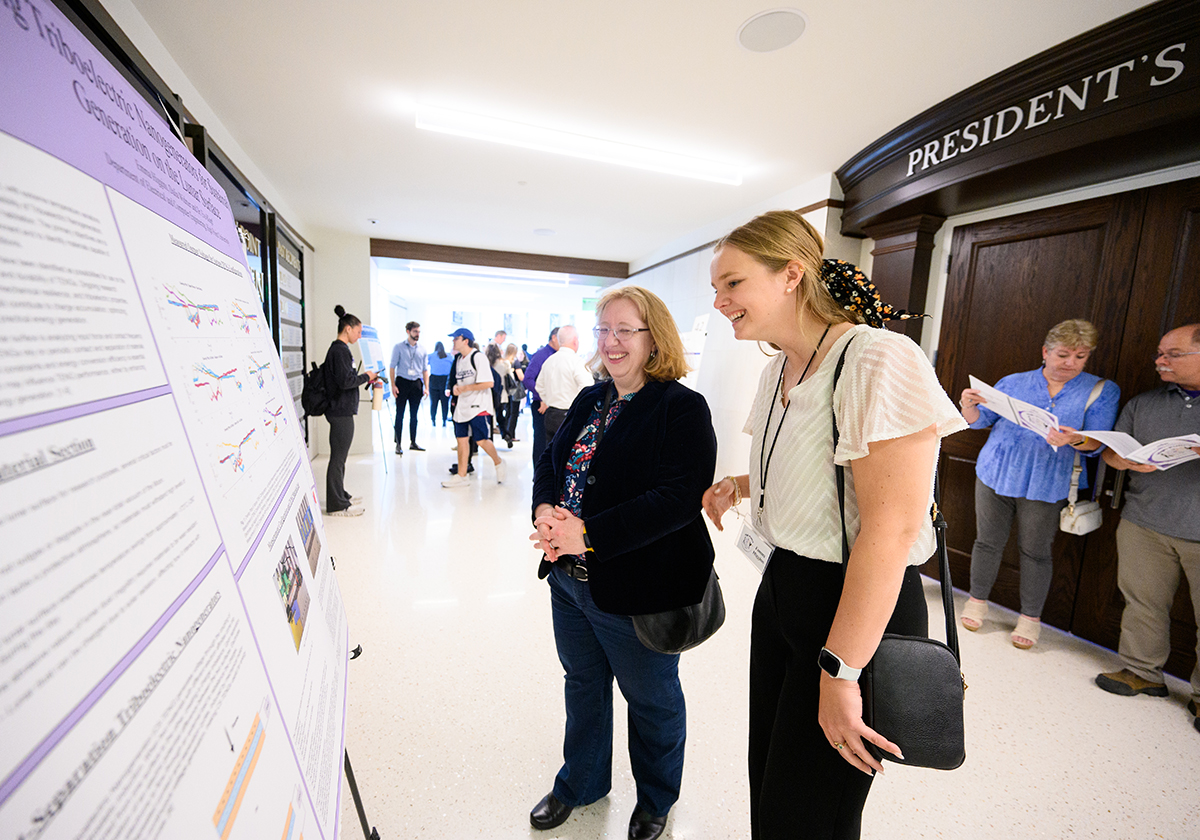
Emma Higgins and Dalia Widmer, who are senior electrical engineering majors, investigated the feasibility of using Triboelectric Nanogenerators (TENGs) to generate sustainable power on the moon’s surface.
“One of the pivotal parts of this kind of research is sifting through other people’s materials,” said Higgins, who is from Yonkers, New York. “Being able to take other people’s preliminary work and really dive deep into a niche topic that’s never been seen before is something we’re going to use for the rest of our lives. We were able to take electrical things we’ve learned and adapt it into a whole different atmosphere.”
Research is easier to conduct when it’s tangible, said Widmer, who is from Richmond, Virginia. “But we’re not easily able to go to the moon to do research, so we were able to work around not being in that environment. We had to think bigger and do our tests differently than just doing our research for the earth on the earth.”
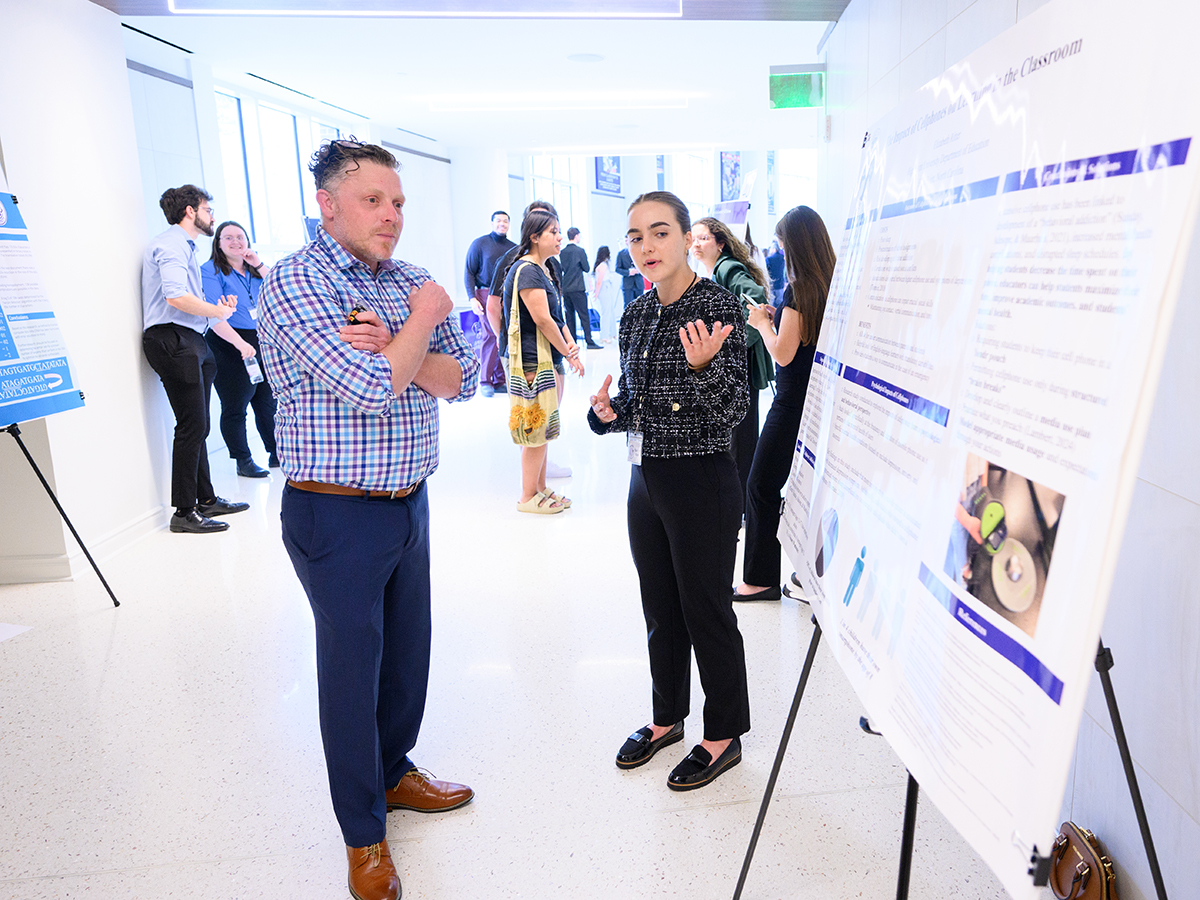
Elizabeth Ritter, a sophomore middle grades education major, researched the impact of cellphones on learning in the classroom. She found that teachers can incorporate technology such as Yondr pouches, which are lockable devices that schools are using to restrict cellphone usage, to control students’ access to cellphones but still allow for structured times, translations and emergencies.
“It really taught me to look at both sides of every issue,” said Ritter, who is from Matthews, North Carolina. “As a teacher, I was naturally inclined to think that cellphones were inherently bad and students shouldn’t have them at all, but this research has shown me that with a Yondr pouch and a media use plan you can be more strategic about how you implement cellphones in your classroom. It doesn’t have to be all or nothing.”
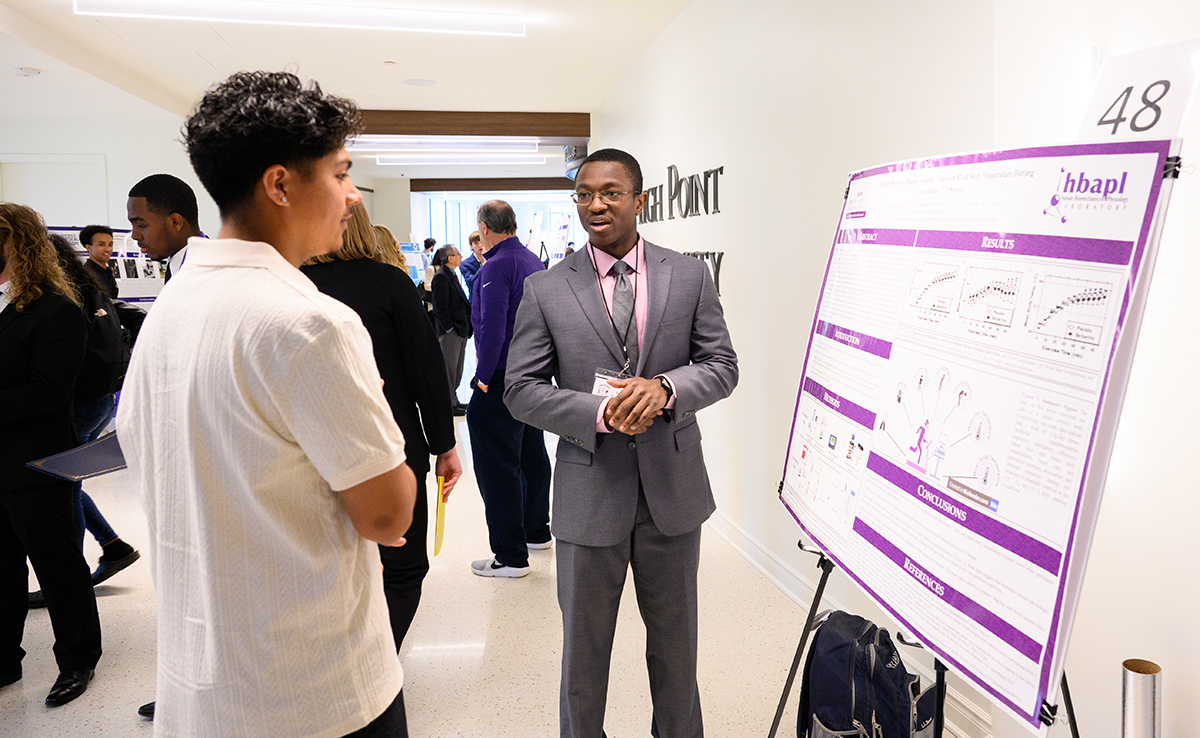
Catherine Gallagher, a junior psychology and dance dual major, said participating in research has been one of her favorite experiences of her college career. The support of HPU’s Office of Undergraduate Research and Creative Works (URCW) has been crucial to her educational and professional growth.
One of the primary reasons she chose to attend HPU was because she knew she would be able to get involved in undergraduate research as early as her freshman year, which was not the case for other universities she considered. Completing the Research Rookies program within URCW helped her discover her passion for research and connect with the research labs of Dr. Laura Nagy, assistant professor of psychology, and Dr. Stacy Lipowski, associate professor of psychology and associate dean for the Whitcher School of Humanities and Behavioral Sciences.
“The opportunity to present my work at High-PURCS each year has allowed me to perfect my presentation skills and gain experience with many different formats of sharing my work, from posters and oral presentations to creative works,” said Gallagher, who is from Chicago, Illinois. “Presenting at High-PURCS has provided me with a valuable opportunity to learn what a conference experience is like in a low-stakes, supportive environment, making me more prepared and a better presenter for other conferences I now attend. I am always excited to share with my peers and professors the research I have worked on, and to see the amazing work my fellow students are doing. High-PURCs is a great opportunity to learn about the variety of work HPU students are doing, from scientific research to creative arts performances.”