HPU’s First Lady Shares Garden History with Residents at River Landing
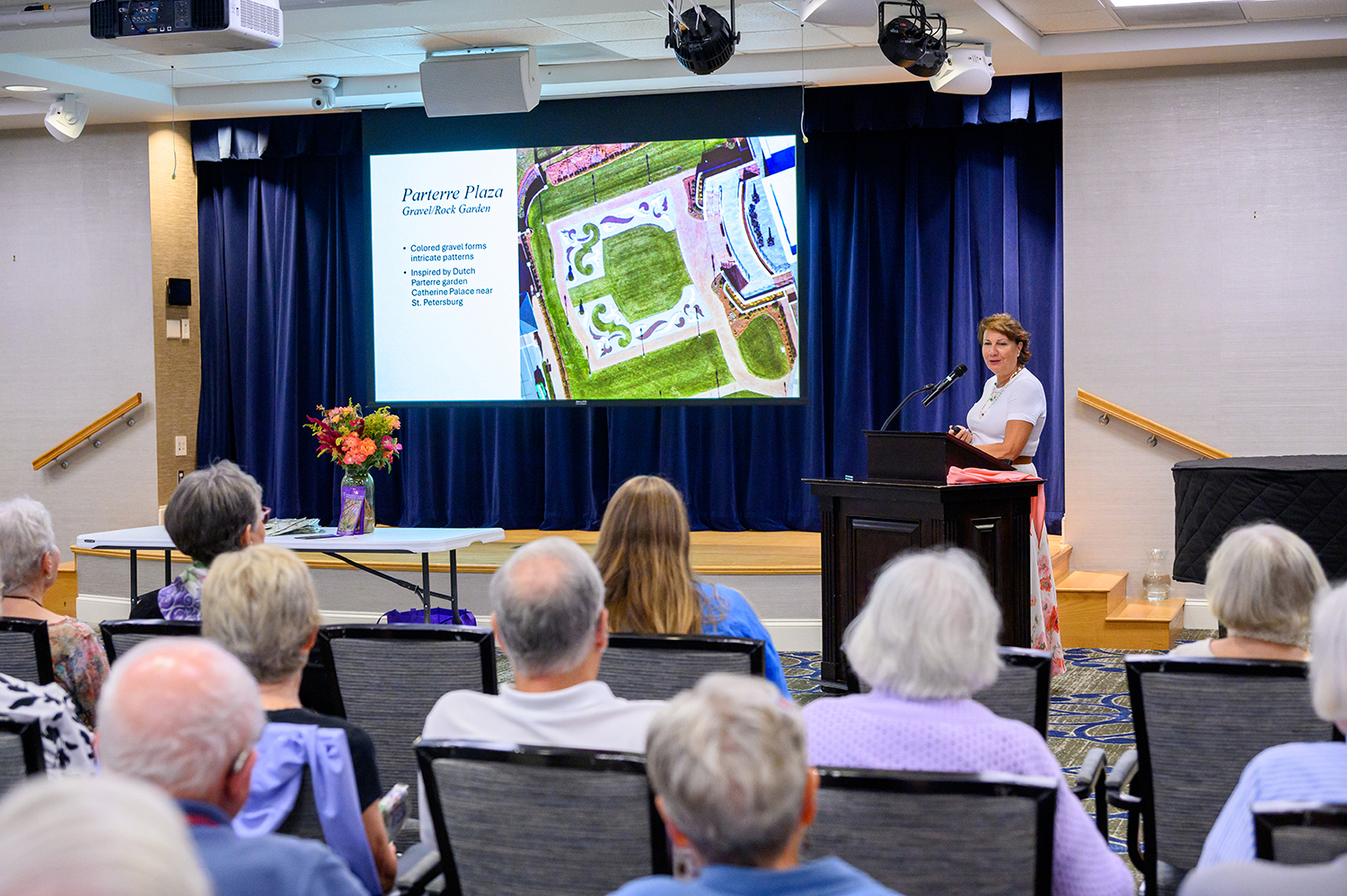
HIGH POINT, N.C., Sept. 19, 2025 – High Point University First Lady Mariana Qubein shared the 20-year history of HPU’s gardens on Thursday with 75 residents at the River Landing at Sandy Ridge retirement community.
After accepting the position as HPU president in 2005, her husband Nido Qubein instructed the university’s landscape team “to put flowers everywhere,” she said. She began working with the staff to spearhead these efforts.
They started by planting a rose garden in front of Smith Library with different varieties students helped to label with their botanical names. After seeing reactions of students, faculty and staff, university Trustee Clarence Ridley supported the rose garden to honor his wife, Eleanor. A Culinary Herb Garden was planted next beside Slane Student Center to provide herbs such as thyme, rosemary, lavender, basil and oregano, for campus chefs to use to flavor some of the food prepared on campus. Faculty and staff later donated their plants to start a perennial garden. Another garden was added to welcome new students and families. The growing university established an arboretum committee and hired a curator.
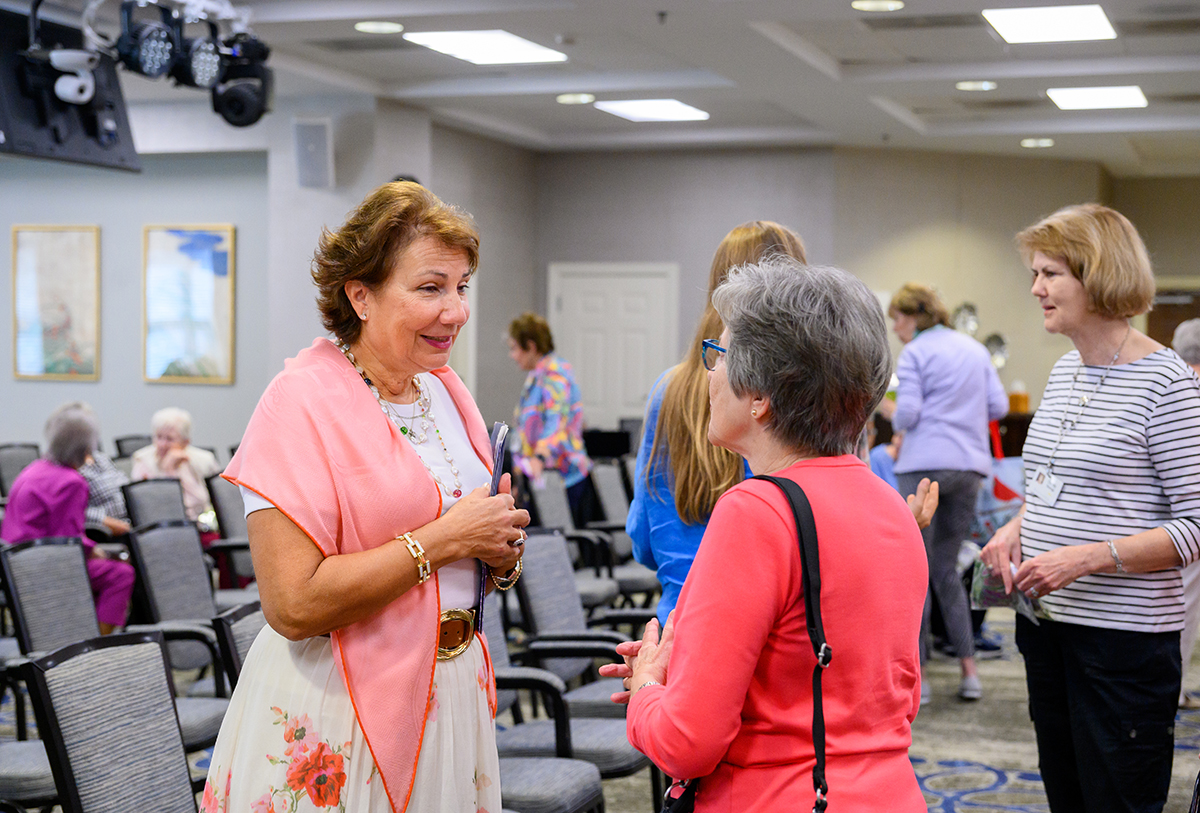
“Whenever a new building went up, we found a nook between two buildings and we put a garden there,” she said. “Each garden is specific to that space, so each garden has a story why it’s there. That’s how the gardens started – slowly, one at a time. As the buildings expanded so did the gardens.”
The university went on to name The Mariana H. Qubein Arboretum and Botanical Gardens in honor of her leadership. Today, HPU now features 31 gardens with 3,700 different plants and more than 700 varieties of trees. The arboretum and gardens feature several tree collections, including 48 varieties of redbuds, 65 varieties of dogwoods, 40 varieties of flowering apricots and 135 varieties of magnolias. Nineteen of the gardens are named or sponsored, she said.
“We had a big dream to have a conservatory that was fulfilled about five years ago when a wonderful donor who believed in our vision made us expand on it,” Qubein said, adding attendees may know Teresa Caine. “There’s a purpose for these gardens. They’re not there just for the beauty of the flowers. The education part is very important. Our professors use these gardens in different ways.”
While science classes may study how leaves change colors, art and design students may use botanical gardens to draw, write or photograph. Other students may see the sculptures and quotes within various gardens as inspiration or places of tranquility.
“We really want to encourage students to engage with the natural world,” said Emma Martone, curator of the Mariana H. Qubein Arboretum and Botanical Gardens. “We know that the peace and serenity of walking through gardens and walking under tree cover not just makes you feel better but can make you think better.”
HPU has recently added a new memorial garden and assisted with the Department of History’s Medieval and Early Modern Physic Greenhouse, a space for interdisciplinary learning and discovery. The Cottrell Japanese Garden behind Cottrell Hall is under construction, Qubein said.