HPU Physical Therapy Faculty Again Ranked Among World’s Top 2% of Most-Cited Scientists
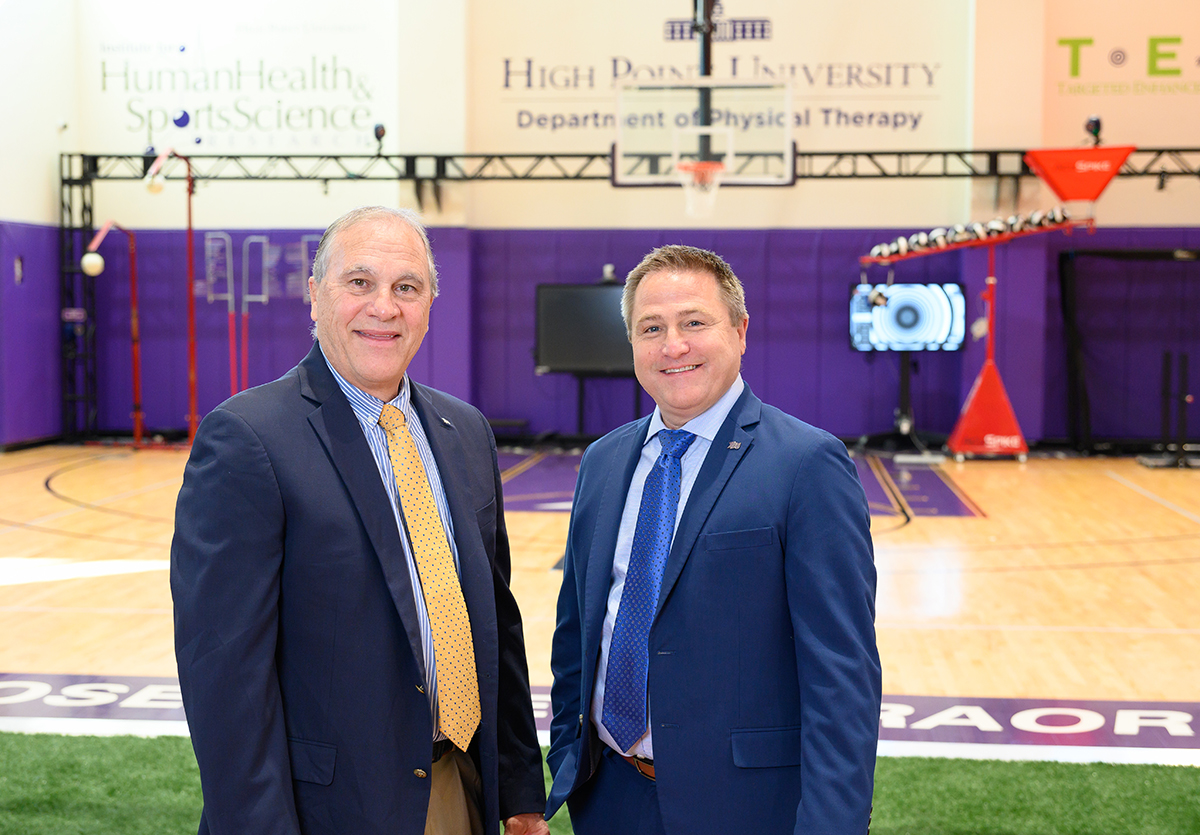
Dr. David Sinacore, a physical therapist and professor of physical therapy, is pictured at left in the Human Biomechanics and Physiology Laboratory with Dr. Kevin Ford, dean of the Congdon School of Health Sciences and professor of physical therapy.
HIGH POINT, N.C., Nov. 13, 2025 – Two High Point University faculty members are included for a second consecutive year in Stanford University’s annual list of the Top 2% of scientists cited by other researchers around the world.
Dr. Kevin Ford, dean of the Congdon School of Health Sciences and professor of physical therapy, and Dr. David Sinacore, a physical therapist and professor of physical therapy, are featured in the recently released Stanford Elsevier rankings of citations, which appear on academic papers and refer to earlier research. The number of times a researcher’s work is referenced in other peer-related work is an important indicator of their research impact and reputation.
This is the fourth year that faculty members from the Congdon School of Health Sciences made the prestigious list.
“Our scientific work is having a measurable impact on individuals across the lifespan,” Ford said. “I’m extremely proud of our High Point University team of faculty, staff and students. I’m continually driven to ask big questions and find innovative solutions that keep individuals active and performing at their best—helping people move, recover and live healthier lives.”
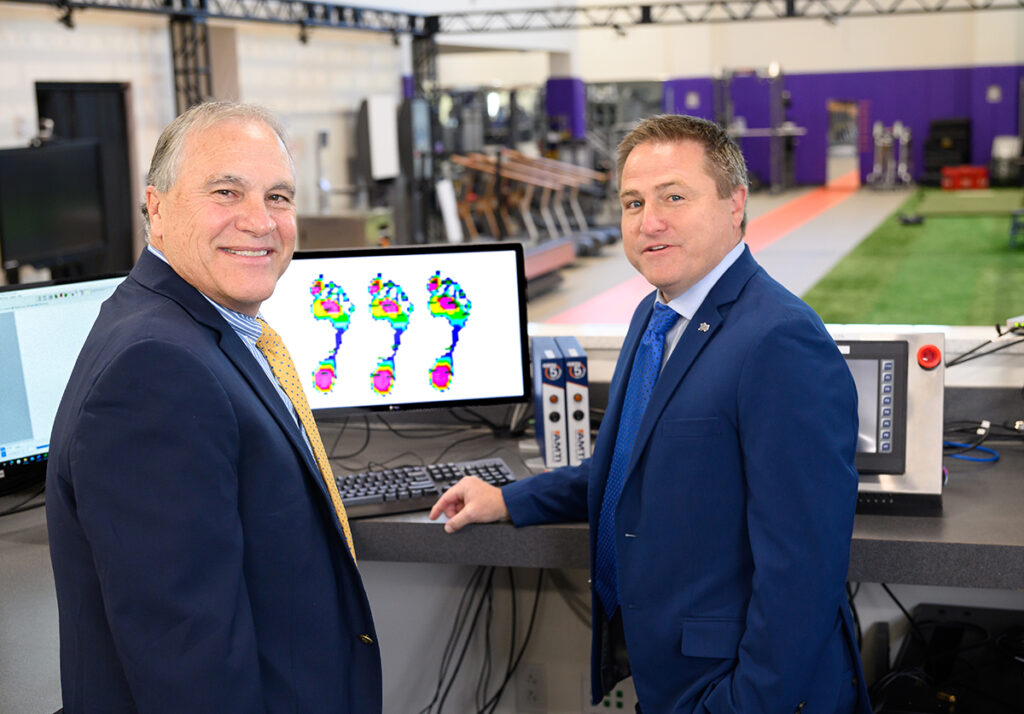
According to Scopus, 25% of Ford’s publications and 26% of Sinacore’s publications are “citation classics,” meaning each has been cited 100 times or more.
“I am grateful to be recognized among the Top 2% of the world’s most-cited scientists again for 2025,” Sinacore said. “This citation recognition confirms the Congdon School of Health Sciences at HPU encourages and supports its faculty to publish highly impactful research.”
Ford said he is grateful their research is being used to positively impact the health of others. He is also excited to share this acknowledgment with numerous HPU students, faculty and collaborators who have co-authored many of these articles.
In 2019, Ford secured a National Institutes of Health (NIH) grant for more than $528,000 in conjunction with Dr. Jeff Taylor, physical therapy department chair and associate professor, and doctors from Cincinnati Children’s Hospital to research how different training programs impact anterior cruciate ligament injury risk in females.
Ford also received a $200,000 NIH grant to conduct athletic injury prevention research, focused on how growth spurts during puberty may contribute to the risk of knee injuries in young female athletes. In 2016, he received the Ruth Ridenhour Scholarly and Professional Achievement Award, which recognizes a full-time HPU faculty member for exemplary accomplishments in their research and creative endeavors.
The Congdon School of Health Sciences has had continual funding for more than 10 years to investigate a variety of footwear with Adidas.
Ford’s 200th peer-reviewed publication was recently published in BMC Musculoskeletal Disorders from HPU’s NIH-funded clinical trial with 150 local 9- to 19-year-old female soccer players. Researchers developed a program to reduce knee injury risk through neuromuscular training with real-time biofeedback.
Sinacore’s two most recent publications have been focused on vascular and skeletal complications affecting the feet of individuals with diabetes mellitus, peripheral neuropathy and various stages of renal disease in a newly recognized condition, known as Chronic Kidney Disease-Mineral Bone Disorder (CKD-MBD) syndrome.
Sinacore is part of a five-year, $3.9 million NIH grant researching CKD-MBD syndrome in the diabetic neuropathic foot. The goals of the grant are to determine the impact of type 2 diabetes, peripheral neuropathy and various stages of chronic kidney disease on the foot. The grant started Sept. 1, 2023, and continues through Aug. 31, 2028.
Sinacore is only the third recipient of the Lifetime Achievement Award from the Foot & Ankle Special Interest Group (FASIG), Academy of Orthopaedic Physical Therapy, American Physical Therapy Association (APTA). The award, in recognition for “career-long significant contributions to advancing foot and ankle physical therapy care through education, research and FASIG service,” was presented Feb. 24, 2023, at the Combined Sections Meeting of the APTA in San Diego, California.