HPU Expands Center for Innovative Teaching and Learning to Assist Students
HIGH POINT, N.C., Jan. 21, 2026 – As High Point University continues to grow, the university is also expanding its Center for Innovative Teaching and Learning (CITL) to provide its faculty with even more strategies to help students learn and continue to be successful after graduation.
Heidi Echols started last June as the director of the CITL, which has been a long-standing resource for HPU’s faculty. Under her leadership, the center is growing and supporting the university’s more than 700 full-time and part-time faculty members with new approaches to teaching and using technology in the classroom.
Since arriving on campus, Echols has mentored both young professors new to HPU and more experienced faculty members who are interested in learning innovative ways of connecting with their students.
“It’s our role to meet the faculty where they are and to show them this is an opportunity to improve and innovate their teaching and the learning experience,” said Echols, who also serves as an assistant professor at HPU. “Maybe they want to explore innovative assessments, or they want to increase student engagement. We brainstorm pedagogical strategies and innovate with them. I want to make sure that the CITL is visible and impactful on campus.”
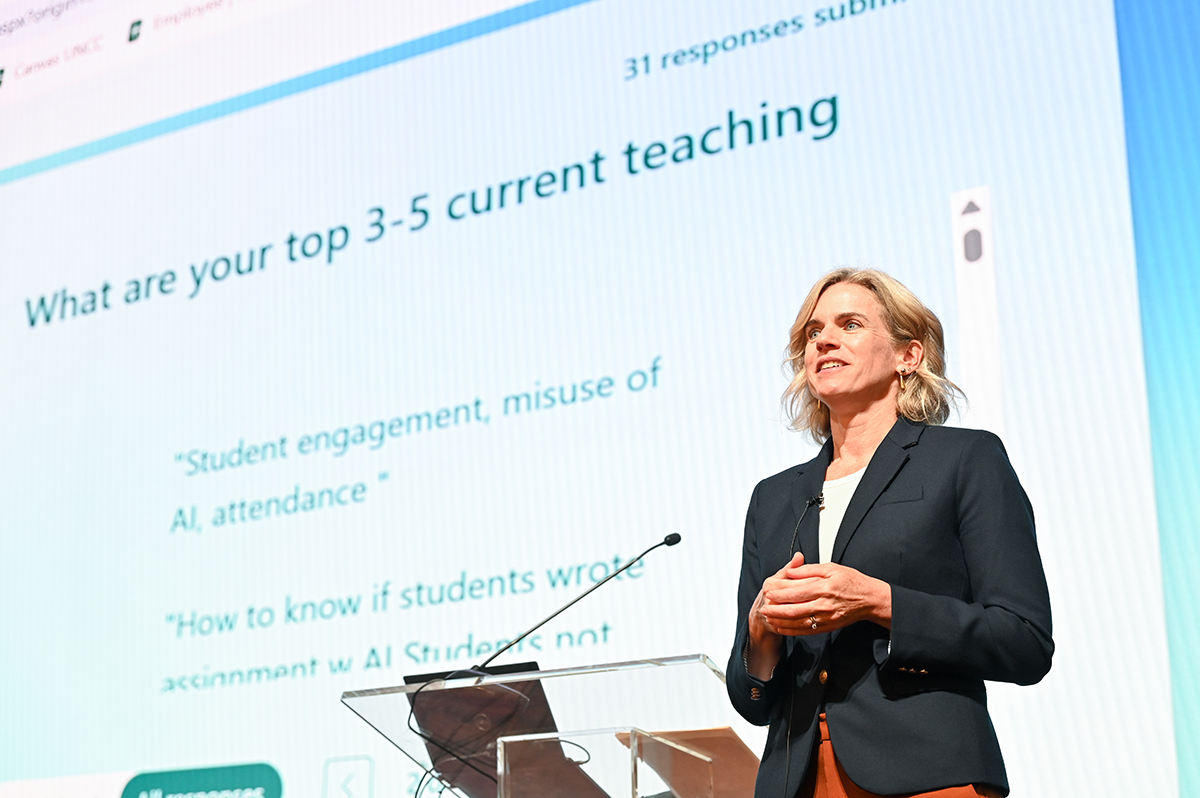
Over the past few months, Echols has surveyed faculty members across campus for the most important teaching and learning needs that the CITL can help provide. The three most popular needs were improving student engagement, integrating artificial intelligence into classes and formative and summative assessments.
“Students are our top priority at High Point University, and our commitment continues to be on academic excellence and student success as we continue to experience transformational growth,” HPU President Nido Qubein said.

Echols joined HPU after spending 21 years as a faculty member at Salem College. She designed Salem College’s dance and movement science degrees and chaired its dance department in addition to running its Center for Teaching Excellence and Innovation for several years.
The CITL currently operates out of Congdon Hall, but it will be housed inside the John and Lorraine Charman Library when the $100 million library opens in 2027. The center is also in the process of expanding its staff, including the addition of Dr. Zawan Al Bulushi, faculty development specialist for AI in education. She joined the CITL this month.
“Our faculty are at the heart of the HPU experience, and supporting their professional growth is essential to our students’ success,” said Dr. Daniel Erb, HPU’s provost. “Heidi Echols brings tremendous expertise to this role, and her work with the CITL will help our faculty continue to innovate and adapt to meet the evolving needs of today’s students.”
In August, only a few days before the start of the fall semester, Echols held a seminar with HPU’s faculty on AI. She said the new technology can help professors build classroom content for students and personalize learning to make difficult material easier for some students to better understand.
“No matter who you are in the realm of teaching and learning, whether you’re in higher ed or K12, AI is changing the way students learn and it’s changing the way you teach,” Echols said.
Echols said faculty members are modeling for their students the importance of being a lifelong learner through their collaboration with the CITL. They are also getting students actively involved in their own education.
“It is helping people see the benefit of lifelong learning. The idea that whatever we’re doing we can always be agile, flexible and do it differently to potentially meet the students where they are,” Echols said. “Together, we can create dynamic, student-centered learning environments that prepare educators and students to thrive in a changing world.”