HPU’s First-Year Biology Students Make Scientific Discoveries with Research in New Lab Class
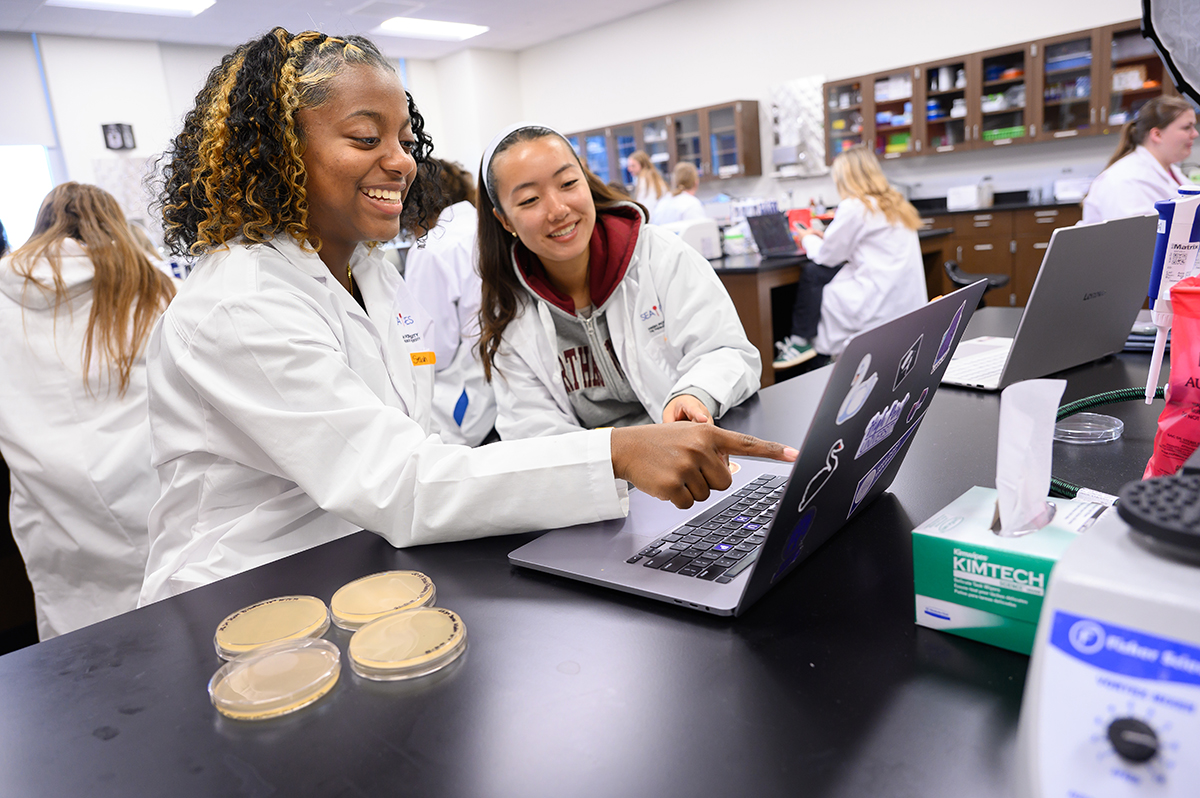
First-year biology students at High Point University are conducting research alongside hundreds of other students around the world and making scientific discoveries through a new program at HPU. HPU freshmen biology students are participating for the first time in a year-long undergraduate research program called SEA-PHAGES (Science Education Alliance-Phage Hunters Advancing Genomics and Evolutionary Science). Freshmen Selah McAdams, left, and Eleanor Lee smiled as they reviewed research together.
HIGH POINT, N.C., Jan. 22, 2026 – First-year biology students at High Point University are conducting research alongside hundreds of other students around the world and making scientific discoveries through a new program at HPU.
Freshman biology majors are participating in a year-long undergraduate research program supported by the nonprofit medical research organization Science Education Alliance at Howard Hughes Medical Institute. Students in SEA-PHAGES (Science Education Alliance-Phage Hunters Advancing Genomics and Evolutionary Science) conduct research that includes digging through soil to identify new bacteriophages, commonly known as phages, which are viruses that infect bacteria.
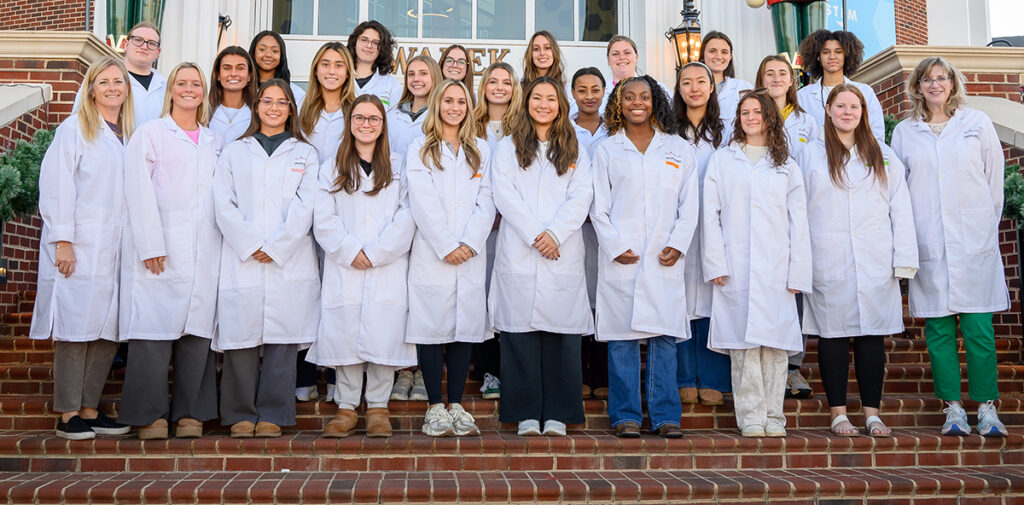
Eleanor Lee, a freshman biology major on the pre-med track, discovered a new phage that she named “Youngsook” after her grandmother. She said SEA-PHAGES introduced her to scientific research.
“It can be messy, exciting and challenging but always so rewarding once you reach the end,” said Lee, who is a Natural Science Fellow from Clarksburg, Maryland. “This lab taught me skills I would not have learned in a regular biology lab like plaque assays and DNA extraction, and eventually we will be able to interpret what the genes in DNA do. Moving forward with my scientific career, I plan on using the foundation SEA-PHAGES has provided me to join other research labs.”
Phages cannot infect and replicate in human cells, but they could have important applications ranging from combating antibiotic-resistant infections to assisting with the removal of pollution from the environment.
“The goal of implementing SEA-PHAGES at HPU is to develop an early sense of community among biology majors, provide a unique research experience, which leads to a sense of ownership and scientific professionalism, and to give students an ability to publish and communicate their efforts,” said Dr. Matt Talbert, chair of HPU’s Department of Biology and associate professor of biology.
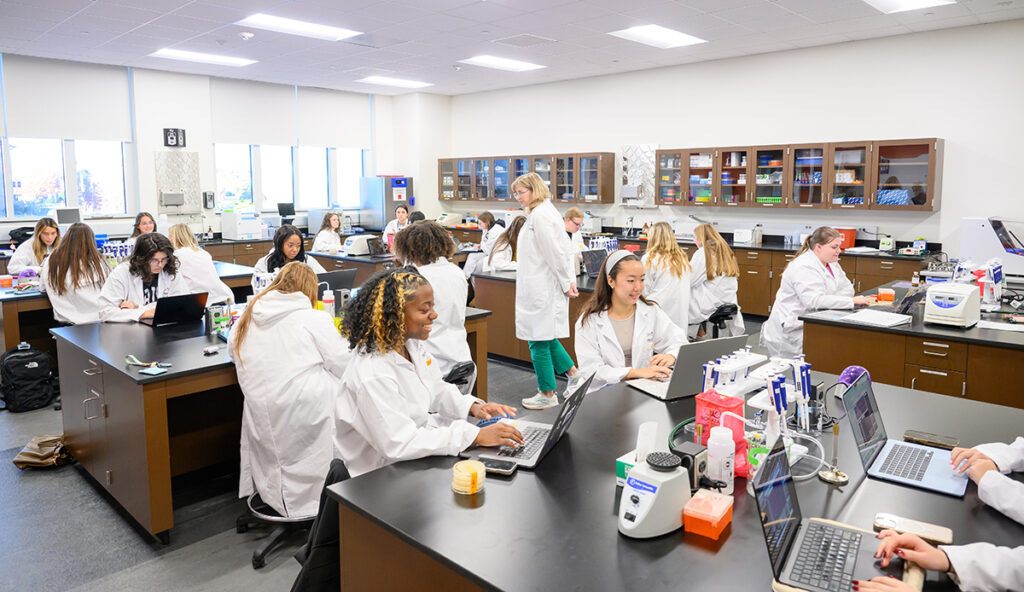
Under Talbert’s leadership, the HPU biology department applied for and was approved to offer the SEA-PHAGES program to students for the first time in the Fall 2025 semester.
Inaugural instructors for the class included biology faculty members Dr. Megan Bowman and Dr. Dinene Crater. The semester culminated with students presenting their research at a poster session at the Wanek School of Natural Sciences.
“This provided students with the opportunity to present their work at multiple levels, speaking with non-science peers, as well as science faculty,” said Bowman, assistant professor of biology.
Selah McAdams, a freshman biology major on the pre-med track with a minor in chemistry, said she developed her critical thinking and creativity through her research in SEA-PHAGES.
“I learned how to apply the scientific process, including how to troubleshoot when challenges arose, and built perseverance along the way,” said McAdams, who is from Greensboro, North Carolina. “This program served as a valuable introduction to research and gave me a deep sense of pride in discovering my own distinct phage through the SEA-PHAGES process. As someone interested in pursuing a career in the medical field, this experience enhanced my understanding of the role of research and critical thinking in medical advancement.”
Students will present their findings, along with research completed in the Spring 2026 semester, at HPU’s annual Undergraduate Research and Creativity Symposium known as High-PURCS.