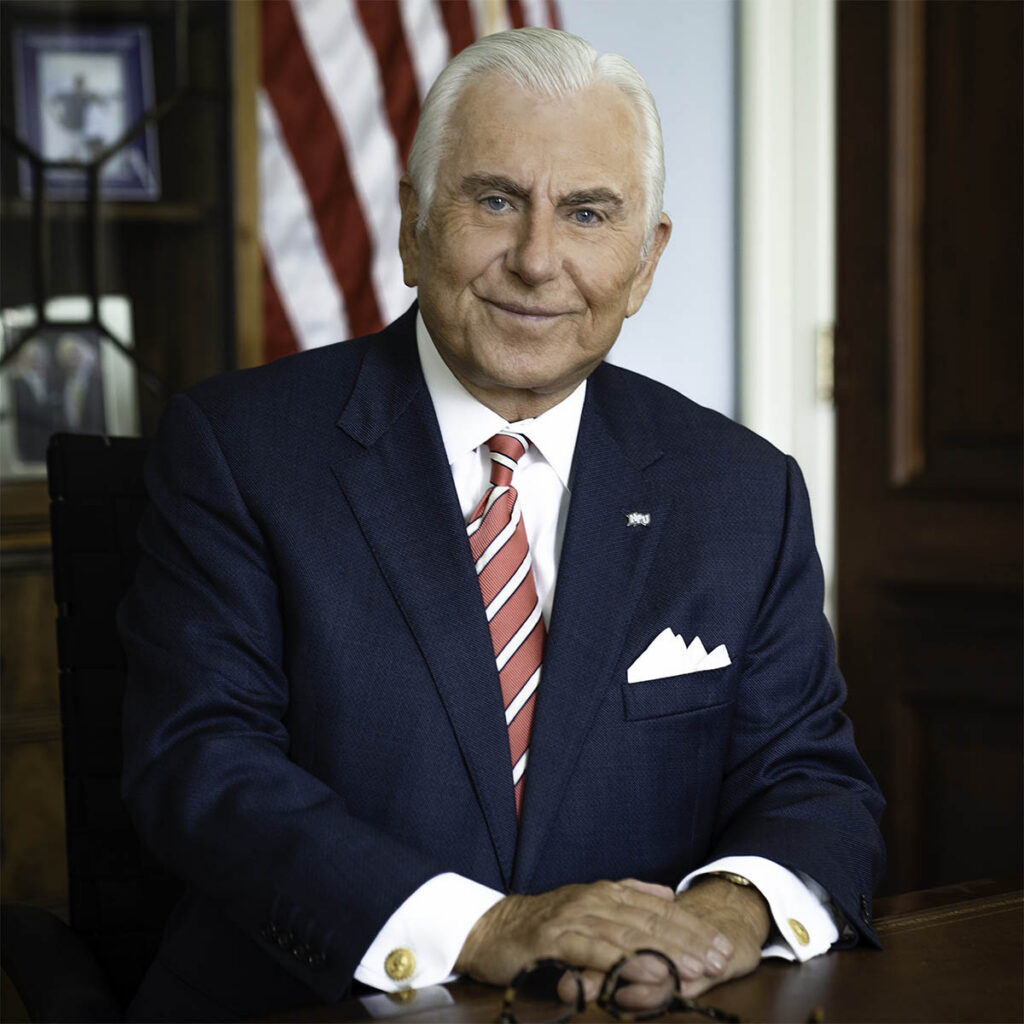
High Point University President Dr. Nido Qubein completed the following Q&A with author and business growth specialist Jeff Blackman, J.D., CSP, CPAE. It was recently shared in Blackman’s January issue of The Results Report, a free e-zine with more than 10,000 readers across 58 countries. We are pleased to share this conversation, edited for clarity and brevity, for your knowledge and enjoyment.
“NIDO KNOWHOW!”
For 41 years, Nido Qubein has had a significant influence on my life. You’ll soon see why.
Nido is a remarkable guy. He has emerged from a humble beginning as an immigrant to the United States to become an incredibly successful businessman, speaker, and consultant to top companies around the world; an author of numerous books and learning systems; an educator and current president of High Point University, known as “The Premier Life Skills University,” recognized by The Princeton Review as “The #1 Best-Run College in the Nation” and earning three #1 rankings in U.S. News & World Report’s 2026 Best Colleges edition.
He is also a volunteer to countless organizations, a recipient of the Horatio Alger Award for Distinguished Americans, and a philanthropist who embraces William Barclay’s philosophy: “Always give without remembering; always receive without forgetting.” Others often describe Nido as smart, suave, and classy. He is all those things. Yet I also know him to be friendly, gracious, supportive, and incredibly funny. I’m proud to call him a friend.
Jeff Blackman: Nido, you’ve chosen to invest one-third of your life in earning, one-third in learning, and one-third in serving. Why that ratio? And how do you make sure you’re extraordinarily successful in each?
Nido Qubein: The ratios are approximate. They serve as a reminder that life is about balance. That life is about both success and significance. That significance is about stewardship and impact.
JB: Tell us about your humble beginning.
NQ: My father died when I was six. My mother worked day and night to feed us, clothe us, and instill in us values for life and living. Her words ring in my ears all the time: “Who you spend time with is who you become. What you choose is what you get. To be great, walk hand in hand and side by side with great people.”
I came to America with $50 and a strong desire to make something of my life. I worked ten hours a day to pay for my education, started my first business straight out of graduate school, and built a thriving speaking and consulting business.
Later, I bought into a number of companies, served on the boards of major corporations, and was chairman of Great Harvest Bread Company.
JB: As a boy, who were your mentors and what did they teach you?
NQ: My mother was my primary mentor. I apply her teaching every day. She taught me about building relational capital, fiscal matters, and problem solving. She had only a fourth-grade education.
JB: What are five or more of the most important things you know about life and business?
NQ: Life is what you make it. Gratitude is the best attitude to nurture. Learning must be continuous. Fairness and justice above all. Think lifetime value in everything. Build equity in your business.
It isn’t how you sell, but how you buy that determines much of your profit. Be productive and efficient. Throw the box out the window and be innovative.
JB: When you wake up each day, what do you want to accomplish?
NQ: I have a clear vision about my work and follow it strategically and tactically each day. I focus on doing good things, building solid relationships, and executing methodically on my objectives.
JB: What stands in the way of most people’s success?
NQ: Their mindset, beliefs, and self-imposed limitations.
JB: How can one turn these obstacles into results?
NQ: Observe and learn from achievers. Read good books. Watch and listen to substantive content through podcasts and other media. Set specific goals. Work relentlessly. Celebrate life.
JB: What’s on the minds of business leaders you meet?
NQ: Leaders are focused on managing change, competing in a global marketplace, surviving economic turbulence, preparing for an uncertain future, and growing their leadership teams.
JB: How do you help leaders wrestle with these challenges?
NQ: I encourage them to focus on strengths, dwell on the positive, master positioning and branding, and manage risk wisely as they pursue new ventures.
JB: Why did you choose to become president of High Point University?
NQ: It’s my undergraduate alma mater. The board persuaded me to lead the institution and transform it into an extraordinary academy of higher education.
We’ve invested hundreds of millions of dollars and doubled or tripled nearly every meaningful measurement academically, physically, and reputationally.
JB: After graduation, what should students take into the community and business world?
NQ: Our students receive an extraordinary education in a fun environment with caring people. They take my required course, President’s Seminar on Life Skills, covering time management, fiscal literacy, communication, self-esteem, and entrepreneurship.
They graduate prepared to compete in a demanding marketplace and go on to do amazing things.
JB: What’s the best business decision you ever made?
NQ: Investing in and helping start a community bank in 1985. A modest investment turned into a fortune.
JB: What’s the biggest mistake you’ve made in business?
NQ: I invested in a real estate venture I didn’t fully understand with people I didn’t fully know. The deal failed.
Lesson: Know your partners well and don’t invest in what you don’t understand.
JB: How do you help others think differently about their future?
NQ: I examine challenges from a ground-zero perspective. Ask questions. Learn how to learn. Growth never stops.
JB: How does one create transformational business?
NQ: Transformational leaders focus on long-term impact, not short-term tasks. They encourage exploration, risk-taking, and accountability.
It’s a process, not a program. It requires commitment, and people should be rewarded when they think and act transformationally.