HPU Students Study Abroad, Build Cultural Understanding During Maymester Programs
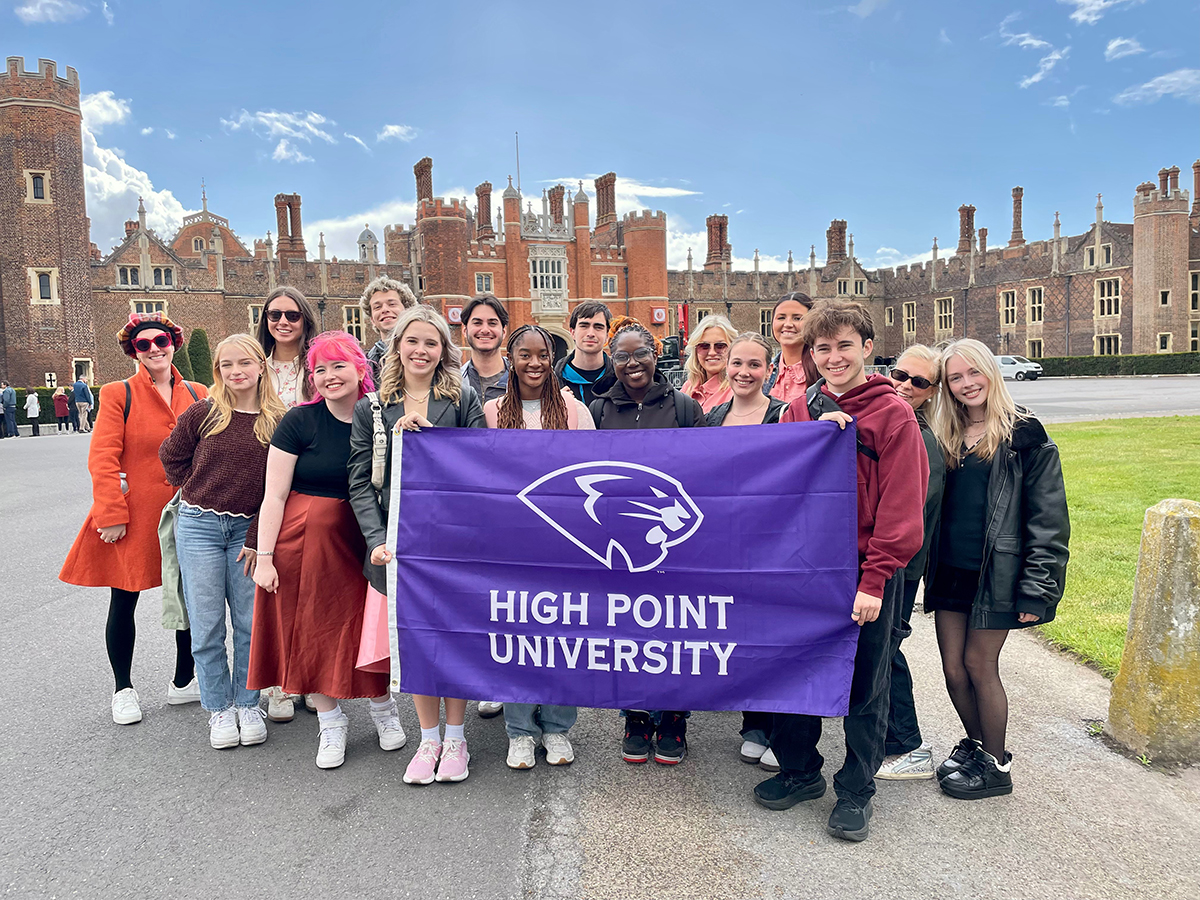
High Point University students and faculty traveled abroad this summer to learn more about different countries and cultures through faculty-led “Maymester” programs. Dr. Amanda Allen, professor of history, was pictured at left with students at Hampton Court Palace, a favorite excursion on the History in London tour.
HIGH POINT, N.C., June 30, 2026 – High Point University students and faculty traveled abroad this summer to learn more about different countries and cultures through faculty-led “Maymester” and “Global Experience” programs.
Short-term study abroad programs allow students to get real-world experiences and travel internationally with their professors to a variety of destinations, including Australia, England, France, Italy, Japan, New Zealand, Spain and Vietnam. “Maymester” programs are monthlong, self-contained courses generally taught while abroad in May and June. “Global Experience” programs are semester-long courses taught on HPU’s campus with a two-week international travel component at the end of the semester.
This year, HPU offered four Global Experience programs in three countries and 14 Maymester programs in eight countries.
“I tell students that the best education I’ve ever received is the one I earn each time I thoughtfully explore somewhere new,” said Dr. Jeff Palais, associate vice president for HPU’s Global Education. “We challenge ourselves to become not only comfortable in new environments, but more knowledgeable and appreciative of culture, language and worldviews. Studying abroad is part of the path to becoming global citizens, which is a requisite mindset to succeed in today’s interconnected economy no matter our chosen major or career.”
Tudor History in London
Dr. Amanda Allen, professor of history, and Spanish Instructor Jody Bowman led 14 students who traveled to London for a monthlong Maymester on Tudor history.
“We are learning about how the Tudors changed the landscape of British history and get to see this impact through visiting many places from which they ruled and paved the way for important political, religious and cultural changes that still shape British and American life,” Allen said. “One of the key aspects of the Tudors’ success and why their legacy dominates over many other monarchical dynasties was through their control of image and reinforcing image everywhere. Students getting to visit places like Hampton Court Palace and Westminster Abbey is deeply impactful because they see firsthand this idea that image matters in politics, business, etc. Thus, they are learning the skills of effective or not effective leadership that can be extended to all future fields of study and careers.”
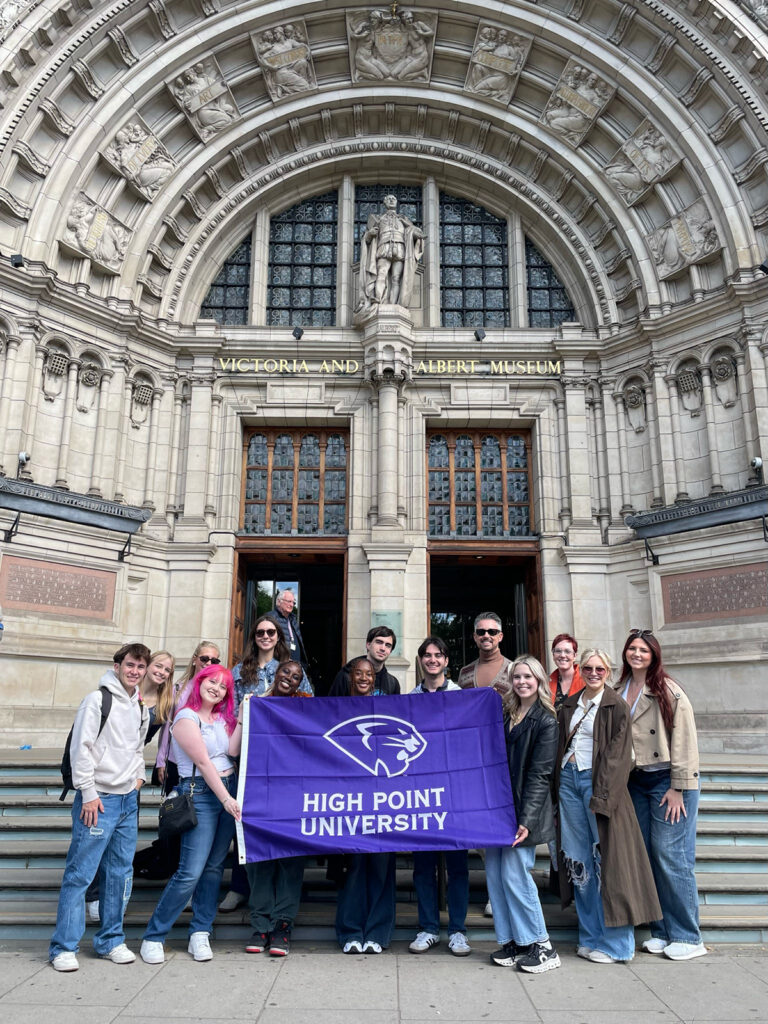
Traveling to London to study the Tudor dynasty provided Aurora Dennison, a junior double major in history and theater, with immersive educational experiences that allowed her to learn in a hands-on and experiential way.
“Learning in a classroom creates wonderful educational opportunities, but learning abroad like this and getting to visit so many of the places we learned about in our classes brought the learning experience to an entirely new level,” said Dennison, who is from Silver Spring, Maryland. “For someone like me, who chose a Maymester program that counts toward their major, learning about the Tudors’ society and culture while experiencing and seeing what we learned firsthand on our excursions created an irreplaceable addition to my education, even opening my eyes to what a career in history could look like overseas and fostering a serious consideration of pursuing a career or higher education internationally after obtaining a degree in history from HPU. I even got to talk with West End actors about the theater, acting and arts industries in England, which has also opened new doors to me as a theater double major and a dance minor. I am beyond grateful for this month-long experience from HPU, and the immersive learning experience has allowed me to grow both intellectually and as an individual with the new life skills I have gained from international study.”
Global Hospitality: Siena, Italy
Twenty students traveled to Siena, Italy, for an immersive experience with Dr. Marisa Ritter, assistant professor of hospitality management, and Ken Medlin, professor of the practice of journalism. Students lived in apartments in the city and attended HPU faculty-led classes at the local school.
The focus of the class was on cross-cultural communication to allow students a better understanding of working with guests, employees and visitors who come from a variety of cultures.
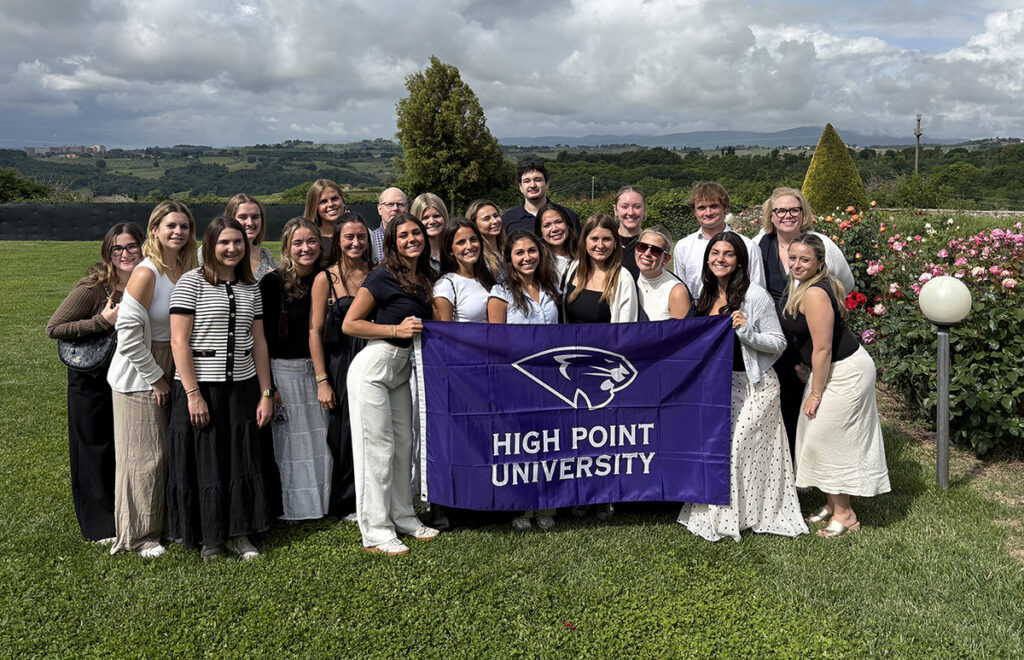
“In addition to navigating living in a foreign country for three weeks, students got to have some amazing hospitality experiences, including a pasta-making class where we ate what we made in class, a visit to a Parmigiano Reggiano cheese-making operation and a balsamic vinegar factory, as well as a food tour of Bologna and a visit to the church and museum of one of the 17 contrade (historic neighborhoods and community) in Siena,” Ritter said. “We also visited with local hospitality professionals at hotels, agritourism sites and a resort located in a former 12th-century monastery. Students were able to see what we learned in the classroom translated to their everyday life in Siena through interacting with shopkeepers, waitstaff and navigating public transportation in a different culture.”
Students gained more knowledge about the creation of hospitality experiences through professional conversations and observation of another culture at work, Ritter said. Students recognized differences in how businesses were run in other cultures, as well as the impact of personalized service.
“They were drawn to the family-owned businesses, personal connections and customized experiences that they had during their stay and consistently reflected on how these experiences changed their approach to their future careers, whether it be in hospitality or another industry,” Ritter said.
Clara Sessor, a senior strategic communication major from Roanoke, Virginia, with a minor in sport management, said the Maymester in Siena taught her that hospitality is about more than providing just a service.
“It is about creating meaningful experiences and relationships with guests,” Sessor said. “These lessons strengthened my communication and cultural awareness skills, which will be valuable in my future career. The most important lesson I learned was that hospitality is woven into everything we do. No matter what future career I decide, success often comes down to how you interact with people, build relationships and make others feel valued.”
The study abroad program was unlike any previous experience for Kyndal Sigmon, a junior hospitality major with a minor in women’s leadership. She described it as a great blend of academics, culture and hands-on experiences.
“Through this program, I learned how important it is for hospitality professionals to understand different cultures and communication styles,” said Sigmon, who is from China Grove, North Carolina. “Because the hospitality industry is global, it is vital for us to know how to interact with guests from diverse backgrounds in ways that respect their cultures and create exceptional experiences. The way Italians grocery shop, dine at restaurants and interact with friends differs from what I am accustomed to in the United States. This experience reinforced the importance of cultural awareness and adaptability. The knowledge I gained will stay with me throughout my career and be a reminder that we cannot assume all cultures are the same. Instead, it is essential to learn about and understand different cultural perspectives to better serve others.”
Kate Niccolai, a junior marketing major, agreed that understanding global hospitality is critical for any career because cultures operate differently in their workplace relationships, gatherings and business dealings. Personal and organizational success often requires understanding these subtle differences. She witnessed firsthand how Italian residents and hospitality businesses create a sense of loyalty and keep customers returning.
“With a centuries-old history, Italians are proud to share their culture and traditions,” said Niccolai, who is from Gladstone, New Jersey. “Whether touring a vineyard as a class or grabbing lunch from my favorite sandwich shop in Siena, the people were eager to connect and share their family stories and recipes. Through this experience, I learned that Italians value relationships in business over mere transactions, a stark contrast to the more transactional nature often found in American business culture. This brought to light how one cannot assume that another culture’s business customs mirror their own. As a marketing major, this lesson hit especially close to home. Marketing is not one-size-fits-all; a campaign, a message or even a brand’s tone can resonate deeply with one culture and completely miss the mark with another. Getting to embed myself directly into Italian culture through Siena gave me a newfound appreciation for just how important it is to approach any market with genuine cultural awareness and the utmost respect. The Global Hospitality: Siena trip gave me a framework for approaching cultural differences with curiosity and respect, and as I move forward in my marketing career, I know that framework will be one of my most valuable tools.”
Sicily: The Crossroads of the Mediterranean
For the “Sicily: The Crossroads of the Mediterranean” Maymester, students traveled with Dr. Megan Anne Fenrich, assistant professor of Italian, and Dr. James Cotton, assistant professor of English, for approximately 23 days, leaving May 3 and returning May 26.
Students arrived in Palermo, Sicily, where they stayed for a day, and then transferred to Marsala, where they spent most of their time. At Marsala, students completed morning lessons and afternoon excursions, traveling to places such as:
- Erice, a medieval town that contains the Ettore Majorana Foundation, an international research center
- Selinunte, the largest archeological site in Europe and home to an ancient Greek city
- Stagnone Saline, the historic Marsala salt pans where salt production continues by hand
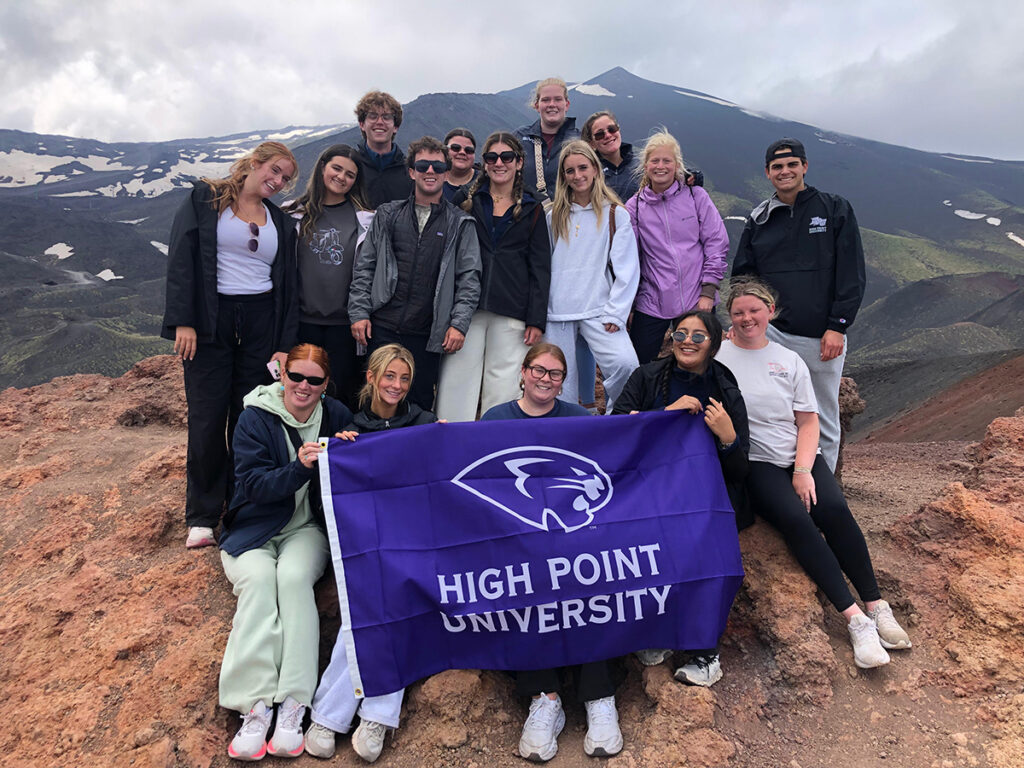
In addition, students visited several other archeological sites and engaged in discussions on contemporary migration with Moltivolti. They also explored the relationship of Sicilians and the earth and sea through food experiences, an art museum visit, hiking and additional excursions. During the final days of the trip, students traveled to the east side of the island to hike Mount Etna, explore the city of Siracusa and hear testimony from a community parish and leaders who were on the frontlines of handling migration in the Mediterranean Sea.
“These various and unique experiences of the multicultural and diverse nature of Sicily throughout history enabled students to engage with questions of identity and migration, food production and sourcing, and the Sicilian relationship with the earth and sea,” Fenrich said.
“This experience will help me with international travel skills that I hope to use for my future in hospitality,” said Danny DeMarco, a junior hospitality major and Italian minor from Northport, New York.
French in Aix-en-Provence
Students in Dr. Benoit Leclercq’s French Today class stayed in Aix-en-Provence from May 4-30, with overnight trips in Nice, Monaco and Èze and day trips to Cassis and les Baux-de-Provence.
“Students earned the opportunity to live like a local and fully interact with the Provençale population, thanks to the French skills they honed on our campus and in France,” said Leclercq, associate professor and director of HPU’s French program. “They navigated the culture, the food and the customs in the various cities they visited.”
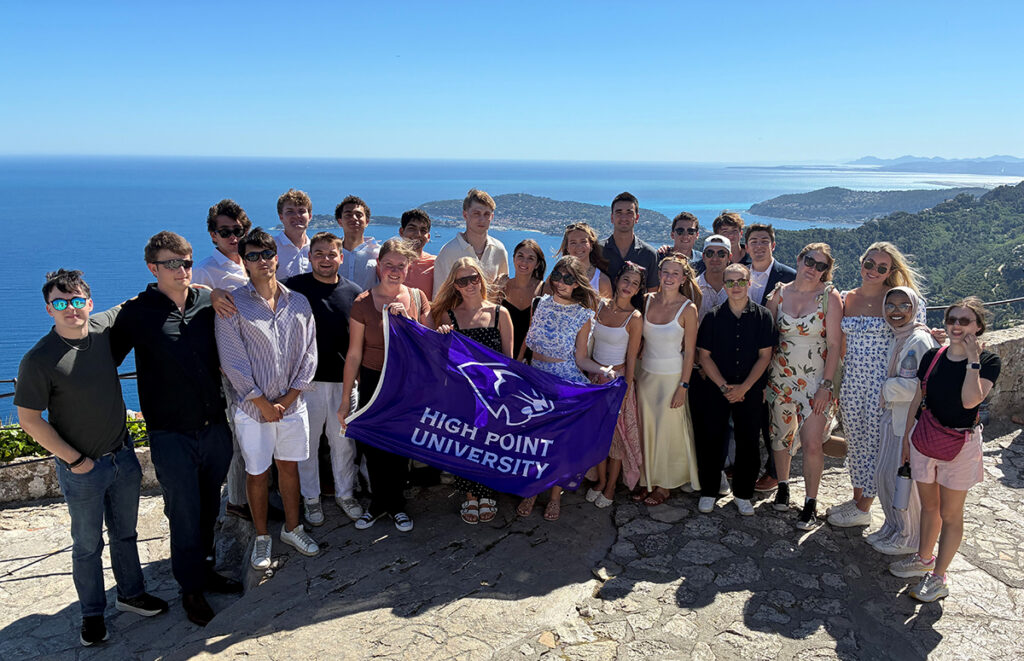
The French in Aix-en-Provence classes explored Cassis by wandering the outdoor market, cruising through the breathtaking calanques and taking in views from France’s highest seaside cliff, Leclercq said. The learning continued at La Dona Tigana winery with Cannelle Tigana, who shared insights into running a successful family business.
Back in the classroom, students also heard from Ashley Donahey of Two Worlds Whiskey, who detailed her journey from public service to entrepreneurship and the art of bringing Kentucky bourbon to the French market. The adventure wrapped up along the Côte d’Azur with visits to Èze and Nice, where students experienced Vieux Nice, Nice’s old town, and the iconic Promenade des Anglais route along the Mediterranean coast.
“Getting to see a different culture and way of life in person and fully immersing myself was incredibly transformative in how I view the world, and it is a skill that I will look to grow for the rest of my life,” said Harrison Daly, a double major in French and international business who is from Pennsylvania.
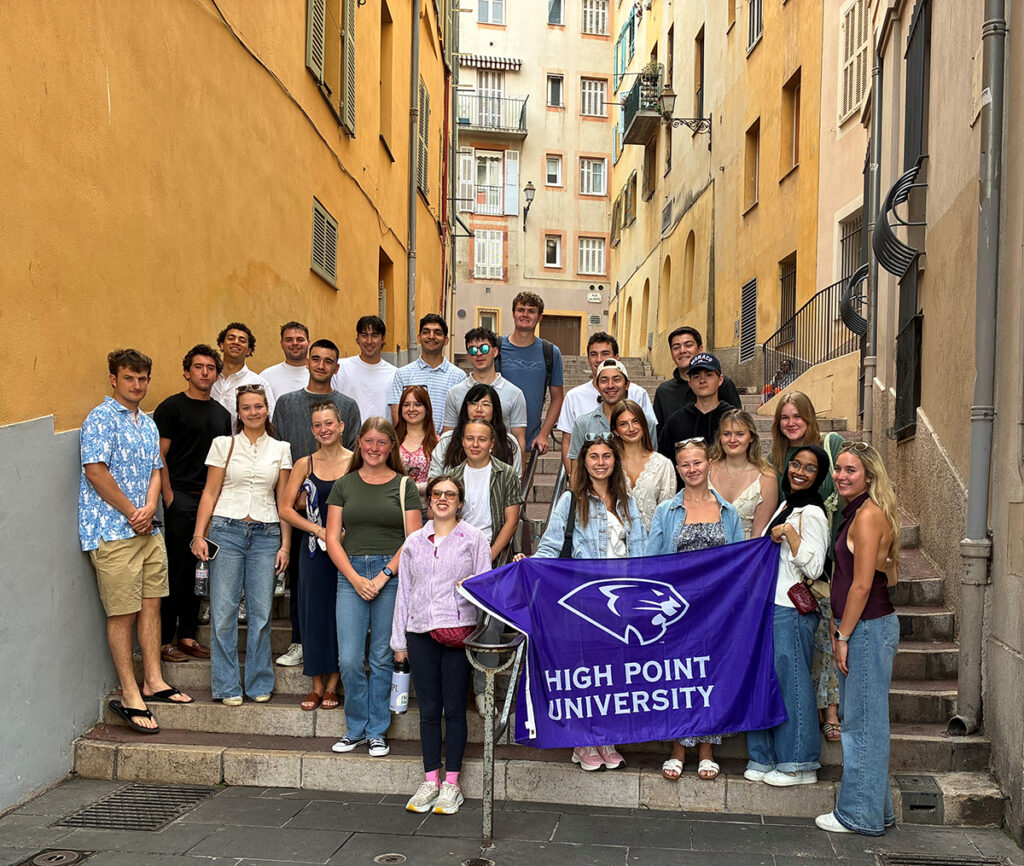
Elle Discont, a neuroscience major on the pre-law track who is pursuing a minor in French, agreed this Maymester was one of her best experiences because she has lived in the U.S. her entire life and knew little about other cultures.
“Coming to France, specifically Aix, has shown me how diverse this world truly is,” said Discont, who is from Arizona. “From the type of people that come here to the different types of native foods, it has been a truly wonderful experience. If you are on the edge about coming on this Maymester, do it. You will practice your French every day and become much more comfortable with conversational skills, cultural understanding and being self-sufficient.”
Max Slayton, an entrepreneurship major who is pursuing a minor in French, also encouraged others to study abroad.
“You should participate in a Maymester because there are many things you can learn from stepping out of your comfort zone,” said Slayton, who is from New York. “The Maymester in Aix-en-Provence was an amazing experience, thanks to France’s rich history, its gastronomy and the weather. The overall experience was one I’ll never forget, and anyone interested in doing a Maymester should go ahead and take this once-in-a-lifetime opportunity.”
Finance in Aix-en-Provence
Twenty-two students from HPU’s Earl N. Phillips School of Business traveled to Aix-en-Provence in southern France for the Financial Management in Aix-en-Provence Maymester, which was led by Thomas James, professor of the practice of finance, and Dr. Kenneth McEwan, assistant professor of finance.
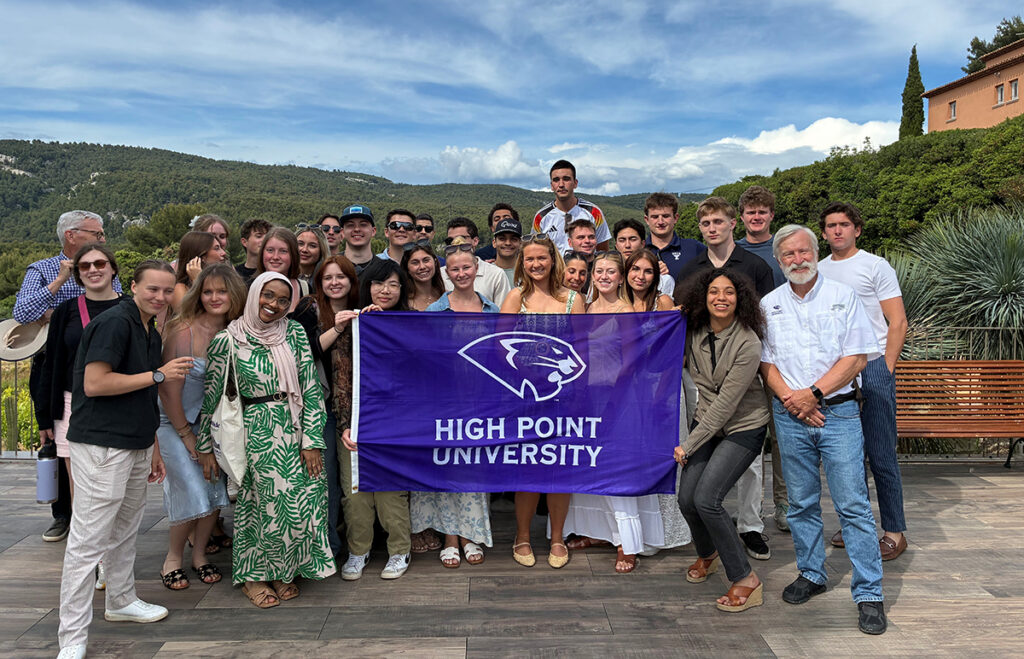
“Students participating in this course seized the opportunity to take a required course for all business majors and minors in an international setting,” James said. “Beyond the content which would be included in a course taken on campus, these Maymester students were immersed in a different culture, which enabled a broadening of global perspective in general, and heard from several local business professionals about French business practices in particular, learning how they may differ from those in the U.S.”
Students also toured some of the major cities in southern France, including Cassis, Nice and Marseille, while Monaco, Monte-Carlo and several villages in the Luberon mountains were also included as part of the cultural and business experience. The group toured facilities and heard from business leaders from the region, including Galimard Perfume, Domaine La Dona Vineyard, Accélérateur M at the City of Innovation and Knowledge and Parli Calissons.
Financial Management in France students paused in front of the Parli Calissons factory, with owner Pierre Gignoux at right.
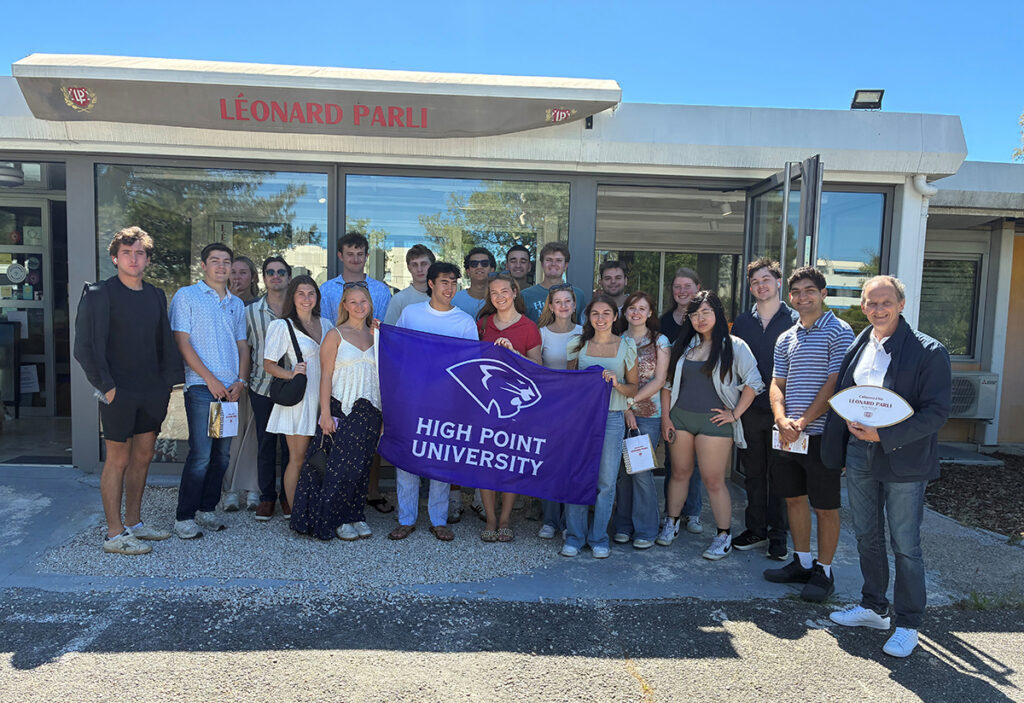
Pierre Gignoux, owner of the Parli Calissons factory, led students on a tour of the facility where the more than 150-year-old company makes the region’s specialty confection. Calissons are a mixture of ground almonds and candied melon, topped with vanilla glazed icing. Gignoux emphasized that Parli Calissons adheres to their original recipe and manufacturing processes to maintain quality and the traditional taste and texture.
Students stayed within a short walk, less than 15 minutes, to the classroom and the city center of Aix, which included an abundance of shops, restaurants and bakeries and the regional bus and train transportation centers, McEwan said.
It was a great experience for Micheal “Sal” Schmitt, a junior double major in finance and business analytics and economics.
“The Financial Management course was valuable on its own, but being in France gave us the chance to hear directly from local business owners and professors about the unique challenges of operating in a global business environment,” said Schmitt, who is from Rochester, New York. “I saw firsthand how differently businesses function, depending on where they are in the world.”
Marketing in Spain
Nineteen students traveled May 3-31 as part of the Marketing in Spain study abroad trip led by Dr. Miguel Sahagun, the Charles T. Ingram Associate Professor of Marketing, and Dr. Ginger Moore, professor of the practice of marketing and sales.
The Maymester course was based primarily in Salamanca, Spain, where students stayed and attended classes at the Universidad de Salamanca. During the weekends, students traveled to different regions of Spain, including San Sebastián, Bilbao, Segovia, La Alberca, Mérida, Sevilla and Burgos, with an additional visit to Guarda, Portugal. The course was designed to help students enhance their understanding of international marketing practices while living and studying in Spain, with a strong emphasis on global awareness and cross-cultural understanding.
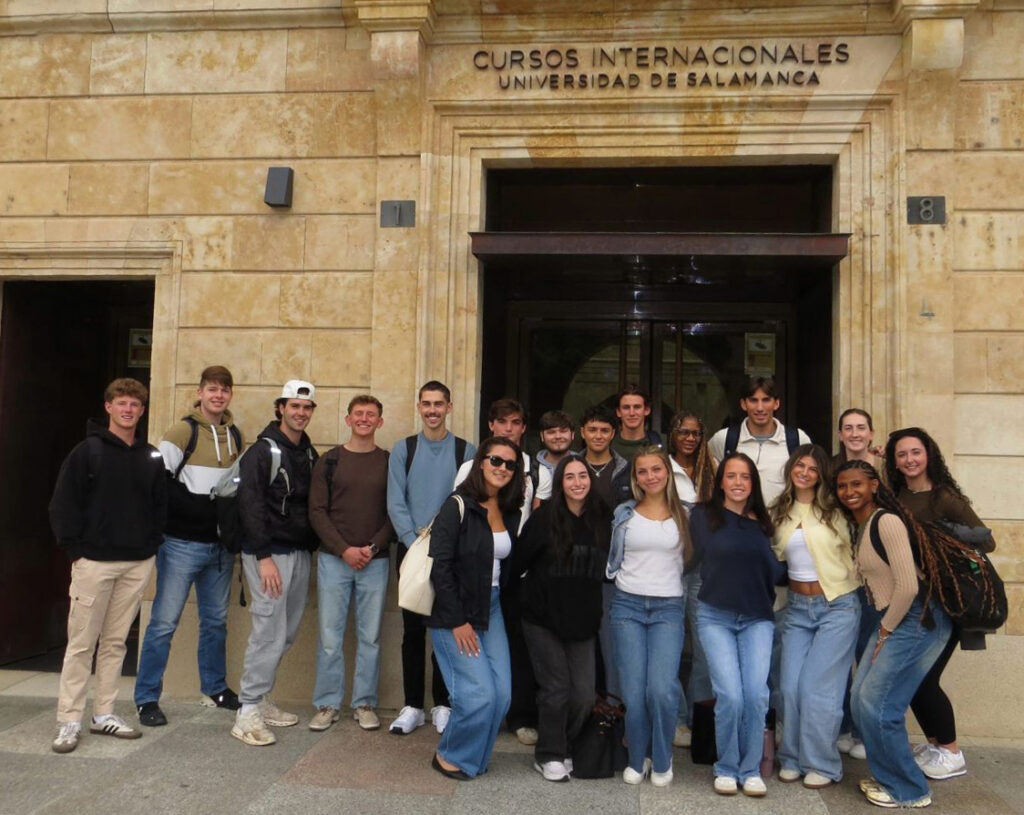
“Students gained experiences that will be valuable for their future careers and higher education goals by connecting classroom concepts with real-world business, cultural and marketing environments,” Sahagun said. “Through visits, cultural activities, academic reflections and business experiences, students analyzed how economic systems, socio-cultural forces, consumer behavior, branding, communication and globalization shape marketing decisions in foreign markets. These experiences helped them develop skills in cross-cultural awareness, critical thinking, international marketing strategy and professional reflection, all of which are important for careers in marketing, business, entrepreneurship, communications and global industries.”
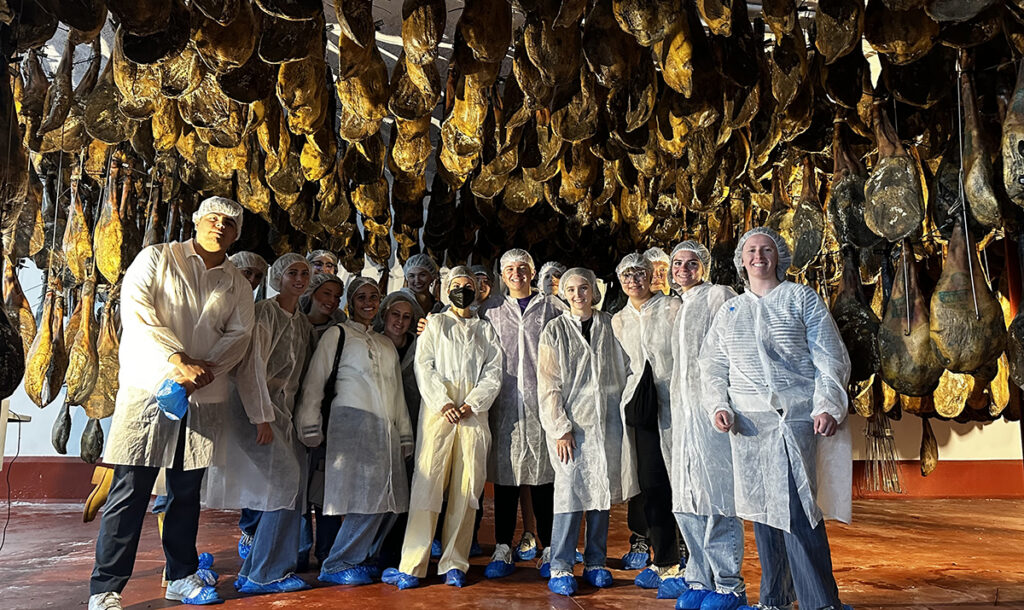
The trip also included experiential learning opportunities. One highlight was a visit to Julián Martín, an Iberian ham factory recognized for its commitment to quality, tradition and excellence in the production of Iberian ham. During the visit, students learned more about one of Spain’s most iconic food products and gained a deeper appreciation for the role that craftsmanship, quality control, branding and cultural heritage play in creating value for consumers. The experience helped students connect global marketing concepts with a product deeply rooted in Spanish identity and tradition.
Another visit was to the Parque Científico de la Universidad de Salamanca, where students learned how the scientific park supports startups and helps them initiate and grow their operations, particularly in sectors such as biotechnology and computer science. The visit gave students a perspective on innovation, entrepreneurship and the role universities play in supporting business development and technological advancement.
Overall, these experiences allowed students to see marketing, innovation, entrepreneurship and culture beyond the classroom while gaining a richer understanding of Spain’s business and cultural environment. The trip helped students apply international marketing concepts in real-world settings and reflect on how global and local forces influence consumer value, branding and business strategy, Sahagun said.
“My biggest takeaway from the Marketing in Spain program was learning that people from different countries and cultures respond differently to marketing strategies,” said Jack Paris, a junior from Mint Hill, North Carolina, who is double majoring in finance and sport management. “For a company to really connect with its audience, marketers have to understand the behaviors, values and preferences of the people they are trying to reach. In short, marketing is not a one-size-fits-all approach. Dr. Sahagun emphasized this when he taught us the platinum rule: Treat people how they want to be treated.”
Paris said understanding cultural differences and being able to communicate effectively with them will be an important skill and benefit his future career, whether he pursues finance or another area of business. In his field, he will likely work with people from a variety of backgrounds around the world.
“One thing that we learned about was the importance of marketers to research and understand the cultural, social, environmental and legal aspects of the market they are trying to enter,” said Worth Kinslow, a junior business administration major from Raleigh, North Carolina, who is pursuing minors in sales and marketing. “This experience will help me in my future career in business by improving my ability to communicate and interact with customers from other cultures. The importance of becoming a global marketer is the ability to find opportunities to expand into other markets, understand the diverse needs of customers and adapt to the growing global interconnectedness of economies.”
Spanish Language and Culture
Students traveled through Spain from May 3-29 as part of this Maymester program, with stops in Madrid, Sevilla, Córdoba, Aracena and Jerez de la Frontera. Senior Spanish Instructor Carmen Salama and Dr. Ho Sang Yoon, assistant professor of Spanish, combined classroom instruction with cultural immersion and experiential learning focused on Spanish language, history, gastronomy, literature, art and contemporary society.
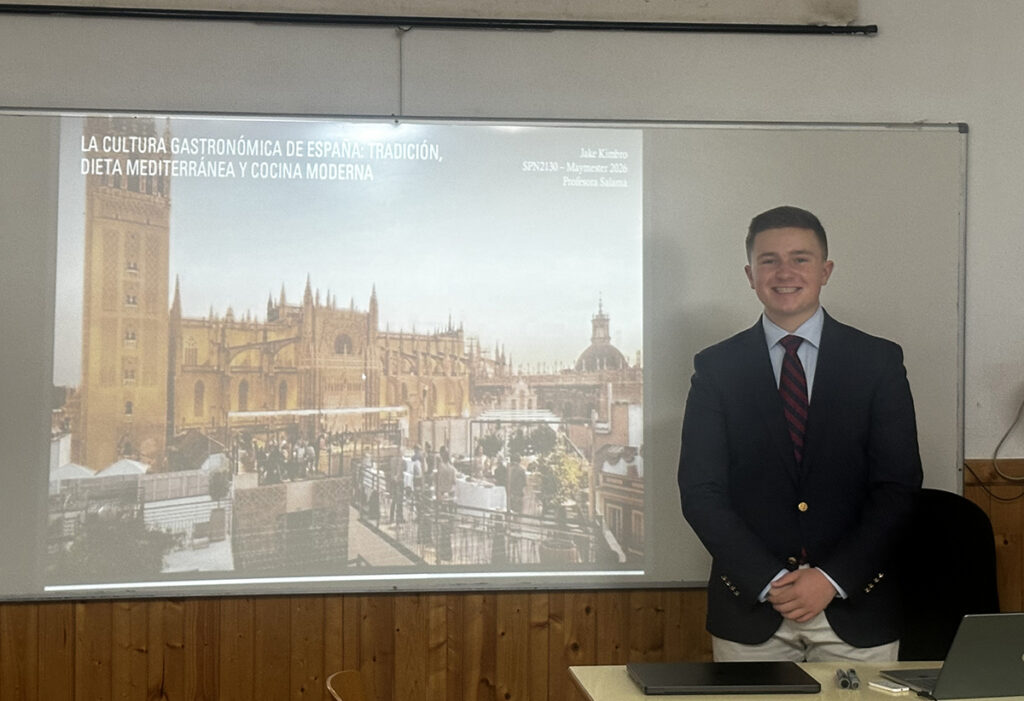
Throughout the program, students participated in guided museum visits, gastronomy workshops, flamenco classes, cooking experiences and conversation exchanges with Spanish students. They visited cultural and historical sites, such as the Prado Museum, the Royal Palace, olive mills, wineries, traditional markets and the Mezquita of Córdoba.
“Students lived with Spanish host families, which allowed them to experience everyday life and strengthen their language skills through daily interaction and cultural exchange,” Salama said. “The program helped students develop advanced communication skills in Spanish while also strengthening critical thinking, intercultural communication and global awareness. Through presentations, analytical writing, collaborative projects and real-world cultural experiences, students learned to connect classroom concepts with contemporary Spanish society and professional environments. These experiences supported students interested in careers in education, international business, healthcare, law, public service, hospitality and other fields that require cultural competence, adaptability and strong communication skills in a global setting.”
Olivia Everhart, a junior exercise science major from Salisbury, North Carolina, said the program was a life-changing experience that strengthened her confidence and deepened her understanding of the Spanish language and culture.
“Being fully immersed in the culture has allowed me to grow in ways that would not be possible in a classroom alone,” said Everhart, who is on the pre-professional physician assistant track and pursuing a minor in Spanish. “This experience is truly irreplaceable, and I am forever grateful for the opportunity.”
“Through the Maymester program, I learned a great deal about Spanish history, culture and gastronomy,” said Claire Taylor, a junior chemistry major from Winston-Salem, North Carolina. “I was able to appreciate the diversity and beauty of Spanish architecture, observe the traditions behind ham and wine production, and experience cultural foods and tapas firsthand. Through this experience, I have developed a stronger Spanish vocabulary and have been inspired to travel to other countries to learn about their unique histories and traditions.”
Environmental Physiology: New Zealand and Australia
Twenty-nine students traveled to New Zealand and Australia on a trip led by Dr. Jason Keeler and Dr. Colin Carriker, who are assistant professors and co-directors of Health Science Fellows in HPU’s Department of Health and Human Performance.
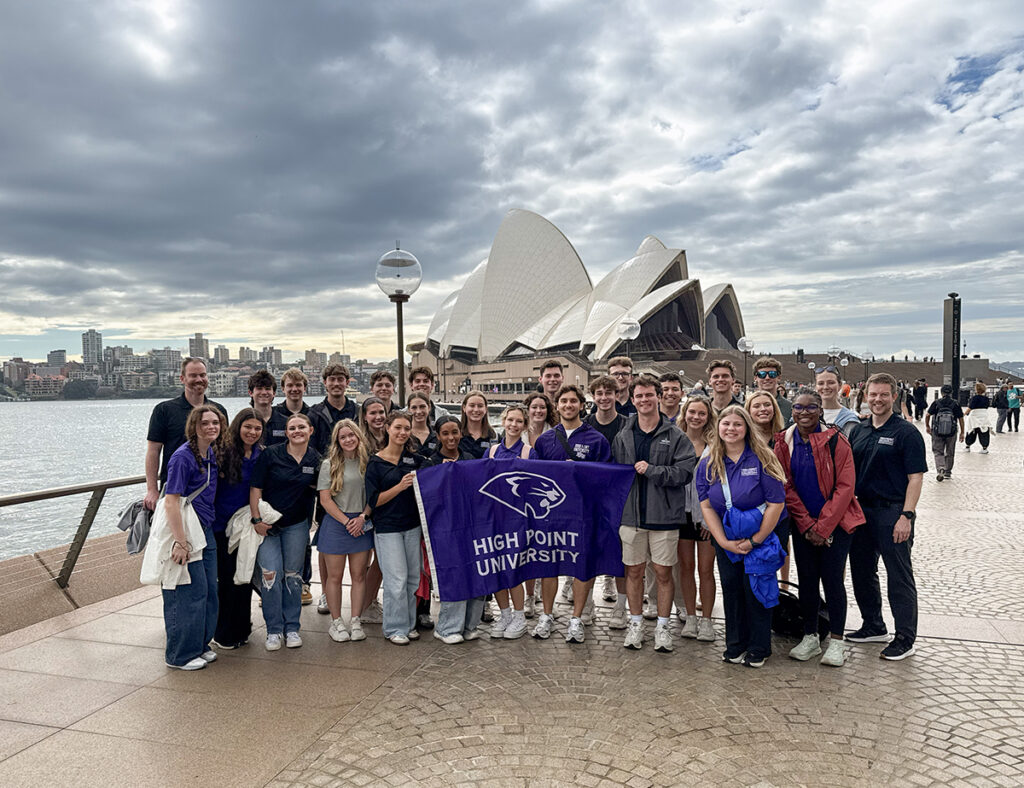
The monthlong Environmental Physiology Maymester across New Zealand and Australia was an incredible, once-in-a-lifetime experience, said Nick Sorensen, a senior majoring in exercise science.
“We followed a packed itinerary across five cities, and we had the opportunity to connect the physiology we learned in classroom lectures to real-world environments,” said Sorensen, who is from Denver, Colorado. “From snorkeling the Great Barrier Reef and hiking a volcano to touring the Sydney Opera House and visiting Hobbiton, it was the perfect blend of academic experiences and cultural immersion.”
Students learned how different environments affect the human body, Keeler said. They learned about past New Zealand and Australia cultures with the Māori, indigenous Polynesian people from New Zealand. The group also experienced current cultural trends.
Keeler was impressed by students’ efforts to immerse themselves in the culture and to perform well in their presentations.
“Several of the students mentioned that they were learning physiology through a different lens and really enjoyed the content,” Keeler said. “We got to see experts from all around the country to really learn about how environmental physiology plays into the adaptations various groups have while also pushing ourselves to accomplish things we were not sure we could achieve. Students completed a more than 12-mile hike over the top of a volcano during the Tongariro Crossing. Many students were nervous at first but felt like they accomplished something at the end, which will hopefully lead to confidence that they can do hard things in the future. Students then were able to snorkel the Great Barrier Reef and experience one of the Seven Natural Wonders of the World.”
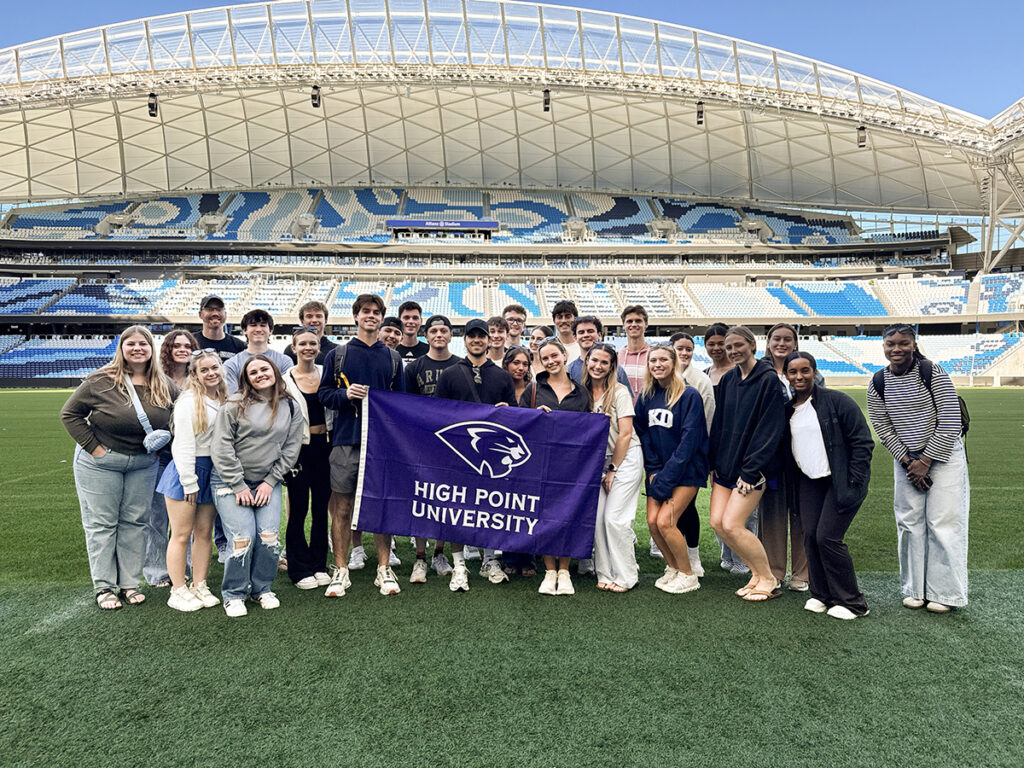
Students also learned about their own physiology by measuring their cortisol levels with test strips, and that data is now being used for other students’ research. In addition, students looked at the effects of jet lag via cortisol and by using a wearable device to track activity, sleep and physiological variables.
“Overall, this trip was an unforgettable experience where I learned more about the application of environmental physiology while getting to know my peers on a personal level beyond the classroom,” said Phoenix Ward, a junior exercise science major from Brooklyn, New York. “On top of all that, I learned so much about myself and gained more independence. The locations on this trip were beautiful, and it was so interesting to see the cultural differences. I also could not have picked better professors to have on this trip. Both Dr. Keeler and Dr. Carriker have incredible knowledge on the topics studied and have such fun stories to share from their research and other academic experiences.”
Japanese Media and Popular Culture
For a fourth consecutive year, 31 students completed the Japanese Media and Popular Culture class in Osaka, Japan, with the assistance of CET, HPU’s partner at Osaka Gakuin University (OGU). The class is drawn from a diverse range of interests in contemporary cultural exports from Japan, including kaiju movies, anime, manga, music, food, fashion and global events.
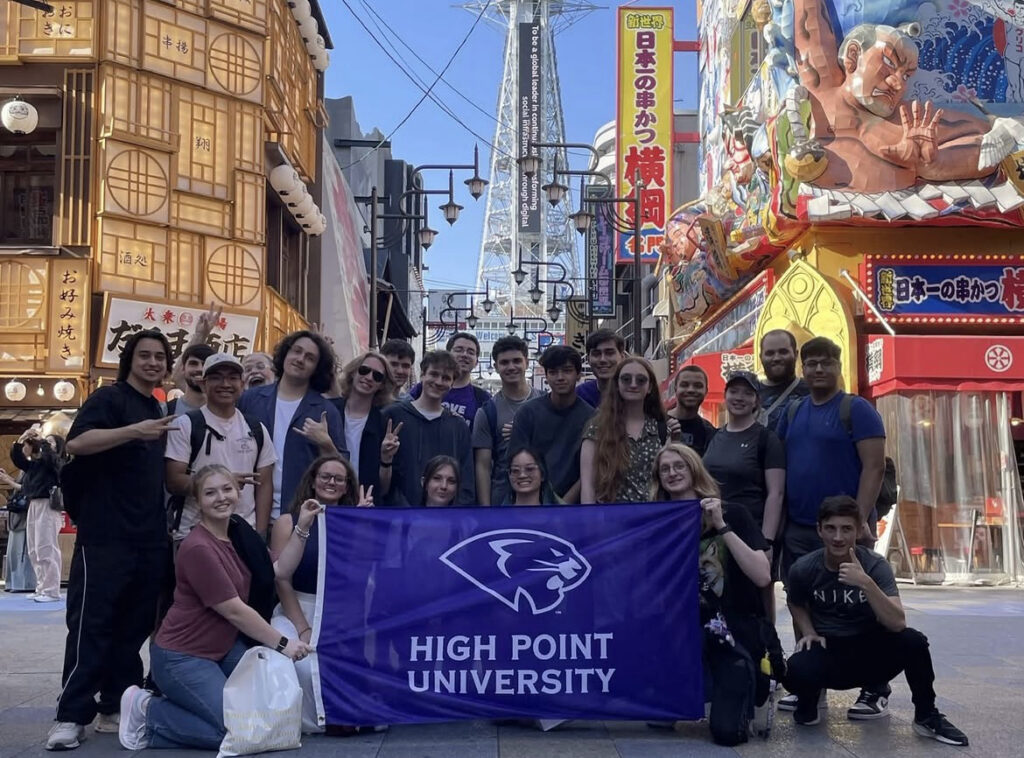
Jillian Curylo, a junior majoring in game design, said her biggest takeaway was the wisdom she gained on the meaning of culture while making friends with Japanese peers.
“The beauty of Japan’s culture and sacred spaces has even influenced me to make a game project closely tied to my experience hiking up Mt. Inari,” said Curylo, who is from Staten Island, New York. “Coupled with my newfound fearlessness of sparking conversations, I am being mentored on this project from someone working in the game industry at Insomniac Games. Throughout my experiences adapting to Japanese culture, expanding on my communications skills and witnessing the unforgettable sights of Japan, my Maymester reinforced my plans to enter the game design industry as a level designer.”
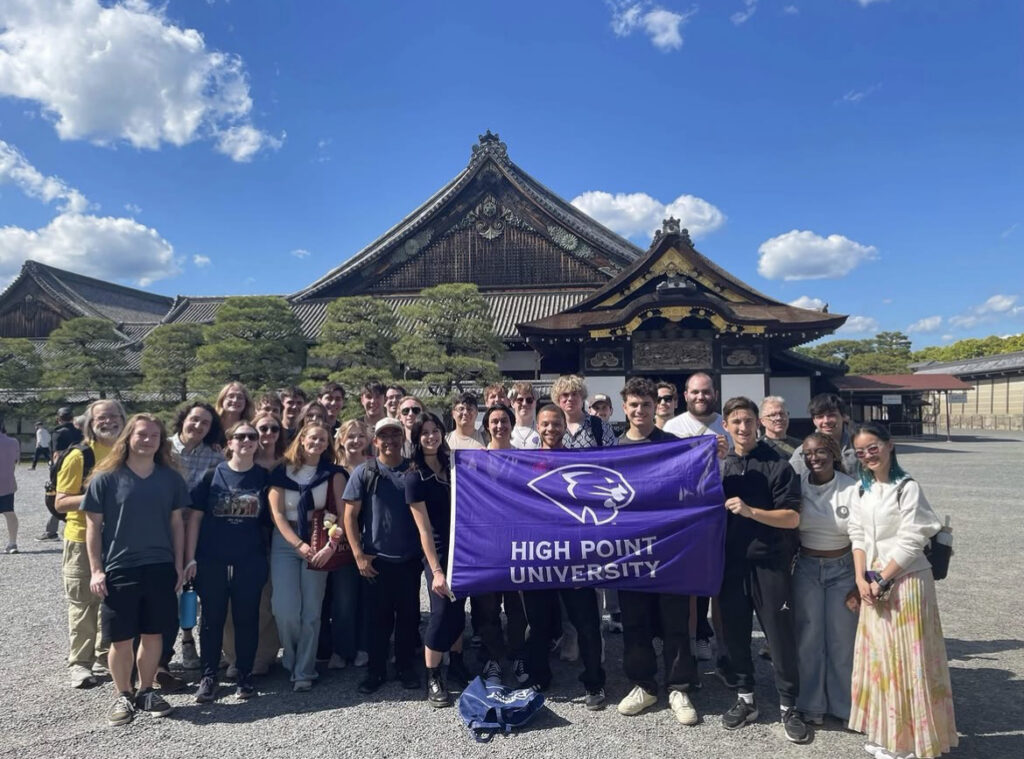
Students lived in a Japanese-style apartment building and learned the train system to commute to class and surrounding cities, such as Kyoto, Nara and Kobe. Morning class sessions were paired with experiential adventures highlighting cultural exchange, such as an onigiri and miso cooking class and a party with OGU students in which they made takoyaki, popular Japanese food balls. They also attended a taiko drumming session, a kimono workshop, a tea ceremony, a Japanese baseball game at the Osaka Kyocera Dome and a tour of the Nintendo Museum. Special guest lectures were incorporated as well, giving the students the opportunity to learn more about Japan’s marginalized groups, game hardware and software design, rakugo comedy and intercultural communication.
“The content of the class ranges across a wide range of Japanese media and popular culture while including some of the traditional arts,” said Dr. Stefan Hall, chair of the Department of Game Design and director of the Communication Fellows. “The opportunity to live in Osaka for an extended time allows the students to immerse themselves into Japanese society in many ways and gives them so many dimensions of experiential learning. In addition to encouraging them to think globally, the class also really enhances many of the premier life skills that HPU is hoping to engender in its students.”
Japan: Auspicious Environments
Fourteen students traveled to Japan for a Maymester led by faculty members Dr. Victoria Brown, Kathryn Brandt and Brandon Jones from the Hayworth School of Art and Design’s Department of Home Furnishings and Interior Design.
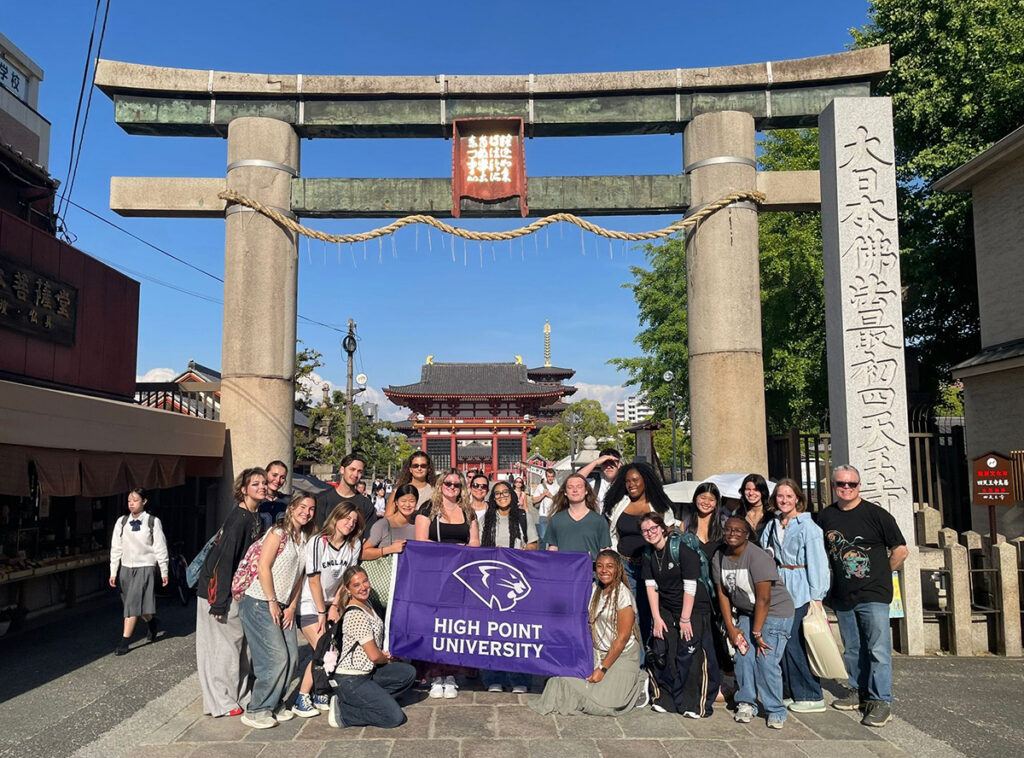
“In May, we embarked on an unforgettable journey with our students to Osaka, Japan—a vibrant immersion into culture, creativity and global design,” said Brown, assistant professor of home furnishings and interior design. “Throughout the month, students dove headfirst into Japanese culture through hands-on workshops, dynamic field trips and inspiring events focused on interior and fashion design.”
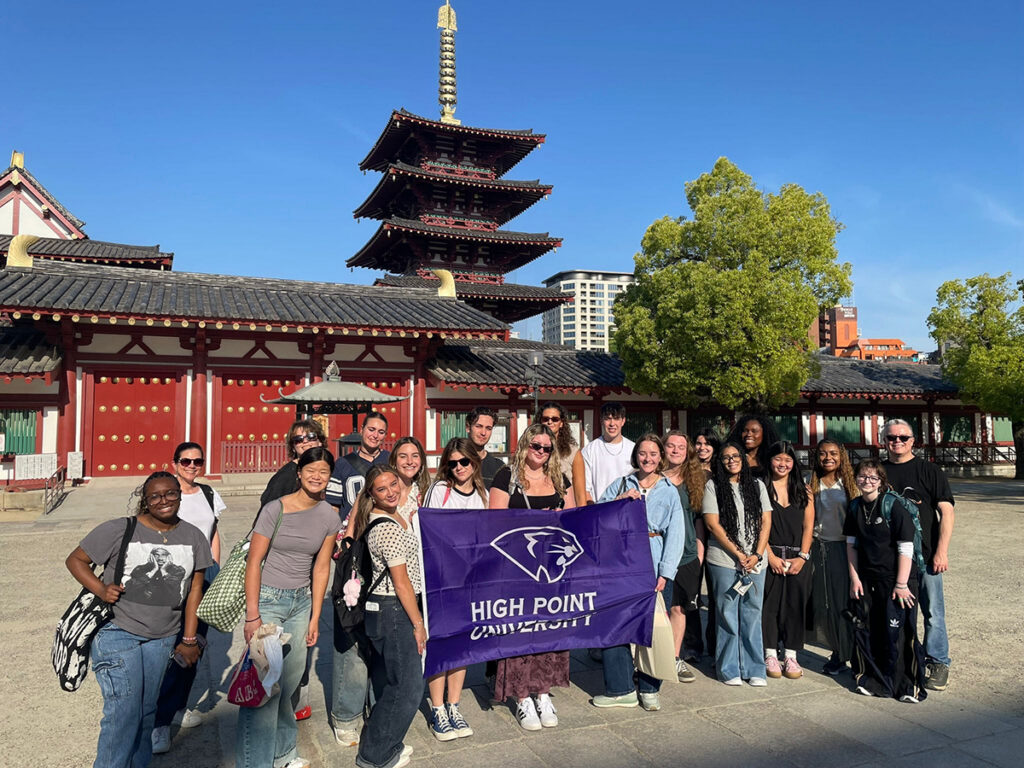
From exploring breathtaking Edo-period temples and castles to creating custom tote bags using traditional dyeing techniques, every day brought a new adventure, Brown said. Students experienced traditional Japanese theater, discovered the beauty and precision of ikebana flower arrangement, experimented with traditional sekkazome dyeing with folded paper or fabric and practiced the art of calligraphy.
“These extraordinary experiences broadened their perspectives, challenged their assumptions about Western design principles and deepened their appreciation for global design practices,” Brown said. “Just as importantly, students connected with peers in Osaka, building meaningful international relationships that will expand their professional networks far beyond HPU and the United States.”