HPU Students and Faculty Share Fun Science at Qubein Children’s Museum
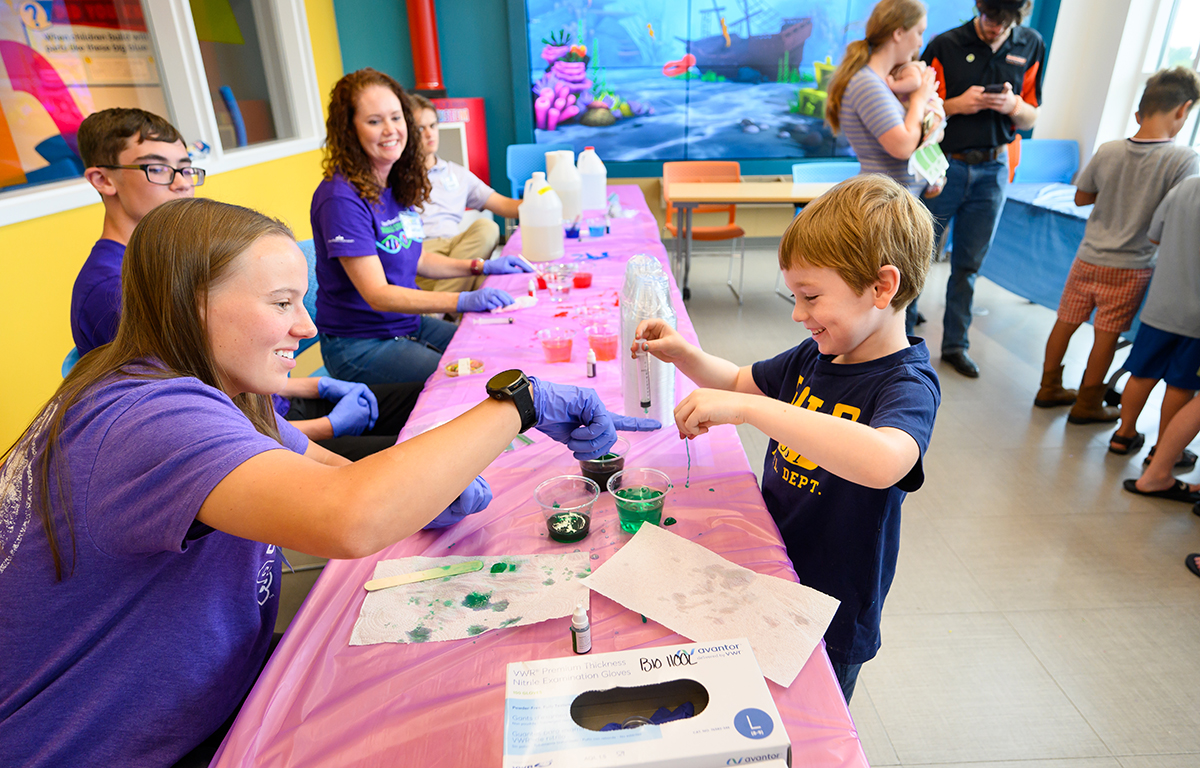
High Point University students and faculty recently shared fun science activities with local children and families at the Nido and Mariana Qubein Children’s Museum during the third annual SciQuest Spectacular. Chase Dillon, a junior neuroscience major, helped a boy make goo worms along with Carson Miller, Dr. Heather Miller, assistant professor of chemistry, and Logan Rampetsreiter, a junior biochemistry major.
HIGH POINT, N.C., July 7, 2026 – High Point University students and faculty recently shared fun science activities with local children and families at the Nido and Mariana Qubein Children’s Museum during the third annual SciQuest Spectacular.
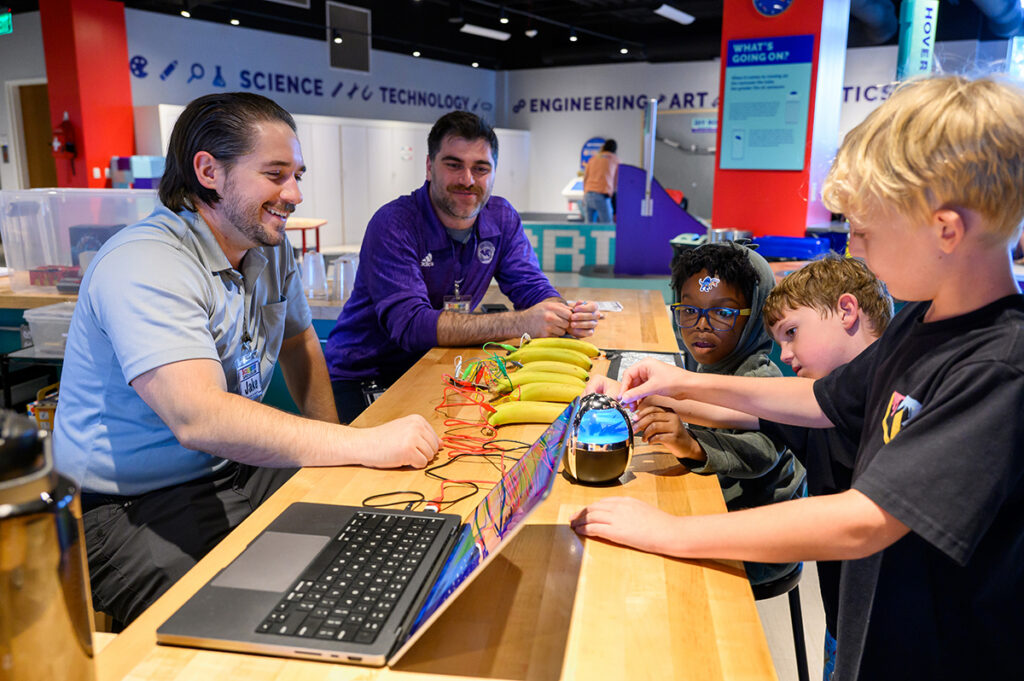
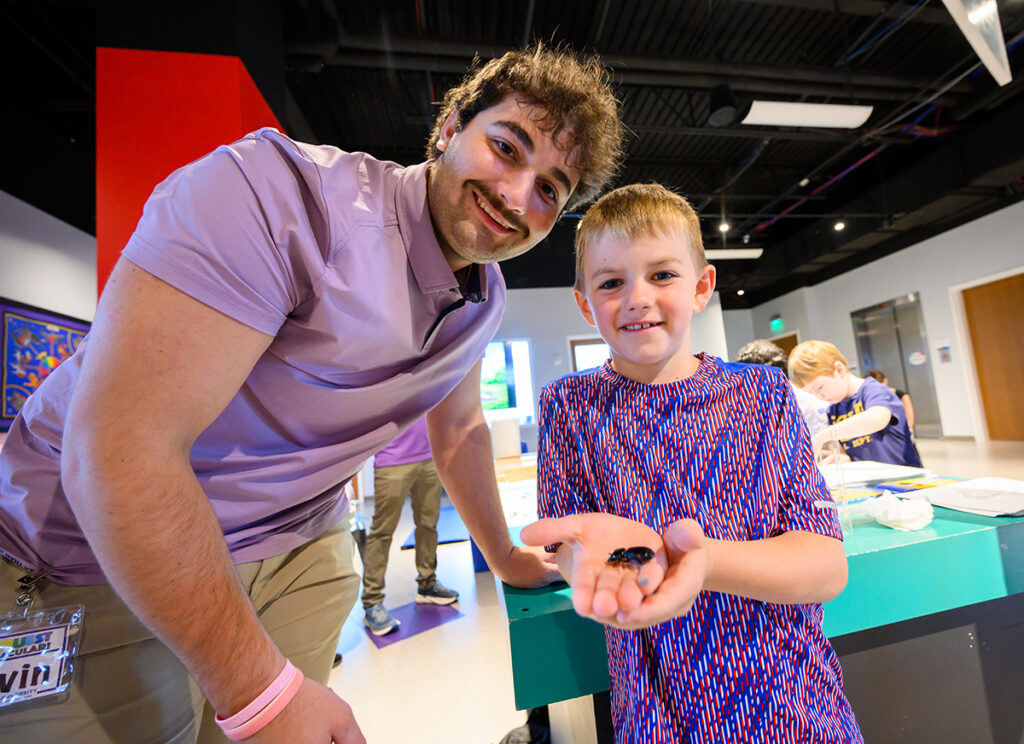
Thirty-three HPU student volunteers, 15 faculty mentors and two staff members presented interactive science activities to children in the community on June 26. Among the activities, children were able to extract DNA from strawberries, make lava lamps, pet insects, play a banana piano and view planets inside a mobile planetarium, which is a collaboration between HPU’s Natural Sciences Fellows, its Department of Physics and the on-campus Culp Planetarium.
The volunteers welcomed 400 guests during the afternoon event in addition to 200 students who visited the museum earlier that day as part of a field trip.
“This is the third annual SciQuest Spectacular, and it’s grown into something our students know as a tradition that they look forward to,” said Dr. Kelsey Kean, assistant professor of chemistry and director of HPU’s Summer Research Program in the Sciences. “I think it has a big impact in the community as well. There’s a huge diversity of kids and families of different identities and ages. This is a way for the community to gain access to lots of different types of science.”
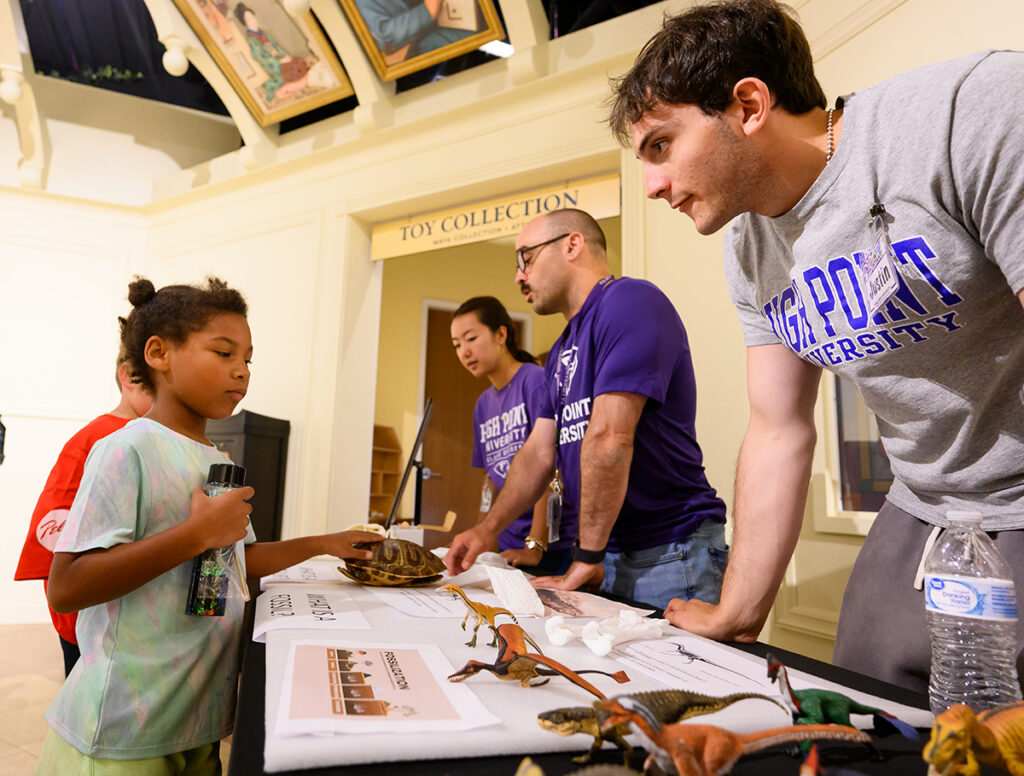
Interactive displays and activities ranged from biology to basic chemistry and physics.

“I love these events,” said Dr. Eric Rokni, assistant professor of physics. “I come to all the monthly ones throughout the semester, and this is our big one of the summer. I’ve seen my students have gotten really excited about just being able to think outside of their research, take these ideas and distill it down to a way these kids can understand. They’re excited to be able to interact and to help spread the fun side of science.”
A year ago, a number of HPU students who were on campus participating in summer research projects cited this event at the museum as one of the highlights of their summer, Kean said. Local children also got excited about science through various activities.
“I think it’s important for our students to participate in this because they get to inspire the new generation of scientists,” said Dr. Briana Fiser, dean of the Wanek School of Natural Sciences. “It gives them a chance to give back to the community, and it gives them practice with communication skills. Our students are excited to share their joy of science with kids who are excited to learn. Every year, we make this event better.”
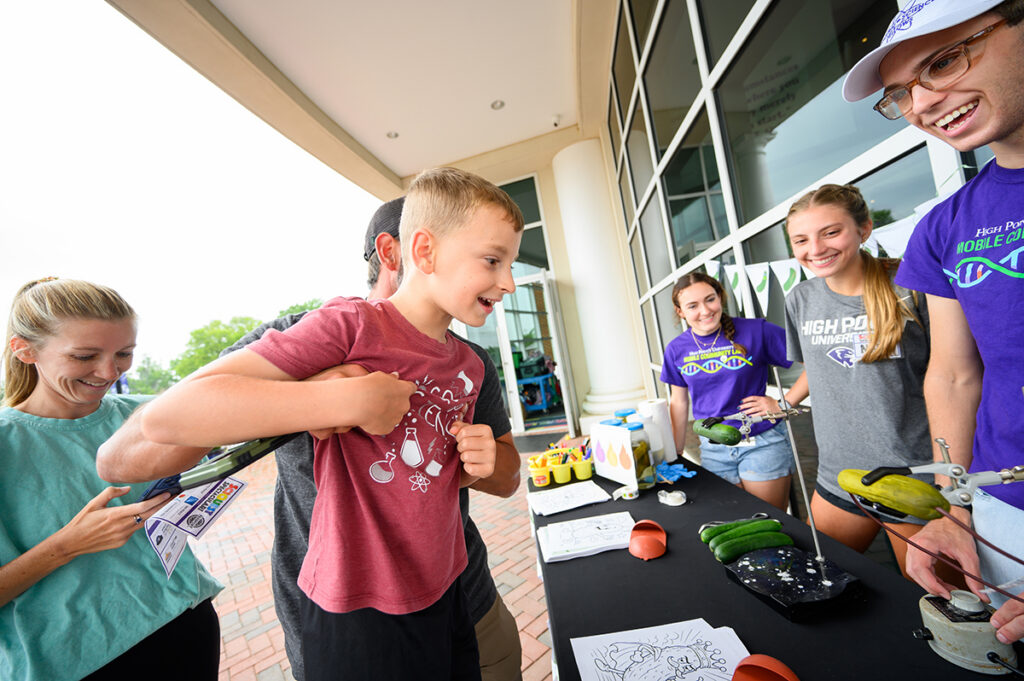
Rather than simply listening to someone talk about science, this event allowed children to experience it for themselves in a festival atmosphere.
As she escorted children into a mobile planetarium, Culp Planetarium Director Erin Brady asked children what they expected to see. She was not surprised when children answered with space, planets and stars, and they shared their knowledge of space by telling Brady that Jupiter is the largest planet.
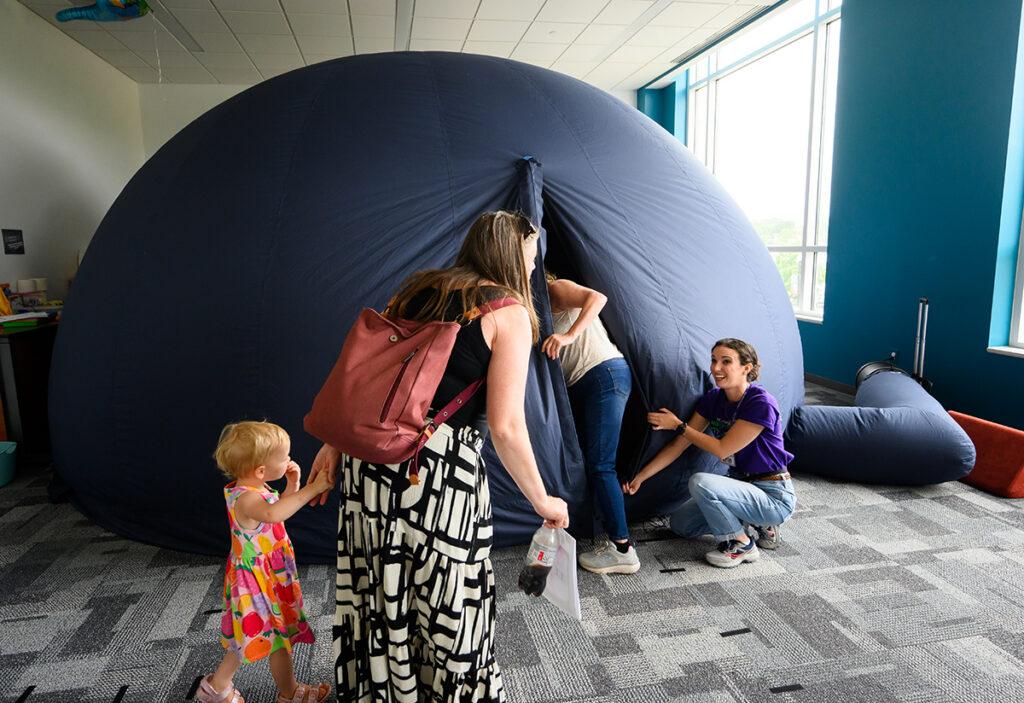
“SciQuest is a great opportunity for High Point University students to serve the community by teaching children that science is accessible to them in a variety of ways,” said Lisa Garrison, the museum’s education and programs director. “Science is not just a person in a lab coat, and it’s not just men, but scientists can be men and women. Science can be things like gravity, but it can also be things like DNA and stars. This also gives families an opportunity to interact with each other around the topic of science. They can share interests that may lead to something down the road for these kids.”