HPU Students Conduct Innovative Summer Research with Professors
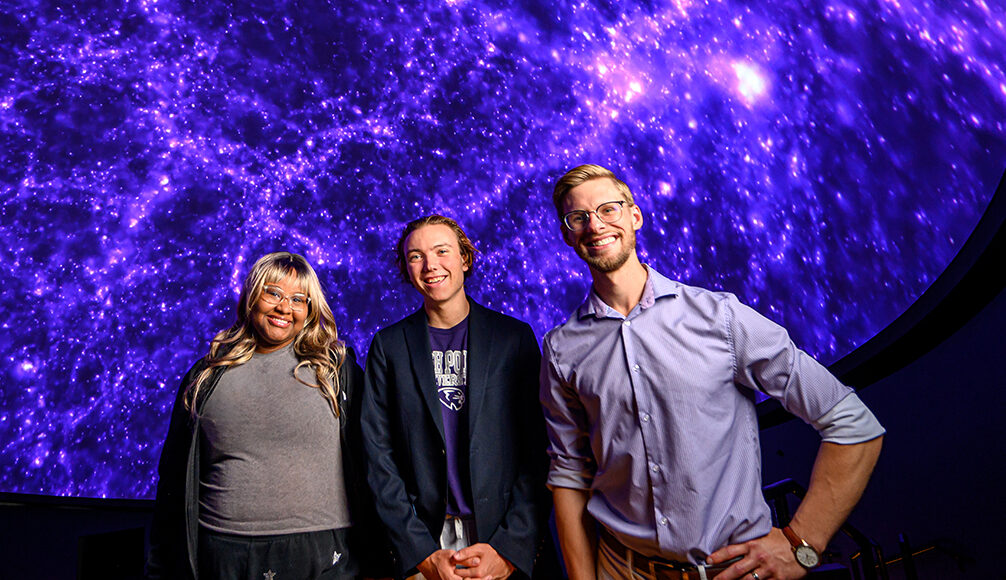
Pictured from left observing dark matter in HPU’s Culp Planetarium were sophomore physics majors Sencerity Baker and Blake Bird with Dr. Alex Sobotka, assistant professor of physics.
HIGH POINT, N.C., July 22, 2026 – High Point University’s labs are buzzing this summer with students and faculty collaborating on innovative research through three unique programs.
Students from every academic school are participating in these programs, which they applied for during the spring semester. The programs are SuRPS (Summer Research Programs in the Sciences), SuRF (Summer Research Fellowship) and SuRI (Summer Research Initiative). Each program pairs students with professors who guide them through projects in a variety of fields. These research projects provide students with a range of opportunities, from learning new lab technology to working together as a team.
How Students Explore Astrophysics and Evolution
Two students are working this summer with Dr. Alex Sobotka, assistant professor of physics, to explore how dark matter is distributed throughout the universe to determine how the universe evolved. This work provides experience in theoretical astrophysics, cosmological modeling, coding and the physics of the early universe while contributing to an understanding of how the universe’s earliest moments shaped the galaxies we observe today.
“Nearly every galaxy we see is surrounded by an invisible spherical halo of something called dark matter, a substance that we have yet to fully understand,” Sobotka said. “These dark-matter halos can be big or small. It turns out that the way in which our universe evolved, from the Big Bang to today, influenced the population of dark matter halos. If the universe expanded at a slightly different rate in the past, then we might expect to see less of the smaller dark matter halos today. Additionally, different models for what dark matter could be make different predictions for the abundance of dark matter halos. By studying the population of dark-matter halos in our present-day universe, we can begin to tease out details about our universe’s history and the nature of dark matter.”
Sencerity Baker, a sophomore majoring in physics, said she is learning Python coding while working on summer research. Python is programming language that is widely used in data analytics.
“I’m using that to create graphs to represent dark-matter halos,” said Baker, who is from Jackson, Tennessee. “I want to be an observational astronomer, and dark matter and dark-matter halos are essential to studying the universe in general. Scientists believe once we understand dark-matter halos, we can better understand how the universe evolved. Understanding dark-matter halos also helps us understand what dark matter is, which is still being debated and tested.”
Blake Bird, a sophomore majoring in physics, said he thinks researching dark matter will sharpen his computational skills. He is interested in the field of quantitative trading, which uses mathematical modules, statistical analysis and algorithms to identify trading opportunities.
“We are researching dark matter, a type of matter that does not interact with light, which is one of the four fundamental forces. However, it does interact with gravity,” said Bird, who is from Charleston, South Carolina. “The reason it’s so hard to study is because it doesn’t interact with light. You cannot see it. There’s no detecting it with our eyes, telescopes or any of that. All you can detect it with is through gravity.”
Because no one can see or feel dark matter, students are learning coding and relying on computation simulations while staying on task.
“You’re not going into a lab and mixing chemicals,” Bird said. “It’s abstract and more about critical thinking. There’s not a path with directions or a recipe that you follow and mix something because it’s a path where no one has gone before.”
Biology Students Examine Eyesight and Aging
Biological aging is a complex process that involves accumulation of cellular and molecular damage, cell and tissue dysfunction, chronic inflammation and many other physiological changes. These changes often result in age-related diseases, including the age-related cataract, which is the leading cause of blindness globally.
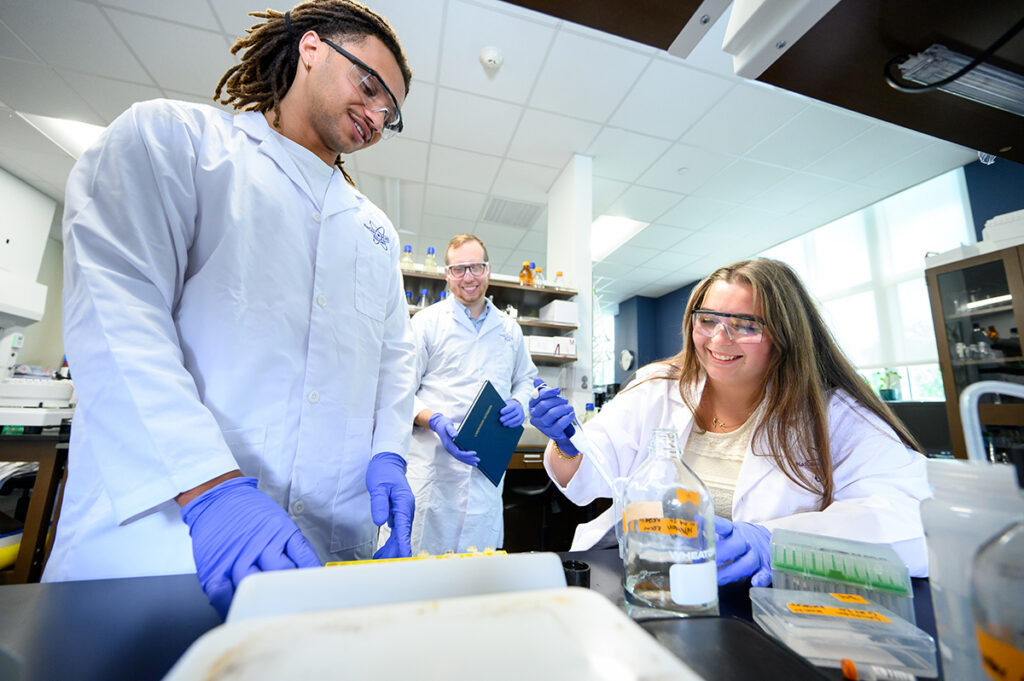
Dr. Jeremy Whitson, assistant professor of biology, focused his research on characterizing the molecular changes that underlie aging and the development of age-related cataracts, as well as testing natural compounds for the ability to slow, prevent or even reverse these molecular changes.
“The main thing we’re looking at is how age-related cataracts develop, which is something that everyone will develop at some point in their lives,” Whitson said. “There are things that will make it occur faster or slower. Those are the kinds of things we’re interested in. What are the driving forces behind how age-related cataracts form? And are there treatments we can come up with that would slow or stop age-related cataracts from forming?”
Angelina Roy, a senior majoring in biochemistry, is assisting Whitson with his research. She said working on summer research with a professor is a valuable hands-on experience for her as a pre-med student.
“Being a pre-med, you have to have research hours, so hopefully this will help me with my resume getting into medical school,” said Roy, who is from Pittsburgh, Pennsylvania. “It’s a great opportunity because I know a lot of colleges don’t offer research hours until you’re in graduate school or later. It’s nice to have that before I even get my bachelor’s degree. It will help me with my future.”
Philip Morisseau, a senior majoring in neuroscience, is also researching the effects of natural products on aging. He is testing levels of certain molecules in food that may have anti-aging properties. Existing data that could reveal how much of those molecules exist in a variety of different foods is limited, Whitson said.
“I’m learning a lot of lab techniques and skills, and I’m learning how to use all the equipment,” said Morisseau, who is from Boston, Massachusetts. “I think it will help me be more comfortable in a lab setting.”
Analysis of Vertebrate Fossils
Justin Allan, a junior biology major with a pre-med focus, was one of three HPU students who traveled to New Mexico in May to collect vertebrate fossils with Dr. Josef Stiegler, assistant professor of biology. Allan helped Stiegler collect fossils along with seniors Payten Meyer-Senkarik and Lily Bruner.
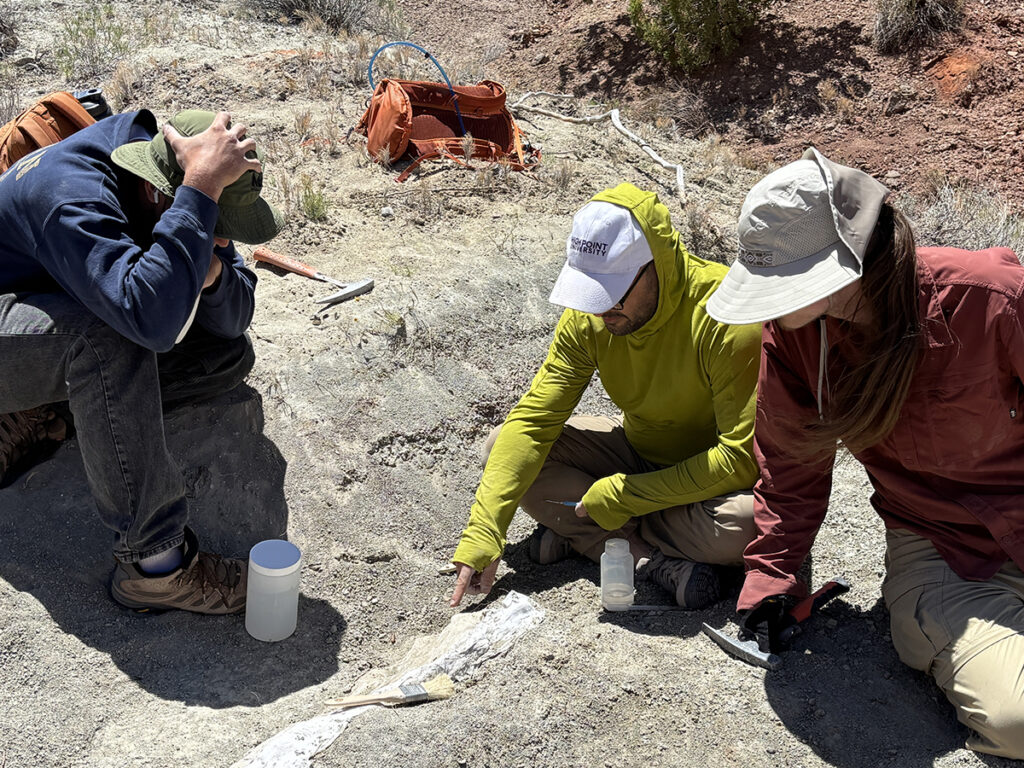
“During my field research, we collect new fossils representing the vertebrate of animals that lived in equatorial Pangea during the Norian stage of the Late Triassic Period (about 220-210 million years ago),” Stiegler said. “Today, some of the rocks that contain those fossils are exposed in northern New Mexico’s Carson National Forest.”
Northern New Mexico has yielded a wealth of fossils, including dinosaurs and other terrestrial reptiles that typically come from dense bonebeds representing mass deaths. Stiegler’s lab conducts paleontological field research to collect fossils from two of these bonebeds and is analyzing the anatomy and evolutionary diversification of the fossil species, with a focus on dinosaurs and their close relatives.
Allan returned to work in Stiegler’s lab at HPU with Eleanor Lee, a sophomore majoring in biology. They are working to identify, catalog and describe the anatomy of fossils, which include an unnamed species of crocodile from the Early Jurassic period. They are studying the anatomy of the unnamed fossil to differentiate it from similar animals, so that they can name the species. They are making 3D models of each individual bone in the skull using CT scan data.
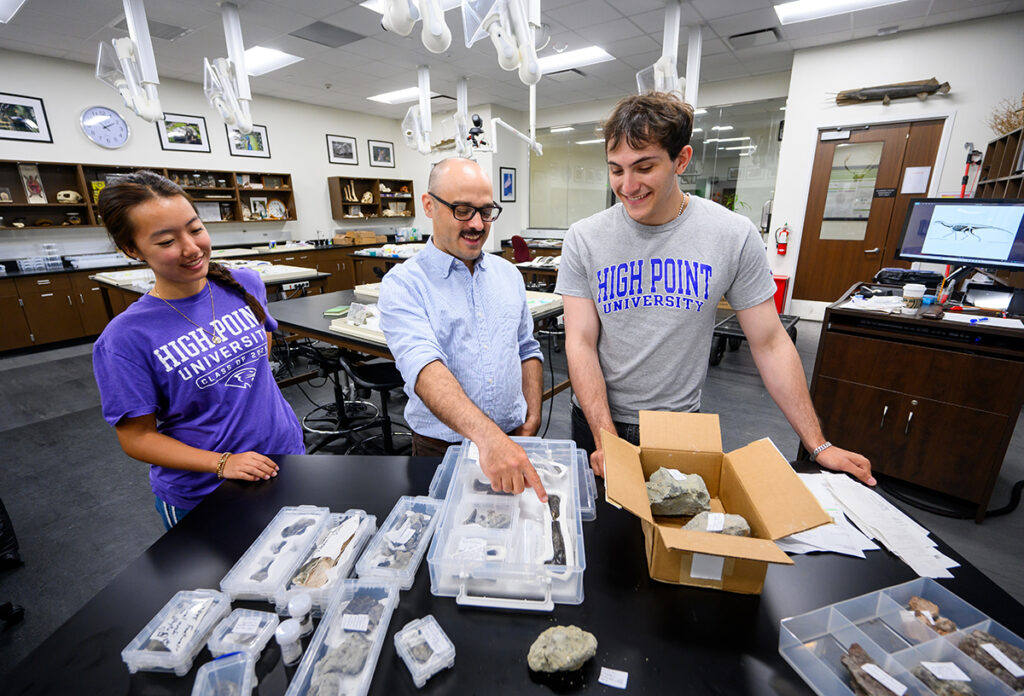
“Through participating in summer research, my eyes have been opened to the meticulous background operations of the scientific process,” said Allan, who is from Dayton, Ohio. “I never imagined the amount of work and preparation that goes into research, especially with paleontology. From detailed data collection during fieldwork to analyzing CT scan data for my upcoming presentation, my SURPS experience has allowed me to experience the full arc of a scientific project and deepened my appreciation for evidence-based thinking.”
Research in Stiegler’s lab this summer offers experiences ranging from handling specimens to analyzing CT scans for Lee, who is also on the pre-med track.
“The most useful part for me is working on the computer. That’s the direction medicine is going toward, so it’s nice being able to get a jumpstart on that,” said Lee, who is from Clarksburg, Maryland. “Even though we’re not working with human fossils or skeletons, a lot of the anatomy can be comparable. When Dr. Stiegler was explaining to us what the anatomies of dinosaurs or lizards might look like, he also was telling us what the equivalent is in the human skull or what no longer exists in the human skull.”
Nuclear Physics
Paul Cusumano, a senior electrical engineering major and honors scholar with a Spanish minor, is conducting nuclear physics research alongside Dr. Adam Anthony, assistant professor of physics and co-director of HPU’s Natural Science Fellows. His project focuses on exploring technologies for next-generation particle detectors allowing them to detect both the lightest and heaviest atoms simultaneously, Anthony said. The eventual goal of this work is to enable one detector to handle both very faint and very strong signals.
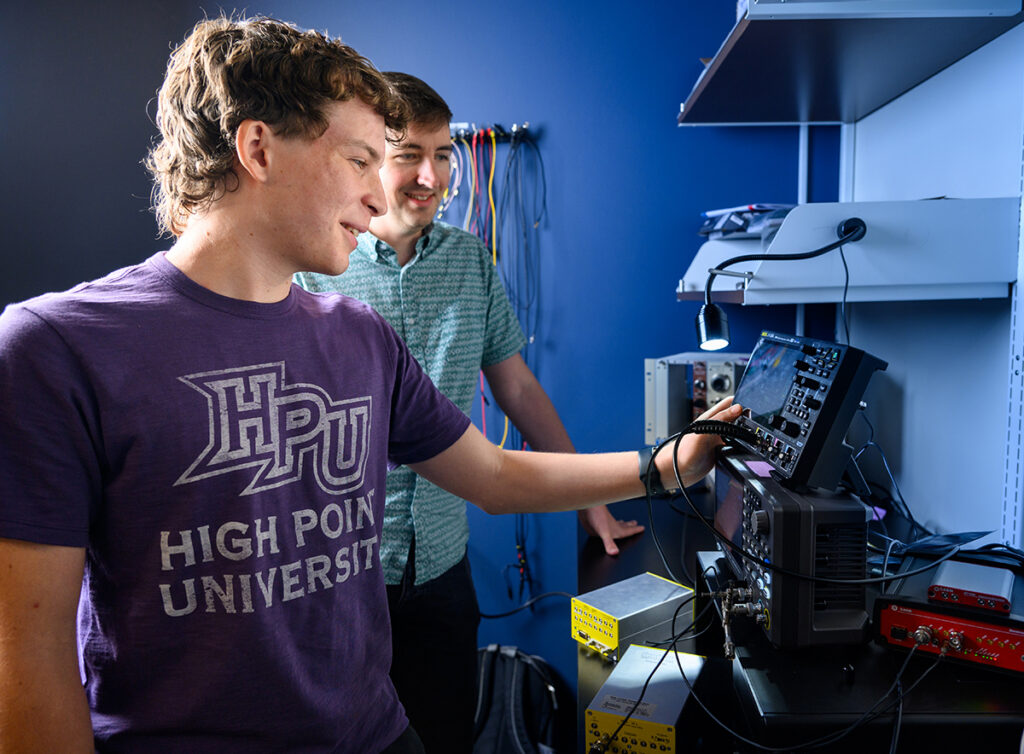
“Participating in undergraduate research has been an incredible opportunity to bridge the gap between theoretical engineering concepts and real-world application,” said Cusumano, who is from St. James, New York. “Working on this project is teaching me how to tackle complex, open-ended technical challenges, analyze massive data sets and apply what I have been learning in classes the last three years. It requires a high level of critical thinking, attention to detail and adaptability when dealing with advanced instrumentation.”
Many nuclear detectors must be tightly tuned to a specific range of elements or energy. For example, they detect either small signals from light elements, such as hydrogen or oxygen, or large signals from heavier elements like iron and lead. Cusumano’s project is using a logarithmic pre-amplifier to bridge that gap and allow a single detector to record both small and large signals. Because any device will distort the signals, Cusumano is developing the mathematics and coding framework to undo distortions and capture the true shape of the original signal, Anthony said.
Cusumano traveled to Washington D.C., in May for his final round of interviews for the U.S. Navy’s highly selective Nuclear Propulsion Officer Candidate Program, which included a final interview with a four-star admiral who directs the Naval Nuclear Propulsion Program. Following graduation in May 2027, Cusumano will report to Officer Candidate School to earn his commission as a Surface Warfare Officer. He aspires to eventually oversee the operation of nuclear reactors aboard a U.S. Navy aircraft carrier.
“The rigorous problem-solving skills, technical discipline and data analysis methods I am developing through this research with Dr. Anthony will be directly applicable to managing the complex, high-stakes nuclear engineering systems I will oversee as a nuclear-trained officer,” Cusumano said.
SuRF Studies How Spleen Affects Blood Pressure
Seniors Nick Sorensen and BriAnna Doll and sophomore Austin Osborne are working this summer with Dr. Jason Keeler in the Human Biomechanics and Physiology Lab at Congdon School of Health Sciences to explore how contraction and enlargement of the spleen affect central blood pressure.
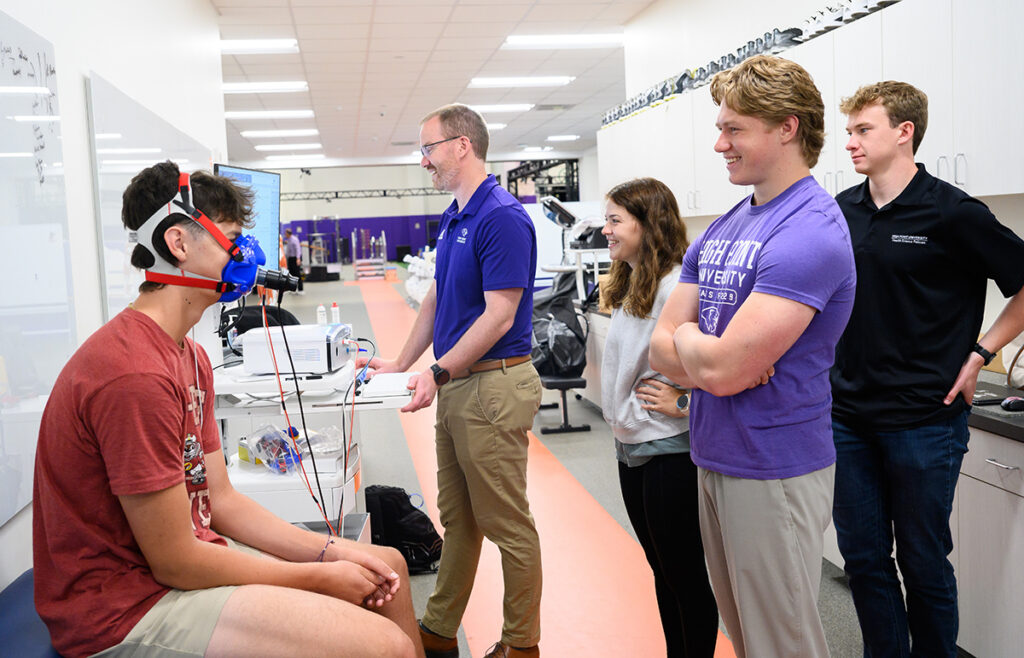
“We’re wondering if the spleen dynamics play a role in how blood pressure may change in different pressure measurements,” said Keeler, assistant professor and co-director of Health Science Fellows. “As blood pressures increase over time, there’s more risk of cardiovascular events. No one has really looked at how the spleen affects blood pressure in different states, so we’re trying to see what happens and discover if there is any relationship between the spleen and blood pressure.”
Because the spleen can contract as someone holds their breath, students measure blood pressure and observe the spleen through ultrasound imaging before and after five extended breath holds. Sitting in a hot tub for about 30 minutes can cause the spleen to dilate, so the students have a research subject sit in the hot tub for 30 minutes and take blood pressure measurements before and after.
The hydrostatic pressure — the force exerted by a resting liquid caused by gravity — of water moves blood from a person’s extremities to the central cavity of their body. The spleen is one of the organs that can dilate and take the extra pressure, Keeler said.
Nick Sorensen, an exercise science major on the pre-professional track, has interest in medical schools that offer research opportunities because of his experience in HPU’s labs.
“It’s been great to do research this summer because my prior research was more theoretical, specifically writing and data analysis,” said Sorensen, who is from Denver, Colorado. “I’ve enjoyed being on the other side of research and doing more hands-on work with participants and data collection.”
Students learn to write research papers and use different skills, software and technologies in various labs, said Doll, who is in HPU’s Air Force ROTC and wants to work in aerospace physiology.
“Just being able to speak to participants is a skill within itself,” said Doll, who is from York, Pennsylvania. “I’ve been involved in physiology research and an organic chemistry lab, and the two are very different from one other. You’re going to get frustrated in the lab because things don’t always go your way, but there’s always something new to learn. You have to open your mind up to that part of the experience. In some kinds of research, especially the physiology research that I’ve done, you can branch off into so many different directions even in one project. I find Dr. Keeler saying all the time that one little aspect of our project can create its own abstract, so it’s like a big picture that you never finish painting.”
In addition to research on spleen dynamics, students are analyzing data from a recent study abroad trip to New Zealand and Australia, where students wore Garmin watches and collected cortisol samples to better understand how their body was responding to jet lag.
The three students also are working together to write a paper on how nutrition affects central vascular measurements in the general population and in law enforcement officers. Their goal is to publish the paper, write abstracts for regional and national conferences and to learn more about physiology, Keeler said.
“This research opportunity is building upon a great foundation for what I have learned in my first year,” Osborne said. “As a sophomore, I haven’t taken the more in-depth courses that Nick and Bri have taken, but being able to develop new skills that are going to help me later on with exercise science and my future career has been fantastic.”
Running Gait Strategies
Alyssa Joshua, a senior biology and exercise science major in the pre-physical therapy program, is working in the Human Biomechanics and Physiology Lab this summer with Dr. Jamie Kronenberg, assistant professor of physical therapy.
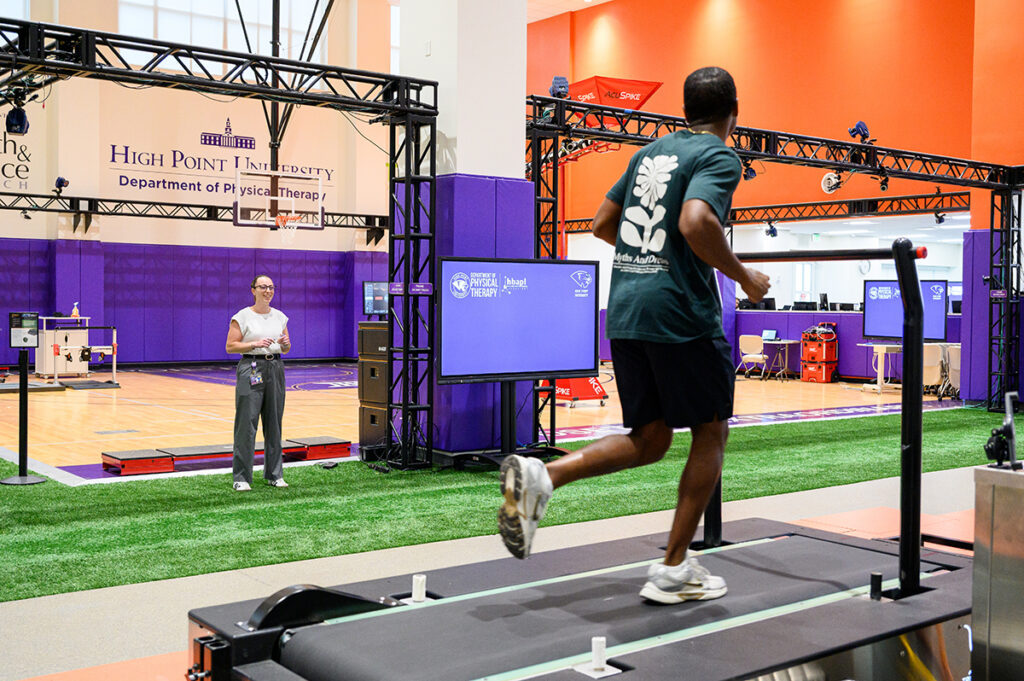
“We are testing HPU students, athletes or non-athletes, to test what part of their foot strikes the ground first,” said Joshua, who is from Manassas, Virginia. “Gait event detection is the way a person runs or walks, and our main focus is their patterns in their walking or running.”
Her research examines how instabilities in the ankles influence the running gait in NCAA Division I athletes using marker-less motion capture technology. The SuRF project contributes to a validation study on gait event detection.
“Overall, this summer we are looking to validate different methods for identifying the phases of the running gait cycle to make it easier for clinicians to get more specific data about their patients’ running strategies,” Kronenberg said. “We are testing an individual’s running mechanics using marker-less motion capture to identify different phases of the running gait cycle.”
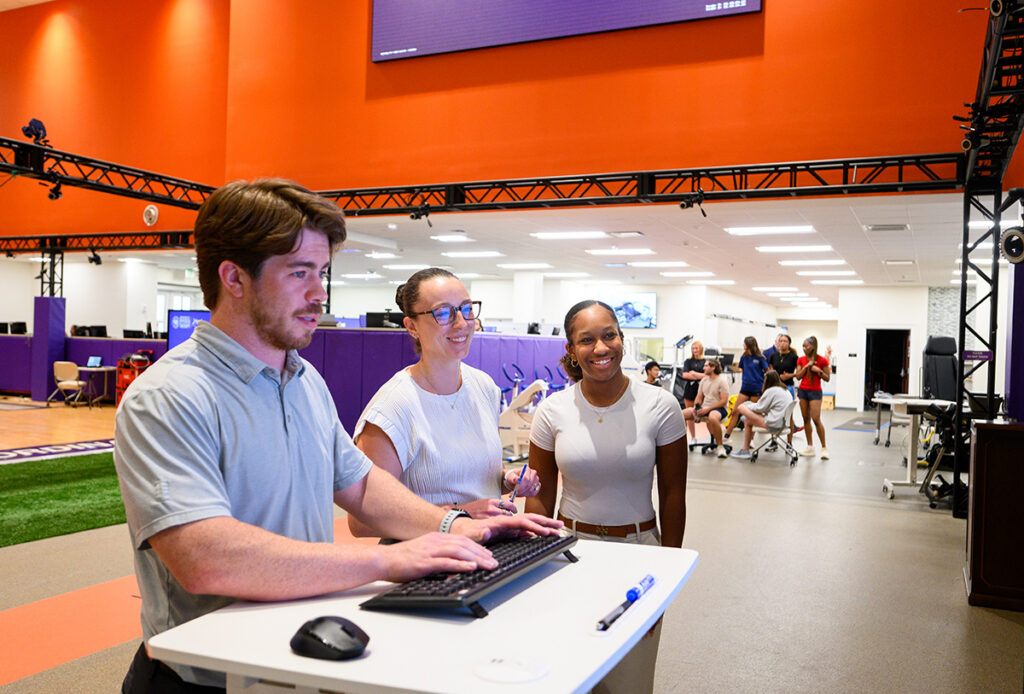
Marker-based 3D motion analysis is often how video games and movies like “Avatar” are made, but the method is time-intensive and requires specialized training to analyze the data. Marker-less motion capture is a newer form of 3D data collection captured by several cameras that take videos of the participant from different angles.
“We then input the video data into an analysis software that outputs different variables to help us understand how the participant is moving,” Kronenberg said. “For that reason, marker-less motion capture may be much more accessible for clinical use. We are still working on validating marker-less motion capture for certain tasks, such as how someone runs. One piece of this is understanding when and how someone is coming into contact with the ground. The current gold standard for collecting these data is by force-plate data collection to tell us when a person is coming into contact with the ground and how much force they are putting into the ground. However, most clinics do not have access to force plate data. Therefore, this summer’s research project is working on collecting data from uninjured runners using both force plate data and marker-less motion capture data to validate different methods for identifying when and how runners are coming into contact with the ground. We hope that with these data we are able to create a more clinically accessible method to understand an individual’s running mechanics.”
SuRI Explores the Vulnerability of Memory
Violet Ruiz Sanchez, a sophomore psychology major with a minor in dance, is researching the vulnerability of memory, with Dr. Kelsey Sundby, assistant professor of psychology.
“The SuRI project explores how the brain supports memory and why memory can sometimes be inaccurate or misleading,” Sundby said. “We are having participants form new memories in the lab. Specifically, participants will learn and remember pairs of gender-neutral names and occupations (e.g., Blake–Firefighter). For some pairs, we will create a moment of surprise by showing a related image that challenges common stereotypes, e.g. Blake as a female firefighter. We will measure brain responses to these surprising images and test whether stronger surprise is linked to poorer memory on a later test.”
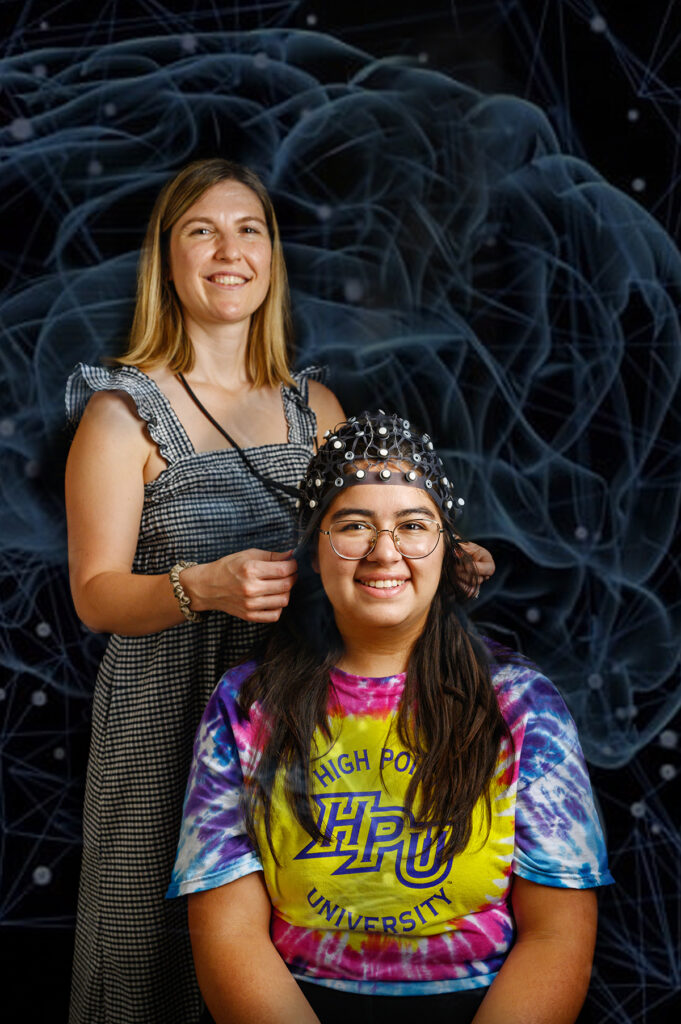
Participants will take a memory test where researchers can look at the number of correct items and the number of “intrusions” when participants think they remember but actually recall an incorrect item. Researchers measure the neural responses using an EEG system, which records the brain’s electrical signals through sensors embedded in a cap worn on the participant’s head.
Past research shows that people’s memories can become less accurate when they experience surprise. However, most studies have examined surprise that occurs when an action leads to an unexpected outcome. In this study, they test whether the same effect occurs with a common everyday form of surprise: encountering information that goes against widely held stereotypes, Sundby said.
“Our experiment pushes the boundaries of memory research by exploring how our memory updates in moments of surprise that many people experience in their day-to-day lives due to their innate implicit biases,” said Ruiz Sanchez, who is from Huntersville, North Carolina. “Learning how to conduct research effectively is going to serve me well, not only in my future classes but as an adult as I navigate through my professional and personal life. Research is going to be a huge part of my career.”
Improving Children’s Memory
Lily Grace Foister, a senior majoring in psychology as well as health and wellness, is exploring whether a brief mindfulness activity such as meditation can improve long-term memory in children.
“While mindfulness has been shown to benefit attention and focus, we know less about whether it helps children retain new information over time,” said Foister, who is from Jamestown, North Carolina. “By comparing mindfulness to other common physical activities, I hope to better understand how we can support learning during early childhood.”
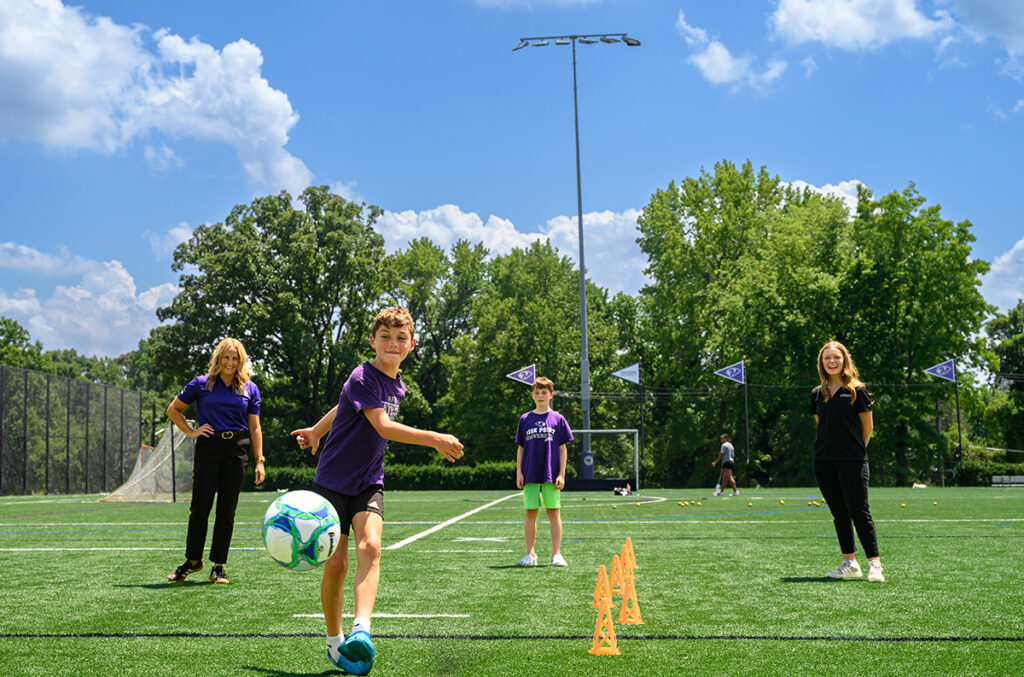
She is working alongside Dr. Stacy Lipowski, associate professor of psychology and associate dean for the Witcher School of Humanities and Behavioral Sciences, whose expertise is in cognitive development. Lipowski specializes in learning and memory in children from preschool through middle school.
“With a consistent decline in student achievement over the past decade, it is more important than ever that we understand the most effective strategies for student learning,” Lipowski said. “With limited support for public education, it is also important that these interventions are cost effective. I love this project because it explores a free and brief meditation intervention that any teacher or parent could use to help boost memory in their students. This project combines my interest in student learning with Lily Grace’s passion for health and wellness. We look forward to seeing the results.”
Elementary school children participate in a five-minute mindfulness meditation and then learn 15 English-Swahili word pairs on a computer screen. Foreign language word pairs were selected because it is information most children have not been exposed to before, Lipowski said. Foister and Lipowski run the children through tasks such as looking at the word, hearing it in Swahili, saying it aloud and writing it down. The children take a memory test immediately after learning and also after a two-day delay.
Previous research in their lab has shown students learn better when they say it back and write it down. To determine the effectiveness of meditation, the researchers will compare the memory scores of children who sit through a mindfulness meditation before learning with those who either kick the soccer ball or play a game of Connect Four before studying. Then the researchers can see which intervention helps the children remember the words better, Foister said.
The summer experience helped Foister gain critical thinking skills needed to formulate and launch a research project. She learned how to diligently manage her time and communicate ideas efficiently to her mentor and other students of economics, interior design, pharmacy, psychology and health and wellness.
“It has been interesting to me to see what other disciplines across campus are working on and how we can all play a hand in each other’s growth,” Foister said. “The next steps in my career goals are to apply to graduate schools to obtain my master’s in clinical mental health counseling. I have gained skills that will be highly transferrable to my resume to set me apart from other applicants. I also have a wonderful experience that has shaped me in great ways to discuss throughout the interview processes. Lastly, I know to continually explore other disciplines and see how we can work together toward greater goals.”
Designs for Rebuilding Lives
HPU sophomore interior design majors Alexandra Fisher, Samantha Carrara and Caneel Conlon are researching ways to assist people who have experienced trauma or homelessness by using home furnishings and interior design techniques to transform housing into homes.
They are working with Pamela Lindeback, assistant professor of interior design, toward an evidence-based home furnishings nonprofit she is starting that combines interior design research, trauma-informed design and community partnerships to provide families and individuals rebuilding their lives with comfortable living spaces.
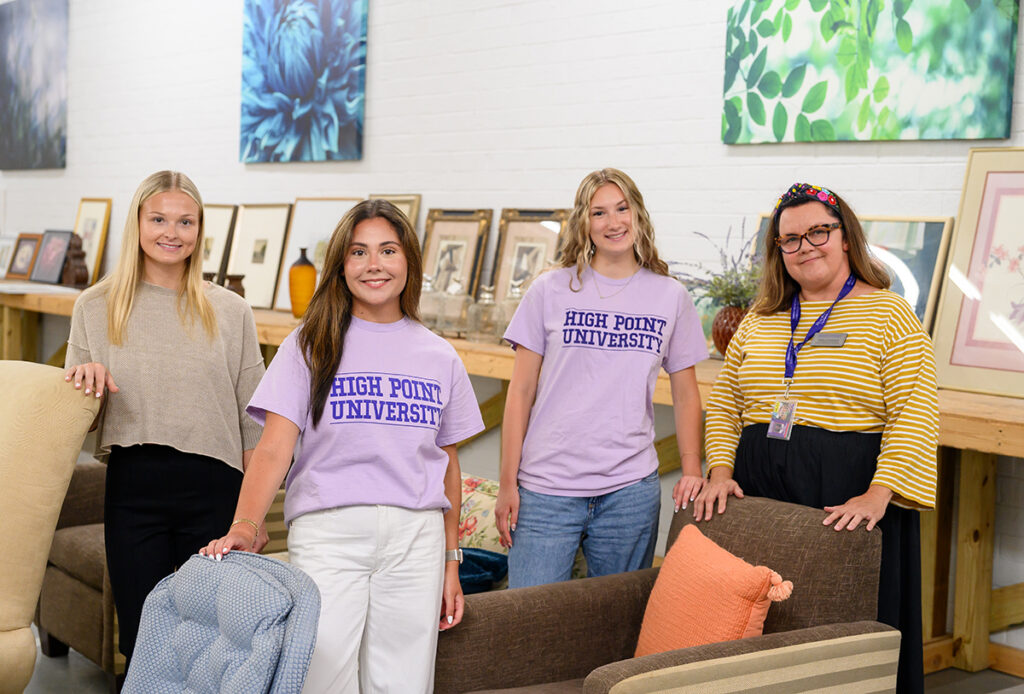
“Through our undergraduate research, we are learning how to write professional literature reviews and reports, meeting with other interior designers, individuals around High Point that specialize in housing/community development and collaborating with various furniture banks/nonprofits that center around furnishing homes for vulnerable populations,” said Fisher, who is from Lake Orion, Michigan and is also pursuing a minor in psychology.
“I’m researching how selecting furnishings for tiny homes through trauma-informed design can assist our neighbors in exiting homelessness,” said Carrara, who is from Charlotte, North Carolina. “This experience has helped me see the value of combining research with design. I’ve gained a better understanding of how thoughtful interiors and furnishings can support stability, dignity and independence for people rebuilding their lives, and it has strengthened my passion for designing spaces that truly serve the people who use them.”
Conlon is researching how furniture can better support disaster survivors as they recover.
“My project focuses on what furniture people need, when they need it and how involving them in the design process can help a house feel like home again,” said Conlon, who is from Charlotte, North Carolina. “This research has shown me that interior design is more than making a space look good. It can help people heal, feel safe and get back to normal after a difficult time. I am learning how to design with people’s real needs in mind and how to create spaces that are both useful and comforting. These are skills I will use throughout my career as an interior designer.”
The summer research team is establishing the foundation for Grounded Design, the nonprofit Lindeback is starting. Drawing on her 20 years of design experience, she reported that furniture is an overlooked determinant of housing stability. In addition, High Point is uniquely positioned to become a national leader in modeling furnishing equity, and how interior design can improve community health. The team’s work positions interior design with furnishings as a meaningful contributor to housing stability, public health and community resilience.
“As the Home Furnishings Capital of the World, the city possesses unparalleled design expertise and furniture showroom resources while also facing significant affordable housing and economic challenges,” Lindeback said. “The Grounded Design nonprofit’s research demonstrates how connecting these strengths can create a trauma-informed interior design framework that transforms housing into home for individuals and families rebuilding their lives.”
Grounded Design challenges the traditional role of interior design by demonstrating that thoughtfully furnished homes are not simply aesthetic spaces; they are environments that support safety, routine, identity, social connection, recovery and long-term well-being. The nonprofit is working alongside the Barnabas Furniture Bank in the city of High Point.
Food Allergies and Consumer Costs
Connor Kresock, a senior business analytics and economics major, is researching the purchasing patterns of people with food allergies compared to people without allergies. He is working with Dr. Rivin Perinchery, assistant professor of economics.
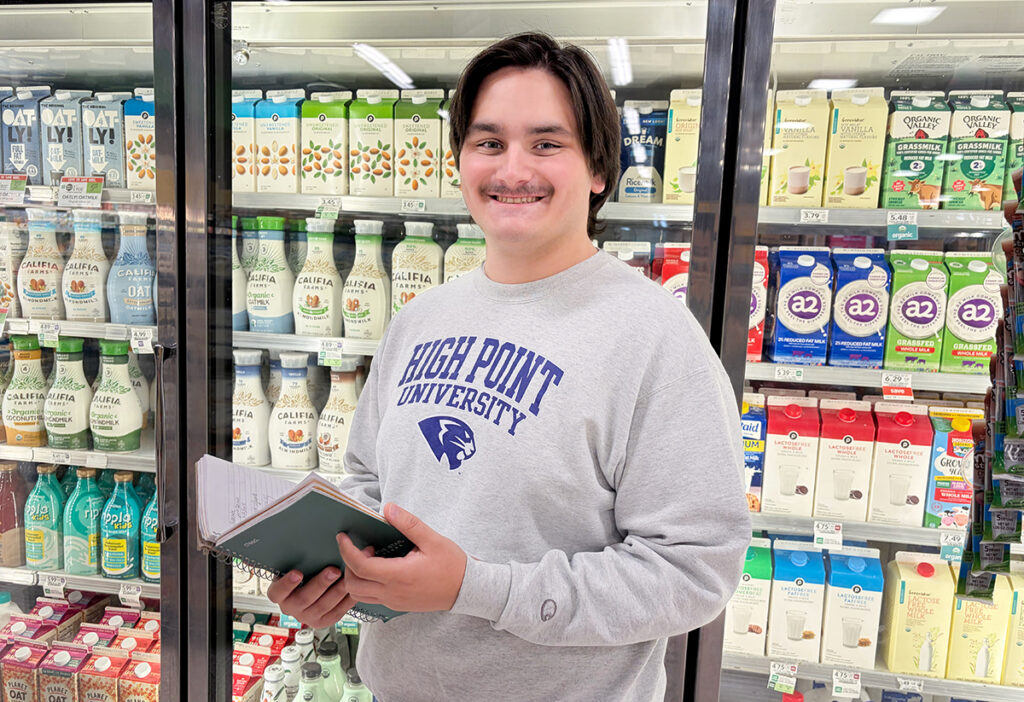
The first part of Kresock’s research consisted of gathering the price data of certain groceries and their counterparts that are marketed as allergy friendly.
“We looked specifically at flour and milk goods and compared their prices to the allergy-friendly counterparts,” said Kresock, who is from Elba, New York. “What we found when comparing the data is that foods that are marketed as allergy-friendly cost an average of $1.60 more than their traditional counterparts. While this may not seem like a lot, if someone with food allergies buys 10 items that are allergy-friendly, they are estimated to pay an additional $16 compared to someone who bought the traditional versions of those groceries.”
The second part of his project focused on how this price increase affects how people with allergies buy groceries. His project is partnering with the HPU Survey Research Center to survey how people with allergies respond to this price discrepancy. Do they just pay the price increase, purchase fewer groceries or choose to buy different types of goods?
“This project is helping me develop my research skills as I prepare to apply and head to graduate school,” Kresock said. “My goal is to earn a Ph.D. in economics and become a professor, allowing me to not only teach, but also to research full-time.”
Seeing Kresock grow as an economist and researcher has been one of the most rewarding aspects of this project, Perinchery said.
“He has been involved in every stage of the process, from collecting and analyzing price data to designing survey questions and interpreting results,” he said. “By synthesizing price data with the consumer habits survey, we hope to better understand how these price differences for allergen-free foods impact consumers’ everyday purchasing decisions. I am excited to see Connor continue developing this line of research at HPU and beyond as he pursues graduate studies.”