National Institutes of Health Continues Funding for HPU Chemistry Research on Antibiotic Resistance
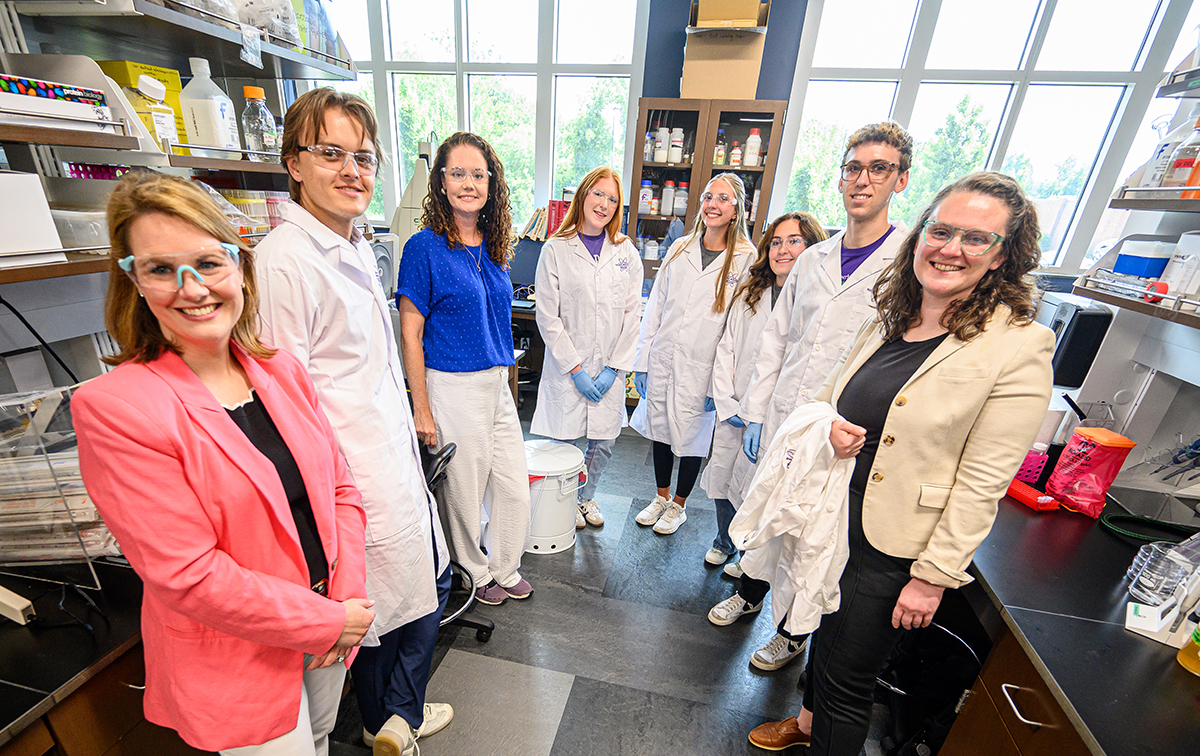
High Point University professors in the Wanek School of Natural Sciences recently received additional funding from the National Institutes of Health (NIH) to continue research on the worldwide health issue of antibiotic resistance. Pictured from left in the research lab were Dr. Meghan Blackledge, Logan Rampetsreiter, Dr. Heather Miller, Caitlin Michaelis, Nelia Kelleher, Sophia Messerly, Thomas “Trip” Donaldson and Dr. Kelsey Kean.
HIGH POINT, N.C., July 1, 2026 – High Point University professors in the Wanek School of Natural Sciences recently received additional funding from the National Institutes of Health (NIH) to continue research on the worldwide health issue of antibiotic resistance.
HPU will receive more than $500,000 to support student training and summer research through continuous renewal of the NIH Academic Research Enhancement Award for the decade 2019-2029. The initial NIH award obtained by this collaborative team in 2019 was the first of its kind at HPU.
Dr. Heather Miller, associate professor of chemistry, is the principal investigator, with co-investigators Dr. Meghan Blackledge, associate professor of chemistry, and Dr. Kelsey Kean, assistant professor of chemistry. They use chemical biology, biochemistry and bioinformatics to address contagious antibiotic-resistant bacteria. The overall goal is to advance disease treatment and prevention.
Their research and continued NIH funding reflects HPU’s commitment to academic excellence.
“Continued NIH support reflects the value of this work and confidence in the direction of our research,” Miller said. “Scientific research is an ongoing process in which each hypothesis often leads to new questions. Building on data generated by our students on MRSA, we are now working to expand our impact on human health by enhancing additional antibiotics in another human pathogen.”
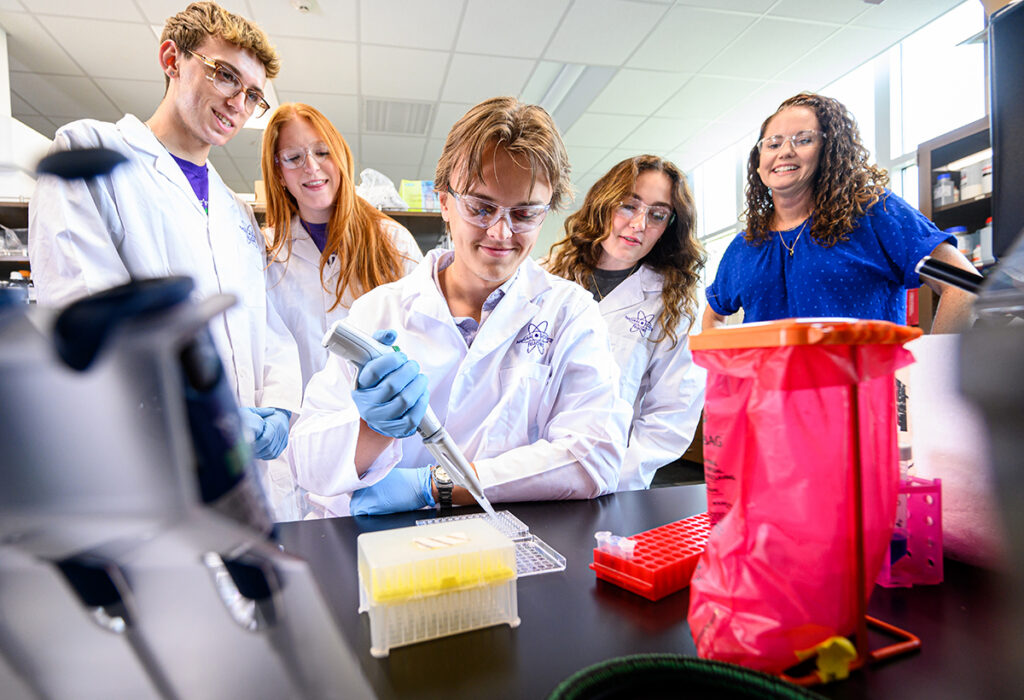
This NIH grant will support 11 undergraduate students in authentic research experiences over several summers, Miller said. Earlier NIH grants supported summer research experiences for more than 30 students. The funding will also allow the purchase of necessary reagents and scientific services, such as RNA sequencing and mass spectrometry. The team will share its results at multiple scientific conferences.
“The continuous funding is really critical for us to continue the work we’ve been doing now for seven years together on this grant,” Blackledge said. “This latest iteration is moving us into some new strains of bacteria that are particularly concerning. There are fewer drugs to treat them. They develop resistance very quickly. Coming up with new ways to understand how these bacteria gain that resistance to drugs, if we’re lucky to find something that can work against that, it would be a new therapeutic and would open lots of new avenues for both research and treatment options for people in the future.”
Working in the lab is helpful for pre-medical students like Logan Rampetsreiter, a junior majoring in biochemistry.
“I’ve had incredible hands-on experience in the lab, getting to dive deeper into real problems that face medical institutions to this day in an effort to combat MRSA,” said Rampetsreiter, who is from Brookfield, Wisconsin. “We’re working to advance technologies to figure out how it works and how we can help people who are afflicted by it. I’ve gained so much knowledge about scientific techniques, hands-on skills, different types of experiments, procedures and ways to analyze and interpret scientific data. It’s greatly increased my scientific understanding of concepts beyond the book, taking what I learned from the book and applying it to a real-world scenario.”
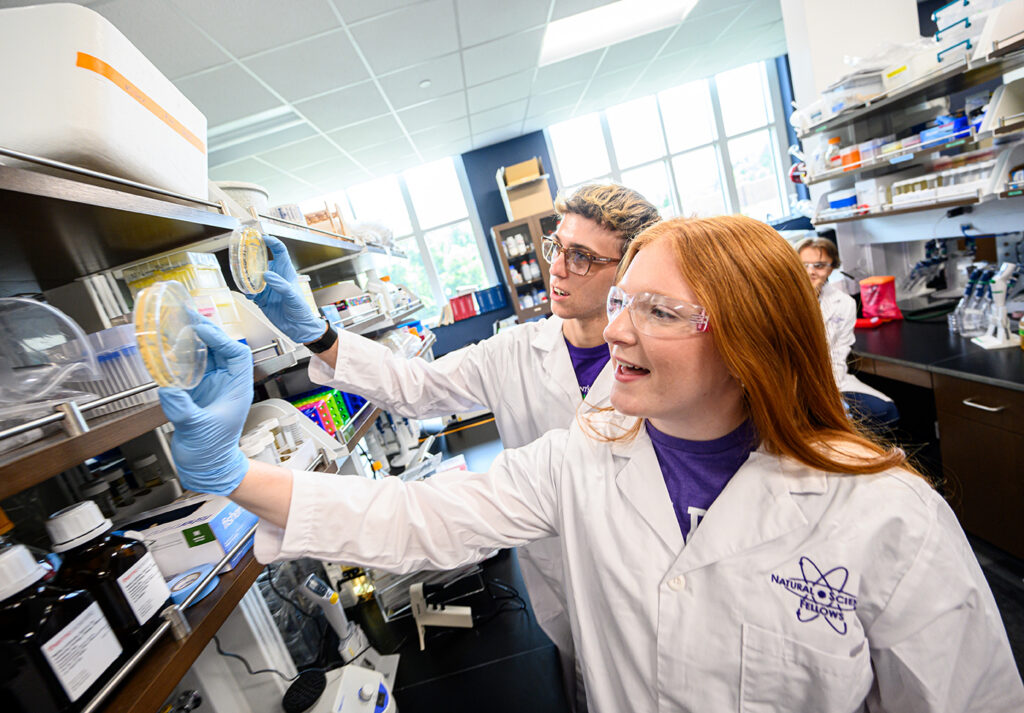
Caitlin Michaelis, a sophomore majoring in biochemistry who also is on the pre-med track, said conducting summer research with the team from HPU’s Department of Chemistry has sharpened her problem-solving skills.
“When we had a contamination, it took a day or two to figure out exactly what caused it,” said Michaelis, who is from Auburn, Maine. “It was good mental preparation, too. When you are learning problem-solving skills but not everything is going perfectly the first time, it’s a great way to learn that. It’s helping me prepare for the challenges of medical school. It’s a lot of thinking outside the box, which is an important skill to have.”