HPU Students Present Innovative Summer Research Projects
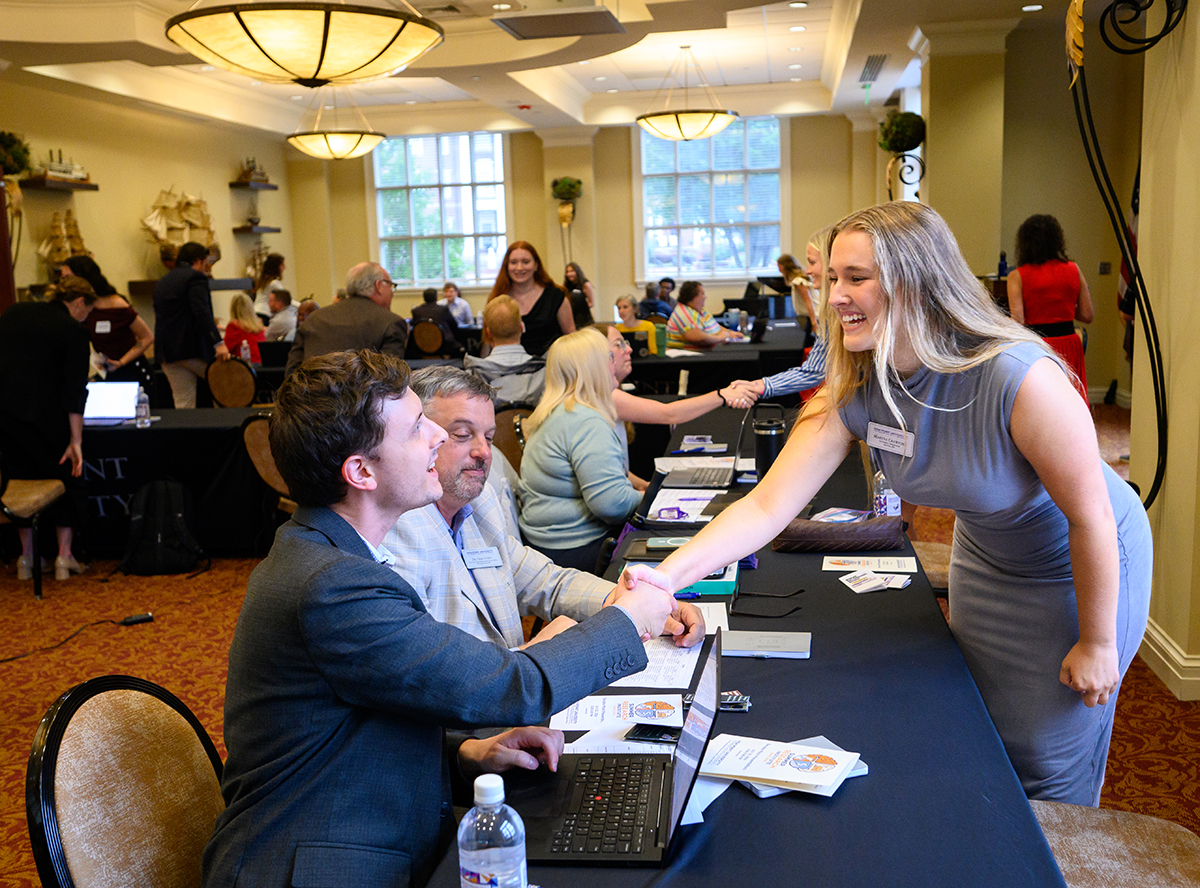
High Point University staff members greeted students who took part in an elevator pitch competition that included 90-second, one-on-one conversations between students and staff members from across campus. Maryna Crawford, a junior event management and dance major from Dayton, Ohio, was pictured at right as she greeted a staff member before her pitch in the Plato S. Wilson Commerce Building on HPU’s campus.
HIGH POINT, N.C., Aug. 6, 2026 – High Point University students wrapped up the innovative research projects that they conducted with faculty members this summer by presenting their findings at culminating events on campus in late July.
The undergraduate programs — SuRI (Summer Research Institute), SuRPS (Summer Research Programs in the Sciences) and SuRF (Summer Research Fellowship) — support student-mentor collaborations in a variety of fields and reflect HPU’s commitment to academic excellence. Here is a glimpse of the final research presentations and how students grew personally and professionally from working closely with their faculty mentors:
Student Researchers Present at Elevator Pitch Competition
SuRI students took part in an elevator pitch competition that included 90-second, one-on-one conversations between students and staff members from across campus on July 23. The majors and academic programs that participated included behavioral neuroscience, business analytics, interior design, psychology, pre-professional, political science, event management, finance and economics.
Students quickly conveyed the relevance of their projects to staff members who are unfamiliar with that area of research.
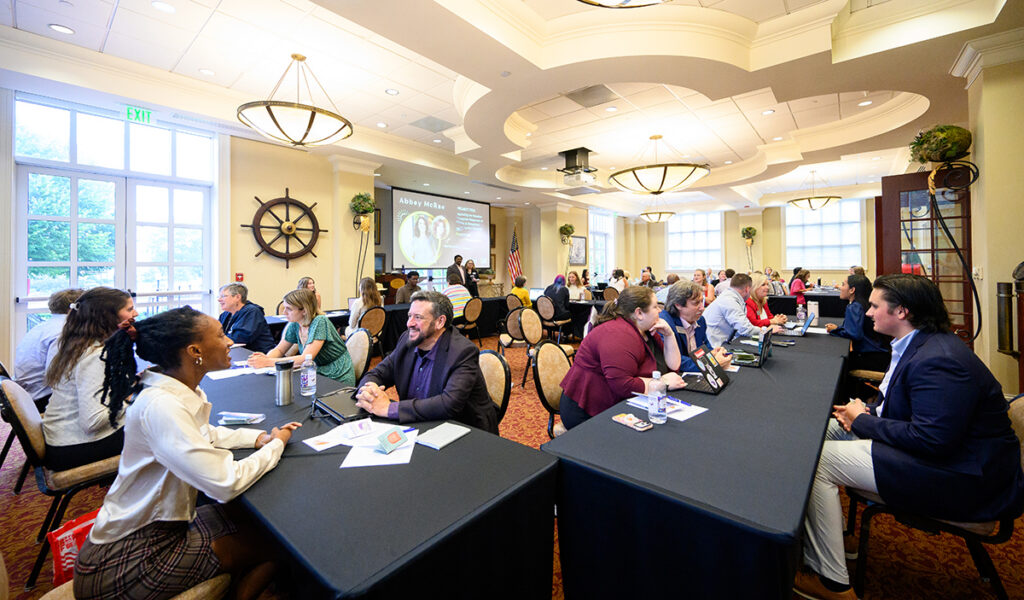
Dr. Joanne Altman, professor of psychology and founding director of HPU’s Undergraduate Research and Creative Works, led students through the speed dating-style format. She advised judges to consider how well students presented their research rather than their research topic. Each student received feedback based on their pitch.
“Students have been trained to talk in the language of their disciplines, so it’s surprisingly hard for them to step back and talk to a broad audience,” Altman said. “This summer, they learned to go from the language of their disciplines to be able to say something anybody can understand. Their goal is to make the judges say, ‘Wow that’s really cool.’”
Students had a chance to comment about their summer research experience at a mentor appreciation dinner.
“They talked about learning to work together as a team,” Altman said. “They talked about resilience and failure, and that failure was a path that leads to problem-solving and new solutions and even new research ideas. In summer research, students don’t only learn about what they are investigating; they learn a lot about themselves.”
Alexa Klein, a junior biology major, was selected as the winner of the elevator pitch competition. She said the research skills she developed through the SuRI program extend far beyond the laboratory.
“Contrary to my initial expectations, I discovered that my favorite part of research was ironically when experiments did not go as planned and I had to rely on critical thinking and problem-solving to adapt,” said Klein, who is from Baltimore, Maryland. “The program also strengthened my ability to communicate scientific information clearly and concisely. In the future, I hope to attend medical school, and I see many parallels between research and the practice of medicine. Diagnosing a patient requires careful observation, critical thinking and the ability to synthesize complex information to determine the best course of action. Equally important is the ability to communicate clearly and compassionately so patients can understand their condition and actively participate in their care. My experiences in research have helped me develop these skills while reinforcing my passion for pursuing a career as a physician.”
Sierra Werner, a junior biochemistry major who worked alongside Klein, said conducting research initially can feel imposing.
“Here you get the opportunity to learn these skills, and it makes me happy to know I can learn them and that I have those skills to use later on,” said Werner, who is from Stafford, Virginia. “I want to become a physician scientist with the military. My goal is to go through the Air Force medical school and continue research in either medicine or aerospace medicine.”
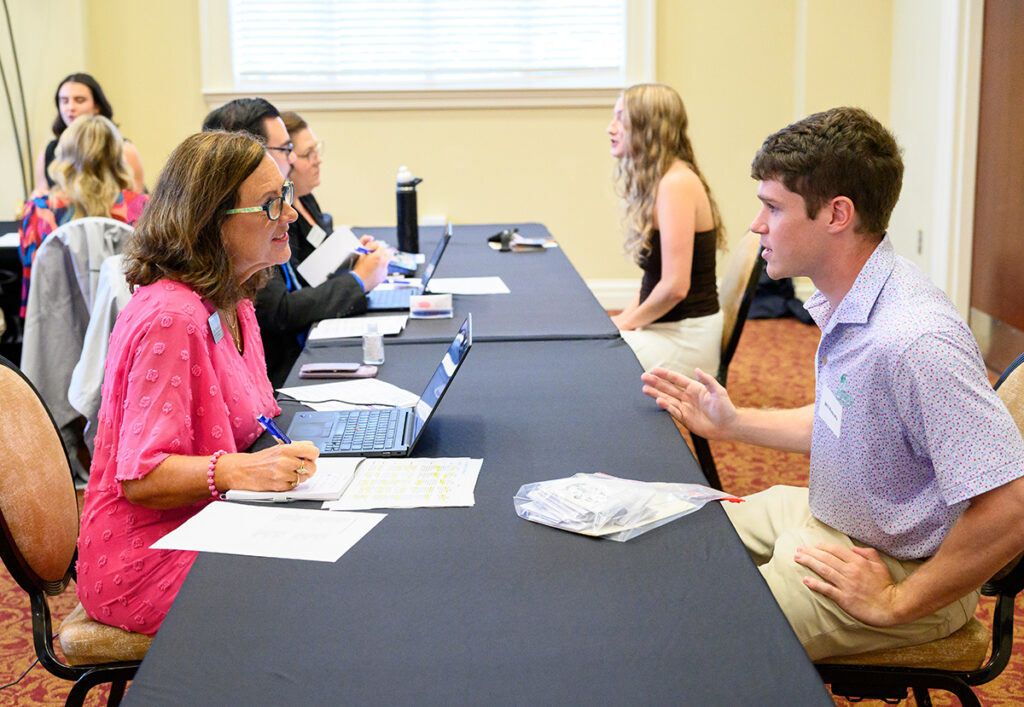
Will Radcliffe, a senior psychology major, said participating in summer research reinforced his study skills and deepened his understanding as he read research articles and spent weeks combing through relevant literature. That culminated in the elevator pitch competition, where he felt pressed for time to explain his topic of social media usage and social influence during adolescence.
“A 90-second pitch is a lot shorter than you might think,” said Radcliffe, who is from Washington, D.C.
Maryna Crawford, a junior event management and dance major, researched the impact of HPU Presidential Scholar events on prospective students’ sense of belonging on campus.
“One thing I took away is that patience is a very important part of any process,” said Crawford, who is from Dayton, Ohio. “Also, I learned the value of celebrating little wins.”
Simeon Davis, a senior business analytics and economic major from Raleigh, North Carolina, presented research on how education and community differences shape labor markets. He said his research has taught him “how to break something down and then build it back up,” which has helped him as he networks and looks for a job after college.
“I learned patience, understanding, time management and critical thinking skills — everything needed to analyze the data,” said Rana Gabrielle Ligue, a junior psychology major from Burlington, North Carolina, who examined how people connect object categories to colors.
Students Share Their Work to Advance Research
Students in the SuRPS program presented their research on July 23-24 in the Culp Planetarium and the Wanek School of Natural Sciences lobby. Fourteen faculty mentors and 31 students from various departments, including biology, chemistry, neuroscience and physics, worked on these projects for the past eight weeks.
Scarlett Peabody, a sophomore dual major in neuroscience and chemistry, presented her assessment of ecosystems in native versus ornamental botanical gardens found in two of the Mariana H. Qubein Botanical Gardens on campus. She compared pollination, decomposition and nutrient cycles of two gardens of similar size.
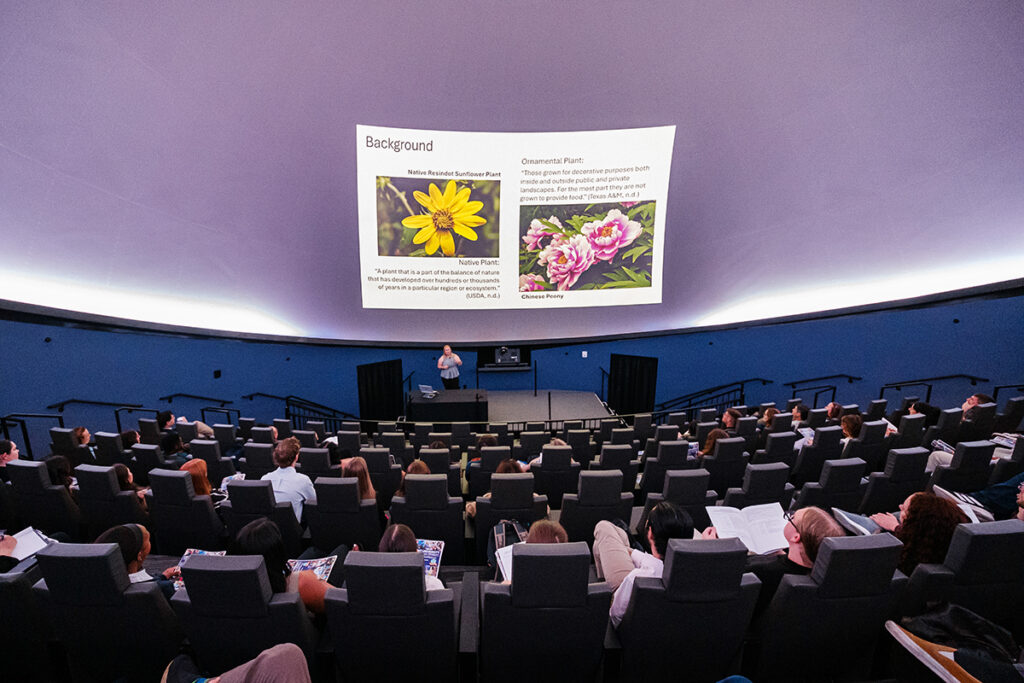
The Scarborough Butterfly Garden contains an array of native plants to support pollination, while the garden inside the Caine Conservatory features annuals that are not native to the area. Peabody used aerial netting to collect and assess insect pollinators such as bees, predators including wasps, and decomposers such as flies. Pitfall traps helped assess other, less beneficial insects, such as ants and mites.
“Native plants are better at adapting,” said Peabody, who is from Carver, Massachusetts. “We’re seeing a higher diversity of epigeal arthropods and pollinators in the native garden. We plan to continue with aerial netting and traps in other gardens throughout the fall and spring semesters.”
Angelina Roy, a senior biochemistry major, presented research on preventing age-related cataracts, a leading cause of blindness among older adults worldwide. She explored molecular changes that underlie aging and tested natural compounds’ ability to slow or prevent age-related cataracts in the lab with Dr. Jeremy Whitson, assistant professor of biology.
“I’m pre-med, but I wasn’t really into research, and I think SuRPS has completely changed my perspective on research, working in collaboration with Dr. Whitson,” said Roy, who is from Pittsburgh, Pennsylvania. “It’s been a great experience. I plan on taking a little bit of a gap year before med school, so I like the fact that I got research experience working in a lab for eight weeks and I have all that baseline now. It was also just fun.”
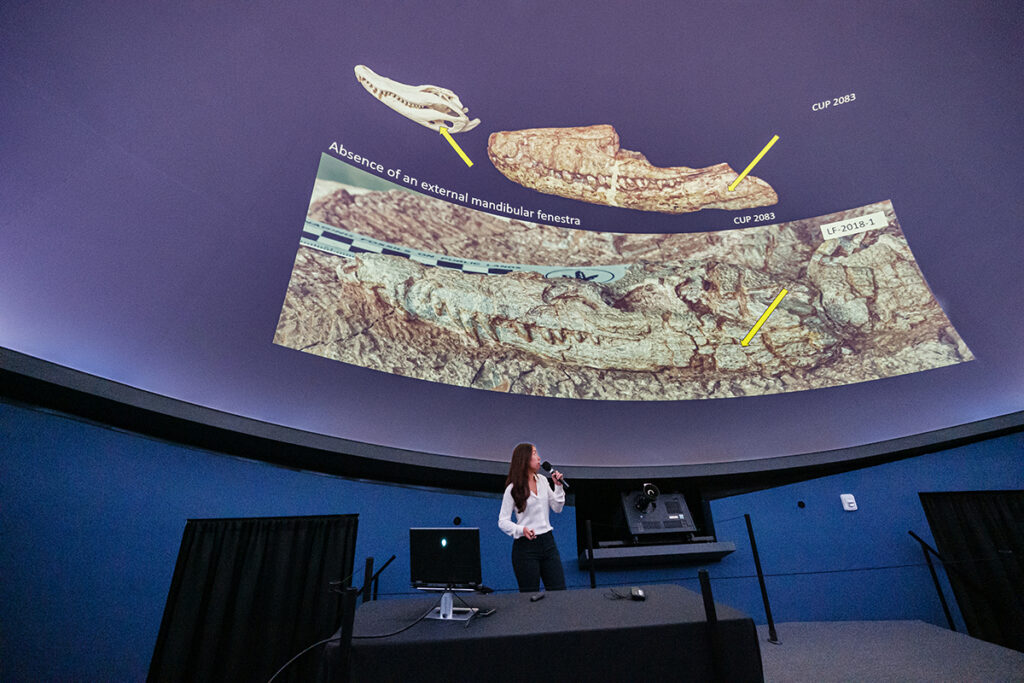
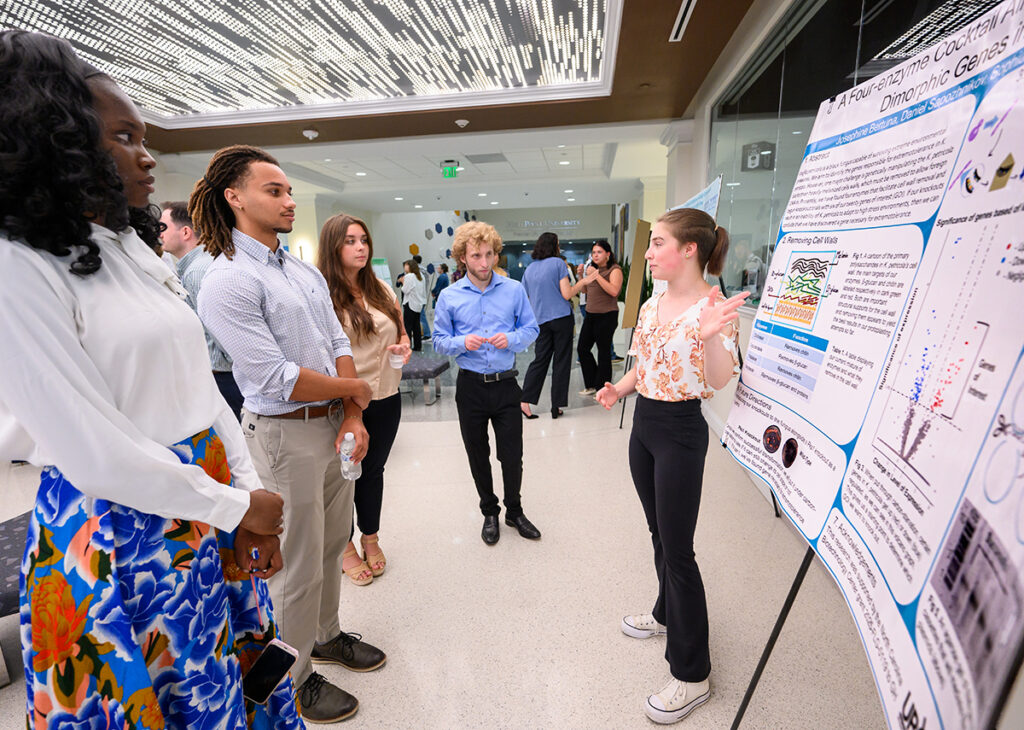
Josephine Bertuna, a sophomore cellular and molecular biology major, presented her research on how a black fungus survives extreme environmental conditions, such as those in outer space.
“It’s been a good opportunity for me to learn and connect with the other members of the scientific community,” said Bertuna, who is from Athens, Ohio. “It’s been helpful and has given me a better understanding of why I want to do science and how I might go about it. SuRPS has given me an opportunity to see what it’s like to work in the lab space, and I’ve found I absolutely adore it. Knowing that the lab environment is a place I can thrive and enjoy what I am doing has been super helpful in knowing where I want my career to go post-graduation.”
HPU Alum Shares Experience With the FBI
Nicholas Cutrona, who earned a biochemistry degree from HPU in 2019 and now works as an FBI agent, returned to campus as the SuRPS keynote speaker.
While at HPU, he participated in the SuRPS program twice to research antibiotic resistance in the lab with Dr. Meghan Blackledge, associate professor of chemistry. He later earned his master’s degree in biochemistry and molecular biology at Georgetown University, where he participated in pediatric cancer research.
Cutrona worked in the Laboratory of Immune System Biology at the National Institute of Allergies and Infectious Diseases (NIAID) to research fetal immune system development as it relates to Amyotrophic lateral sclerosis (ALS), also known as Lou Gehrig’s disease.
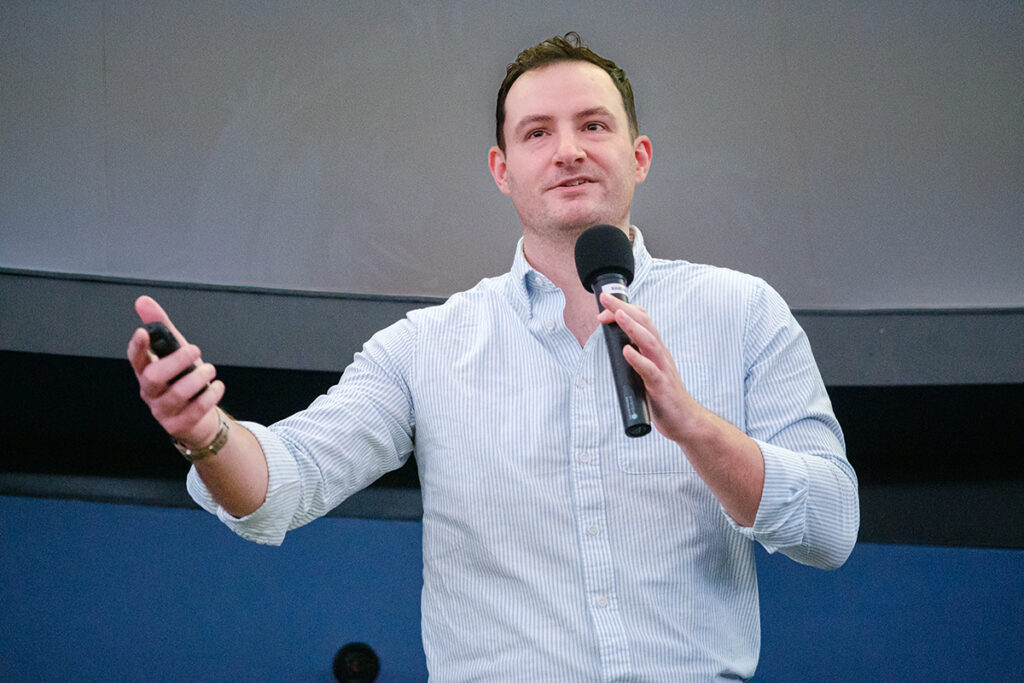
Exploring ways to use his scientific background, Cutrona became a special agent with the FBI in 2023. He conducts criminal investigations involving drug trafficking, kidnappings, violent crime, gangs, money laundering, corruption and terrorism.
“I look at them all through a scientific lens,” Cutrona said. “I have all these skills that I fostered all the way starting with my time at High Point University through Georgetown and NIAID, and I wasn’t using them. Now I feel like I’ve really hit my stride. I can use all those skills I’ve been building for so long and can apply what I’ve learned into what I’m doing today. It’s helped me to be at a place I didn’t think I would be in my career, and I’m thankful for it.”
Cutrona advised students to view everything as an opportunity to learn, to know failure isn’t always a bad thing, to draw from what they know, be creative and problem-solve.