HPU Chapel Pilgrimage Invites Students to Discover Faith Beyond the Classroom
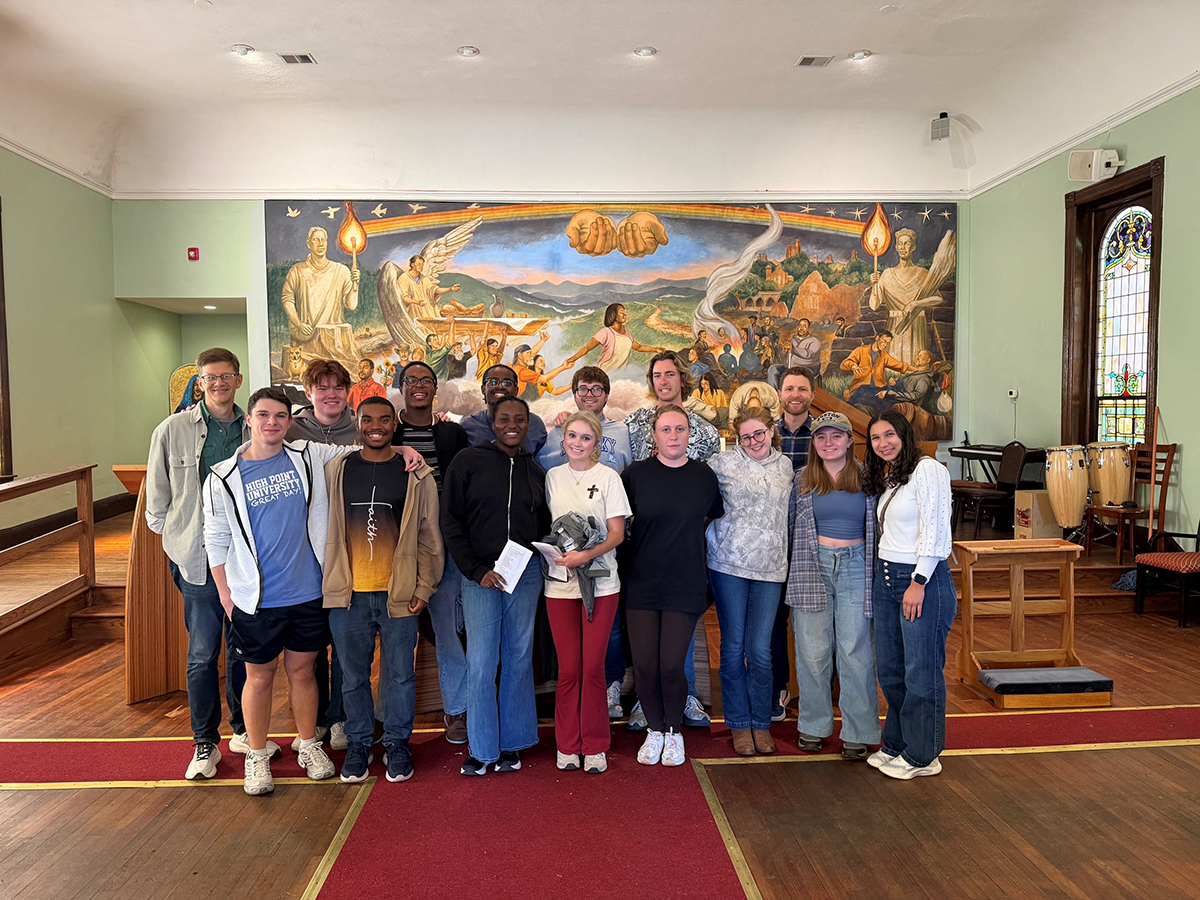
Thirteen High Point University students spent their Fall Break discovering how faith, art, service and community can transform lives during HPU Chapel’s annual pilgrimage to Asheville, North Carolina. Students were pictured at Haywood Street Congregation, a United Methodist faith community in downtown Asheville.
HIGH POINT, N.C., Oct. 13, 2026 – Thirteen High Point University students spent their Fall Break discovering how faith, art, service and community can transform lives during HPU Chapel’s annual pilgrimage to Asheville, North Carolina.
Representing a variety of academic majors and religious backgrounds, students stepped away from their familiar campus routines to interact with people whose lives demonstrate the power of faith in action. Through conversations with artists, prayer walks in the Blue Ridge Mountains and service alongside local ministries, students explored how faith can shape not only what people believe, but how they live, create and care for others.
For nearly a decade, HPU Chapel has offered this Fall Break pilgrimage as an opportunity for students to grow through experiences that connect spiritual reflection with real-world encounters. The pilgrimage reflects the chapel’s commitment to helping students discover that who we become is deeply connected to what we learn to see and whom we learn to love.
Discovering Faith Through Art and Creation
Students met with Christian artist Chrys Corn Goodman, who shared how her faith influences her artistic expression. They also discovered how the creative process itself can become an expression of faithfulness—a way of attending to beauty, finding meaning and offering one’s gifts to the world.

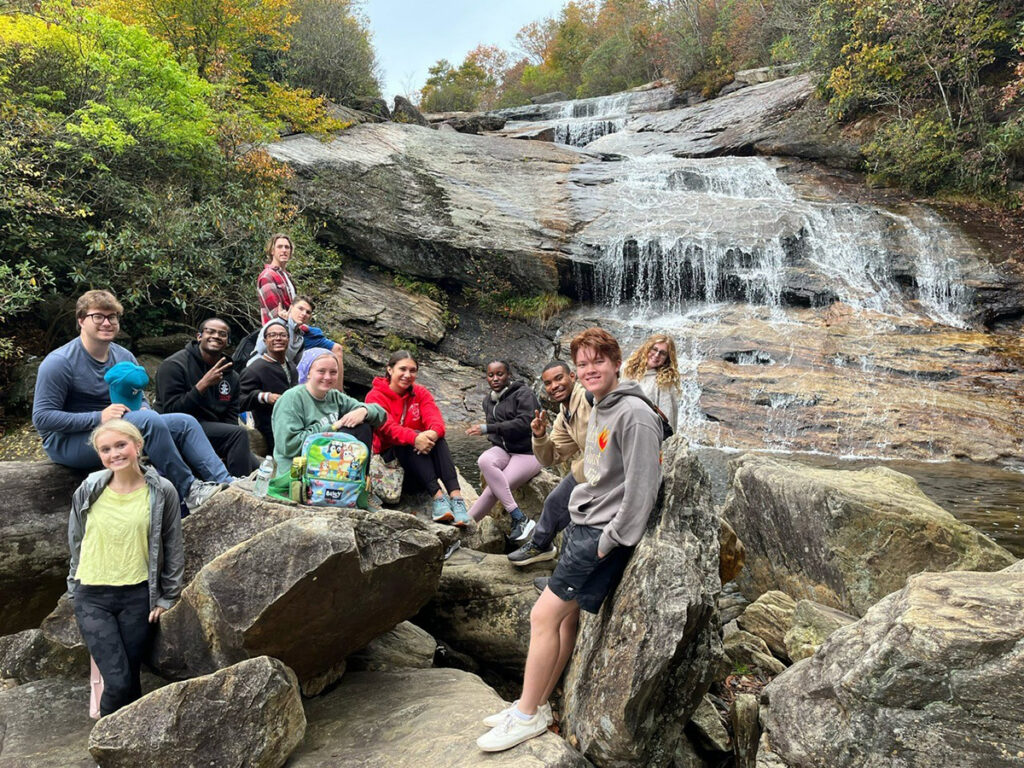
Prayer walks through the Blue Ridge Mountains provided additional opportunities for students to slow down, reflect and experience the natural world with a renewed sense of wonder.
Discovering Faith That Transforms Communities
The pilgrimage also introduced students to United Methodist clergy and laity who are reimagining how congregations serve their neighbors beyond the walls of traditional church buildings.
At Deep Time, a ministry connected to Trinity United Methodist Church and led by the Rev. Dustin Mailman, students learned how a coffee roasting enterprise creates opportunities for formerly incarcerated individuals to rebuild their lives and find meaningful work.

Through this encounter, students witnessed how faith can become more than a source of personal encouragement. It can inspire communities to confront suffering, restore dignity and create opportunities for people to begin again.
Hayes Jones, a junior religion and criminal justice double major on the pre-law track, described the pilgrimage to Asheville as an eye-opening experience.
“It showed me just how small a fraction of the human experience I’ve witnessed for myself,” said Jones, who is from Washington, D.C. “I had the privilege to witness the reality of many people’s lives that were in stark contrast to my own, whether it be because of faith tradition, experiencing poverty or being formerly incarcerated. Seeing how God is moving through so many different lives was incredibly eye-opening, and it gives me a greater desire to be a part of His mission.”
Learning about reentry of formerly incarcerated individuals was one of the most impactful parts of the pilgrimage for Jessica de los Santos, a sophomore entrepreneurship major who has a minor in event management.
“These formerly incarcerated people vulnerably shared their stories with us and gave me a new perspective on the struggles and the stigma they face and how society outcasts them,” said de los Santos, who is from Apex, North Carolina. “It opened my eyes to the way that society can demonize the people who are already marginalized and make it impossible for them to escape their mistakes or to be treated with dignity and value again.”
She witnessed the ways the ministry and coffee shop provide second, third and even fourth chances at life to some individuals. The ministry gives them opportunities to earn certifications and higher education, to have a reliable paycheck, to heal from trauma, to dream again and to choose what they want to do with their lives.
“This ministry was not only impactful for my academic and future career plans, but it was also impactful in the way that I see Jesus,” de los Santos said. “It built a bridge between what He preached in the Gospels and how to take His words to heart and be the hands and feet of Jesus in our society today. This ministry puts into practice the unfailing love, forgiveness and value that the Lord places on each of His children despite our mistakes. I believe that will forever stick with me and be impactful in the way that I see, value and serve people in my life.”
Discovering the Dignity of Every Person
The pilgrimage concluded at Haywood Street Congregation, a United Methodist faith community in downtown Asheville committed to placing “relationship above all else.” Haywood Street’s weekly Wednesday meal brings together people from across the community, including neighbors experiencing homelessness and poverty, around a shared table.
HPU students helped prepare and serve the meal, prayed with community members and participated in conversations that challenged assumptions about poverty, belonging and human dignity. Rather than simply learning about the challenges facing vulnerable communities, students encountered the people behind those challenges—neighbors with names, stories, gifts and inherent worth.
For the Rev. Dr. Preston Davis, HPU’s vice president and minister to the University, these encounters are at the heart of the pilgrimage experience.
“Every year, I return from this pilgrimage amazed by how deeply these experiences shape our students,” Davis said. “I watch their faith move from the theoretical to the tangible. They begin to recognize that faith is not simply a private belief, but a calling to respond to the suffering of the world with compassion, courage and love. I could not be more proud of these students, who chose to spend their Fall Break learning from and building relationships with people our society too often overlooks.”