
 Qubein: Events center, museum, park to be built near stadium
BY: PAT KIMBROUGH
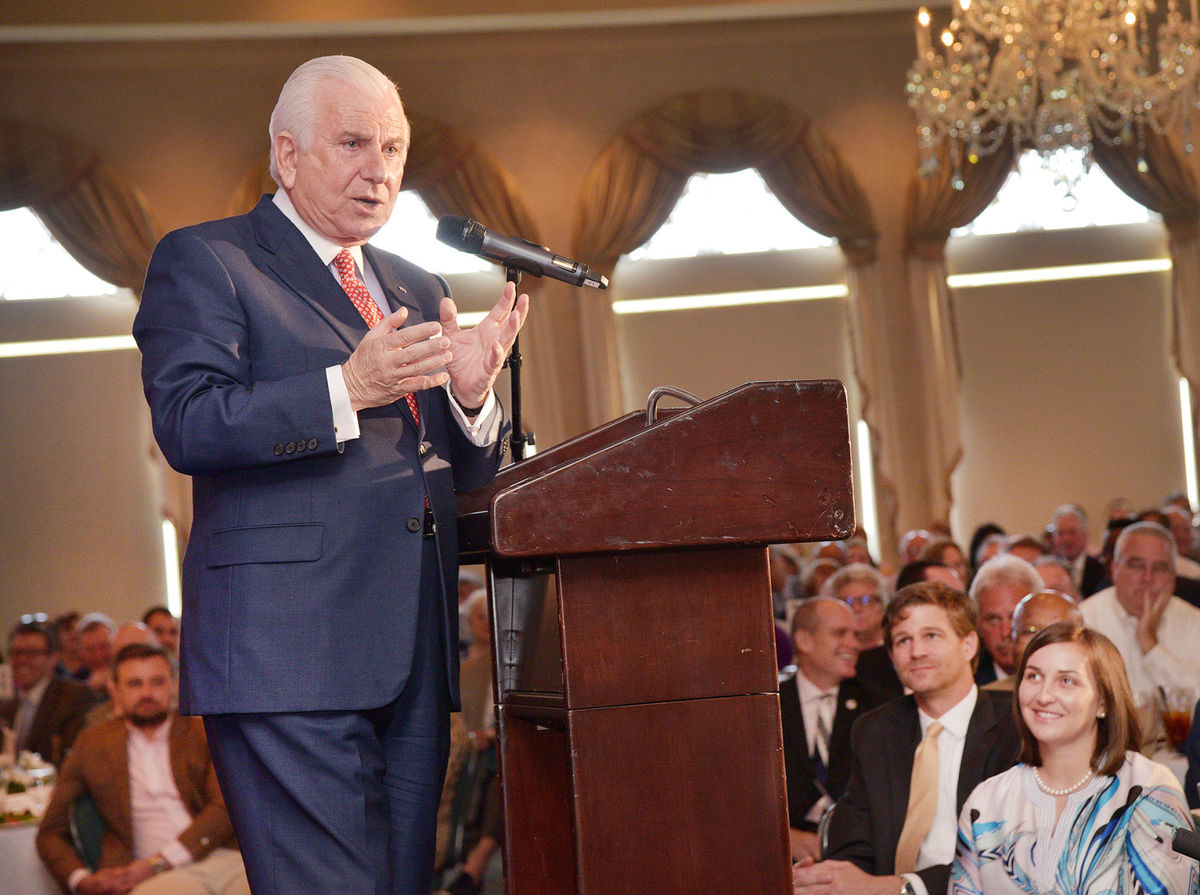
HIGH POINT — High Point University President Nido Qubein announced Wednesday that an events center, children’s museum, park and free educational movie theater will be built around the proposed downtown stadium.
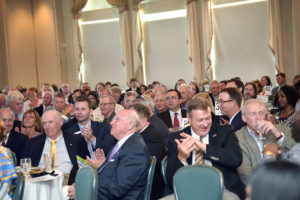
At the High Point Convention and Visitors Bureau annual meeting, Qubein told a large crowd that he will assemble and chair a small, philanthropic board that will raise $38 million in private money by Sept. 15, 2017 to fund these projects in the stadium area.
He said the funds will include money to secure naming rights for the stadium and the cost of acquiring an Atlantic League of Professional Baseball expansion franchise.
“That’s $38 million — every penny will be raised before the first brick will be placed for the stadium,” Qubein said. “It’s not about baseball. It’s about a catalyst we desperately need in this city, an anchor we desperately need in this city — a destination point where we can gather one and all to fellowship with each other.”
He also announced that he has accepted a request from Forward High Point, the public-private redevelopment board spearheading the stadium planning, to lead team acquisition and naming rights efforts.
 Qubein said the board will be “a local group” that owns the team and leases the stadium from the city.
The city plans to spend roughly $45 million to acquire land and build a 5,000- to 7,500-seat multi-purpose stadium on a site between N. Elm Street and N. Lindsay Street that includes the former High Point Enterprise facility.
The goal is to have the stadium complete and in use by May 2019.
The project hinges on private investment developing around the stadium that would grow the tax base enough to pay off the city debt on the stadium and the land.
City officials said Qubein’s announcement is a big step toward this goal.
“When somebody pledges $38 million to fund a project like this, I think we overcame the biggest hurdle,” said Assistant City Manager Randy Hemann.
City Councilman Chris Williams said he was excited to hear about the plans for the park and other amenities.
“When you talk about the park and children’s museum, you’re reaching out to people of all financial backgrounds from all over the city,” he said. “I’m excited. I’m very encouraged. We were already looking for private investment, and this should push us over the goal line.”
Qubein said the plan is for HPU to make the lead donation toward the additional projects, but HPU will not own the facilities. It’s not clear at this point who would own the site, he said.
He said he has “spoken with some friends” about donating, but no commitments have been secured yet. He said he expects the bulk of donations to come from six to 10 individuals who will comprise the board.
“I offer my promise to raise every bit of money needed,” Qubein said. “I’ve raised $350 million for High Point University. If you doubt that, that’s your issue, not mine.”
The concept for the event center is for a 40,000-square-foot facility that could seat 1,000 people. Other planned features are for an urban park with a playground and an “educational cinema, where families who might not be able to afford it otherwise can take their kids to see movies for free,” he said.
He said he’s looked at numerous children’s museums all over the country as possible models for High Point and wants to “create something the quality of Epcot Center.”
Qubein said that neither he nor other board members will have any financial interest in any of the projects.
Several council members and Guilford County commissioners attended the meeting.
County participation is a key part of the city’s financing plan for the project. New county property tax revenue is one of the funding streams that would pay off the city’s construction debt on the stadium. At some point, the city will have to get the commissioners’ blessing to steer a portion of the county’s additional property tax revenue from future development surrounding the stadium into the city’s coffers.
“I beg you, commissioners, to think beyond the immediate, to understand that this is the opportunity of a lifetime,” Qubein said. “We need your help. …we need your vote.”
He said he believes the stadium and surrounding growth will revitalize the downtown area.
“The ballpark by itself is not the end-all, do-all,” he said. “Just imagine the apartments that will be built around this park. I have, personally, the word from a developer who will build 200 to 300 apartments around the park, and a hotel will go up there.”
Williams said he thinks the city has to do something to reverse the trend of declining property values in the core city. He said the stadium plan, with Qubein’s involvement, boosts his confidence level that other investment will follow and begin to achieve this goal.
“Nothing’s 100 percent, but I really do believe you will see residential and commercial,” he said.

High Point University’s Nido Qubein to lead stadium effort
By John Newsom
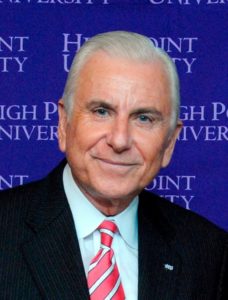 HIGH POINT — High Point University’s president will lead the city’s effort to build a minor-league baseball stadium and develop the surrounding area.
Nido Qubein announced Wednesday that by mid-September he will raise $38 million from private donors to build projects that will bring visitors downtown year-round. Those projects could include an events center, a children’s museum and a park.
Qubein also said he will lead efforts to secure naming rights for the stadium and attract a baseball team to play there.
Qubein, who will remain at the university that he has led since 2005, has lived in High Point for much of his adult life. He said he agreed to lead the stadium effort after being asked by Forward High Point, the new nonprofit charged with revitalizing downtown. This group also is behind the ballpark project.
“High Point has been my chosen home for nearly 50 years. I am happy here, and I love my city,” Qubein said in a statement. “I have no financial interest or stake in this development project in any way. My sole interest is helping High Point thrive.”
High Point City Council last month approved a plan to buy four square blocks in downtown and build a $30 million stadium.
The 10-acre stadium property is bordered by North Elm Street, Gatewood Avenue, Lindsay Street and West English Road. It’s a few blocks north of the city’s furniture showrooms.
The stadium will seat about 5,000 people for baseball games and about 7,500 for concerts and other events. Project leaders say they hope to have it open in 2019.
The city said the project won’t lead to a tax increase or affect High Point’s bond rating. Media reports say the city expects to recoup the cost of the project through stadium revenues — rental and parking fees, the team’s annual lease and naming rights — and increased property taxes collected from new development nearby.
The city has not yet lined up a team to play at the stadium but reportedly has interest from the Atlantic League, an eight-team professional baseball league that’s not affiliated with Major League Baseball.
City leaders envision the stadium as a catalyst for other commercial and residential projects in downtown High Point.
Qubein’s announcement came at the annual meeting of the High Point Convention and Visitors Bureau.

High Point University President Nido Qubein promised to raise $38 million in private funds by Sept. 15 for amenities surrounding a proposed stadium in downtown High Point after accepting an invitation to lead the city of High Point’s efforts to put together an ownership group for a professional baseball team and sell the naming rights for a proposed $30 million downtown stadium.
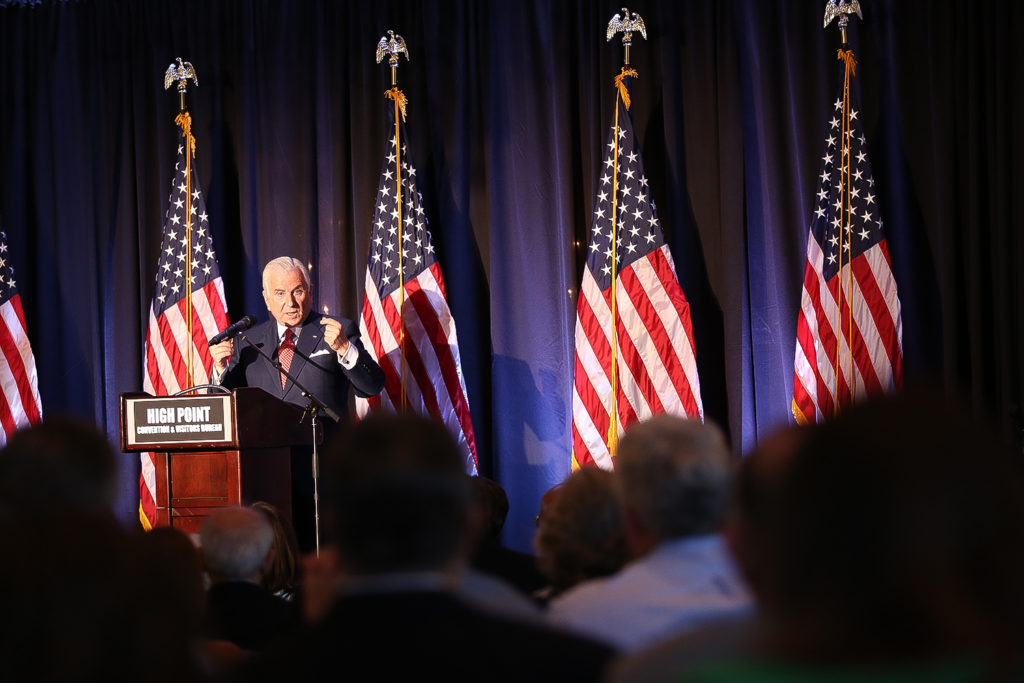
Speaking Wednesday at the High Point Convention and Visitors Bureau annual meeting at High Point Country Club, Qubein said the $38 million would be used for a park, a playground, a children’s museum, and an educational cinema, and an events center — all of which would be donated to the city for public use.
“It’s going to be a game-changer,” said Tim Mabe, president and CEO of the High Point CVB.
Qubein said one of his first actions would be to put together a small board made of as few as “five or six friends” — each major contributors to the amenities plan. He said HPU would be the project’s largest contributor, whether in financial or personal resources.
Qubein also said he was confident that apartments and a hotel would be built near the 5,000-seat stadium, located between Elm, Gatewood, Lindsay and English streets on the north side.
“I have personally talked to a developer who will build 200 to 300 apartments around the ballpark,” Qubein said. “And a hotel will go up there.”
The HPU president urged city council members to support tax incentives for the private investors and discouraged opposition from naysayers. He said neither he nor his board members would benefit financially from the stadium or surrounding public amenities.
He said HPU would benefit from operating in a “thriving” city.
Qubein provided no details or timeline for the public amenities. Ray Gibbs, the executive director of Forward High Point, which initiated the stadium project, said the stadium could be ready by 2019.
The city was scheduled to interview two groups to design and build the stadium this week and next week.
“We must focus on the art of the possible,” he told the gathering of more than 500 people. “I’m a full supporter of this baseball stadium. This is not about baseball. Let’s quit talking about baseball. It’s about a catalyst project we desperately need in this city.”
Qubein said the Sept. 15 deadline should help move the stadium project forward. He said he had already spoken to several “friends” about the project.”
Since taking over as HPU president, Qubein has led the university in raising $300 million in gifts and pledges without a formal campaign.
Last month, High Point City Council approved the first $15 million for the stadium. The city also has an agreement with the independent Atlantic League for a franchise if the stadium is built and ownership is found that meets the league’s approval.
“It’s really important that we act very quickly,” Qubein said. “We want to energize the city council. It provides a sense of confidence that it will get done.”
Qubein listed naming rights, a lease to a baseball team and a facility tax added to tickets for stadium events as methods in which the city would regain its $30 million stadium investment.
The HPU president said a baseball team was not enough to transform the city’s downtown into what he envisioned. He said his board would make sure the amenities are “first-class.”
“The stadium alone is no answer. We have to create something where people will want to go every day,” he said. “This is a turning point for our city.”