
Join us for an unforgettable program that will challenge your thinking, expand your network, and elevate your leadership. Each cohort is limited to 25 participants
The Program
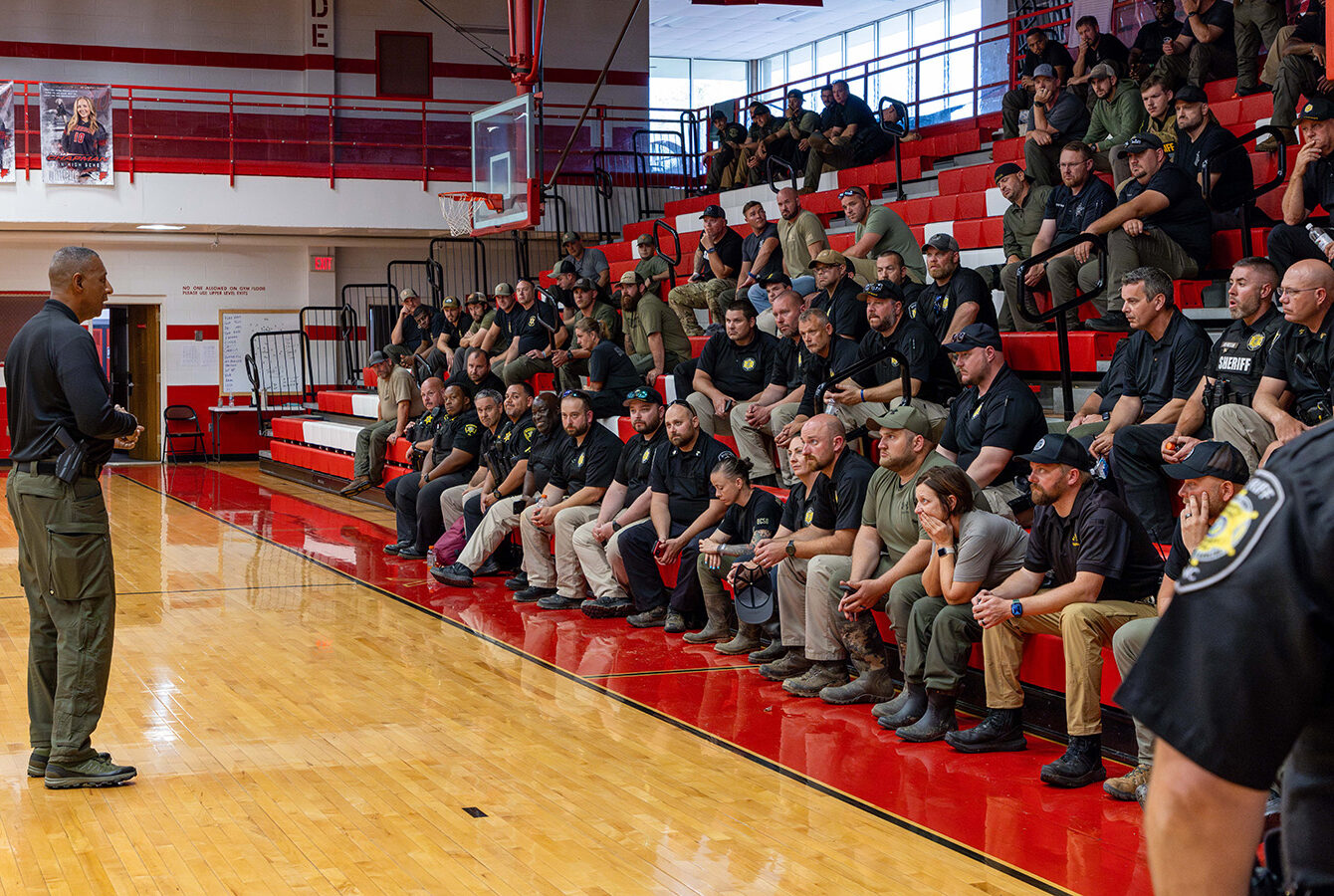
Designed for law enforcement and First Responders from around the country, this collaboration with HPU’s Executive Education Program was envisioned by Sheriff Bobby F. Kimbrough, Jr., based on the Harvard Business School Seminars for Young Presidents’ Organization (YPO) and CEO organizations, this HPU leadership program focuses on the four key pillars of leadership: Vision, Communication, Execution, and Culture.
Select faculty from HPU’s Phillips School of Business, along with Dr. Daniel Hall, Dean of the Business School, deliver lectures, case studies, and group activities to prepare emerging leaders for the C-suite.
Content is customized with your association and enriched by experienced industry leaders. Participants are nominated by their department leader and must apply to be accepted.
The program fee is $6,000 per candidate, covering on campus lodging at the 5 star Kahn Hotel, meals, snacks, and all materials.
About Us
High Point University’s Executive Education Program is a prestigious and cutting-edge initiative designed to cater to the educational needs of seasoned professionals and executives seeking to elevate their leadership skills and stay ahead in today’s dynamic business landscape.
Renowned for its commitment to excellence and innovation, the program offers a comprehensive range of executive development courses and workshops that are carefully curated to address the ever-evolving demands of the corporate world. Led by a faculty of accomplished experts and industry leaders, High Point University’s Executive Education Program focuses on delivering practical knowledge, hands-on experience, and real-world insights.
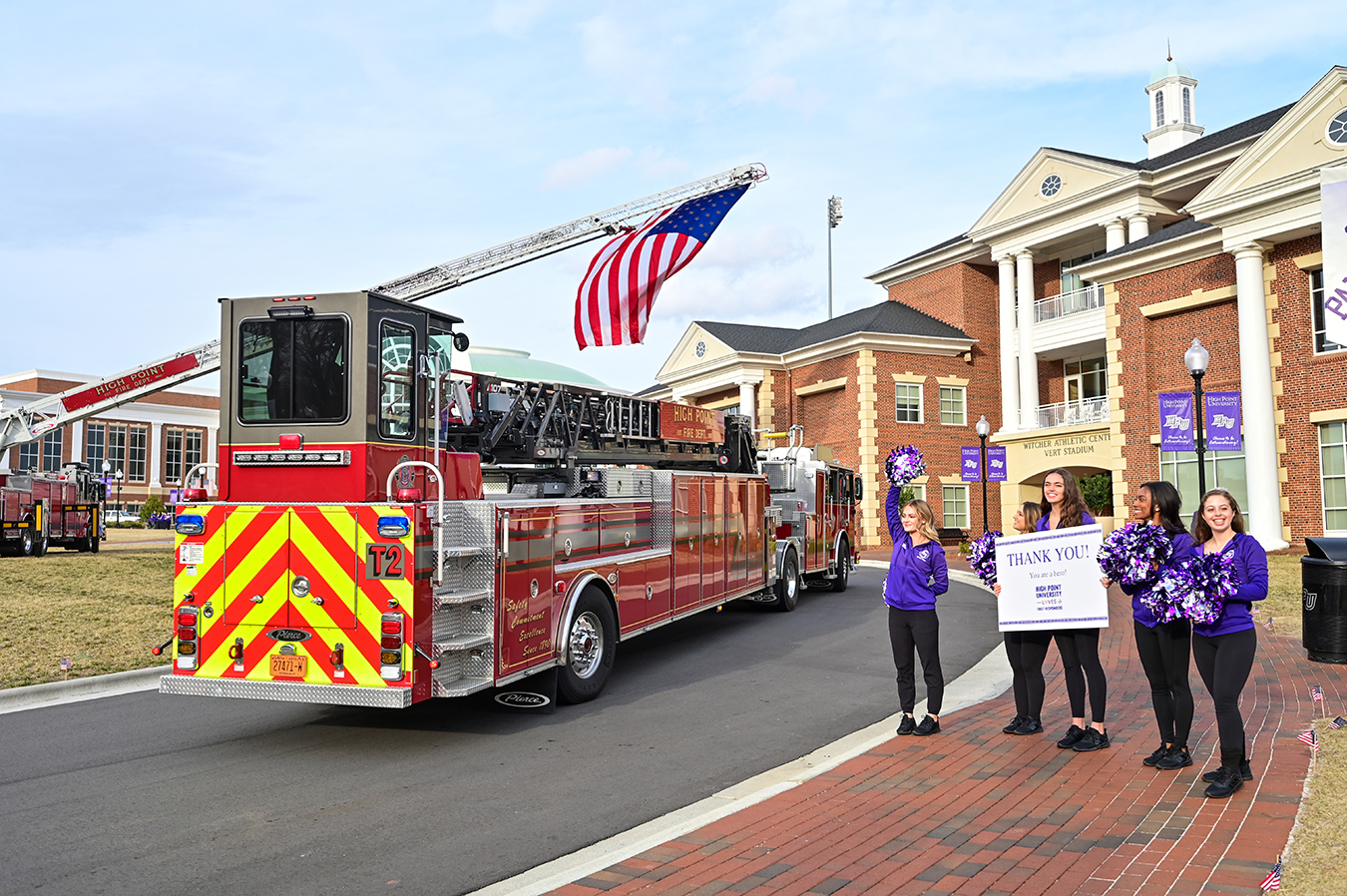
The program fee is $6,000 per candidate, covering on campus lodging at the 5 star Kahn Hotel, meals, snacks, and all materials.
For successful completion of the application below, you will want to have these materials ready:
- Candidate and Sponsor Information
- Answers to the Questions
- Candidate bio (150-200 words) and resume
- A high-resolution photo of the nominee
- A signed copy of the High Point University Code of Conduct
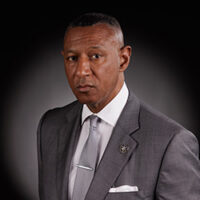
Sheriff Bobby F. Kimbrough, Jr. was elected to office in 2018. Sheriff Kimbrough was born and raised in Forsyth County, graduated from North Forsyth High School, and later earned his Bachelor of Arts degree in Sociology from High Point University in 1991. Kimbrough then earned his Master’s degree in Leadership from Piedmont International University in 2020. In May 2023, Kimbrough received his Doctor of Laws degree from Carolina University.
Kimbrough began his law enforcement career in 1984 as a Police Officer for the Winston-Salem Police Department. In 1987, he became an Arson Investigator with the Winston-Salem Fire Department. He then moved to work with high-risk offenders at the North Carolina Department of Probation and Parole. From 1995 to 2016, Kimbrough served the United States Department of Justice as a Special Agent in the Drug Enforcement Administration (DEA). He specialized in investigating crimes against the government, including organized crime, money laundering, gang violence, and drug trafficking.
Kimbrough has four decades of law enforcement experience and brings his professional experiences and personal passions to projects throughout the community. Kimbrough continues to hone his leadership skills, completing the Dale Carnegie Course, Skills for Leadership. Kimbrough also completed Becoming a Leader: Developing Your Style and Making Sound Decisions and Emotional Intelligence in Leadership courses from Harvard University in 2020.
Kimbrough led the agency to partner with Wake Forest University’s School of Professional Studies to create a Law Enforcement School of Executive Leadership for First Responders. Recently, Kimbrough has been tasked with creating the Executive Leadership Program at his alma mater High Point University.
![sumner headshot[60]](https://www.highpoint.edu/media/home/2026/07/sumner-headshot60-200x200.jpg)
Marty A. Sumner serves as the Senior Deputy Commissioner of the Fraud Control Group at the N. C. Department of Insurance (NCDOI). Sumner was appointed to this position in July 2017, by Commissioner Mike Causey. Sumner led the 2.4-million-dollar expansion of the Criminal Investigations Division, which doubled the number of sworn Special Agents, added a Bail Bond Regulatory Division, Criminal Legal Services (four prosecuting attorneys) and the Fire & Risk Reduction Division.
Prior to joining the NCDOI Sumner served 30 years as a law enforcement officer with the High Point Police Department. He retired in 2016, serving the last four years as Chief of Police.
Sumner is a nationally recognized subject matter expert on focused deterrence policing and data driven violence reduction strategies. As a consultant Sumner is a developer and instructor of Transformational Leadership, a Technical Assistance/Training provider for the Bureau of Justice Assistance, United States Department of Justice, and for the Institute for Intergovernmental Research (IIR).
Chief Sumner graduated from John Wesley University with a BA in Management and Ethics, the Southern Police Institute Administrative Officers Course at the University of Louisville and the Senior Executives in State and Local Government at Harvard.
Marty and his wife Kathy have been married for 40 years; they have two sons and one grandson.
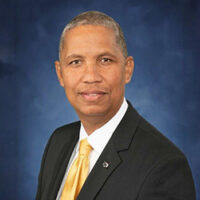
Deputy Chief Eddie M. Buffaloe Jr., joined the Raleigh Police Department (RPD) in January 2026 after retiring from state government. Before his arrival at RPD, he served as Secretary/Homeland Security Advisor, the highest-ranking law enforcement officer for the North Carolina Department of Public Safety. Over the past 30 years, he worked in various law enforcement and public safety capacities across the state, including serving as Chief of Police, Police Officer, Deputy Sheriff, a correctional officer, and as a law enforcement instructor and Commissioner for the North Carolina Training and Standards Commission.
His education includes a Bachelor of Science degree in Criminal Justice Administration, a Master of Science degree in Criminal Justice Administration from Grand Canyon University, and numerous law enforcement and public safety certifications. He is also a graduate of the FBI National Executive Institute, US Naval Postgraduate School Center for Homeland Defense and Security, and served as the past president of the North Carolina Association of Chiefs of Police.
Throughout the years, he has been appointed to numerous commission and advisory boards and is a member of several professional organizations and currently serves on the Board of Directors for International Association of Chiefs of Police, North Carolina Association of Chiefs of Police, and North Carolina Police Executives Association.
In addition to serving his community as a public safety professional, Deputy Chief Buffaloe served in the North Carolina Army National Guard for 10 years, and a Life Member of OMEGA PSI PHI Fraternity Incorporated.
As Deputy Chief of Support Administration, he oversees the Chief’s Office, Office of Professional Standards, and Administrative Services Division. He is dedicated to serving the citizens of Raleigh through his extensive experience in public service and is a dual recipient of the Order of the Long Leaf Pine from Governors Cooper and Stein.

Garrett Melich has decades of experience leading intelligence operations around the globe, driving enterprise transformation, building high-performing organizations, and translating C-suite strategy into operational reality across federal and commercial environments. His career spans the U.S. Intelligence Community, Fortune 500 defense contracting, corporate leadership, and entrepreneurship—giving him a rare combination of federal mission and private-sector innovation, across operational and technical realms.
Prior to his retirement from the CIA in 2022 as the Deputy Director of Cyber and Digital Policy following 24 years of service, he helped stand up their first new directorate in over 50 years, led human intelligence operations around the world, led open source threat intelligence against transnational issues, served in a war zone, and managed technical programs with foreign partners overseas. Garrett created Garrett Global Consulting, LLC in 2026, which teaches companies and university students how to optimize the digital and physical information around them in order to separate themselves from the ordinary by using tradecraft taught at the CIA.
Garrett holds a Master of Professional Studies in Technology Management from Georgetown University and a Bachelor of Arts in International Affairs from the University of South Florida. He speaks French and has a basic understanding in Japanese and Thai. He is married to Gwendolyn, who is also a retired CIA officer, has one daughter currently attending Highpoint University, and two rescued dogs named Lucy and Tuffa.