After being founded on Sept. 14, 1924, High Point University celebrates its centennial anniversary during the 2024-2025 academic year. For a century, HPU has led with purpose, innovation and excellence in mind. Throughout our campus, you’ll find symbolic artwork, sculptures, and reflections of our past, present in future embedded throughout the campus environment. These elements, many of which are depicted in the illustrated Centennial Magazine cover above, embody the values and standards HPU upholds, which have remained strong and consistent throughout the decades. As we celebrate this milestone, learn more about the iconic symbols that are featured on the Centennial Magazine cover and that reflect our rich history and the transformational journey of our campus community. Each symbol tells a story, not only of the past, but also a vision for the future.
Transformational Butterfly Sculpture
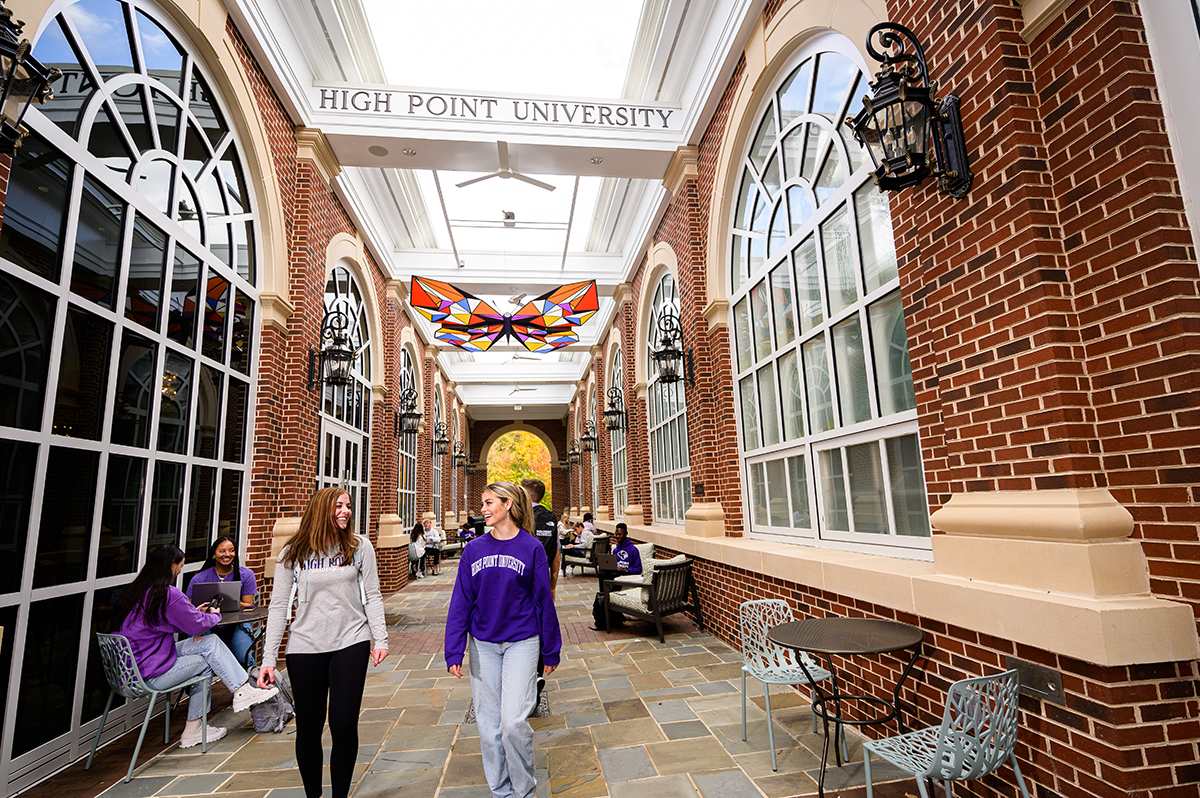
Students see transformation and growth happen before them constantly on HPU’s campus, and it reflects the transformational growth they’ll experience in their academic journey on campus. In its 100 years, there has been so much growth, but especially in the last 20 years, the university has undergone total transformation. As only a few examples, campus has expanded from 90 to 520 acres, academic schools grew from three to 14, and campus enrollment nearly quadrupled. Found above the breezeway between the Butterfly Cafe and Caine Conservatory, the moving mosaic butterfly sculpture serves as a reminder of the vibrant transformation that takes place throughout a student’s time at HPU — preparing them to spread their wings when they graduate.
Tree of Life
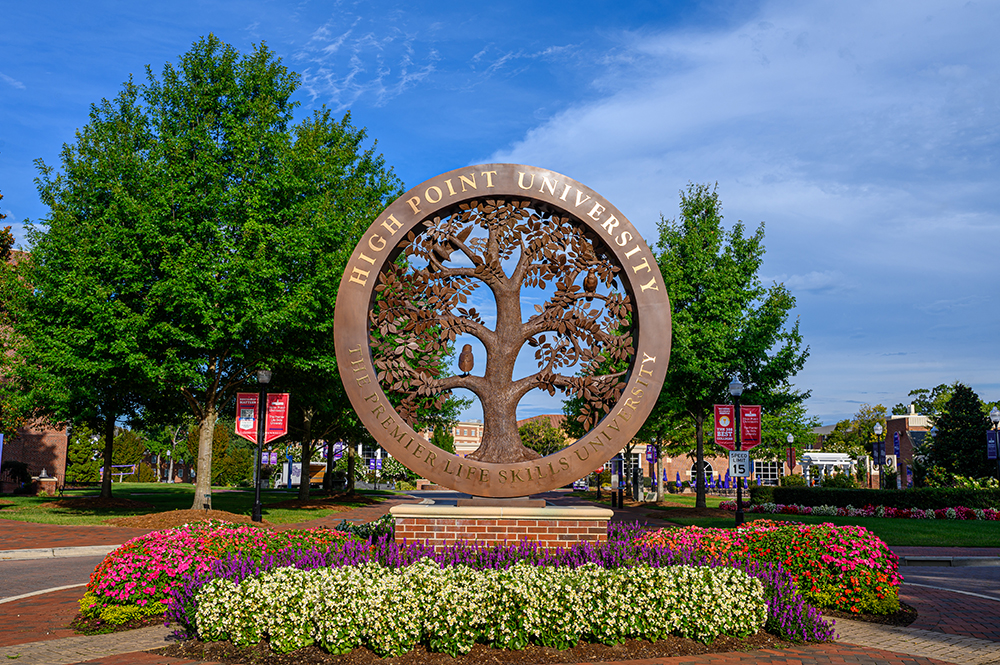
To live life in balance, one must grow intellectually, spiritually, physically, and emotionally. Located next to Roberts Hall, the first building constructed on campus in 1924, this sculpture embodies HPU’s balanced approach to education. Just as a tree flourishes through its roots, branches, and leaves, students are encouraged to nurture all aspects of their being to thrive in their personal and academic journeys.
American Flags Abound
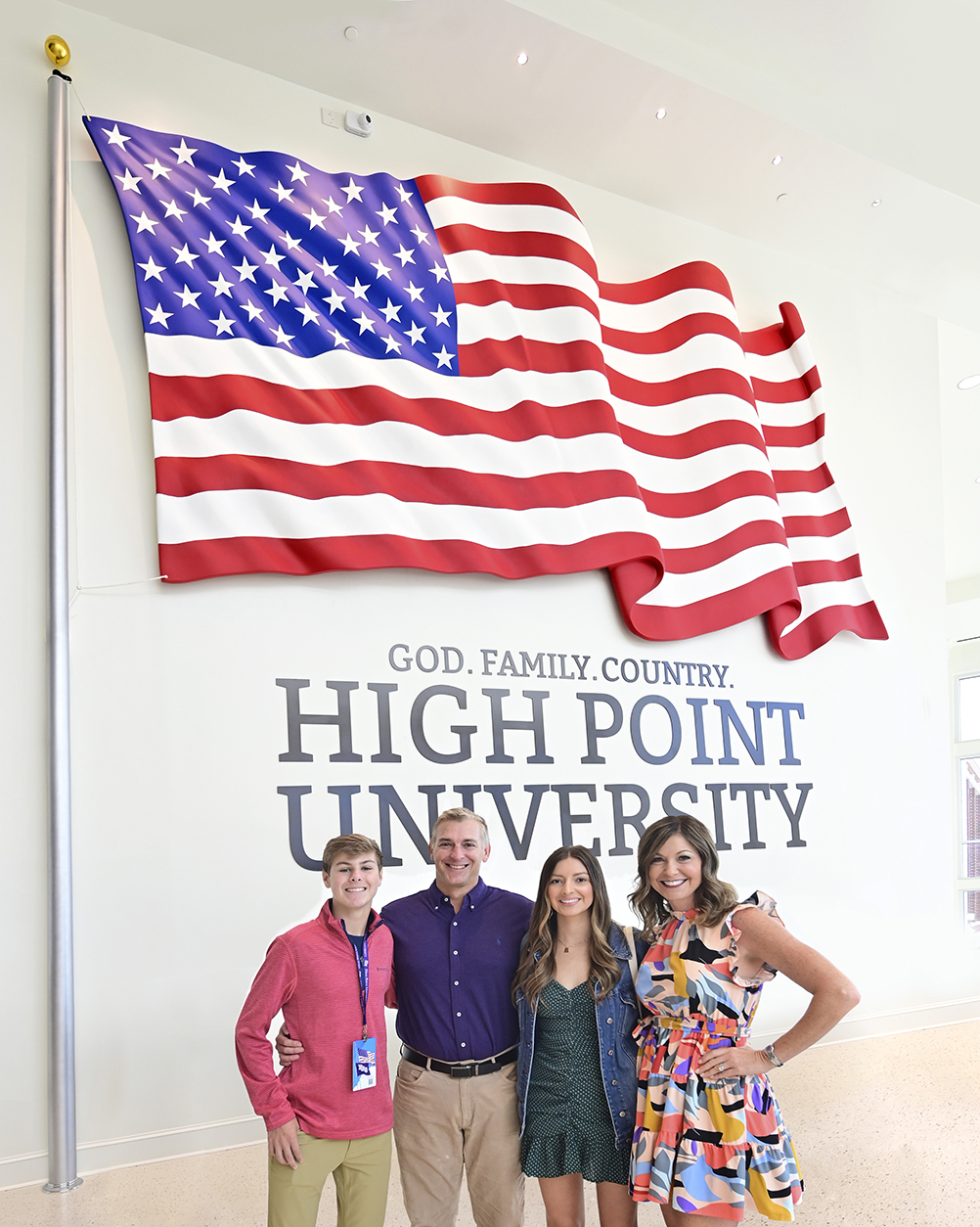
At HPU, the American flags that wave across campus symbolize the core values of faith, family, and patriotism that define the community, serving as a reminder of the principles on which the nation was built. It’s a proud display of how these principles are woven into campus life, as a “God, Family, Country” institution. Each year, events like the Annual Veterans Day Celebration and gatherings at Patriots Plaza strengthen a culture of honoring our country and expressing gratitude for those who have served our great nation.
President Qubein and Students
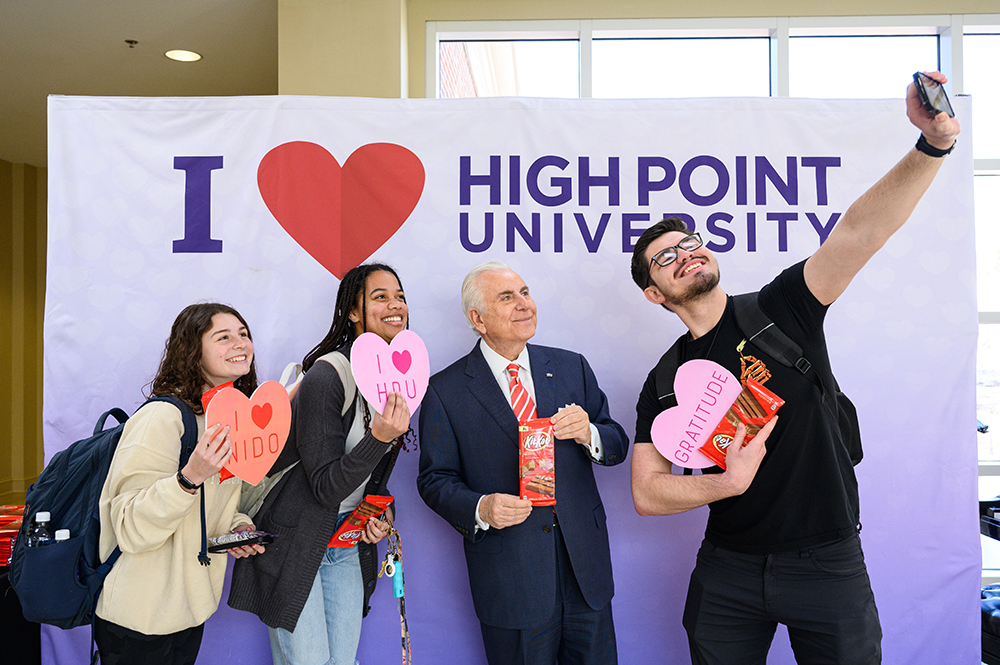
High Point University President Dr. Nido Qubein’s involvement on campus is unlike that of any other university president. While many colleges have a chancellor or president, at HPU, President Qubein symbolizes so much more. His dedication to connecting with students is evident. He can often be found chatting with students in the Slane Café, taking selfies at basketball games, or even teaching the President’s Seminar on Life Skills. Where else could you find a university president leading a class?
Since taking office in 2005, Dr. Qubein’s instrumental role in HPU’s growth has transformed the university into a vibrant hub of learning and innovation. Under his leadership, HPU has expanded its facilities, enhanced academic programs and prioritized the student experience, establishing itself as The Premier Life Skills University.
Amelia Earhart and Dozens of Other Historical Sculptures
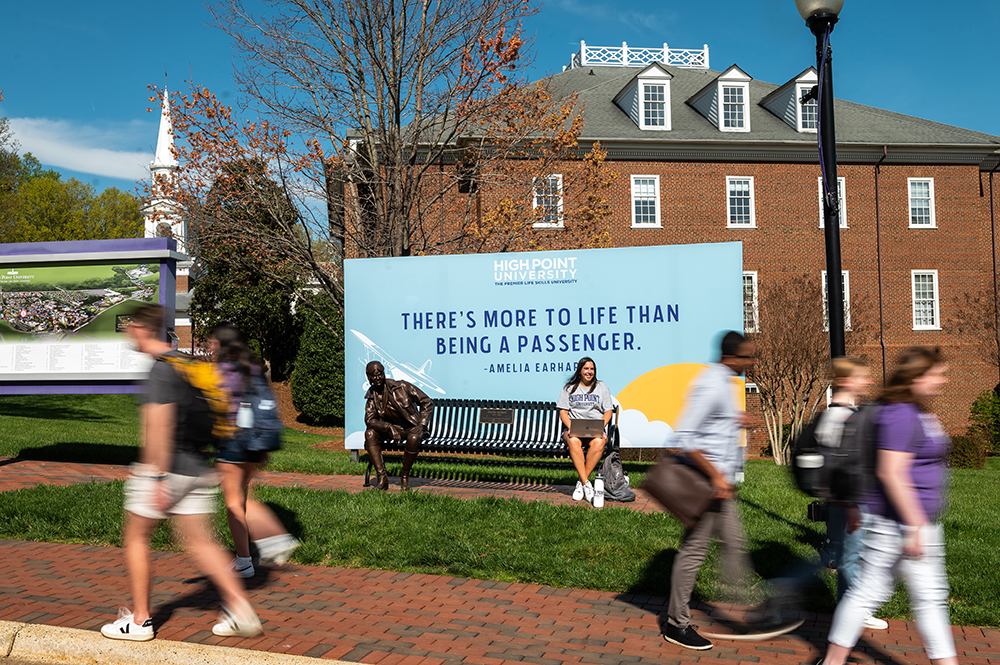
Amelia Earhart is one of the 40 sculptures of a historical figure found along the Kester International Promenade. Earhart represents an individual of great courage, determination and who accomplished many ‘firsts.’ Other historical figures you’ll find along the promenade include Martin Luther King Jr., Marie Curie and Mahatma Gandhi. They have a purpose. HPU knows who you spend time with is who you become. And these sculptures are a daily reminder to students that they, too, can achieve great things.
Dream Big Chairs
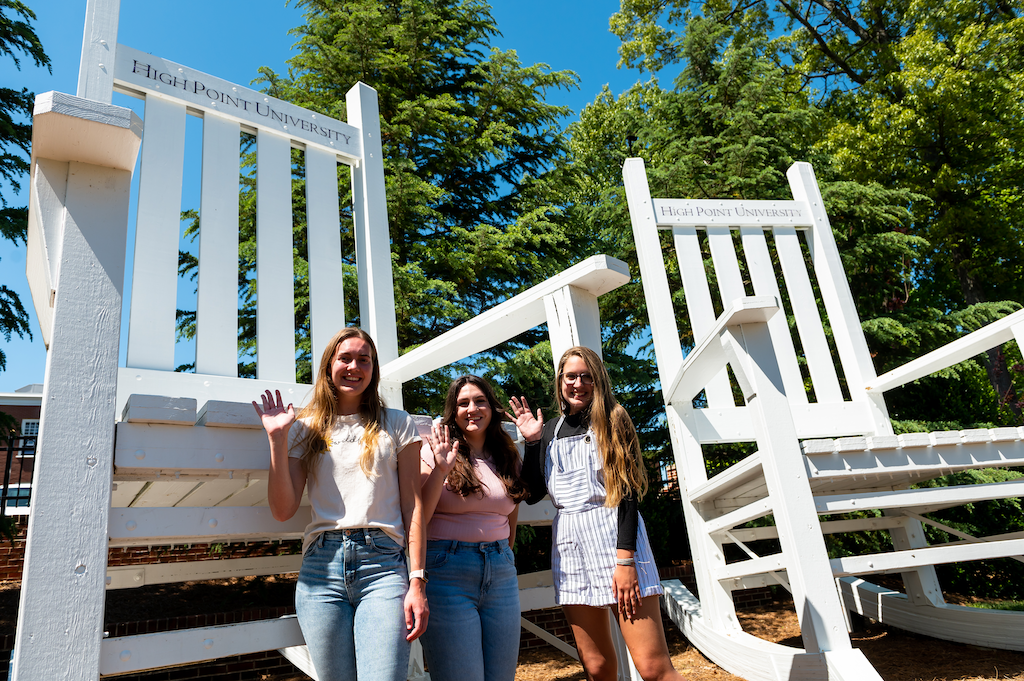
Standing 16 feet tall, these giant rockers were inspired by HPU Class of 2008 graduate Christine DiFerdinando, who wrote to HPU President Nido Qubein a few months after graduating: “HPU gave me the positive outlook I needed to dream big dreams and achieve my goals without being intimidated by life’s obstacles.” Her letter inspired the Dream Big Chairs, which represents how HPU equips students with the confidence to embrace whatever life throws their way. Plus, being that the city of High Point is known as the Home Furnishings Capital of the World, the chairs show support for all the unique opportunities the industry brings to HPU students.
Yadkin College Bell
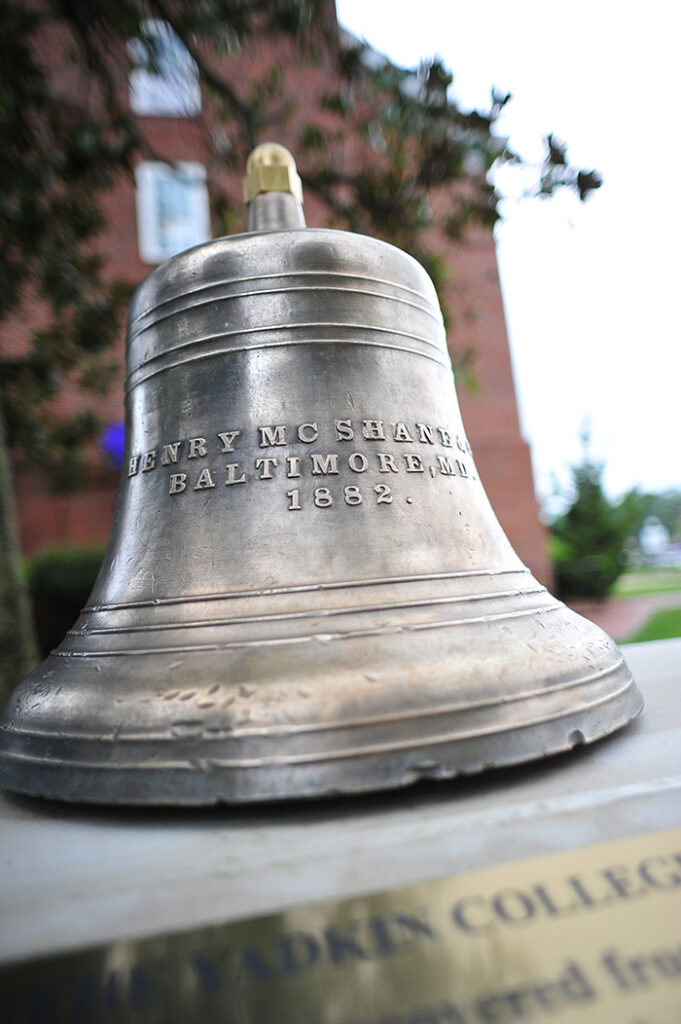
Yadkin College Bell stationed outside of Finch Hall represents a piece of history of what came before High Point University. Before the campus was HPU, it was Yadkin College — a Methodist-supported school founded in the area in the 1850s. When the college closed in 1924 just as High Point College opened, Yadkin College students found a new home here and the victory bell remains a reminder of the campus history.
Mobile Lab

A vehicle for service — HPU’s Mobile Lab, an innovative science lab on wheels, designed to ignite a passion for science in students beyond the traditional classroom. Faculty and students travel to schools throughout the city of High Point and the Piedmont Triad to foster a love for science in local youth. This initiative symbolizes HPU’s commitment to enhancing accessibility to science and providing hands-on opportunities for children in the community. By bringing hands-on experiments directly to schools, the Mobile Lab not only sparks scientific curiosity in local youth but also provides valuable experiences that help undergraduates grow through their meaningful interactions with the community.
Bald Eagle
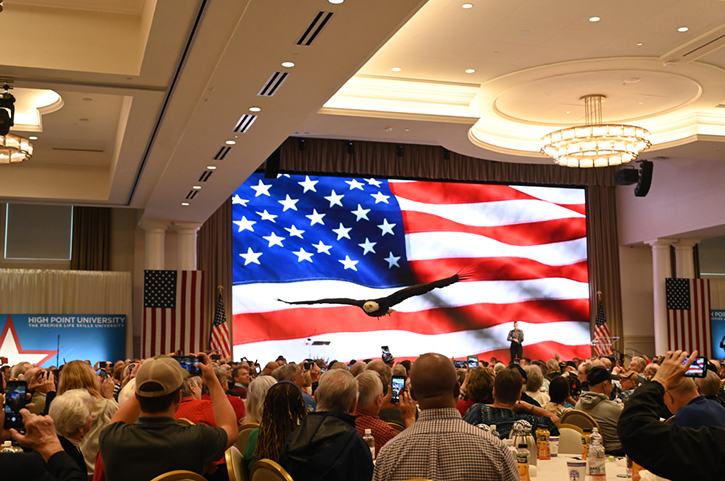
The eagle, a powerful symbol of American vision, strength and determination, reflects the university’s core values as a “God, Family, Country” institution. One of the bronze eagles you’ll find on campus is posted in front of the Smith Library with a seven-foot wingspan. At High Point University’s Commencement, Convocation and Veterans Day Ceremonies, Clark the bald eagle can be found soaring over the crowd, creating a moment of awe and celebration. This tradition serves as an unforgettable reminder of the freedom we cherish as citizens of our nation.
HPU Letters
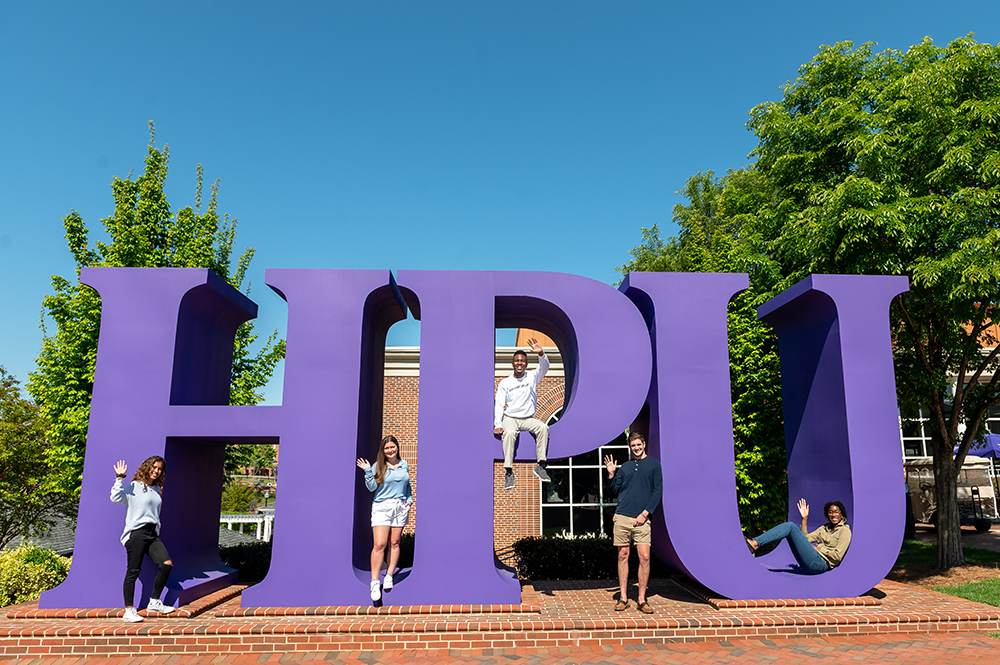
The giant HPU letters are a newer addition to the campus. They welcomed students back during the fall of 2020 as a new feature, just in time for safe in-person classes, which HPU held through the pandemic. Standing 12 feet tall and located next to the Slane Student Center, it’s an essential photo-op for visiting students or milestone moments. More than just a backdrop, these letters represent HPU — their beaming presence reflects the energy and resilience of the HPU community, making them a beloved landmark on campus.
DNA Sculpture

At HPU, innovation is in our DNA. Located in the center of the Congdon Hall lobby, stands this glowing floor-to-ceiling DNA installation. The Congdon School of Health Sciences and the Fred Wilson School of Pharmacy is a 220,000-square-foot, state-of-the-art health care education facility filled with innovative lab spaces and technology all around, completed in 2017. The sculpture’s design reflects the dynamic nature of learning, capturing the idea that just as the unique configurations of DNA adapt and change, so too do students at HPU, embracing growth and discovery throughout their transformative educational journey as they progress from student to innovative leader.
HPU’s Mariana Qubein Gardens and Arboretum + Magnolia Collection
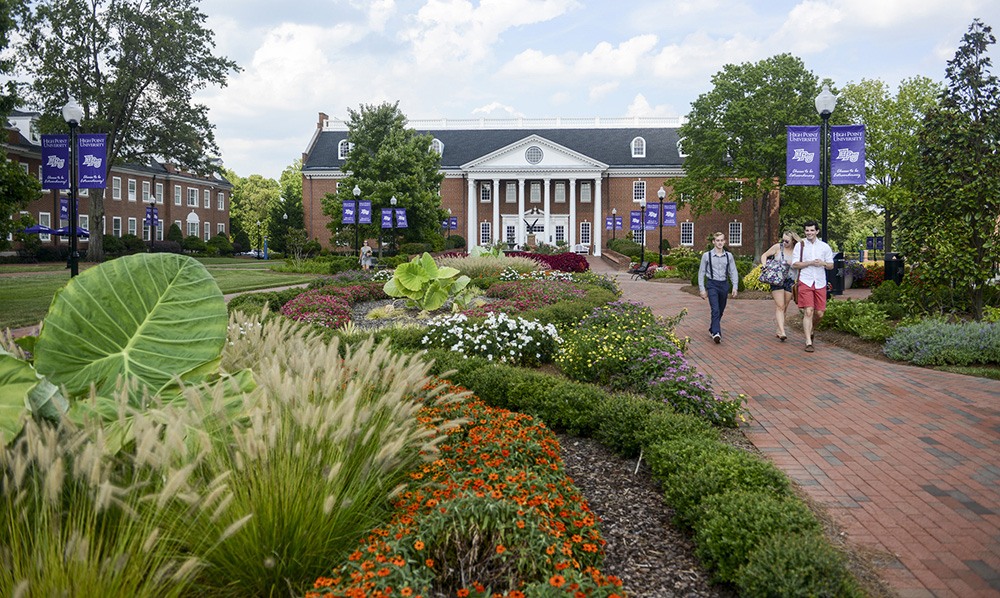
The magnolia represents the vast gardens on High Point University’s campus, a vision brought to life by First Lady Mariana Qubein in 2006. Starting with a small rose garden in front of Smith Library has blossomed into over 30 gardens, and From there, her idea blossomed. HPU now has 30 gardens, nine plant collections, and a 15,000-square-foot conservatory that’s home to plants from all over the world. HPU’s commitment and care to the gardens has earned it the Tree Campus Higher Education Award from the Arbor Day Foundation for the past 15 years, and with 128 magnolia trees, the university boasts one of the largest collections on any college campus in North Carolina.
The duel symbol also represents the alumnae group known as the Steel Magnolias. The group began in the 1950s with friendships that were formed in what was known as the Woman’s Hall at, then, High Point College. The group continues to support students through an endowed scholarship funded, in part, by their magnolia tree initiative, allowing families to honor loved ones with a tree on campus. You can read more about the Steel Magnolias on page 132 of HPU’s Centennial Edition Magazine.
Kiosks with Caring People and Complimentary Snacks
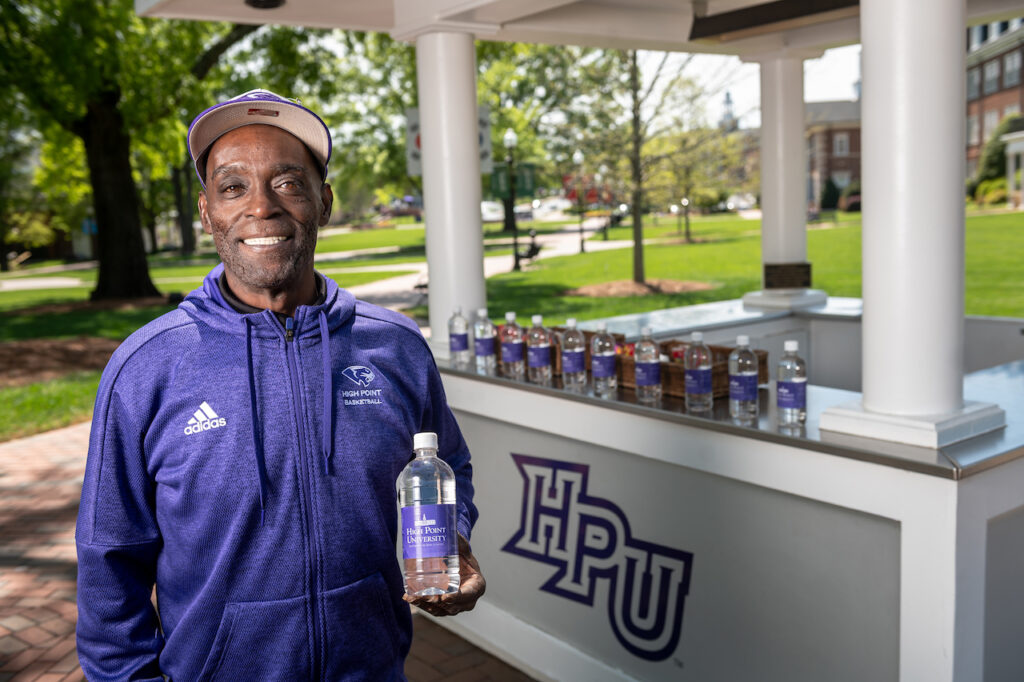
HPU has several kiosks located around campus. They model generosity by offering complimentary snacks, drinks and more that students can grab on their way to class. It’s just one of the ways HPU fosters a holistic learning environment. Even if a student is running late to class, they’re able to start their day off right — hydrated and filled. On the surface, these kiosks may look like they are about snacks, but really it’s about connection. The staff members working kiosks spread positivity, give encouragement and make real connections with the students they see every day. Discover the impact these connections have on students in this story about one of HPU’s kiosk staff members and campus celebrity Chris Quick, AKA “Boss Man.”
The University Mace
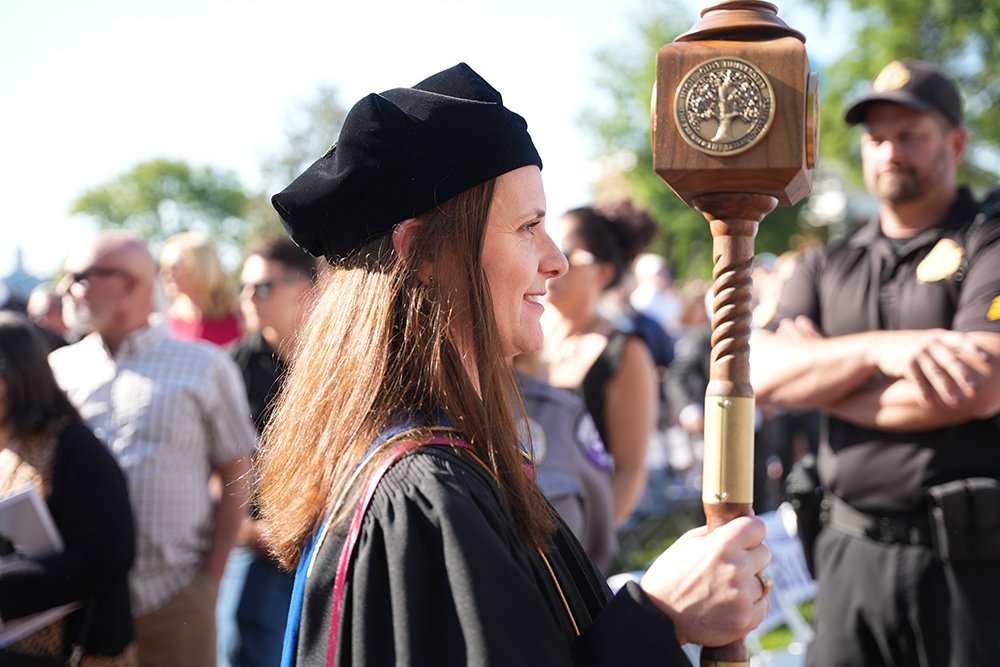
Developed originally as a weapon of war, the mace now serves as a symbol of the university as an official body of scholars. The mace plays an important role in the HPU’s Graduation Ceremony as the processional officially commences as the Faculty Marshal and mace-bearer wave the mace to announce the arrival of the line of march. The High Point University mace was designed in 1965 by Assistant Professor of Art, Raiford Porter. Carved from pecan wood, the top of the mace reveals the lamp of learning. The Office of the Provost, located in Roberts Hall, proudly displays the mace throughout the year.
HPU’s Signature Street Signs
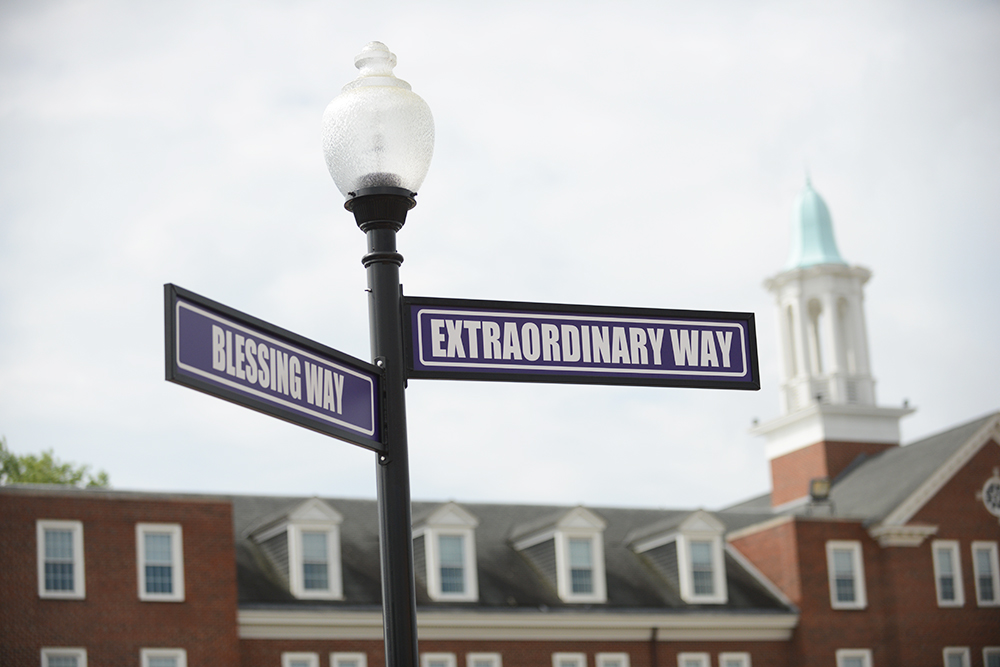
Everything on HPU’s campus has meaning. Even the names of campus streets — “Innovation Way,” “Extraordinary Way,” “Pather Dr.,” and “Patriots Way” — reflect the campus’s pride values and remind students that every path in life has a purpose.
Roberts Hall
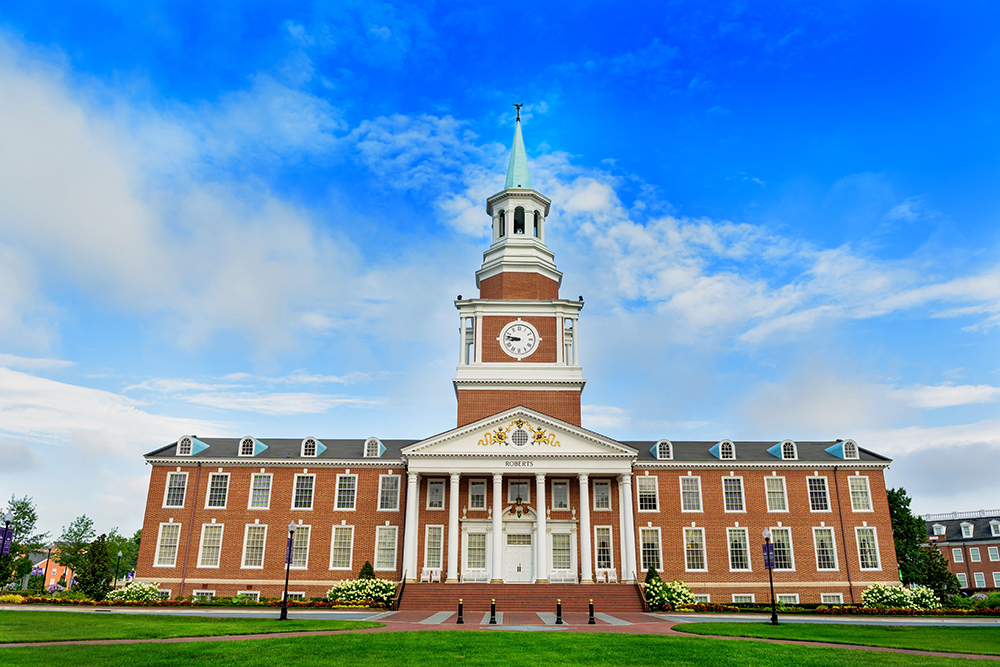
Roberts Hall clock tower is an iconic symbol that dates to the earliest days of then, High Point College. It was the first building that opened in 1924 and stands proudly representing the university’s continuing commitment to graduate students who serve as beacons of light in the world. Roberts Hall Lawn sets the stage for Convocation and Commencement — significant milestones marking both the start and end of students’ journeys at HPU. Roberts Hall also remains a can’t-miss photo op for students as they take their graduation photos against the quintessential backdrop of HPU.
Cottrell Hall
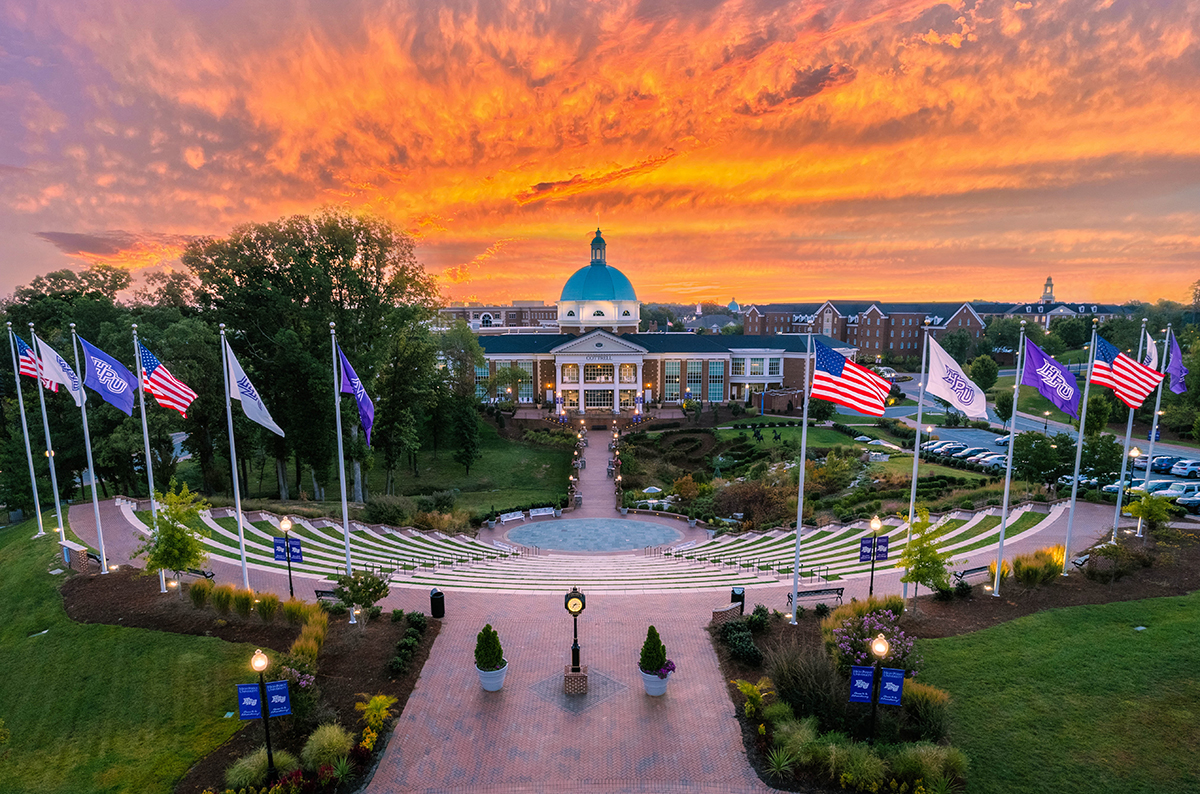
Opened in 2015, Cottrell Hall is a dynamic $22 million, 43,000-square-foot facility funded by HPU parents. Home of the Flanagan Center for Student Success, Cottrell Hall was designed to provide students with a real work environment and provide them with a dynamic space for them to not only learn professional development skills but to put them into practice. In the building, you’ll find HPU’s Office of Career and Professional Development, Entrepreneurship Center, Office of Global Education and Mestdagh Learning Commons — the home base for HPU’s Freshman Success Coaches. Students also practice giving presentations in sleek conference rooms with glass walls modeled after Fortune 500 companies. For that extra kick of motivation, there is also a Starbucks inside which adjoins the International Concourse and airplane fuselage.
Growth in HPU Sciences
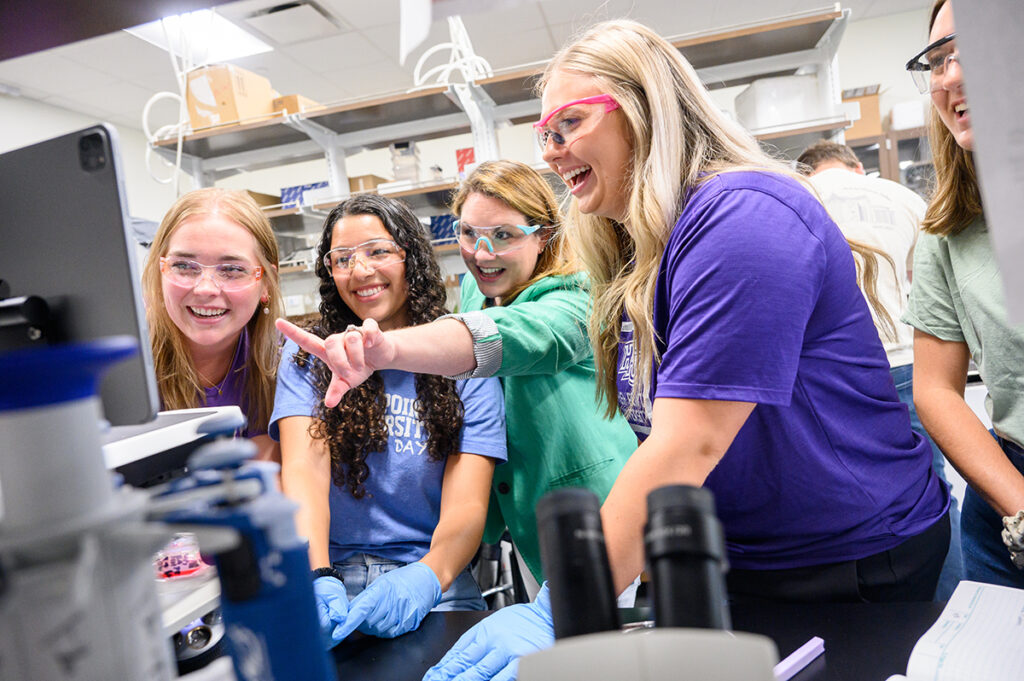
Depicted on the cover, the microscope represents HPU’s commitment to STEM education. HPU’s commitment is also represented through the campus’s Innovation Corridorr — Since 2005, HPU has invested $500 million in STEM programs, faculty and facilities. The result is a half-mile stretch of campus that HPU’s scientists call home. The Innovation Corridor is one of the university’s single largest investments and reflects HPU’s commitment to preparing STEM students for the world as it’s going to be.
R.G. Wanek School of Natural Sciences
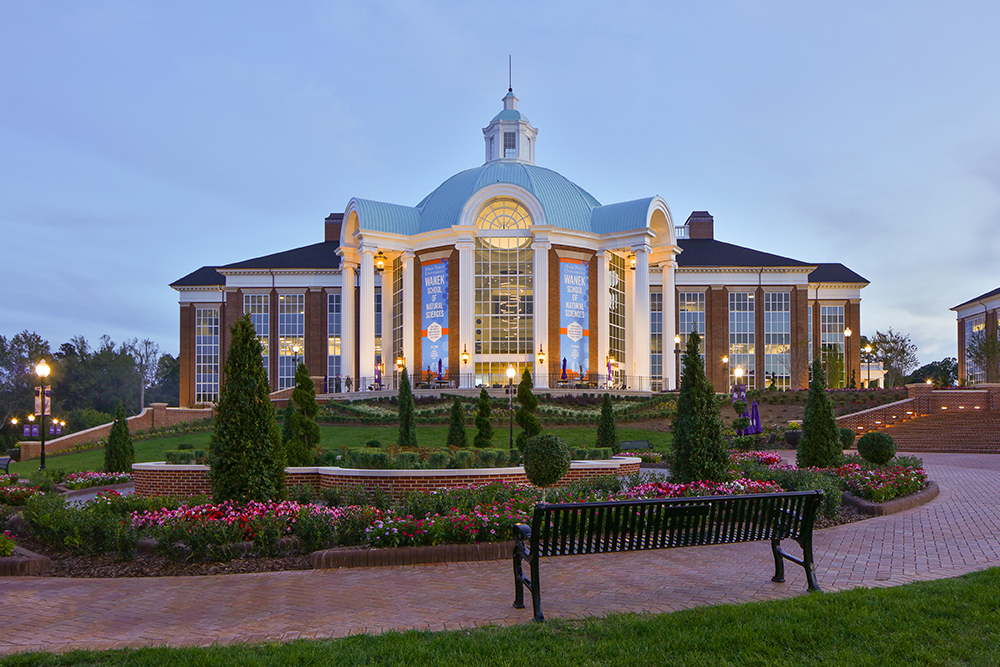
The $65 million, 128,000-square-foot Wanek School of Natural Sciences, opened to students in the Fall of 2019. The state-of-the-art facility includes four stories of collaborative and innovative lab and classroom space and is home to the Culp Planetarium, one of the nation’s brightest planetariums. The three-story, 6,000-square-foot planetarium and lecture room space includes 125 seats and a 50-foot dome with a 4K projection screen and a state-of-the-art surround sound system.
The HPU Seal
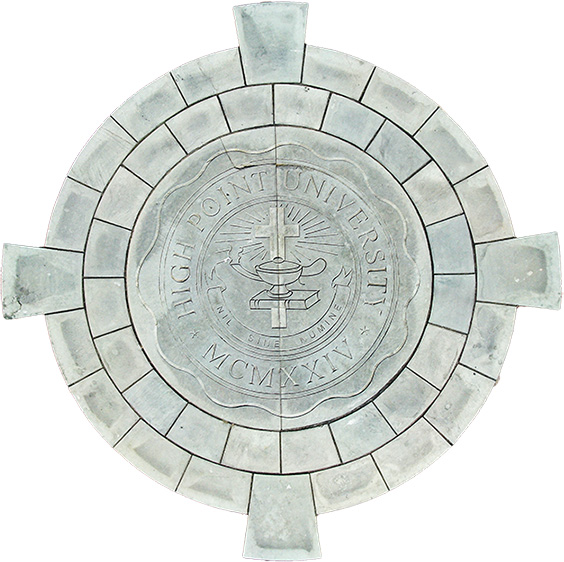
Created during the establishment of High Point College in the early 1920s, the university seal embodies the history and legacy it represents. The seal features a “lamp of learning,” symbolizing the hope that knowledge will never be extinguished, along with a cross reflecting the “toil for scholastic triumph.” Encircling these symbols is an open band, signifying the belief that human life can never achieve absolute perfection.
Today, the seal remains a sacred emblem. HPU’s oldest honor society, the Order of the Lighted Lamp, was founded in 1936, inspired by the seal’s lamp of knowledge, representing scholarship, leadership, character and service. It signifies the hope that the college will never allow the lamp of learning to be extinguished. You can read more about the Order of the Lighted Lamp on page 46 of HPU’s Centennial Edition Magazine.