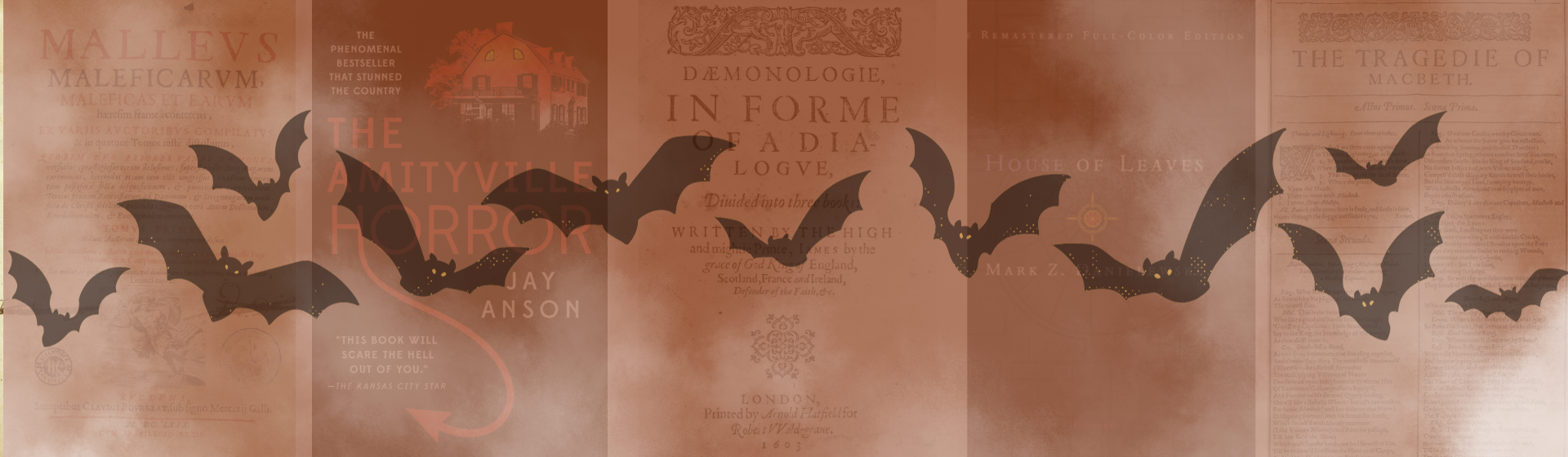
Eerie Pages Through the Ages: A Journey of Spooky Books Across the Centuries
-Blog post by Gerald Ward, Media & Digital Services Librarian
Throughout history, books have served as a medium for the manifestation of our most profound anxieties and disturbing creative visions. Whether found within unsettling works of fiction or chilling accounts of real events, the written word possesses an unparalleled capacity to evoke spine-tingling sensations. We invite you to embark on a captivating expedition across the centuries, delving into the world of eerie literature that has captivated and unnerved readers from the fifteenth century to the contemporary era.
The 15th Century: The Malleus Maleficarum (1486)
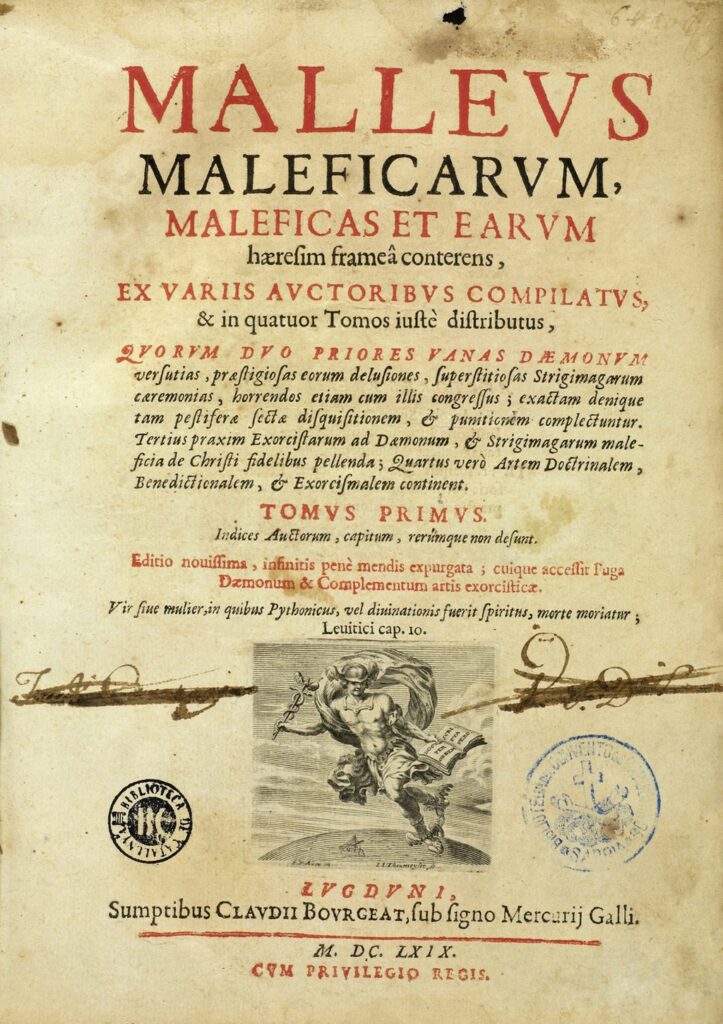
Our journey begins in the 15th century with The Malleus Maleficarum, also known as “The Hammer of Witches.” This infamous work was penned by Heinrich Kramer and Jacob Sprenger, two German friars who sought to expose and persecute witches during the witch trials of the time. Filled with gruesome accounts of witchcraft and instructions for witch-hunting, it remains a haunting relic of a dark era.
Extensively read and influential throughout Europe for centuries, The Malleus Maleficarum played a significant role in fueling the witch hunts that occurred in the 15th, 16th, and 17th centuries. The initial argument presented in the book asserts that witchcraft poses a genuine and substantial threat to Christianity. It then proceeds to outline the various categories of witches and their supposed abilities. The Malleus Maleficarum also contains instructions on how to identify and interrogate witches, along with guidelines for conducting witch trials.
Although The Malleus Maleficarum faced condemnation from some church leaders, it continued to be widely employed by inquisitors and clergy. Tragically, the book played a significant role in the deaths of thousands of innocent individuals, predominantly women, who were falsely accused and convicted of witchcraft. Ultimately, it established a systematic framework for witch trials, perpetuated gender biases, and fueled the persecution and execution of those accused of witchcraft.
The 16th Century: Daemonologie by King James VI of Scotland (1597)
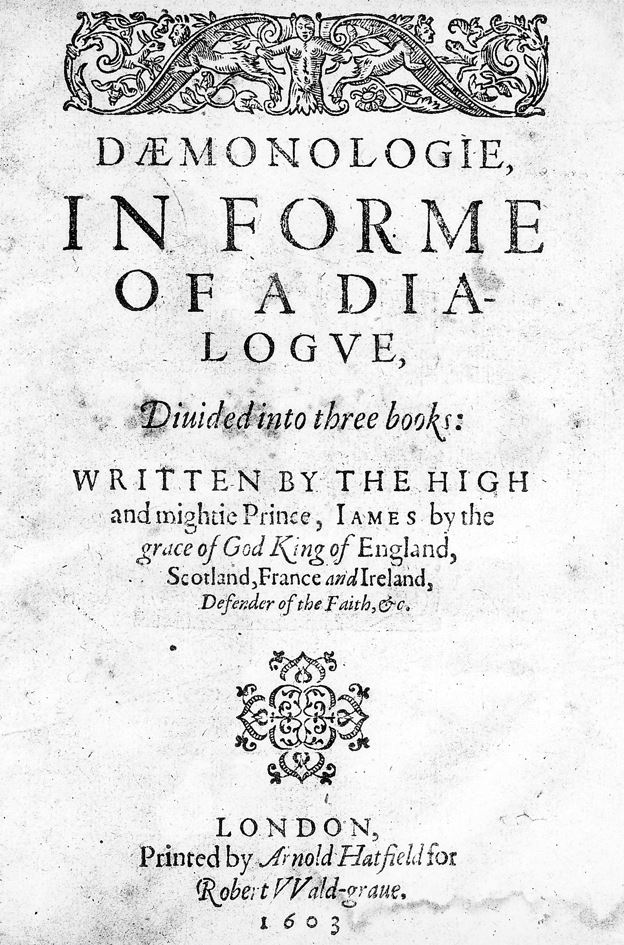
Daemonologie, written by King James VI of Scotland (later King James I of England), held significant importance in the late 16th century with regard to the topic of witches and witchcraft. King James’ book served multiple important functions during this time.
King James’ work strongly advocated for the persecution of witches, reinforcing the belief in the reality of witchcraft. His support for witch trials had a notable influence on authorities, leading them to take accusations of witchcraft more seriously. Moreover, the book established a clear definition of witchcraft, providing a theological and legal framework for the identification and prosecution of individuals involved in witchcraft. It emphasized the notion that witches made agreements with the Devil and utilized magic to cause harm to others.
As a reigning monarch, King James’ endorsement of witch trials and his active involvement in Daemonologie provided substantial credibility to the witch-hunting efforts of the time. This royal support carried significant weight in the prosecution of those who were accused of witchcraft.
All in all, Daemonologie by King James played a pivotal role in promoting and shaping the persecution of witches in the late 16th century. It offered theological and legal justification for witch trials and contributed to the prevailing beliefs surrounding witchcraft, ultimately influencing the widespread fervor for witch-hunting during that period.
The 17th Century: Macbeth by William Shakespeare (1606)
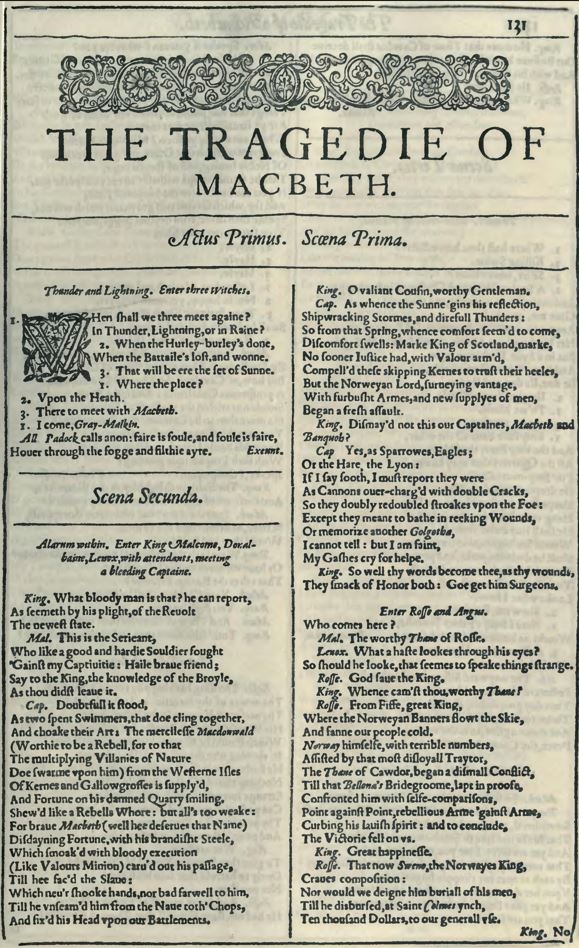
From the early 17th century, we are presented with the timeless classic Macbeth by the Bard himself. In this tragedy, Shakespeare weaves a tale of ambition, betrayal, and supernatural elements that still send shivers down readers’ spines.
Macbeth contains a prevalent supernatural atmosphere that adds to the eerie feeling throughout. These supernatural elements include the mysterious presence of the Weird Sisters (or witches) who predict events and interact with Macbeth and others. Their eerie chants and ability to see the future greatly contribute to the otherworldly mood. Macbeth encounters a series of ghostly visions conjured by the witches, which convey cryptic and disturbing prophecies that drive him further into madness.
Furthermore, the ghostly appearance of Banquo, whom Macbeth has murdered, during a banquet creates a haunting moment. References to natural disturbances like storms, darkness, and unsettling events, like horses devouring one another, reflect the disruption of the natural order caused by Macbeth’s ambition and the intervention of supernatural forces. Lady Macbeth’s sleepwalking, where she desperately tries to cleanse her imaginary bloodstained hands, reveals the psychological toll of guilt and involvement in the murders. Various characters also call upon prophecies, curses, and incantations, intensifying the sense of the supernatural.
These supernatural elements collectively highlight the moral and psychological consequences of ambition, murder, and manipulation of fate in Macbeth, contributing to the play’s overall eerie and unsettling tone and establishing it as one of Shakespeare’s most captivating and chilling tragedies.
The 18th Century: The Monk by Matthew Lewis (1796)
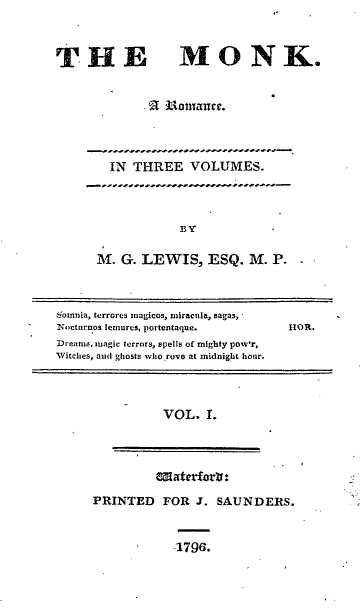
Matthew Lewis’ The Monk, published in 1796, is a Gothic novel that intricately blends supernatural and Gothic horror elements to establish a haunting and unsettling atmosphere. Within the narrative, supernatural elements are pervasive, with Ambrosio, a devout monk, striking a demonic pact that leads to a series of otherworldly occurrences and temptations. Ghostly apparitions, notably the spectral bleeding nun who torments Ambrosio, contribute significantly to the eerie ambiance. The story also incorporates occult practices, including black magic and witchcraft, along with encounters with malevolent spirits, further enhancing its supernatural character.
In addition to its supernatural aspects, The Monk embraces Gothic horror elements, using dark and ominous settings such as monasteries, dungeons, and ancient castles to create an atmosphere of foreboding. The central theme of moral degradation follows the protagonist’s descent into sin, murder, and moral decay, aligning with the Gothic tradition of exploring the corruption of innocence and virtue. The novel delves into taboo subjects like blasphemy, incest, and sexual depravity, which were considered shocking and horrifying in its historical context. Furthermore, it employs psychological horror to depict the mental torment and madness experienced by Ambrosio and other characters.
Overall, The Monk stands as a quintessential work of Gothic literature, skillfully intertwining supernatural elements like demonic pacts and ghostly apparitions with a dark and morally disturbing narrative. It probes themes of temptation, moral decline, and psychological horror, solidifying its place as a significant contribution to the Gothic horror genre.
The 19th Century: The Tell-Tale Heart by Edgar Allan Poe (1843)

The 19th century gave us one of the masters of the macabre, Edgar Allan Poe. The Tell-Tale Heart stands as a prime example of his unsettling storytelling. This short story, narrated by an unreliable and increasingly unhinged protagonist, explores themes of guilt, paranoia, and the horrors of the human mind.
The Tell-Tale Heart is a perfectly crafted story that effectively combines supernatural and horror elements to create a chilling and suspenseful narrative. Primarily falling into the realm of psychological horror, the story revolves around the deteriorating mental state of the narrator. We are taken on a disturbing journey through the mind of an increasingly unstable individual, which is a characteristic of psychological horror.
Poe skillfully builds suspense throughout the narrative, intensifying tension as the protagonist’s obsession with the old man’s eye grows, ultimately leading to a gruesome murder and dismemberment. The overwhelming guilt that consumes the protagonist after the murder, along with their descent into madness, serves as a central theme and significantly contributes to the overall terrifying mood of the story. Poe’s use of repetition and rhythmic writing style further enhances the sense of unease and insanity, heightening the horror.
In The Tell-Tale Heart, Edgar Allan Poe demonstrates his mastery of blending supernatural elements, psychological horror, and suspense to create a timeless work within the horror genre. The story delves into the complexities of a disturbed mind with an eerie and spine-tingling narrative.
The 20th Century: The Amityville Horror by Jay Anson (1977)
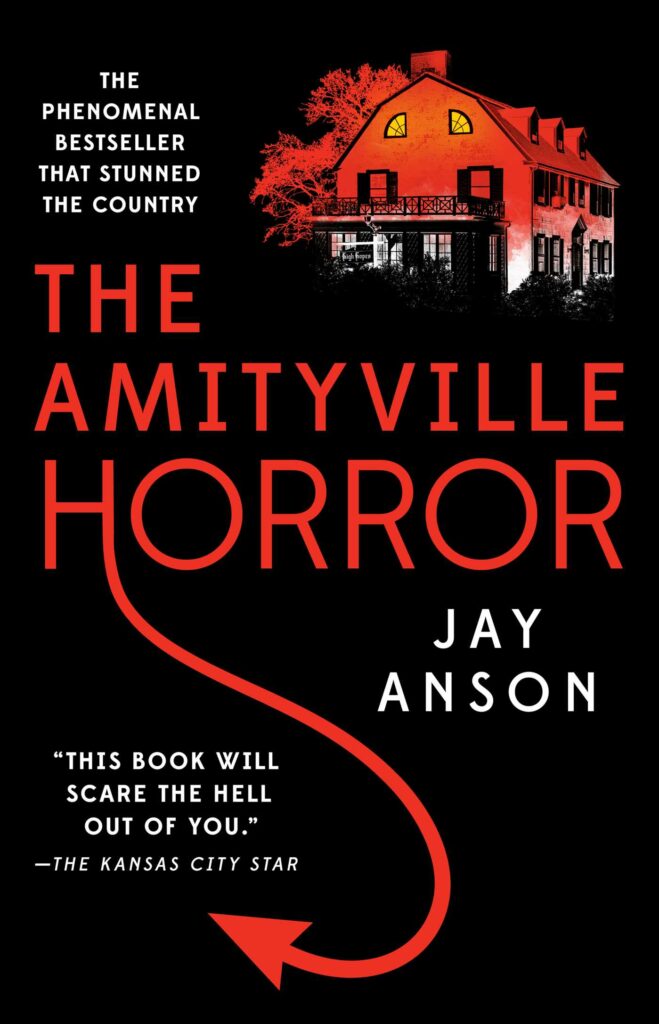
The 20th century brought us a blend of nonfiction and horror with The Amityville Horror by Jay Anson, a book that explores the blend of supernatural and horror elements through a narrative rooted in alleged real-life events.
The story revolves around a house in Amityville, New York, where a series of paranormal incidents have reportedly occurred. These eerie events encompass unexplained sounds, levitating objects, and ghostly apparitions, all presented as inexplicable and supernatural phenomena. Additionally, the narrative alludes to the existence of a malevolent supernatural entity inhabiting the house, believed to be responsible for the terror experienced by its inhabitants. The theme of possession is also explored as certain characters are said to have come under the influence or control of this malevolent force.
The horror elements in the book primarily operate on a psychological level. It delves into the toll the haunted house takes on the family living there, vividly depicting their escalating fear, growing paranoia, and increasing mental distress as they struggle with the supernatural forces surrounding them. The horror is further heightened by the family’s desperate desire to escape the horrors within the house, hindered by financial limitations that contribute to their sense of helplessness and dread.
What distinguishes The Amityville Horror is its claim to be based on actual events, adding an unsettling layer of horror for readers who believe the depicted events to have actually happened. This fusion of supernatural occurrences, psychological anguish, and the alleged real-life foundation of the story has solidified the book’s enduring status as a classic within the horror genre.
The 21st Century: House of Leaves by Mark Z. Danielewski (2000)
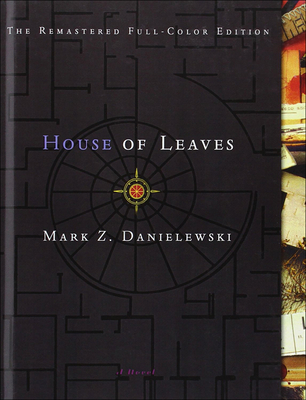
In the 21st century, House of Leaves by Mark Z. Danielewski challenges the very concept of what a book can be. This labyrinthine novel explores a family’s encounter with a house that defies the laws of physics and sanity. The unconventional formatting and unsettling narrative create an immersive and disorienting experience for readers.
At the core of the story is the Navidson House, which evolves from an ordinary dwelling into a source of supernatural terror. As the interior of the house inexplicably expands, revealing endless, dark, and labyrinthine corridors, the characters, including Zampanò and Johnny Truant, embark on an exploration that uncovers disturbing revelations about the house’s eerie phenomena, mysterious nature, and haunted history. This exploration triggers profound psychological disturbances among the characters, such as paranoia, hallucinations, and obsession, all of which contribute to the overall unsettling atmosphere of the novel.
House of Leaves’ unconventional typographical choices and layout further enhance the disorienting experience. By utilizing various text orientations, fonts, and colors, the novel mirrors the characters’ declining sanity and enhances the eerie and unsettling tone. Extensive footnotes, references, and scattered citations also blur the boundary between fiction and reality, encouraging readers to question the reliability of the narrative and the authenticity of the depicted events. The novel’s labyrinthine structure mirrors the intricate and ever-evolving nature of the Navidson House. Readers find themselves navigating a complex narrative landscape that constantly shifts and morphs, echoing the disorientation and unease experienced by the characters themselves.
Ultimately, House of Leaves is a uniquely structured novel that seamlessly incorporates supernatural and unsettling elements. The intricate narrative layers and unconventional formatting intensify the sense of disorientation and psychological horror, resulting in a profoundly unsettling and unforgettable reading experience within the psychological horror genre.
Conclusion
From witch hunts to gothic castles, haunted houses to psychological thrillers, spooky books have spanned the centuries, reflecting the fears and curiosities of their respective eras. Whether grounded in real events or emerging from the darkest corners of the imagination, these books continue to captivate and haunt readers around the world. As we venture further into the 21st century, one thing remains clear: our fascination with the eerie and the unknown endures, and the pages of spooky literature continue to beckon us to explore the shadows.
Sources
Anglo, Sydney. The Damned Art : Essays in the Literature of Witchcraft. Routledge & K. Paul, 1977. https://hpulibraries.on.worldcat.org/oclc/3334259
Anson, Jay. The Amityville Horror. Prentice-Hall, 1977. https://hpulibraries.on.worldcat.org/oclc/3072755
Danielewski, Mark Z, and Zampanò. Mark Z. Danielewski’s House of Leaves. Edited by Johnny Truant, 2nd ed., Pantheon Books, 2000. https://hpulibraries.on.worldcat.org/oclc/41641311
Frazier, Kendrick. Paranormal Borderlands of Science. Prometheus Books, 1981. https://hpulibraries.on.worldcat.org/oclc/7614511
Institoris, Heinrich, and Jakob Sprenger. The Malleus Maleficarum of Heinrich Kramer and James Sprenger. Dover, 1971. https://hpulibraries.on.worldcat.org/oclc/246623
James I (King of England). Daemonologie: In Forme of a Dialogue, Diuided into Three Bookes. Written by the High and Mightie Prince, Iames by the Grace of God King of England, Scotland, France, and Ireland, Defender of the Faith. &c. Printed by R. Bradock for William Aspley, and W. Cotton, According to the Copie Printed at Edenburgh, 1603. https://hpulibraries.on.worldcat.org/oclc/606504703
Levack, Brian P. The Witch-Hunt in Early Modern Europe. 3rd ed., Pearson Longman, 2006. https://hpulibraries.on.worldcat.org/oclc/61309397
Lewis, M. G. The Monk: A Romance. Edited by Howard Anderson, Oxford University Press, 1973. https://hpulibraries.on.worldcat.org/oclc/775271
Poe, Edgar Allan. The Annotated Poe. Edited by Kevin J Hayes, Belknap Press of Harvard University Press, 2015. https://hpulibraries.on.worldcat.org/oclc/544510
Shakespeare, William, and Robert S Miola. Macbeth : Authoritative Text, Sources and Contexts, Criticism. W.W. Norton, 2004. https://hpulibraries.on.worldcat.org/oclc/55536142
Wikipedia contributors. (2023, September 22). Daemonologie. In Wikipedia, The Free Encyclopedia. Retrieved 19:31, October 5, 2023, from https://en.wikipedia.org/w/index.php?title=Daemonologie&oldid=1176625612
Wikipedia contributors. (2023, September 10). House of Leaves. In Wikipedia, The Free Encyclopedia. Retrieved 20:17, October 5, 2023, from https://en.wikipedia.org/w/index.php?title=House_of_Leaves&oldid=1174757843
Wikipedia contributors. (2023, September 19). Malleus Maleficarum. In Wikipedia, The Free Encyclopedia. Retrieved 19:30, October 5, 2023, from https://en.wikipedia.org/w/index.php?title=Malleus_Maleficarum&oldid=1176063856
Wikipedia contributors. (2023, June 2). The Monk. In Wikipedia, The Free Encyclopedia. Retrieved 19:44, October 5, 2023, from https://en.wikipedia.org/w/index.php?title=The_Monk&oldid=1158187478
Wikipedia contributors. (2023, September 5). The Tell-Tale Heart. In Wikipedia, The Free Encyclopedia. Retrieved 20:05, October 5, 2023, from https://en.wikipedia.org/w/index.php?title=The_Tell-Tale_Heart&oldid=1173887225
Williams, William F. Encyclopedia of Pseudoscience. Facts On File, 2000. https://hpulibraries.on.worldcat.org/oclc/40602640