Smith Library at High Point University houses an impressive array of board games and roleplaying games, establishing itself as a haven for tabletop gaming enthusiasts across campus. From timeless classic board games to immersive RPG experiences like Dungeons & Dragons, our collection caters to many tastes and interests.
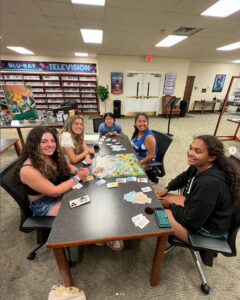 But we’re more than just a repository of games—Smith Library hosts regular game nights, providing students with opportunities to unwind, forge connections, and discover new games in a warm and welcoming atmosphere. These events foster a sense of community and camaraderie among players of all backgrounds.
Moreover, our Tabletop Tuesdays, held every other week during the semester, offer dedicated time for students to indulge in their love for tabletop gaming. Whether engaging in competitive board game showdowns or embarking on epic RPG adventures, Tabletop Tuesdays provide a dynamic and engaging platform for students to immerse themselves in their favorite games.
Yet, amidst the excitement of gameplay, have you ever stopped to ponder the intriguing history behind board games and roleplaying games? These ancient pastimes have woven a captivating narrative that spans centuries and cultures, offering profound insights into the societal, cultural, and technological contexts of their eras. Far more than mere sources of amusement, tabletop games serve as reflective mirrors, capturing the essence of their times and inviting players to explore immersive experiences across various landscapes of human history.
History
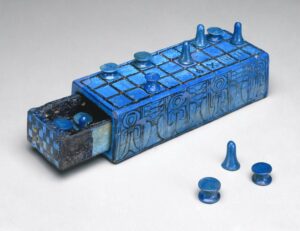 In ancient civilizations such as Mesopotamia and Egypt, board games like Senet and the Royal Game of Ur emerged as early examples of structured gameplay. These games not only entertained but also served religious, educational, and even divinatory purposes, offering insights into the beliefs and values of ancient societies (Grunfeld, 1975).
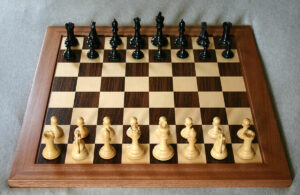 As civilizations evolved, so too did their games. Medieval Europe saw the rise of chess, a game of strategy and intellect that became a symbol of nobility and power (Harkness, 1967). Additionally, courtly pastimes and festivities incorporated elements of roleplaying, with masquerades and theatrical performances providing opportunities for individuals to adopt different personas and explore imaginative narratives.
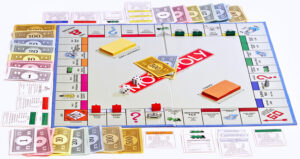 The advent of the industrial revolution in the 18th and 19th centuries brought about significant changes in the gaming landscape. Mass production techniques allowed for the widespread distribution of board games like Monopoly, Scrabble, and Clue, which became staples of family entertainment and popular culture (Grunfeld, 1975).
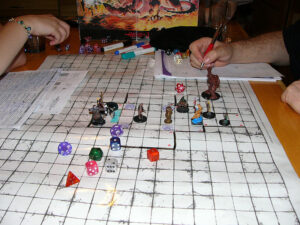 However, it was not until the latter half of the 20th century that the modern tabletop gaming renaissance truly began. In 1974, Dungeons & Dragons, created by Gary Gygax and Dave Arneson, revolutionized gaming with its innovative blend of storytelling, strategy, and character development. D&D introduced the concept of collaborative storytelling, where players assumed the roles of characters within a shared narrative, paving the way for the roleplaying game genre (Peterson, 2012).
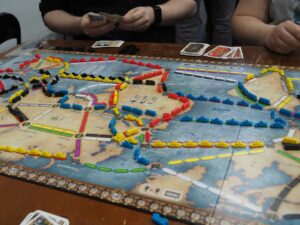 The late 20th and early 21st centuries witnessed a resurgence in board game design, marked by a wave of Euro-style games that emphasized strategy, resource management, and player interaction. Games like Ticket to Ride and Carcassonne became beloved classics, appealing to a new generation of gamers with their elegant mechanics and immersive gameplay experiences (Donovan, 2017).
In the digital age, tabletop games have embraced technology, with apps, augmented reality, and online platforms enhancing gameplay experiences and facilitating remote play, such as Roll20.
Conclusion
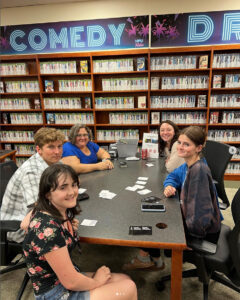 As we traverse the dynamic realm of tabletop gaming, one truth shines through: these games persist in enchanting players of all ages and backgrounds, providing not merely amusement but also avenues for social bonding, imaginative expression, and narrative exploration. With every dice roll and card flip, tabletop games beckon us to embark on an odyssey of exploration, fostering camaraderie and crafting lasting memories destined to echo through the annals of time.
–Blog post by Gerald Ward, Media & Digital Services Librarian
Resources
Cover, J. G. (2010). The creation of narrative in tabletop role-playing games. McFarland. https://hpulibraries.on.worldcat.org/oclc/476156852
Donovan, T. (2017). It’s all a game: The history of board games from Monopoly to Settlers of Catan. Thomas Dunne Books. https://hpulibraries.on.worldcat.org/oclc/960239246
Grunfeld, F. V. (1975). Games of the world: How to make them, how to play them, how they came to be. Holt, Rinehart and Winston. https://hpulibraries.on.worldcat.org/oclc/1502289
Harkness, K., & United States Chess Federation. (1967). Official chess handbook. D. McKay. https://hpulibraries.on.worldcat.org/oclc/728637
Harrigan, P., & Wardrip-Fruin, N. (2009). Third person: Authoring and exploring vast narratives. MIT Press. https://hpulibraries.on.worldcat.org/oclc/233813740
Peterson, J. (2012). Playing at the world: A history of simulating wars, people and fantastic adventures, from chess to role-playing games. Unreason Press. https://hpulibraries.on.worldcat.org/oclc/808727087
Wardrip-Fruin, N., & Harrigan, P. (2007). Second Person: Role-playing and story in games and playable media. MIT Press. https://hpulibraries.on.worldcat.org/oclc/68712441
Williams, J. P., Hendricks, S. Q., & Winkler, W. K. (2006). Gaming as Culture: Essays on reality, identity and experience in fantasy games. McFarland. https://hpulibraries.on.worldcat.org/oclc/63122794
Witwer, M. (2015). Empire of Imagination: Gary Gygax and the birth of Dungeons & Dragons. Bloomsbury USA, an imprint of Bloomsbury Publishing, Plc. https://hpulibraries.on.worldcat.org/oclc/908838677