College and University Marching bands can trace their roots back to the early days of the battlefield and the conflicts in Europe. A drum and fife and then later a trumpet were used to tell soldiers where to go and what to do on the chaotic and noisy field of battle. In the colonies and later the United States, outdoor concerts became common, and the earliest known outdoor performance was in 1775 in Philadelphia. Later well-known band leaders such as John Phillip Sousa performed regularly.
The oldest college marching band can be traced to the mid-1800’s at the University of Notre Dame Band of the Fighting Irish. But it was the advent of football and later other sports that created the environment for the development of what we know today as the college marching band. It was the Fighting Irish band that performed at their first game in 1887 and since then college marching bands have become an integral part of college athletic events.
College marching bands became more common in the 1920s because of two developments. High School music programs began producing amateur musicians and the football programs became a meaningful part of the college experience. The marching band was the perfect complement to these developing athletic programs. And it is interesting to remember the early battlefields that used the trumpeter or the drummer to direct the troops and, in this case, to excite and entertain the audience!
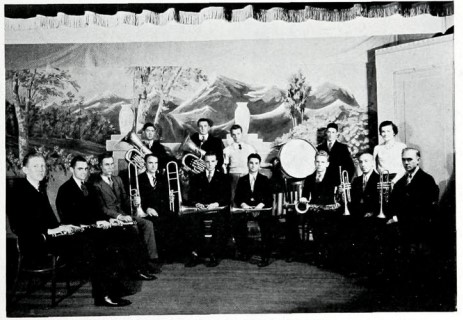 The marching band at High Point College began in the fall of 1925 and was known as the High Point College Panthers Band. Of the 100 students enrolled in 1925, only 13 students were a part of the band when it was formed. If you open a copy of the 1928 yearbook, the Zenith, you can see the note about Panther Band as a part of the student activity description. Only 2 of the 13 students had musical experience and the rest started with little experience. A few weeks after their formation, the band started to perform various concerts. These performances formed valuable connections in the community.
In the fall of 1926, the band gained four new members. Elections took place and five people were the officers of that year. To start off the exciting new year, the first official practice took place. Harmony came easy to the band, as most people were returning members. They had plans to expand their program and tour more, even though there was no set regimen in place.
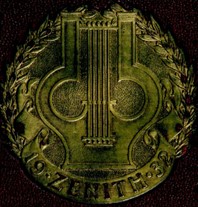
Music played an important role on campus. In 1932 the entire yearbook was devoted to music! Not only was there a picture of the band members (seen here) but the other music groups – the choir, the orchestra, the girl’s glee club and the etude music club were all featured as a part of the yearbook that included quotes from famous composers. Even the cover included a musical image which is shown at the beginning of this post.
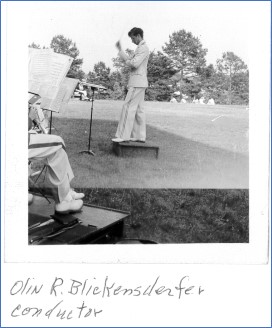
Olin R. Blickensderfer became the band conductor in 1937 and brought a new level of enthusiasm and organization to the band. Conductor Blickensderfer challenged the band and pushed them to improve. He was actively engaged, and one noticeable change was seen in the first game of the season. The band had 20 pieces and brought pep and spirit to the first football game of the year.
By the fall of 1940, 19 new instrumentalists were added to the band’s roster. This was a large increase in membership. The band continued to be very involved in the community in the following years. They performed in parades and sporting events and represented High Point College during trips.
As college marching bands became the norm on college campuses there were a few considerations. Early programs were copied from military marching bands. The uniforms and the camaraderie of the musicians were also very structured. It was not until the 1960’s that bands begin to vary their programming to suit the audience.
The marching band at High Point University came to an end in fall of 1950 with the disbandment of the football team. The PEP band continued to perform at various events, including concerts and campus events. Then, in August of 2020 the marching band returned! Even though a football program was not brought back, it did not stop the music department from restarting the marching band program at HPU.
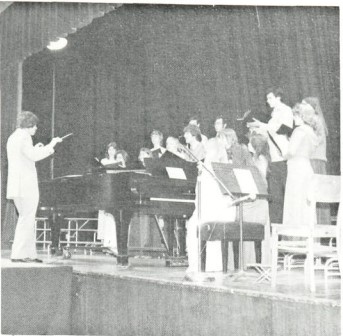
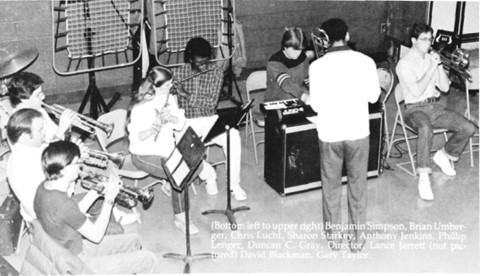
For your enjoyment, what follows are pictures of the High Point College marching band, as seen from about 1940 to 1984. You can see the how the appearance and the size of the band changes over the years. The band was documented throughout the pages of the yearbook, the Zenith and in the Hi-Po (HPU newspaper), until 1984; the last yearbook with pictures of the band at HPU. Enjoy!
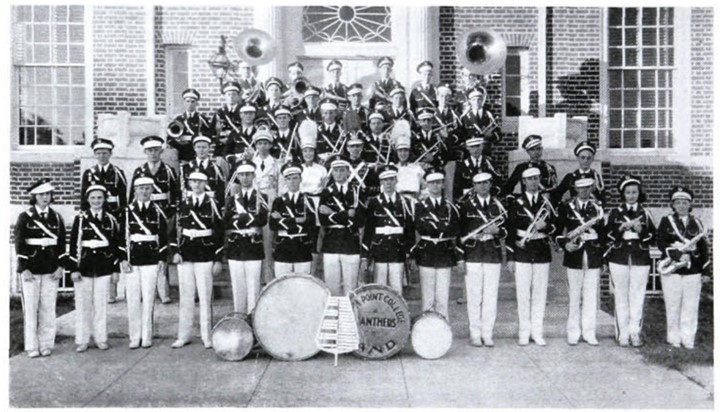
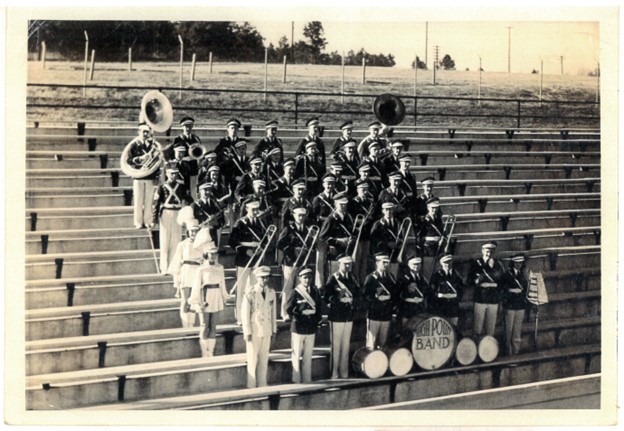
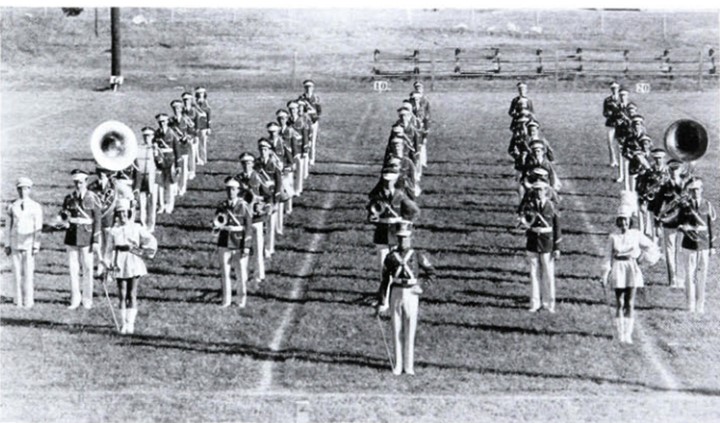
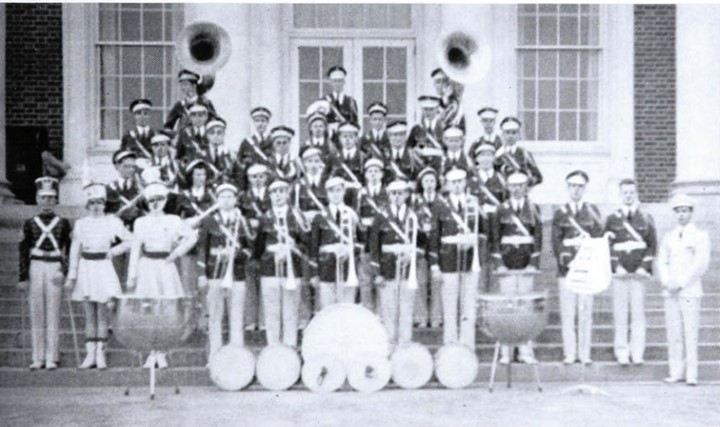
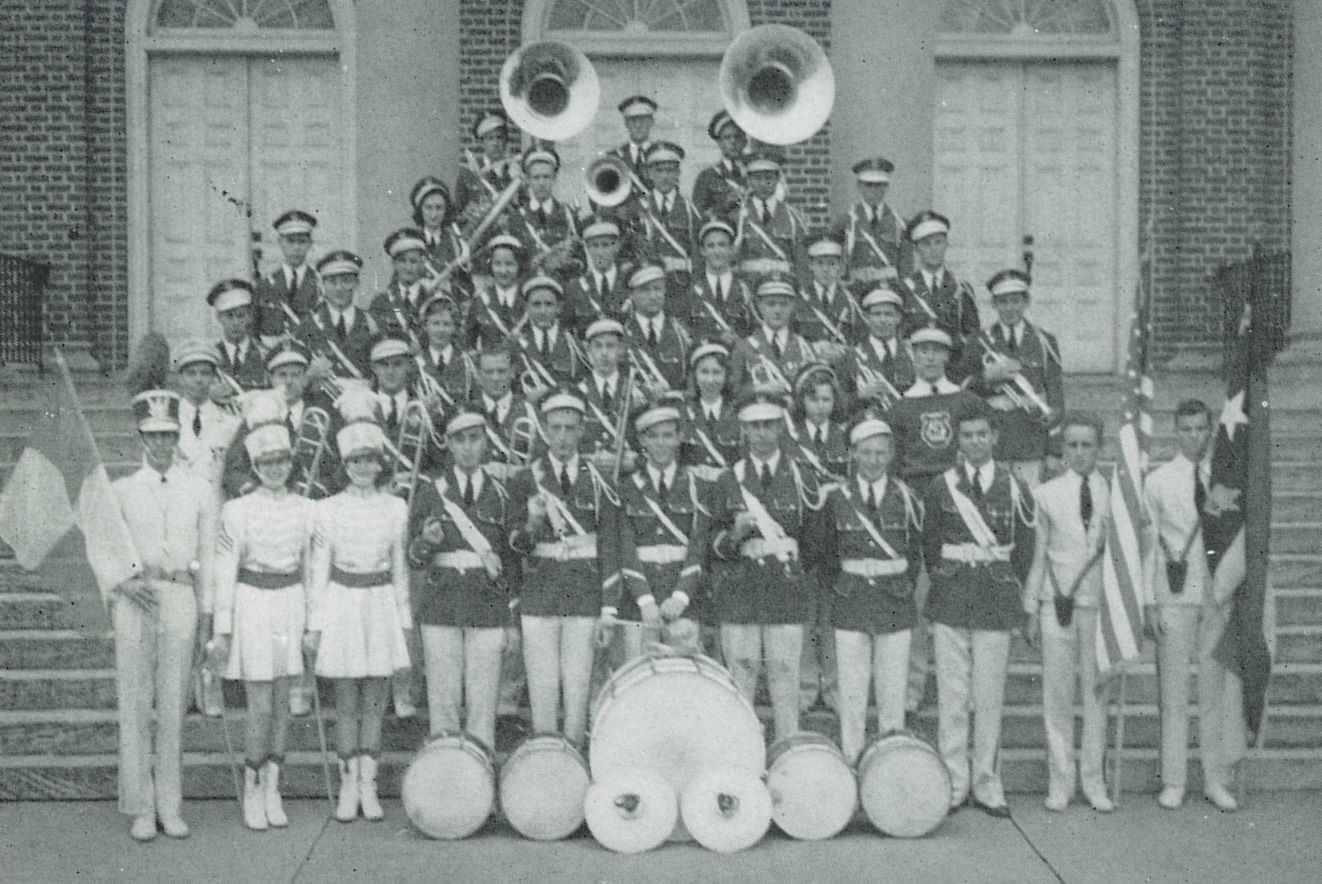

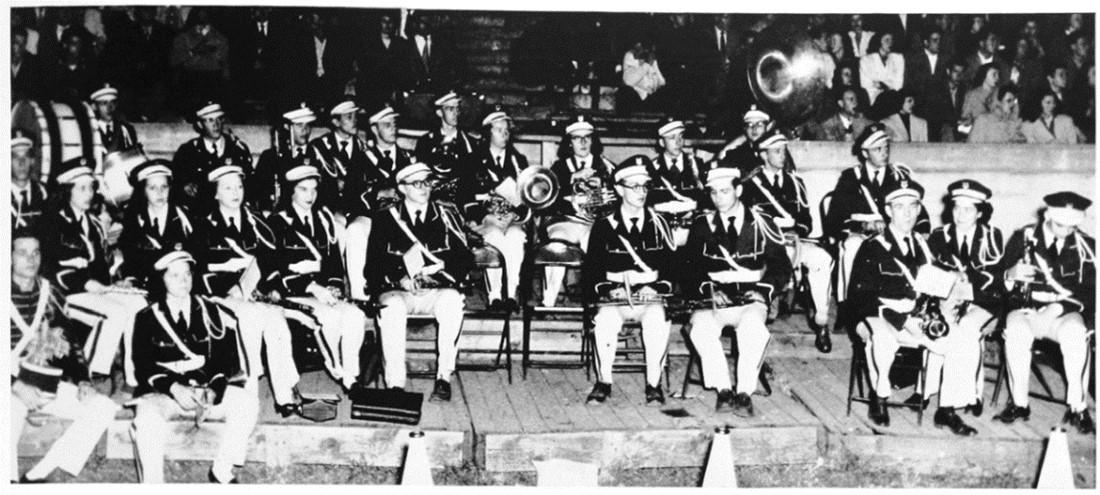
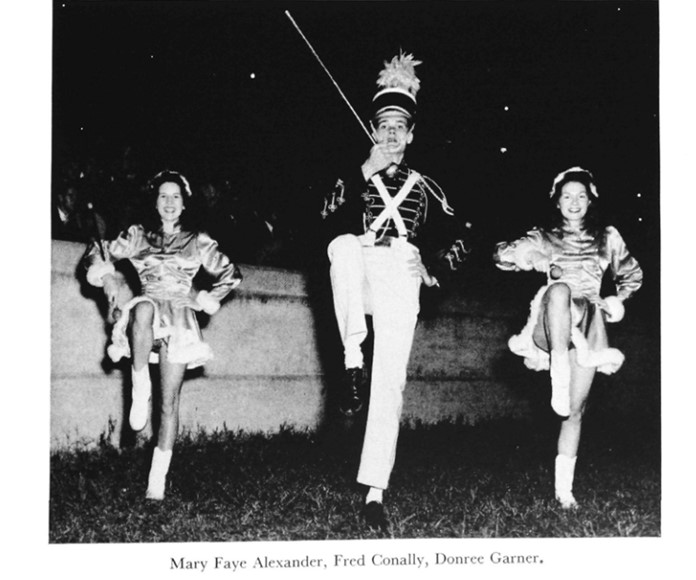
Majorettes: Mary Faye Alexander & Donree Garner
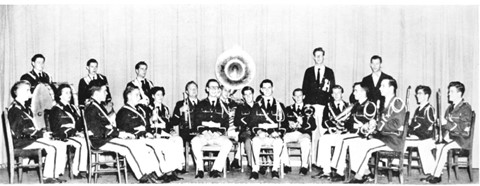

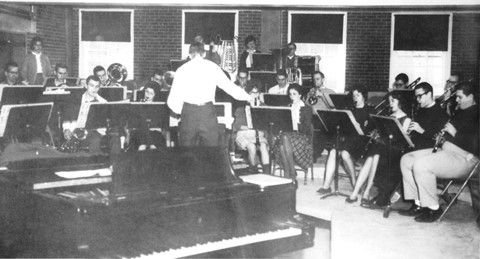
Special thanks to the staff of the High Point University archives and to one of our library student workers, Becky Meier, who gathered images and data for this historical posting and yes, she was a member of the HPU honor guard.
The information on the history college marching bands came from a dissertation – the information was summarized from the literature review – pages 6-12. Here is the citation in case you would like to read more about the topic.
Cumberledge JP. The use of one week’s time among specific groups of college students: Music majors, non-music majors, and marching band participants. Order No. 3724220 ed. The Florida State University; 2015. https://hpulibraries.on.worldcat.org/oclc/1403222134
-Blog post by David Bryden, Director of Library Services & Becky Meier, Library Student Worker