Tales That Grew in the Telling: Modern Fantasy’s Dialogue with Tolkien
Few authors have reshaped an entire genre the way J.R.R. Tolkien did with The Hobbit (1937) and The Lord of the Rings trilogy (1954–55). Tolkien didn’t just tell stories, he built worlds. He constructed languages, histories, and mythologies with a scholar’s rigor and a poet’s sensibility. For generations of writers and readers, his work has become the foundation upon which modern fantasy literature stands. His vision has been celebrated, emulated, challenged, and even dismantled, yet it remains central to how we understand epic storytelling today.
To showcase the scope and depth of Tolkien’s influence, we’ve curated a display of works by fantasy authors from the 20th and 21st centuries, all available at Smith Library. These books demonstrate a range of responses to Tolkien’s legacy, some pay direct homage to his style and themes, while others critique or reinvent the tropes he popularized. Together, they offer a fascinating window into how modern fantasy both reveres and reimagines its most iconic forebear.
Before we explore these individual titles, let’s identify some of the defining pillars of Tolkien’s influence on fantasy literature.
Tolkien’s Legacy: Central Pillars of Influence
- Epic Scope and Worldbuilding: Tolkien created a secondary world of staggering depth. Middle-earth came with its own geography, histories, genealogies, and lore, making it feel as real and ancient as our own.
- Mythic Archetypes: He drew heavily on Norse, Celtic, and classical mythologies to shape familiar yet resonant characters: the humble hero, the dark lord, the wise guide, the fallen king, and the heroic journey.
- Moral Complexity: Though often framed as a struggle between good and evil, Tolkien’s characters are marked by temptation, sacrifice, and the corruption of power, adding layers of nuance to his world.
- Linguistic and Cultural Depth: As a philologist, Tolkien developed multiple original languages and ensured that each culture in his world had its own songs, traditions, and histories, offering readers a deeply immersive experience.
Authors in Conversation with Tolkien
Each of the following authors engages with Tolkien’s influence in their own way, some embracing it as inspiration, others pushing against it in critique, and still others transforming it into something startlingly new. Arranged from homage to reinvention, these works show just how flexible and far-reaching Tolkien’s legacy truly is.
Margaret Weis – Mistress of Dragons
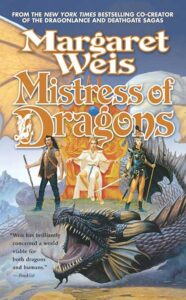
Margaret Weis’s Mistress of Dragons offers a familiar yet engaging high fantasy setting filled with ancient prophecies, secret bloodlines, dragon conspiracies, and a clearly demarcated battle between good and evil. Weis draws on many of the foundational elements that Tolkien helped popularize, such as deeply ingrained magical systems, sprawling political landscapes, and a sense of cosmic stakes. Her dragons, however, are far more central to the political intrigue and the fate of the world, functioning not just as mythical beasts but as strategic power players. The book’s structure, with alternating perspectives and long-lost secrets slowly unearthed, mimics Tolkien’s use of fragmented histories to build suspense. Weis’s prose is accessible and fast-paced, targeting a broader commercial audience, but her narrative still channels a reverence for the epic that defines classic Tolkienian storytelling.
Robert Jordan – The Eye of the World
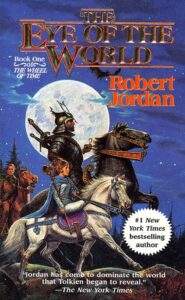
Robert Jordan’s The Eye of the World is perhaps the most direct modern descendant of Tolkien’s epic model. From its opening pages, the novel evokes a pastoral calm disrupted by dark forces, echoing the early chapters of The Fellowship of the Ring. Jordan’s world, immense, intricately detailed, and ruled by prophecy, follows many Tolkienian hallmarks, such as a Dark One, ancient wars, and a hero unknowingly tied to the fate of the world. However, Jordan’s vision is broader and more layered, incorporating reincarnation, gendered magical systems, and political complexity. The Aes Sedai, an all-female magical order, serve as a compelling contrast to Tolkien’s predominantly male power structures. Jordan also expands on the notion of the reluctant hero, using multiple protagonists to explore the psychological strain of being chosen. His meticulous descriptions and mythological references showcase deep admiration for Tolkien’s style, but Jordan’s ambition leads him to reframe those tropes with more narrative sprawl and modern themes.
Ursula K. Le Guin – A Wizard of Earthsea

Ursula K. Le Guin’s A Wizard of Earthsea presents a different kind of fantasy altogether, one that moves inward as much as outward. While Tolkien’s works often hinge on external threats and cosmic battles, Le Guin centers her story on the personal and spiritual development of her protagonist, Ged. Her world is just as rich and immersive as Middle-earth, with archipelagos, schools of magic, and ancient secrets, but it’s the moral and philosophical journey that takes precedence. Language is not just ornamental in Earthsea; it’s the very structure of reality, reflecting Tolkien’s own linguistic obsession, yet wielded with a distinct metaphysical elegance. Ged’s arc, from proud and reckless student to wise and self-aware wizard, eschews the glory of battle in favor of emotional maturity and balance. Le Guin also subtly critiques the Eurocentric, white-male norms of classic fantasy by populating her world with people of color and incorporating Taoist themes. Her approach offers a meditative counterpoint to Tolkien’s grandeur while remaining firmly rooted in the traditions he helped shape.
Susanna Clarke – Jonathan Strange & Mr. Norrell
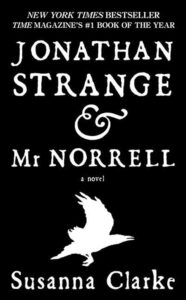
Susanna Clarke’s Jonathan Strange & Mr. Norrell is both a love letter to fantasy and a sharp reinvention of it. Set in an alternate 19th-century England where magic is academic, aristocratic, and largely forgotten, the novel reads like a blend of Austen, Dickens, and Tolkien. Clarke’s prose mimics the style of historical fiction, and her use of copious footnotes, some of which detail imagined magical histories and legends, creates a deep and believable alternate reality akin to Tolkien’s appendices and invented lore. However, the book’s themes diverge from traditional fantasy: rather than focus on grand quests or battles, it explores the politics of knowledge, the burden of history, and the cost of reclaiming lost power. The rival magicians, Strange and Norrell, represent competing ideologies about the use of magic, one intuitive and romantic, the other cautious and institutional. Clarke’s work shows that fantasy can be as much about manners and metaphysics as it is about dragons and dark lords.
Michael Moorcock – The Elric Saga
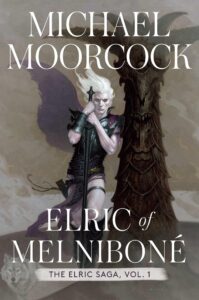
Michael Moorcock’s Elric series is a direct confrontation with the Tolkienian ideal of heroic fantasy. Where Tolkien’s heroes often resist corruption and uphold order, Elric is a figure of chaos, a sorcerer-emperor who must consume souls to survive and whose greatest weapon, Stormbringer, brings destruction as often as salvation. In The Elric Saga, Moorcock deepens his exploration of fatalism and moral ambiguity, presenting a protagonist whose tragic choices lead to inevitable ruin. Moorcock was vocal in his disdain for what he saw as Tolkien’s nostalgic and conservative storytelling, labeling it escapist in his essay Epic Pooh. Yet despite this critique, Moorcock shares Tolkien’s love of myth, drawing on a pantheon of gods, eternal champions, and interdimensional struggles. His rejection of Tolkien’s moral clarity doesn’t diminish the impact of his worldbuilding, it enhances it, creating a darker mirror in which the reader can glimpse the cost of unchecked power and the instability of idealism.
George R. R. Martin – A Game of Thrones
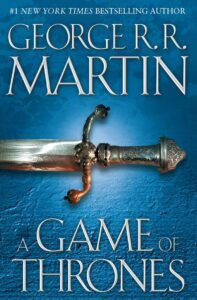
George R. R. Martin’s A Song of Ice and Fire series, beginning with A Game of Thrones, stands as both an homage to and a reinvention of Tolkien’s epic fantasy model. Like Tolkien, Martin constructs a richly detailed secondary world complete with its own histories, noble lineages, and mythologies. However, he replaces moral clarity with ambiguity and idealism with political realism. Westeros is a land where power corrupts, justice is fragile, and heroes are often undone by their own virtues. Martin draws heavily from real-world history – particularly the Wars of the Roses – to create a narrative of shifting alliances, betrayal, and tragic consequences. While Tolkien’s influence is evident in Martin’s grand scope and use of ancient prophecies and long-forgotten magic, Martin rewrites the rules of fantasy by prioritizing human motivation over destiny, and by questioning the cost of power and the fragility of honor in a broken world.
Joe Abercrombie – The Blade Itself

Joe Abercrombie’s The Blade Itself is a cornerstone of the “grimdark” subgenre, a term that itself signals a departure from the noble, heroic tone of Tolkien’s work. Abercrombie trades high ideals for messy realism, crafting a world where characters are motivated by self-interest, cowardice, and desperation more often than honor. The story follows a barbarian with a conscience, a torturer with philosophical leanings, and a wizard whose manipulations are anything but noble. The novel deconstructs classic fantasy tropes by presenting archetypes who are aware of their own limitations and hypocrisies. Yet Abercrombie’s work still exists in the shadow of Tolkien’s. His gritty cities, political intrigue, and grand conflicts all stem from the same epic tradition, just reimagined through a darker and more irreverent lens. If Tolkien’s world offered a moral compass, Abercrombie’s spins it, asking whether we can trust it at all.
Tamsyn Muir – Gideon the Ninth

Tamsyn Muir’s Gideon the Ninth is perhaps the most radical reimagining of fantasy on this list. Blending gothic horror, necromancy, science fiction, and absurdist humor, Muir crafts a world where death is magic, bones are tools, and locked-room puzzles intersect with ancient rituals. Despite its tonal and stylistic departure from Tolkien, Gideon the Ninth shares his commitment to immersive, internally consistent worldbuilding. Muir’s characters speak in modern slang and swear with gusto, yet they inhabit a world governed by arcane laws and hierarchical orders with long, complex histories. The novel interrogates the idea of legacy, the weight of knowledge, and the manipulation of myth, all themes Tolkien explored, albeit in a more reverent tone. By subverting the genre and injecting it with punk energy, Muir challenges the solemnity of traditional fantasy while preserving its awe-inspiring scale and emotional stakes.
Final Thoughts
J.R.R. Tolkien’s influence on fantasy literature is vast and multifaceted. Some writers embrace his blueprints for epic storytelling, grand worldbuilding, and moral clarity. Others push back – challenging his structures, questioning his ethics, or simply using his legacy as raw material for new, subversive forms. Across this spectrum, what remains constant is Tolkien’s presence: foundational, formative, and enduring.
By following the thread of Tolkien’s influence from Mistress of Dragons to Gideon the Ninth, we see not a single genre, but a vast landscape of stories. These authors don’t merely walk in Tolkien’s footsteps, they chart new courses through the terrain he helped shape. Each title on display represents a unique voice in the evolving conversation about what fantasy can be.
All books featured here are available through HPU Libraries. We invite you to explore them, borrow them, and reflect on how one man’s imagined world continues to echo through countless others.
-Blog post by Gerald Ward, Assistant Director HPU Libraries