Few words describe the love of books as precisely, or as dangerously, as bibliophilia and bibliomania. One suggests affection, devotion, or even romance. The other suggests obsession, excess, and a distinctly raised eyebrow. Together, they form a matched set that has haunted book culture for centuries, invoked by scholars, satirists, collectors, doctors, novelists, and the occasional judge.
With National Library Week in view, it feels like an especially fitting moment to explore this long and complicated relationship. The American Library Association marks National Library Week in 2026 from April 19 to April 25, under the theme “Find Your Joy.” That spirit, joy in discovery, reading, collecting, and the enduring life of books, makes a particularly appropriate frame for considering the fine line between loving books and losing oneself in them.
This blog post traces the history of bibliophilia and bibliomania as terms, examines the real people who embodied them, and explores how both concepts have been treated in literature and culture. Along the way, we will encounter monks, murderers, scholars, fools, and heroes, all bound together by paper, ink, and desire.
From Affection to Affliction: Where the Terms Come From
The word bibliophilia comes from the Greek biblion (book) and philia (love or affection). It describes, quite literally, a love of books. The term entered European usage relatively late, first appearing in French in the early eighteenth century and in English soon after. Its tone was, and remains, largely positive. A bibliophile loves books for their content, their form, or both, and this love is assumed to be enriching rather than destructive.
Bibliomania, on the other hand, arrived earlier and with far more suspicion. Formed from biblion and mania (madness), it was already in circulation by the late seventeenth century. From the beginning, it implied excess. Bibliomania was not simply loving books, it was loving them too much, in the wrong way, or for the wrong reasons.
By the early nineteenth century, writers were already drawing sharp distinctions between the two. One oft quoted observation makes the difference painfully clear: a bibliophile still believes books are meant to be read, while a bibliomaniac may prefer that they remain pristine, unopened, and untouched. In this formulation, reading is a virtue, collecting a hobby, and obsession a moral failing.
Yet the boundary between love and madness has always been porous, and nowhere more so than in the history of book collecting.
The Age of Book Madness
The late eighteenth and early nineteenth centuries witnessed what contemporaries openly described as an epidemic of bibliomania. Britain and France, in particular, saw an explosion of interest in rare books, early printing, and fine bindings. Several historical forces collided to create this perfect storm.
The French Revolution flooded the market with books seized from aristocratic and monastic libraries. At the same time, rising wealth among the British gentry created a class of collectors eager to display taste, education, and refinement. Auctions became social events, prices soared, and competition turned vicious.
The most famous of these spectacles was the 1812 sale of the library of the Duke of Roxburghe. The auction lasted weeks and culminated in the sale of a rare 1471 edition of Boccaccio for a sum that shocked even seasoned collectors. Observers described the atmosphere as frantic and emotional, more battlefield than bookshop. Rational valuation gave way to rivalry, pride, and sheer desire.
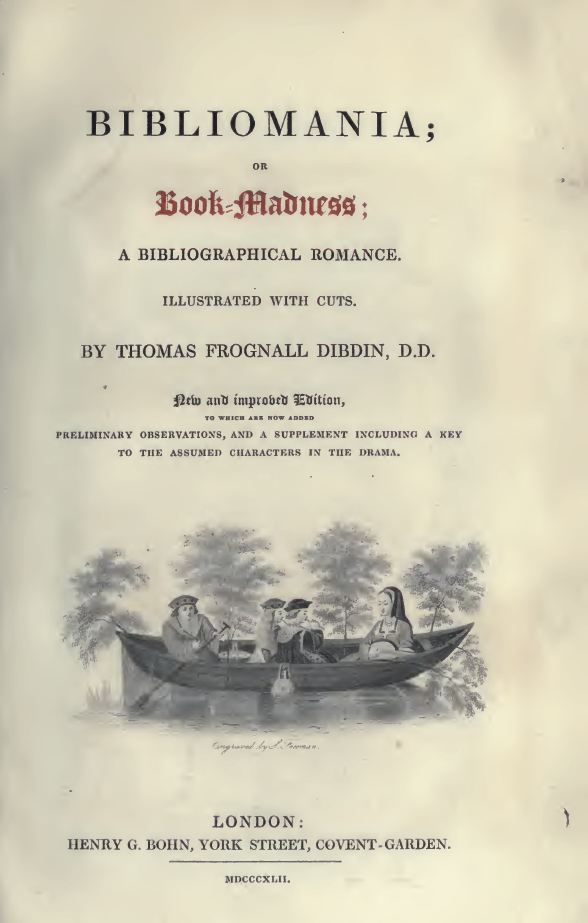
It was during this moment that Reverend Thomas Frognall Dibdin published his influential and deeply strange book Bibliomania; or Book Madness. Cast as a series of fictional dialogues among collectors, the book treated bibliomania as both satire and diagnosis. Dibdin cataloged the symptoms of the disease with mock seriousness, identifying telltale fixations such as first editions, black letter type, uncut pages, large paper copies, vellum printings, and luxurious bindings.
Dibdin’s genius lay in his ability to mock collectors while simultaneously validating them. His readers recognized themselves in his caricatures and embraced the label of bibliomaniac with a mix of pride and self-awareness. Bibliomania became both an accusation and a badge of honor.
The irony, of course, is that Dibdin himself helped fuel the very madness he described. His writing glamorized book collecting, and his involvement in elite societies such as the Roxburghe Club reinforced the idea that obsessive book ownership was a marker of distinction.
When Love Becomes Excess: Real World Bibliomaniacs
Some collectors embodied Dibdin’s playful version of bibliomania. Others pushed it into genuinely troubling territory.
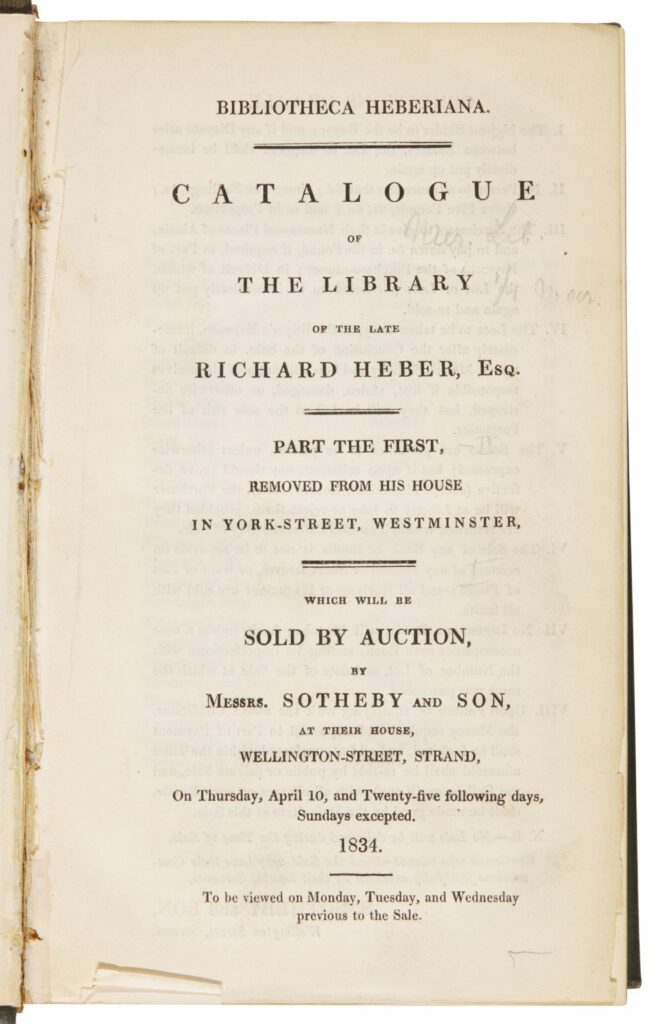
Richard Heber, a wealthy English collector, famously claimed that no gentleman could be without three copies of a book, one for show, one for use, and one for lending. Heber’s collection eventually occupied multiple houses and numbered well over one hundred thousand volumes. When he died, the dispersal of his library took years.
Sir Thomas Phillipps represents a darker extreme. Phillipps openly declared his ambition to own one copy of every book in existence. He spent his fortune, bankrupted his estate, and filled his home with such towering heaps of manuscripts and printed books that the space became nearly uninhabitable. Phillipps coined the term “vello mania” to describe his obsession with manuscripts on vellum, a detail that perfectly captures the collector’s tendency to refine madness into taxonomy.
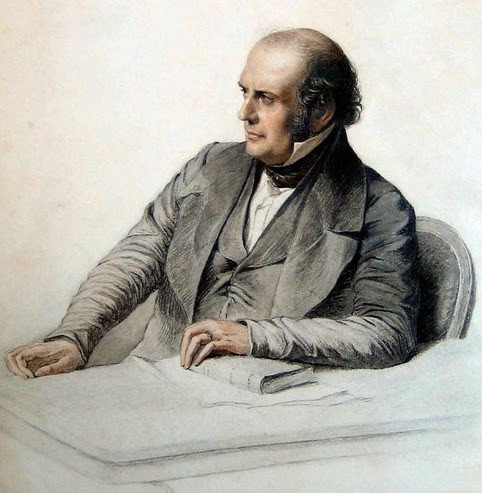
Bibliomania was not always harmless. Several nineteenth century cases linked extreme book obsession with theft, fraud, and even violence. The Italian count Guglielmo Libri abused his position as a scholar to steal thousands of manuscripts from French libraries. In Russia, librarian Alois Pichler stole thousands of volumes from the Imperial Library and attempted to defend himself in court by claiming bibliomania as a form of insanity.
Whether or not courts accepted such arguments, the cultural idea had taken hold. Bibliomania was increasingly framed as a psychological condition, a compulsion that could override reason and morality.
Yet even critics acknowledged a paradox. These same obsessives often preserved texts that might otherwise have vanished. Many modern research libraries exist precisely because private collectors could not stop themselves from acquiring more.
Bibliomania in Literature: Fools, Fanatics, and Fire
It is hardly surprising that such a vivid phenomenon made its way into literature. Writers have long used bibliophilia and bibliomania as tools for satire, tragedy, and reflection on the nature of knowledge itself.
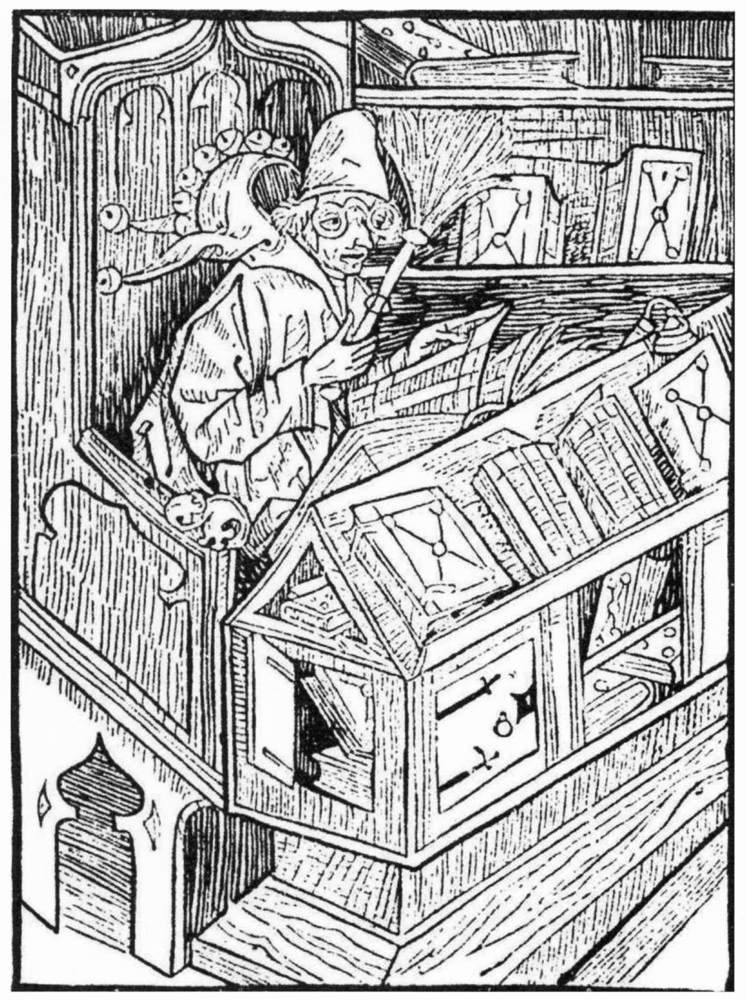
One of the earliest examples appears in Sebastian Brant’s Ship of Fools from 1494, which includes a “book fool” weighed down by volumes he neither understands nor uses. The image is unmistakable: books as burden rather than enlightenment.
Dibdin’s own Bibliomania occupies a curious space between fiction and nonfiction. Though filled with real bibliographic detail, its dialogue-driven structure and exaggerated characters make it one of the earliest works to treat book obsession as narrative entertainment.
Gustave Flaubert took the idea in a darker direction with his short story “Bibliomanie,” written in his youth. In it, a bookseller murders a rival over a rare volume. The story is lurid, melodramatic, and moralistic, presenting bibliomania as a corrupting force that destroys both intellect and soul.
Perhaps the most devastating fictional portrait of bibliomania appears in Elias Canetti’s novel Auto da Fé. The protagonist, Peter Kien, is a scholar whose life is entirely consumed by his private library. He cannot navigate human relationships, social reality, or even basic survival. When his books are threatened, his identity collapses. The novel ends in literal and symbolic conflagration, as Kien dies with his books, unable to separate himself from them. Here, bibliomania is not quaint or amusing but annihilating.
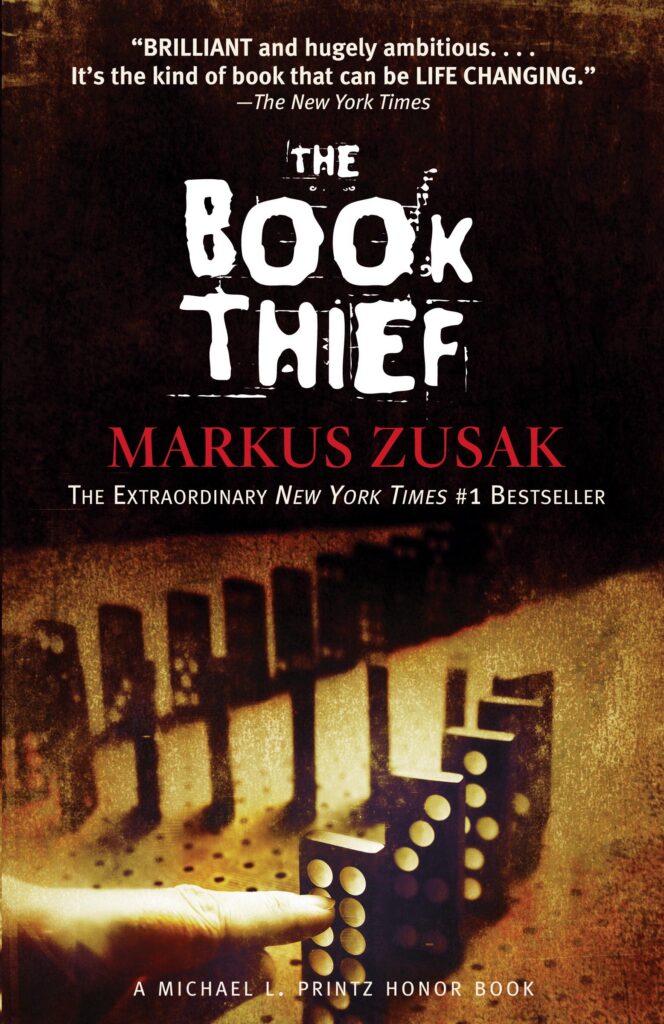
More recent fiction has tended to soften the image, recasting obsessive book love as heroic, redemptive, or romantic. Carlos Ruiz Zafón’s The Shadow of the Wind imagines a secret library dedicated to forgotten books, guarded by devoted caretakers. Markus Zusak’s The Book Thief frames book stealing as resistance and survival, turning obsessive reading into an act of moral courage.
Even lighter contemporary novels such as Mr. Penumbra’s 24-Hour Bookstore revel in the idea that secret societies, ancient mysteries, and near mystical devotion still cling to the physical book in the digital age.
Nonfiction and the Romance of the Collector
Nonfiction writers have often approached bibliomania with affection tempered by caution. Eugene Field’s The Love Affairs of a Bibliomaniac presents book collecting as a series of sentimental attachments, each volume tied to memory, place, or identity. It is humorous, self-aware, and deeply indulgent.
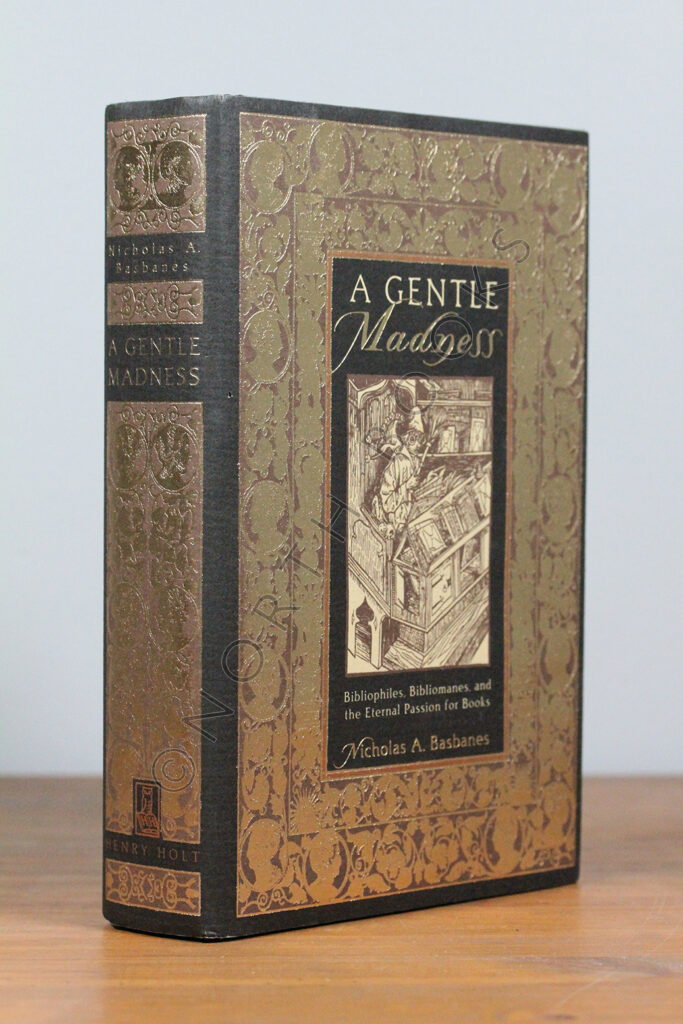
In the twentieth century, writers such as Holbrook Jackson and Nicholas Basbanes provided more systematic treatments. Basbanes’ A Gentle Madness remains perhaps the definitive modern account of bibliophilia and bibliomania, blending historical case studies with contemporary anecdotes. His title alone captures the prevailing modern attitude: loving books may be irrational, but it is a madness we largely forgive, and often admire.
What these works share is a recognition that books occupy a unique place among objects. They are simultaneously tools, artworks, repositories of memory, and symbols of selfhood. To love them is understandable. To lose oneself in them is, perhaps, inevitable.
Books on Screen, Briefly
Film and television have touched on bibliophilia mostly as shorthand. The bespectacled scholar, the eccentric librarian, the reclusive collector, these are familiar tropes. A notable example remains The Twilight Zone episode “Time Enough at Last,” in which a man’s desperate desire for uninterrupted reading is fulfilled only through catastrophe, and then cruelly revoked.
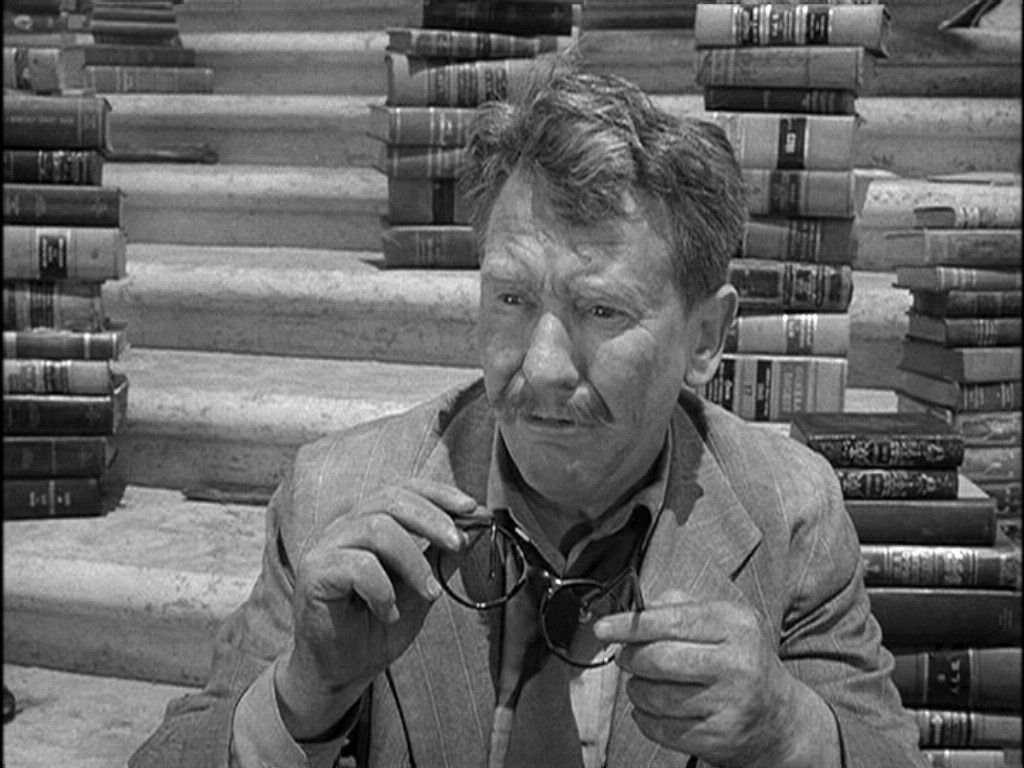
Such portrayals tend to emphasize irony. The book lover is punished not for loving books, but for imagining that books alone are enough.
Love, Madness, and the Modern Reader
Today, bibliomania is rarely treated as a serious diagnosis. When it appears, it is more likely to be invoked humorously, or folded into discussions of collecting, hoarding, or obsessive behavior. Meanwhile, bibliophilia has expanded to include not only collectors and scholars, but readers of all kinds.
The modern equivalent of bibliomania may be less about rare incunabula and more about unread stacks on nightstands, shelves groaning under the weight of future intentions. The Japanese term tsundoku has gained popularity precisely because it captures this phenomenon without judgment. Owning books you have not yet read is not a failure, it is a promise.
In that sense, bibliophilia today is less about possession than possibility.
Conclusion
Bibliophilia and bibliomania remind us that books have always been more than neutral containers of information. They inspire desire, jealousy, devotion, and occasionally ruin. They have been hoarded, stolen, burned, rescued, and revered.
If bibliomania once frightened doctors and moralists, bibliophilia continues to be celebrated as one of the more civilized forms of passion. Loving books may be irrational, but it is an irrationality that builds libraries, sustains scholarship, and fills lives with meaning.
National Library Week offers a useful occasion to reflect on that devotion. At a time set aside to celebrate libraries, readers, and the joy of discovery, it is worth acknowledging that many of us maintain long-standing, deeply committed relationships with books. They disappoint us, challenge us, comfort us, and sometimes overwhelm us. They ask for time, space, and attention. They rarely ask for anything in return.
If that is madness, it is one we are unlikely to give up.
Blog post by Gerald Ward, Assistant Director, Head of Archives & Special Collections, HPU Libraries