
Shark Week and Jaws: Taking a Bite Out of Summer
Summer may be winding down, and we may be a little late to the party, but we’re not ready to let Shark Week swim off into the sunset just yet. For many of us, summer means hitting the beach, curling up with a book, or flipping on the TV for this highly anticipated annual event. Shark Week, a full week on the Discovery Channel dedicated to education, entertainment, and our fascination with sharks, took place a few weeks ago, but we’re diving in anyway. Whether you’re a longtime fan or galeophobic, meaning you have a fear of sharks, join us as we explore the history and cultural impact of this summer tradition.
What Is Shark Week?
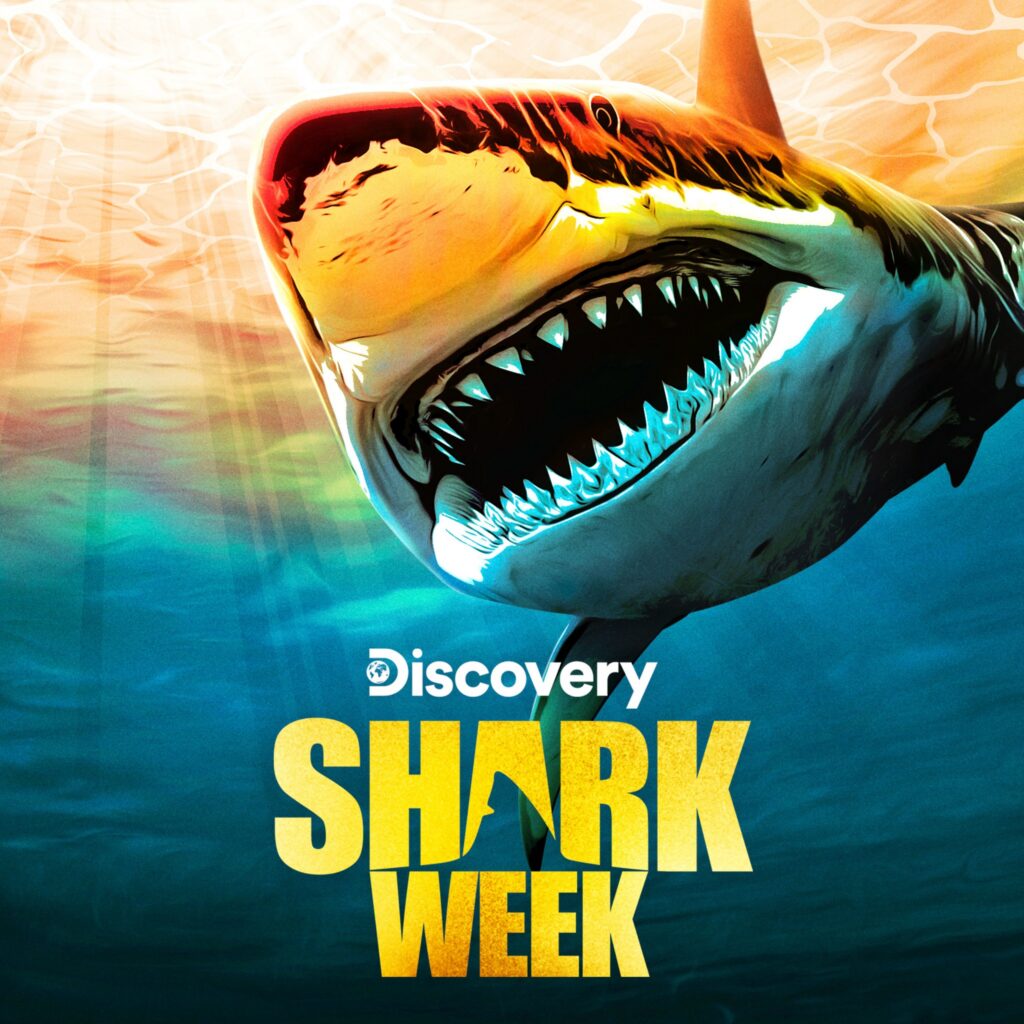
As you may have guessed, Shark Week is an annual television event, typically spanning six or seven days, devoted entirely to sharks.
The event began on July 17, 1988, with a program called “Caged in Fear,” a documentary about testing a new motorized cage designed to observe sharks from a safe distance. Nine other programs premiered that year, and the ratings and reception were exceptional.
As Lee notes, “Because of the great public reception to the first Shark Week, the Discovery Channel brought the event back the following year, and it soon became an annual summer event.”
The idea came from humble beginnings. A group of Discovery executives and colleagues gathered in a bar to brainstorm, and the idea for Shark Week was reportedly first written on a cocktail napkin.
Soon after that discussion, the team rolled up its sleeves and began developing the event for the network. They were also well aware of the lasting fascination, and fear, that Jaws had generated more than a decade earlier. Joseph Schneier, SVP of Production and Development at Discovery, told the New York Post, “It’s our best week of the summer every year. It’s often the highest-rated thing on cable that week. We owe a little credit to ‘Jaws,’ of course” (Sarner).
At the time, the Discovery Channel was still in its infancy. Launched in 1985, the network focused on educational specials and documentaries about wildlife, cultures, history, and other topics, with the broader goal of captivating and educating viewers.
Clark Bunting, one of the executives associated with the creation of Shark Week, later told Michigan State University that he had no inkling he was helping create a pop-culture phenomenon. As Dee recounts, Bunting was “as surprised as anyone else” to see the event take off so dramatically.
Shark Week has now been running for nearly four decades. The 2026 event was scheduled for July 26 through August 1, kicking off with “K-Pop Shark Heroes,” featuring Ken Jeong and Rei Ami from the animated film KPop Demon Hunters. Shark Week often draws on popular movies and broader pop culture, along with other Warner Bros. Discovery programming, to keep the event timely and engaging.
Jaws: The Novel
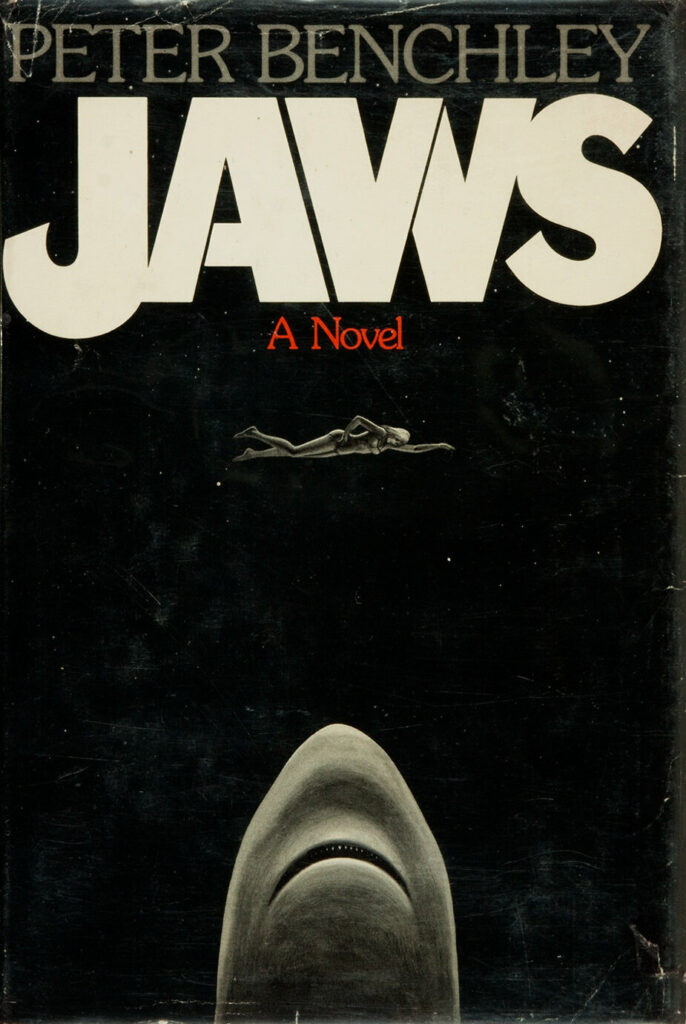
We can’t talk about Shark Week without discussing perhaps the most famous shark book-turned-movie of all time, Jaws.
Most people know Steven Spielberg’s blockbuster film, which thoroughly traumatized a generation of beachgoers and became synonymous with the summer movie season. The novel is sometimes less familiar, however, and its origin story helped shape both the pop-culture phenomenon and the iconic artwork we know today. Peter Benchley wrote Jaws, and the book generated such interest that Hollywood producers Richard D. Zanuck and David Brown purchased the film rights before it was even published. As Weiss writes, “Confident in the book’s potential as a movie, Hollywood producers Richard D. Zanuck and David Brown chomped down on the film rights before it had even been published.”
One frequently cited source of inspiration is Frank Mundus, a colorful, shark-obsessed fisherman based in Brielle, New Jersey. Mundus has often been identified as an inspiration for Quint, the famous shark hunter featured in both the novel and the film. Gould notes that Mundus was credited with catching a 3,427-pound great white with rod and reel about 28 miles off Montauk, and that Mundus claimed his fishing exploits captured Benchley’s imagination.
Mundus was not credited in the film, however, and Benchley denied that he was the direct inspiration for Quint. Some later accounts have speculated about why. In his later years, Mundus shifted from shark hunting toward shark conservation. He also wrote books of his own, including Fifty Years a Hooker and White Shark Sam Meets the Monster Man, while Russell Drumm wrote about him in In the Slick of the Cricket.
Other influences included dives captured in the documentary Blue Water, White Death and the book Blue Meridian. Benchley also became friends with Stan Waterman, a producer and photographer on Blue Water, White Death, which is often cited as an important early example of cinematic great white shark footage.
Hooking horror readers and Hollywood producers was not the only challenge. Benchley and the publishing team still needed a memorable title and an equally memorable cover. As Raftery notes, Benchley spent months considering possible titles, including “Dark White” and “The Edge of Gloom,” before settling on Jaws only hours before the deadline.
Then came the next major question: what should the cover look like? Art director Alex Gotfryd, who had worked on hundreds of book jackets, brought in Wendell Minor to help develop an early concept. One initial idea featured a shark’s open jaws containing an image of a calm seaside town. Sales managers pushed back, however, believing the design could be interpreted as risqué. A text-only cover with the title Jaws in black lettering was then considered, but the editor worried that it might look like a book about dentistry.
Gotfryd then brought in Paul Bacon, who placed a shark near the lower center of the cover and added a swimmer above it to create a sense of scale and impending danger. The concept was later revised for the paperback edition when the publisher commissioned Roger Kastel to rework the image. Kastel recalled that the only direction he received was to make the shark bigger and more realistic (Marks).
To create the now-iconic image, Kastel visited the American Museum of Natural History to study sharks and give the painting a more realistic feel. He ultimately referenced a mako shark, emphasizing its rows of teeth. For the swimmer, he used a model who had appeared in Good Housekeeping. The cover drew controversy in Boston and St. Petersburg because of the swimmer’s nudity, but the publisher turned the controversy into a marketing opportunity. Universal Pictures also embraced the artwork, which was adapted for the film’s theatrical posters and other promotional materials.
When Jaws was released in early 1974, it became a publishing sensation. Raftery writes that the novel “kicked off a feeding frenzy in the publishing industry” and transformed Benchley from an unknown writer into a literary celebrity before becoming the basis for Spielberg’s 1975 blockbuster. The film proved so influential that the Library of Congress selected it for preservation in the National Film Registry in 2001.
Artwork and production materials related to Jaws, including sketches, original objects, and promotional pieces, have also been exhibited by the Academy Museum of Motion Pictures. The museum’s Jaws exhibition brought together materials that helped document the creation and lasting influence of the film.
Jaws and Shark Week “Shake Fins”
As noted above, it is difficult to separate the success of Shark Week from the cultural impact of Jaws. The film captured the public imagination and helped create both a fascination with and a fear of sharks. Weiss notes that the movie became the highest-grossing release of all time until Star Wars surpassed it two years later.
Shark Week gave a direct nod to the Jaws franchise in its fourth year, when the event was billed as “Shark Week: The Revenge,” a reference to the fourth and final film in the series, Jaws: The Revenge, released in 1987.
The connection came full circle in 1994, when Jaws marked its 20th anniversary and Peter Benchley became Shark Week’s first host. Benchley introduced scheduled programs from locations associated with the movie, linking the author directly to the television event that Jaws had helped inspire.
One of Shark Week’s best-known recurring features is “Air Jaws,” a series that uses high-speed cameras and other technology to capture great white sharks breaching from the water, often while pursuing seal-shaped decoys. The title itself plays on the cultural familiarity of Jaws while turning spectacular shark behavior into a signature television event.
In 2005, Shark Week also partnered with MythBusters for a special that tested popular myths about sharks and explored some of the stories surrounding the real-life figures associated with Jaws.
Over the years, Shark Week has continued to reference Jaws through recurring “Air Jaws” programs, themed titles, and other playful connections to the franchise.
Critiques of Shark Week
Although Shark Week continues to draw substantial audiences across Discovery platforms, not everyone embraces the weeklong event. Some critics argue that its coverage can do more harm than good by sensationalizing shark attacks and capitalizing on public fear. NPR’s Linda Holmes described the modern event as a television “machine,” packed with familiar reality-TV elements such as celebrities, food programming, baby animals, and brand extensions.
Other criticism has focused less on the sharks themselves and more on sensational marketing tactics designed to reel in viewers. In 2013 and 2014, Discovery faced backlash over two particularly controversial examples. One involved a viral video depicting fishermen encountering a shark in Lake Ontario. The other was a two-hour special presented in a way that encouraged some viewers to believe that Megalodon, a long-extinct giant shark, might still exist.
David Kerstetter, then an assistant professor at Nova Southeastern University’s Oceanographic Center, complained that instead of using Shark Week to highlight real and compelling research on elasmobranchs, scientists were being forced to spend their public-outreach efforts debunking claims about topics such as mermaids and the continued existence of Megalodon (Cohen).
Others acknowledge the problems while pointing to Shark Week’s support for conservation efforts. Cohen notes that Discovery has partnered with the nonprofit Oceana to promote conservation, including anti-finning public service announcements during Shark Week.
Shark finning is the practice of removing sharks’ fins, often for shark-fin soup or commercial sale, and discarding the animals. Alongside its entertainment programming, Shark Week has used airtime and partnerships to promote shark and ocean conservation, raise awareness, and highlight related policy efforts such as the Shark Fin Sales Elimination Act.
For Shark Week 2026, Warner Bros. Discovery also partnered with Ocean Conservancy on a donation-matching campaign supporting shark and marine-life protection, debris removal, and broader ocean-conservation efforts.
From their unexpected beginnings, both Shark Week and Jaws have become enduring fixtures of American summer culture, combining entertainment, fascination, education, and, increasingly, conservation.
With Jaws having recently marked a major anniversary and Shark Week approaching four decades on the air, we hope these fin-tastic facts inspire you to learn more about these remarkable ocean predators, or perhaps to discover something new about a favorite franchise.
Books, eBooks, and Movies About Sharks
Want to read the world-famous Jaws for yourself? Or maybe you would like to learn more about these often-misunderstood ocean predators from the comfort of home. Below are books, eBooks, and movies available for checkout through HPU Libraries.
“It’s out there in the water…waiting. Nature’s most fearsome predator. The seaside community of Amity is at its mercy. A small-town police chief, a marine biologist, and a modern-day Ahab must try to stop it. But they are only three men…alone against the Great White Death.” — Description from Amazon.com
“When Steven Spielberg released Jaws in the summer of 1975, his adaptation of Peter Benchley’s novel forever type-cast sharks as bloodthirsty man-eaters. But, as we all worried whether it was safe to go back into the water, we failed to notice that while sharks account fewer than four human fatalities per year, humans needlessly kill 100 million sharks per year, which has made the species vulnerable for the first time in its existence and put the future of the world’s oceans at risk. At once a deep-dive into the misunderstood world of sharks, specifically great whites, makos, hammerheads, and tigers, and an urgent call to protect them, [this book] tells the true story about the ocean’s most mysterious, most misunderstood, and most important guardians.” — Book jacket
The underworld : journeys to the depths of the ocean
From New York Times bestselling author Susan Casey, an awe-inspiring portrait of the mysterious world beneath the waves, and the men and women who seek to uncover its secrets. For all of human history, the deep ocean has been a source of wonder and terror, an unknown realm that evoked a singular, compelling question: What’s down there? Unable to answer this for centuries, people believed the deep was a sinister realm of fiendish creatures and deadly peril. But now, cutting-edge technologies allow scientists and explorers to dive miles beneath the surface, and we are beginning to understand this strange and exotic underworld: A place of soaring mountains, smoldering volcanoes, and valleys 7,000 feet deeper than Everest is high, where tectonic plates collide and separate, and extraordinary life forms operate under different rules. – Provided by publisher.
eBooks
A pocket guide to sharks of the world
“An updated and comprehensive guide identifying all of the world’s sharks. Sharks are some of the most misunderstood animals on the planet. We still have a lot to learn about these fascinating creatures, which are more seriously threatened with extinction and in greater need of conservation and management than any other major group of vertebrates. A Pocket Guide to Sharks of the World is the only field guide to identify, illustrate, and describe every known shark species.” — Description
Introductory fish biology : an ecophysiological approach
“Drawing on the author’s 35 years of experience in teaching freshman biology, fish biology, shark biology, ichthyology, physiology, and oceanography, as well as over 40 years as a researcher of shark biology, this book brings a wealth of knowledge and experience to bear on the topic of the biology of fishes. Written with an emphasis on clarity, the book contains almost 300 high-quality photographs, figures, and diagrams, as well as over 450 primary literature sources. It reflects the most recent research and trends in fish biology, and will be a welcome addition to any introductory fish biology class.” — Description
Coral Reefs of Australia : Perspectives from Beyond the Water’s Edge.
“Explores Australia’s evolving relationship with coral reefs through a diverse range of perspectives.” — Description
Movies
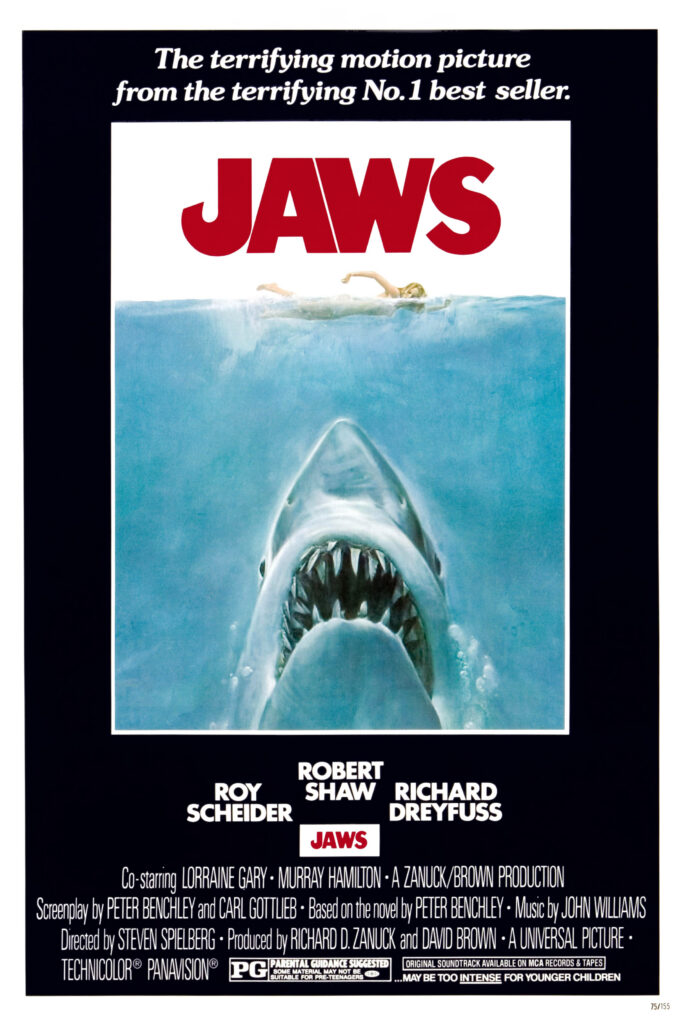
When the seaside community of Amity finds itself under attack by a dangerous great white shark, the town’s chief of police, a young marine biologist, and a grizzled shark hunter embark on a desperate quest to destroy the beast before it strikes again. — Blu-ray cover
After escaping an attack by what he claims was a 70-foot shark, Jonas Taylor must confront his fears to save those trapped in a sunken submersible. — Blu-ray cover
When a category seven hurricane pummels New York, the surging floodwaters bring thousands of sharks. To make matters worse, tornadoes soon dot the horizon. As sharknadoes tear through the city, no vehicle, building, or national monument is safe. — Container
Ocean odyssey : the blue realm.
Shark Business: Beyond the security of a protective cage, camera teams test the limits of shark behavior, including a face-to-face encounter with a 15-foot great white. — Blu-ray cover
“Visible from space, the Great Barrier Reef is the largest living structure on our planet. Stretching just over 1,200 miles in length and made up of 3,000 individual reef systems and hundreds of islands, Australia’s Great Barrier Reef is breathtakingly beautiful. Given World Heritage status in 1981, it is one of the wonders of the natural world. This program offers a definitive guide to the secrets of the reef: how it was created, how it works, the intricate relationships between its inhabitants, and how climate change and other factors might shape its future. Using the latest specialist filming and visual techniques, the series captures the magic of the reef as it has never been seen before.” — DVD cover
Blog post by Christina Cavanaugh, Print Shop Manager
References
Academy Museum of Motion Pictures. (2025, September 15). Jaws: The exhibition. Jaws: The Exhibition. https://www.academymuseum.org/exhibits/jaws
Artuso, A. (2014, July 16). Shark in Lake Ontario? nope. Discovery Channel pranked US. Toronto Sun. https://torontosun.com/2014/07/16/shark-spotted-in-lake-ontario
Bender, K. (2023, July 21). Shark week started 35 years ago and the reason why may surprise animal lovers. People. https://people.com/shark-week-history-why-shark-week-started-35-years-ago-7564239
Bender, K. (2026, June 18). Shark Week 2026 Is Approaching, and It’s Brimming with Apex Predator Thrills. People. https://people.com/shark-week-returns-for-summer-2026-on-discovery-12001531
Bulter, G. (2013, August 6). Shark week faces fan fallout over fake megalodon documentary (video). The Oregonian. https://www.oregonlive.com/movies/2013/08/shark_week_faces_fan_fallout_a.html
Chen, M. (2025, September 15). The painting that helped ‘jaws’ make a killing. Artnet News. https://news.artnet.com/art-world/jaws-roger-kastel-academy-museum-2688384
Cohen, M. (2015, January 8). The history of Shark Week: How the Discovery Channel both elevated and degraded sharks. The Week. https://theweek.com/articles/444542/history-shark-week-how-discovery-channel-both-elevated-degraded-sharks
Conservancy, O. (n.d.). Shark week 2026 | ocean conservancy. Ocean Conservancy. https://oceanconservancy.org/sharkweek/
Dee, B. (2012, August 8). Shaping Shark Week. The State News. https://statenews.com/article/2012/08/shaping_shark_week
Dolak, K. (2025, July 22). Shark week’s enduring popularity: Discovery’s secret ratings weapon. The Hollywood Reporter. https://www.hollywoodreporter.com/tv/tv-news/shark-week-popularity-discovery-ratings-2025-1236325032/
Fetters, A. (2012, August 13). The evolution of Shark Week, pop-culture leviathan. The Atlantic. https://www.theatlantic.com/entertainment/archive/2012/08/the-evolution-of-shark-week-pop-culture-leviathan/261063/
Frank Mundus, 82, Dies; Inspired ‘Jaws’. (2008). New York Times. https://www.nytimes.com/2008/09/16/nyregion/16mundus.html
Gould, S. (2025, September 15). Lights! camera! shark! remembering Frank Mundus. Southampton History Museum. https://www.southamptonhistory.org/post/jaws-mundus
Holmes, L. (2025, July 22). How shark week became a cultural phenomenon. NPR. https://www.npr.org/2021/07/12/1015232438/shark-week-history
Lee, C. (2024a, July 9). The history of Shark Week. Time. https://time.com/6996703/shark-week-history/
MacReady, M. (2025, July 16). ’jaw’s: Biggest differences between the movie and the book. MSN. https://collider.com/jaws-differences-between-book-and-film/
Marks, B. (2012, June 29). Real Hollywood thriller: Who stole Jaws? Collectors Weekly. https://www.collectorsweekly.com/articles/real-hollywood-thriller-who-stole-jaws/
Matters, A. (2025, January 2). Jaws turns 50: Reading Peter Benchley’s novel, you barely mind if its self-loathing characters are eaten by a ‘genius’ shark. The Conversation. https://theconversation.com/jaws-turns-50-reading-peter-benchleys-novel-you-barely-mind-if-its-self-loathing-characters-are-eaten-by-a-genius-shark-218519
NBCUNIVERSAL MEDIA, LLC. (n.d.). Jaws celebrates 50th Anniversary: Uncovering the iconic film’s impact and lasting legacy | NBCUNIVERSAL Media. NBC Universal. https://www.nbcuniversal.com/article/jaws-celebrates-50th-anniversary-uncovering-iconic-films-impact-and-lasting-legacy
Oceana & Discovery. (n.d.). Oceana X Discovery Shark Week – Oceana USA. Oceana USA. https://usa.oceana.org/oceana-x-discovery-shark-week/
Petit, Z. (2020, June 19). The making of Jaws’ iconic book covers. PRINT Magazine. https://www.printmag.com/book-covers/the-making-of-jaws-iconic-book-covers/
Raftery, B. (2024). 50 Years Ago, ‘Jaws’ Hit Bookstores, Capturing the Angst of a Generation. New York Times. https://www.nytimes.com/2024/07/12/books/booksupdate/jaws-peter-benchley-50.html
Sarner, L. (2025, July 18). ‘Shark Week’ and ‘SharkFest’ execs reveal how sharks took over summer TV – and if there’s a rivalry. New York Post. https://nypost.com/2025/07/18/entertainment/shark-week-and-sharkfest-execs-reveal-how-sharks-took-over-summer-tv/
Sharpless, A. (2006, February 16). Peter Benchley and shark conservation – oceana USA. oceana. https://usa.oceana.org/blog/peter-benchley-and-shark-conservation/
Vásquez, V. (2021, June 21). The Shark Fin Sales Elimination Act passed the US senate. Discover. https://www.discovery.com/nature/the-shark-fin-sales-elimination-act-passed-the-us-senate
Warner Bros. Discovery, Inc. (2014, August 3). Shark week | highlights from 25 years of “shark week.” Discovery. https://web.archive.org/web/20140803030916/http:/www.discovery.ca/article.aspx?aid=44961
Warner Bros. Discovery, Inc. (n.d.). Shark week 2026 kicks off July 26 | discovery. Discovery. https://www.discovery.com/shark-week/shark-week-2026-kicks-off-july-26
Weiss, J. (2025, June 6). The origin of Steven Spielberg’s Jaws: From newspaper article to novel to Summer blockbuster. NBC. https://www.nbc.com/nbc-insider/the-origin-of-steven-spielberg-jaws-movie-from-novel-to-blockbuster
Wikipedia Entries (Alphabetized by Title)
Wikipedia contributors. (2026, March 8). Frank Mundus. In Wikipedia, The Free Encyclopedia. Retrieved 18:17, July 2, 2026, from https://en.wikipedia.org/w/index.php?title=Frank_Mundus&oldid=1342268371
Wikipedia contributors. (2026, June 27). Jaws (franchise). In Wikipedia, The Free Encyclopedia. Retrieved 18:17, July 2, 2026, from https://en.wikipedia.org/w/index.php?title=Jaws_(franchise)&oldid=1361370462
Wikipedia contributors. (2026, July 2). Stan Waterman. In Wikipedia, The Free Encyclopedia. Retrieved 18:18, July 2, 2026, from https://en.wikipedia.org/w/index.php?title=Stan_Waterman&oldid=1362127805