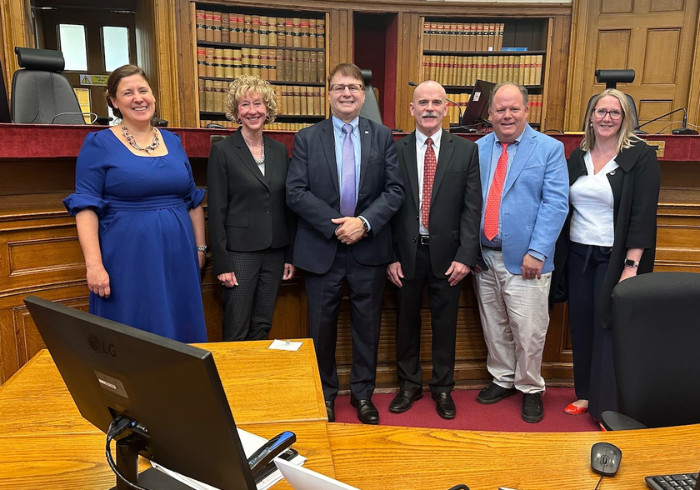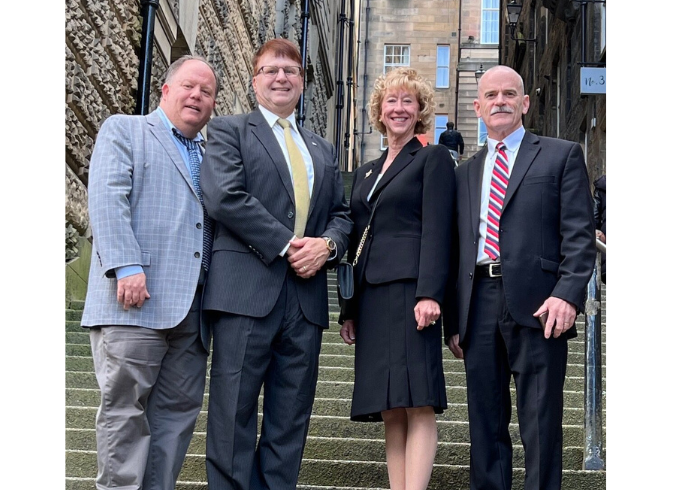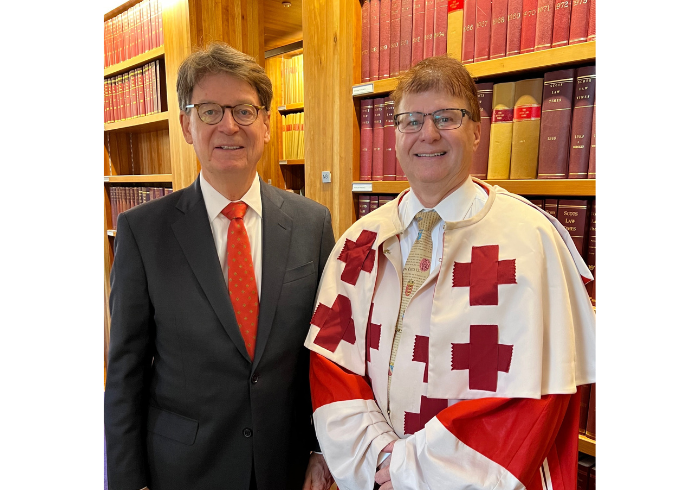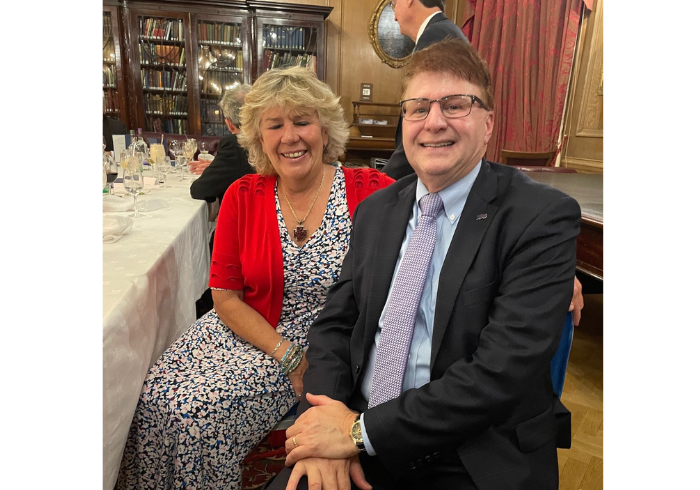
Founding Dean and Professor of Law Mark Martin embarked on a remarkable journey to Scotland as part of a prestigious delegation of lawyers and judges organized by Vice President Tom Leighton of Thomson Reuters in his role as a member of the Board of Trustees of the American Inns of Court. The trip, which took place September 23-30, provided a unique opportunity to coalesce with international legal scholars and delve into the heart of Scotland’s legal system, culture, and history.
Dean Martin’s visit kicked off with a truly extraordinary experience—a Red Mass at St. Mary’s Catholic Cathedral in Edinburgh. The Red Mass is a traditional religious service celebrated in many countries, invoking blessings and guidance for the legal profession. This solemn event set the tone for the deep dive into the Scottish legal system that continued throughout the week.
The next day, Dean Martin walked the historic streets of Old Town in Edinburgh to Parliament House—home to the Court of Sessions, Scotland’s closest analog to the United States Supreme Court. Dean Martin, along with attorneys and judges from Scotland and beyond, converged into hallowed halls to celebrate the opening ceremony for the Court of Sessions.
After an invocation from the Lord President of the Court, an assortment of lectures and tours from Scotland’s top institutional directors, professors, and legal minds followed over the next several days. A thousand years of Scottish legal history was amazingly compressed into a number of days!
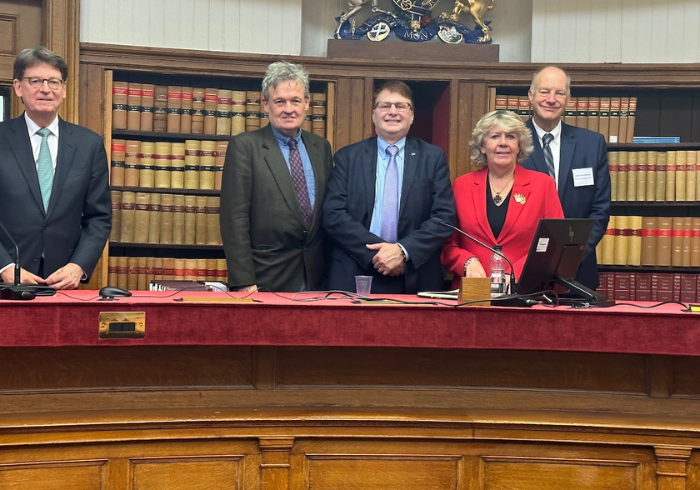
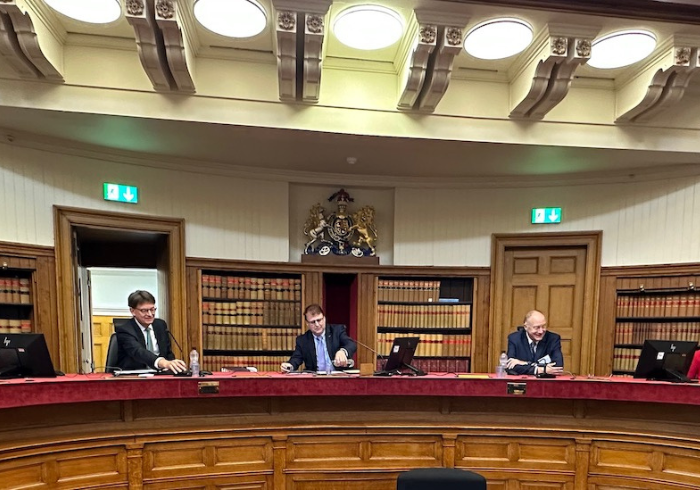
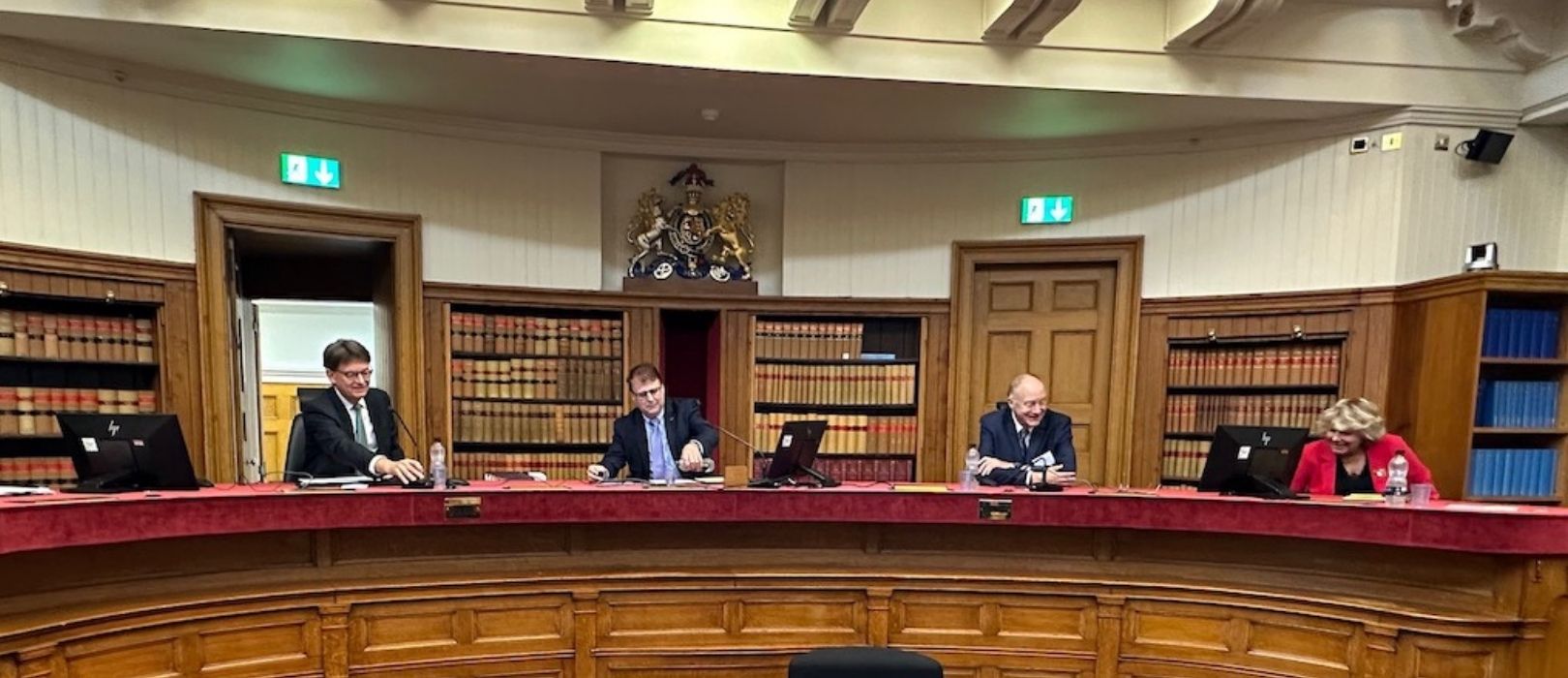
Dean Martin thoroughly enjoyed his role as a pupil of Scottish legal history, but he was also privileged to contribute to the proceedings. The former Chief Justice was asked once more to take the bench, this time sitting ceremonially in the seat of the Lord President—Scotland’s most senior judge—as he moderated a panel on judicial independence.
The panelists included Lady Dorian (Lord Justice Clerk of the Scottish High Court—Scotland’s second most senior judge), Judge Tony O’Connor (Ireland High Court), Senior Associate Justice Barry Anderson (Minnesota Supreme Court), and Jim Duff (two-time former director of the Administrative Office of the United States Courts). Members of the audience included Brigadier General Melinda Dunn (ret.), who serves as Executive Director of the American Inns of Court, and Chief Judge James Lockemy (ret.) of the South Carolina Court of Appeals. The panelists engaged in thought-provoking discussions about the critical importance of a fair, impartial, and independent judiciary. The dialogue reaffirmed Dean Martin’s commitment to protecting judicial independence and promoting its critical importance to the rule of law.
During his visit, Dean Martin had the honor of meeting and visiting with some of the top leaders in the Scottish legal system. These encounters allowed him to foster connections with esteemed legal professionals from across the Atlantic and gain valuable insights into the challenges and successes of the Scottish legal system. This exchange of ideas was a memorable and profound aspect of his journey and will provide insights that the Kenneth F. Kahn School of Law can incorporate into its educational model to more effectively educate its students.
Dean Martin was enthusiastic when asked about the value of his trip to the Kahn School of Law and its students: “It was amazing really. Attending the kick-off of the Scottish legal year and meeting many of the most senior judges. Moderating a panel on judicial independence with judges from several countries. Comparing legal education systems as we finalize curriculum for our inaugural class. Forming relationships as we anticipate future collaboration. Frankly, this trip was among the most productive and rewarding that I have had in my legal career.”
Dean Martin’s journey to Scotland was an enlightening and historically inspirational experience and a good reminder of the enduring connection between law and history and the United Kingdom and the United States. He returned to High Point University not only personally enriched but also encouraged to continue his pursuit of establishing a law school rooted in sound legal principles, committed to an independent judiciary, and dedicated to ethics and justice.