About this Course
The landmark United States Supreme Court decision Chevron U.S.A., Inc. v. Natural Resources Defense Council, Inc. (1984) governed how agencies resolved challenges to an agency’s interpretation of an administrative statute. Chevron deference, the doctrine birthed from this case, is an administrative law principle that compelled federal courts to defer to a federal agency’s interpretation of an ambiguous or unclear statute that Congress delegated to the agency to administer.
In the last four decades since Chevron was decided, the case has been cabined and questioned. Then, in the Supreme Court’s most recent term, Chevron was overruled by Loper Bright Enterprises v. Raimondo (2024).
With the demise of Chevron, many questions have arisen as to how the courts will practically absorb these agency cases and what other ripple effects are to follow.
Learning Objectives
- Understand the Chevron ruling and the new expectations for administrative cases.
- Discuss the practical implications of the Court’s new ruling and its effect on the caseload of courts.
- Consider future cases that will emerge resulting from the Loper Bright holding.
Download Materials
- Carpenter v North Carolina Dept of Human Resources
- Chevron USA Inc v Natural Resources Defense Council Inc
- Loper Bright Enterprises v Raimondo
- Sound Rivers Inc v NC Department of Environmental Quality
- Sound Rivers Inc v NC Department of Environmental Quality Division of Water Resources
- 150B 34 Final decision or order
About The Presenters
 CHIEF JUSTICE MARK MARTIN
Hon. Mark Martin is the Founding Dean and Professor of Law at the Kenneth F. Kahn School of Law at High Point University. He is a respected voice in both judicial and academic circles, an accomplished attorney, jurist and professor, as well as an advocate for access to justice, legal reform, and innovation in legal education.
During his judicial career, Martin served at every level of the state court system and ultimately as Chief Justice of the Supreme Court of North Carolina from 2014- 2019. At the time of his respective installations, Martin was the youngest member in history of the Supreme Court and the North Carolina Court of Appeals.
Martin successfully advocated for juvenile justice reform through a program called “Raise the Age.” In addition, he established the NC Pro Bono Resource Center to improve access to justice. Martin has served on the Committee on Federal-State Jurisdiction of the United States Judicial Conference. He also served on the Board of Directors and as chair of the Professionalism and Competence of the Bar Committee of the Conference of Chief Justices, an organization with a direct influence on the development of codes of ethics and legal best practices nationwide.
Martin has served as the dean at two U.S. law schools. He currently serves as the founding dean of High Point Law and formerly served as dean at Regent University School of Law. He has taught law students at five law schools—Duke, High Point, NC Central, Regent, and UNC. Martin has expertise in multiple areas of the law. He co-taught a course on the various modes of constitutional interpretation with Associate Justice Samuel A. Alito, Jr. of the Supreme Court of the United States. He has also taught law courses in appellate advocacy, election law, professional identity formation, professional responsibility, and trial practice.
Martin previously served as chair of the American Bar Association (ABA) Judicial Division and Appellate Judges Conference. He has also chaired the Appellate Judges Education Institute (AJEI) Board of Directors. He is a member of the American Law Institute, where he assisted with the Third Restatement, Conflict of Laws, and served on the Region 15 Advisory Committee. He chairs the Thomson Reuters Judicial Advisory Council. He also served as a founding board member of the Bolch Judicial Institute at Duke Law School. At the state level, Martin serves as a member of the Judicial Independence Committee of the North Carolina Bar Association and previously served as chair of the NC Professionalism Commission and the NC Equal Access to Justice Commission. He chaired the Commission on the Future of the North Carolina Business Court and led the effort to expand the business court.
Dean Martin’s advocacy for the rule of law has extended beyond the United States. He served on the Commission for the World Justice Project and was a two-time delegate to the World Justice Forum, the first-ever global convening to promote the multidisciplinary importance of the rule of law. Martin has served as an expert witness in the Queen’s Bench, Commercial Division in London, England.
Dean Martin’s lifetime of public service and devotion to the rule of law has been widely recognized. Martin has been inducted into the Warren Burger Society of the National Center for State Courts. He is a recipient of the Patriotic Employer Award of the United States Department of Defense. Martin received the ABA Robert Yegge Award for Outstanding Contribution in Judicial Administration, the Liberty Bell Award of the North Carolina Bar Association, and the Order of the Long Leaf Pine (the highest award given to a civilian in North Carolina). He is an honorary member of the American Counsel Association.
Martin has been married to Kym Martin for over 30 years, and together they have raised five children.
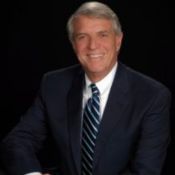 CHIEF JUDGE JULIAN MANN III
Hon. Julian Mann III retired in 2021, after serving twelve terms as North Carolina’s Chief Administrative Law Judge and Director of the Office of Administrative Hearings. He received appointments by five different Chief Justices of the Supreme Court of North Carolina and is the longest serving Chief Administrative Law Judge in North Carolina history. Upon retirement, he was given the Amicus Curiae Award, the Supreme Court’s highest recognition.
Prior to his judicial role, Judge Mann was in private practice, concentrating in administrative law litigation and serving as private counsel to the North Carolina Board of Architecture and the North Carolina Veterinary Medical Board. He has also served as an Adjunct Professor for Administrative Law, Business Law, Regulatory Law, and Architectural Law.
Judge Mann has served as chair of the ABA Judicial Division and the National Conference of the Administrative Law Judiciary. Recently, he served as vice president at-large of the North Carolina Bar Association and chair of its endowment committee.
Judge Mann has authored numerous legal articles and is a frequent CLE presenter, primarily in the fields of special education and administrative law. His novel Madam Vice President received the May 2021 Literary Titan Five Star award.
Judge Mann received his B.S. from the University of North Carolina, M.P.A. from North Carolina State University, and J.D. from Samford University Cumberland School of Law, where he received the distinguished alumnus award in 2017. In 2021, he was awarded certification in the category of public leadership by the Harvard Kennedy School of Government’s Executive Education program.
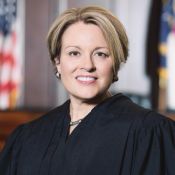 JUDGE DONNA STROUD
Hon. Donna S. Stroud served as the 10th Chief Judge of the North Carolina Court of Appeals and is currently serving her third consecutive term as a member of that Court. She has also served as a law school Adjunct Professor for over a decade, teaching Judicial Process and Juvenile Law.
Prior to elected office, Judge Stroud was in private practice for 16 years. She represented individuals, businesses, and municipalities in a wide variety of cases and tried cases in many counties across North Carolina. During this time, she also served as a Certified Superior Court Mediator and a District Court Arbitrator. Judge Stroud was then elected as a District Court Judge in Wake County, serving as a Family Court Judge.
Judge Stroud received her J.D., cum laude, from Campbell University School of Law, where she graduated first in her class. She also holds an LL.M. in Judicial Studies from Duke University School of Law and was a member of its charter class. Her thesis from this program, “The Bottom of the Iceberg: Unpublished Opinions,” was published in the Campbell Law Review.
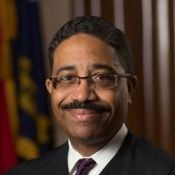 MICHAEL R. MORGAN
Michael Rivers Morgan was born in Cherry Point, North Carolina to Barbara and the late Leander R. Morgan and is the eldest of five children. The family resided in Washington, D.C. until young Mike was the age of six, when the family relocated to his mother’s hometown of New Bern, North Carolina. As an eight-year-old fifth grader in 1964, Mike was the first Black student to attend all-white Trent Park Elementary School, becoming one of the five Black students that year to integrate the New Bern public school system city-wide. In the eleventh grade, he became the first Black drum major of the marching band of New Bern Senior High School.
Upon graduating from the New Bern public school system at the age of sixteen, Mike earned his Bachelor of Arts Degree in both History and Sociology from Duke University. He went on to obtain his Juris Doctor Degree, with honors, from North Carolina Central University School of Law, where he served as the student body president during his final year of law school.
Justice Morgan served on the legal staff of the North Carolina Department of Justice for ten years following law school, first as a research assistant, then as an Associate Attorney General, and later as an Assistant Attorney General. In 1989, he was appointed as an Administrative Law Judge with the North Carolina Office of Administrative Hearings. While in this capacity, he administered the oath of office to his father, the first and only African-American to serve as mayor of the City of New Bern. This historic event was featured nationally in an article titled “Swearing in His Dad” in the February 19, 1990 issue of Jet Magazine.
In 1994, Justice Morgan was appointed as a Wake County District Court Judge by Governor James B. Hunt, Jr., and he was subsequently elected to the judgeship by the voters of Wake County in 1996 and again in 2000. He was elected to the Superior Court bench in 2004 for an eight-year term and was re-elected to the post in 2012. In his first statewide quest for elective office, Justice Morgan was elected in November 2016 to be an Associate Justice of the Supreme Court of North Carolina. He is the only jurist in the history of the State of North Carolina to have held four different judgeships, and is the first and only Omega man to sit on North Carolina’s highest court.
Justice Morgan is a Life Member of Omega Psi Phi Fraternity. He was initiated into the Fraternity on the charter line of Omega Zeta Chapter at Duke University in Durham, North Carolina in April 1974. Justice Morgan is an active member of Iota Iota Chapter of Raleigh, North Carolina, in which he has been appointed to numerous committee chairmanships and has been elected to several offices, including the presiding post of Basileus. He has also served in various positions of fraternity leadership on the Sixth District level for North and South Carolina as well as on the International level, including his role as the Grand Marshal for Omega Psi Phi Fraternity’s 76th Grand Conclave held in Raleigh, North Carolina in July 2010. Justice Morgan currently serves as a member of the Board of Directors of the Fraternity’s Friendship Foundation. He has been recognized as Iota Iota Chapter’s Citizen of the Year and twice as its Omega Man of the Year. Justice Morgan has also been awarded the Iota Iota Chapter’s Founders Award, the Sixth District’s Founders Award, and the International Founders Award. Justice Morgan is married to the former Audrey Phillips of Raleigh. Between them, they have an adult daughter, an adult son, and five grandchildren.
Justice Morgan and his wife are active members of Rush Metropolitan AME Zion Church in Raleigh, where he serves as Chair of the Steward Board and in several other capacities.