 At the end of World War II the wartime alliance that had existed between America, Britain and Russia broke apart. The allies that had successfully defeated Nazi Germany and the Empire of Japan, split into their two ideological camps, with the Russian communists in deadly competition with western capitalist nations. The term “cold war” came into use in 1947 to describe the war of words and ideals that followed WWII. The cold war would end in 1992, with the fall of the Berlin Wall, and the collapse of the Soviet Union.
Communists and capitalists became the bitterest of ideological enemies over a forty-five year period. Spies, double-agents and spy-masters played out a secret and deadly game that was largely hidden from public view. The American CIA, British MI6 and Russian KGB were the agencies responsible for running the respective spying activities, and they became the heroes or villains, depending on whether you were loyal to capitalism or communism.
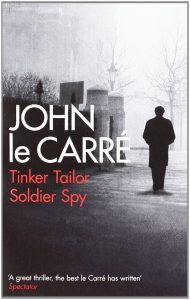 The clandestine and deadly world of spies and double-agents has proved to be a consistently rich source of material for fiction authors, as well as TV and film producers. Authors who have added to the genre, include Ian McEwan, Norman Mailer and Graham Greene. Len Deighton set a high bar, with his Berlin Game, Mexico Set and London Match trilogy. However, John Le Carré went further with his 1974 book Tinker, Tailor, Soldier, Spy, in creating the character of George Smiley, a retired British spymaster.
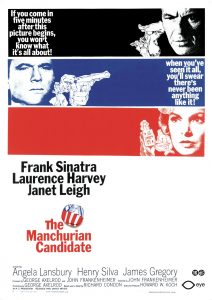
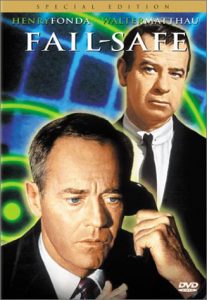
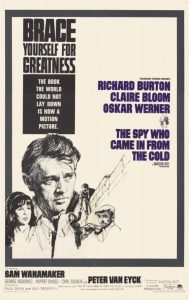
Many fine cold war films were produced in the 1960’s, such as The Manchurian Candidate (1962), starring Frank Sinatra and Janet Leigh. Fail Safe (1964), features Henry Fonda and Walter Matthau who are trying to prevent total worldwide nuclear devastation, following an accidental nuclear first-strike on Russia, following a US computer glitch. A fine gritty example of the genre from 1965, The Spy Who Came in from the Cold, adapted from the novel by John Le Carré, stars Sir Richard Burton and Claire Bloom. Not surprisingly, tensions produced by the cold war found release in movies which parodied the spy genre. Our Man Flint (1965), featuring the spoof “superspy” Derek Flint, was played for laughs by James Coburn. The Man from U.N.C.L.E. followed the same formula, with the 2015 movie being a re-make of the 1960’s TV series of the same name. Caricature Russian spies and spy agencies were the villains in the British TV series, The Avengers. And of course, the epitome of cold war spies, James Bond, always had to have a foreign villain to defeat, with From Russia with Love (1963), being a good example.

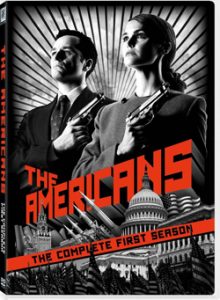
 The cold war spy genre has been reinvigorated recently, with a raft of new movie and TV releases. In the 2012 adaptation of John Le Carré’s Tinker, Tailor, Soldier, Spy, Gary Oldman plays the lead part of George Smiley to perfection. Tobey Maguire and Liev Schreiber capture the tension of the cold war, fought out by proxy – with chess pieces – in Pawn Sacrifice (2014): the story of US chess prodigy Bobby Fischer, and his epic chess matches with the Russian chess grand master, Boris Spassky. The FX Network show, The Americans (2013-2018), stars Keri Russell and Matthew Rhys as “sleeper” Russian spies, who are living in plain sight, in 1980’s Washington DC.
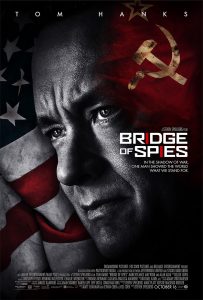
Stephen Spielberg does a marvelous job of expertly weaving many cold war themes into his 2015 movie, Bridge of Spies. As in many cold war spy stories, the film is set against the background of the city of Berlin, which after World War II was divided by a wall into west (capitalist) and east (communist) zones. Spielberg tells the story of a prisoner-swap between the US and Russia, in which the Soviet spy, Rudolf Abel was exchanged for the American pilot, Gary Powers. Spielberg captures admirably, the tensions and pressures of the cold war period, in which spies and spying changed world history. Spielberg proves that the cold war spy genre continues to provide stories that can interest, thrill and excite us.
Blog post by Andrew Fair, HPU Evening Reference Librarian