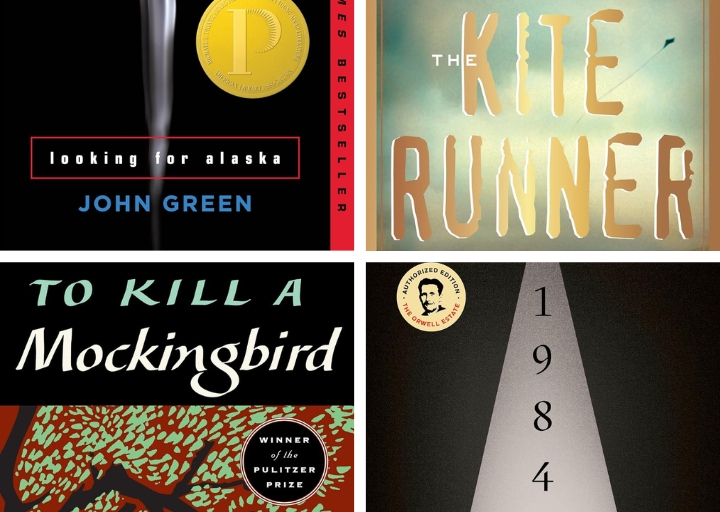
In the U.S., no books are banned nationwide. The First Amendment protects free expression, so the federal government does not outlaw books. However, many titles are banned or challenged locally in schools and public libraries, usually through school boards or community decisions. This means a book may be restricted in one district but freely available everywhere else. Below are five of the most frequently challenged books across the U.S. and the reasons behind their bans.
1. The Bluest Eye by Toni Morrison

The Bluest Eye (1970) by Toni Morrison is one of the most challenged books in the country. It addresses racism, colorism, and beauty standards, focusing on the harm they inflict on young Black girls. Its graphic depictions of sexual abuse, incest, and violence have led critics to argue it is too explicit for students, though supporters view it as a vital exploration of systemic racism and trauma. It has been repeatedly targeted in states like Texas, Virginia, and Missouri.
2. Looking for Alaska by John Green
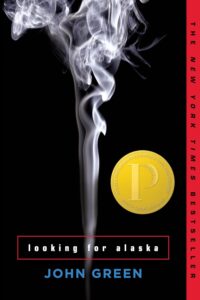
Looking for Alaska (2005) by John Green has also faced frequent bans. The book includes sexual content— particularly one explicit scene— as well as strong language, underage drinking, and smoking. Themes of death, grief, and mental health have also made it controversial. Still, it won the Michael L. Printz Award in 2006 and remains a cornerstone of modern YA literature despite removals in Kentucky, Tennessee, and Texas.
3. The Kite Runner by Khaled Hosseini
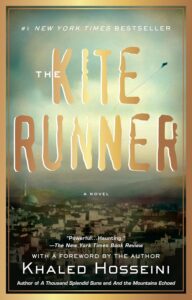
Khaled Hosseini’s The Kite Runner (2003) is often challenged for its depictions of sexual assault, violence, war, and cultural conflict. Critics also argue it portrays Afghanistan negatively and risks reinforcing stereotypes. It has been pulled from classrooms in states like North Carolina, Indiana, and Arizona, yet continues to be taught in advanced high school and college courses for its literary and cultural impact.
4. 1984 by George Orwell
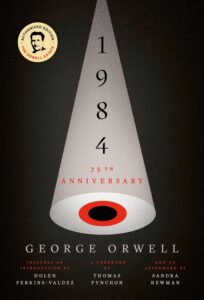
1984 by George Orwell has faced bans since its publication for political and sexual content. During the Cold War, it was viewed by some as promoting communist ideology, while others saw its critiques of government surveillance as too radical. The sexual relationship between Winston and Julia, profanity, and “anti-family” themes have also sparked objections. Though widely taught, it was banned in certain districts during the 1950s, 60s, and as recently as 1981 in Jackson County, Florida.
5. To Kill a Mockingbird by Harper Lee

Finally, To Kill a Mockingbird (1960) by Harper Lee is one of the most challenged books in U.S. history. Parents and districts have objected to its frequent racial slurs, depictions of racism, and themes of sexual assault. Some critics also argue that its “white savior” framing diminishes Black voices. While never banned nationally, it has been removed from curricula multiple times, including in Virginia (1977) and again in the 1980s, 2009, and 2017.
Taken together, these examples show that book banning in the U.S. is rarely about eliminating a book outright, but rather about restricting who has access to it. While critics argue these works can be offensive or inappropriate, supporters see them as powerful opportunities to spark dialogue and deepen understanding. The ongoing challenges highlight the tension between protecting students and preserving the right to read freely— an issue that continues to shape American classrooms and libraries today.
Blog post by: Brielle Regdos Print Shop Assistant