The Iconic Leprechaun: Influential Books and Films that Shaped Its Legacy
It’s that time of year again, the cold of winter is subsiding, the flowers are blooming once more, and St. Patrick’s Day is upon us. In this blog post, we plan to dive into one of the biggest icons that make St. Patrick’s Day and Irish culture so much fun! Why is a leprechaun associated with the day itself, and where did it all come from? How did it become so popular? And of course, what books and films helped shape its notoriety.
Well, today we are going to dive into finding out how this lucky Irish symbol came to be.
What Are Leprechauns, And What Is Their Origin?
Ireland’s most famous folklore, the Leprechaun, is renowned around the world.
Leprechauns, also known as “little people,” appear in many cultures, and they are especially well known in Ireland. The saga Fergus mac Léti (also known as The Adventure of Fergus Son of Léti) is often cited as an early depiction of leprechaun-like beings. It describes how Fergus mac Léti, the king of Ulster, encountered water spirits that tried to drag him into the ocean. These spirits, known as luchorpáin in Old Irish (meaning “small body”), resemble leprechauns in their size and in the way they grant three wishes (Wikipedia contributors, 2025a).
Other spellings include leprecauns and lepracauns. “The English word ‘leprechaun’ is derived from the Middle Irish ‘luchrapán’ or ‘lupraccán.’ These in turn were descended from the Old Irish ‘luchorpán’ or ‘lupracán’” (Dhar, 2024).
They are often described as small, mischievous old men who wear green outfits and hats, have red hair and beards, and, of course, are rumored to have a pot of gold. Early Irish folklore tends to portray them as cunning, sometimes mean-spirited tricksters who lure people astray with harmful pranks, though they are also sometimes described as helpful shoemakers.
“In the 1887 book Ancient Legends, Mystic Charms and Superstitions of Ireland, Jane Francesca Agnes, Lady Wilde (Oscar Wilde’s mother) describes leprechauns as ‘merry, industrious, tricksy little sprites.’” She also calls them vengeful and “bitterly malicious if they are offended” (Kennedy, 2025).
It wasn’t until the 19th century that popular ideas about leprechauns began to shift and they became associated with St. Patrick’s Day. Today, they are still often portrayed as clever tricksters, but with a more jovial, cheery, light-hearted tone. Many stories still keep the classic lesson that those who can outwit or capture a leprechaun may win riches, a folklore test of human greed.
Stories of “little people” are still discussed today, and they are even said to be protected in parts of Ireland through habitat protections tied to local biodiversity. For example, Slieve Foy, a mountain in County Louth, Ireland, has a trail called the “Sliabh Foy Loop,” which is sometimes described as being protected under the European Habitats Directive (IrishCentral Staff, 2020; Irish Independent, 2010).
Irish Culture And The Potato Famine
So why are Leprechauns associated so much with St. Patrick’s Day?
Overall, Ireland has many different myths and folklore, from ghostly fiends like Banshees to beautiful Faeries or Fairies. So, to answer that question on why the Leprechaun stood out from them compared to the rest, we have to dive back into one of the worst periods of Irish history, the Great Potato Famine.
The famine caused by late blight in their crops, mainly potatoes, caused them to rot from the inside out. The late blight itself was hard to eradicate, as the disease is passed around by fungi that can stay dormant in winter and persist in soil (Encyclopaedia Britannica Editors, 2024). These rotting crops were devastating to the rural poor farmers in Ireland, as they were a significant primary food source for them. Due to these unfavorable conditions, many farmers were evicted from their homes or were desperate to leave for the new world (Mokyr, 2026).
“It has been estimated that nearly two million people, about a quarter of the population, emigrated to the United States in a ten-year period at that time” (National Museum of Ireland, n.d.).
When Irish immigrants came to America, like many immigrant groups of the era, they were not always welcomed. Nativists feared Irish newcomers would take jobs, and hostile political movements and English newspapers helped spread stereotypes by downplaying the potato famine and blaming Irish communities.
However, the Irish wanted to be accepted into American culture while bringing in their own culture as well. So, like many others at the time, they would hold parades to try to get more people to be more accepting of Irish Culture and to educate them more.
The oldest St. Patrick’s Day parade in the world is still being held in St. Augustine, Florida, dating back to 1601 with its first St. Patrick’s celebration in 1600 (Mulraney, 2025).
“Americans began to feature the leprechaun in St. Patrick’s Day celebrations and by the early 20th century, leprechauns were associated with all things Irish and good luck, becoming embedded in popular culture” (Kennedy, 2025).
The Book That Changed It All
One of the biggest influences, however, and one of the ways early American culture became more interested in the Irish, was due to a book called Darby O’Gill and the Good People. This was written in 1903 by Herminie Templeton Kavanagh and is one of her best-known works. “Kavanagh became determined to supplement her income as a stenographer by writing stories for children that engaged with Irish folklore and specifically targeted an Irish-American readership” (McManus, 2022).
For those who would like to read this book for themselves, it’s currently in the public domain. Meaning that all of Hermine Tempelton Kavanagh’s works are available for free to read in a variety of formats and sources. From The Internet Archive to Wikipedia, alongside various other public domain reading companies.
The book entails multiple stories, not just of Leprechauns, but of other Irish folklore and myths as well. However, the most well-known story being Darby O’Gill and Brian Connors, the King of the Little People.
Soon, however, this book would become not only a popular book passed around in the 1900s but also a big-screen adaptation. Helping establish the Irish icon further in American culture.
Becoming A Major Motion Picture
It’s a little-known fact that Walt Disney himself was of Irish descent and had a big interest in Irish culture and folklore. “After Walt’s ancestors moved toward England, and later Ireland, their name was anglicized from D’Isigny to the current spelling of Disney” (Loftus, 2023a). Walt visited Ireland several times and drew inspiration to make a film about a protagonist battling a leprechaun, initially titled The Three Wishes (Loftus, 2023b). While researching, he received help and inspiration from Irish people and institutions. Walt was welcomed to Ireland by Éamon de Valera, the prime minister at the time, and President Seán T. O’Kelly (Mulraney, 2015). He also met with the National Folklore Collection, formerly known as the Irish Folklore Commission (Loftus, 2023b). One member of the commission, John Delargy, tried to steer Walt toward other Irish myths and heroes.
“We tried to interest Disney in one or other of the great heroic sagas, The Táin or The Well at the World’s End… but no, nothing but leprechauns would do,’ he later reported” (Quigley, 2023).
Walt loved leprechaun stories as a child, and he even spoke of them fondly as an adult at the Dublin premiere of the film. “Of course they still exist. They are testy little men… Leprechauns spend their time drinking Irish whiskey, dancing and watching horse races, very good pastimes” (O’Toole, 2009).
After his trip to Ireland and numerous script and idea alterations, Disney decided to base the film on Kavanagh’s work. Development began in 1945, and Darby O’Gill and the Little People was released on June 26, 1959 (Wikipedia contributors, 2026a).
The film received high praise from both the New York Times and the Los Angeles Times and featured many well-known Irish actors of the era, with veteran actor Albert Sharpe coming out of retirement to play Darby O’Gill. More notably, it was Sean Connery’s first Hollywood film, and it helped him on the path to his iconic role as James Bond. “Connery later recalled that James Bond producer Albert R. ‘Cubby’ Broccoli was viewing films in his search for Bond. He saw me in Darby O’Gill and the Little People. He thought I might qualify and called in his wife, Dana. She told him, ‘Why, that is James Bond.’” (Fanning, 2019). Overall, without the time and effort put in by Disney, leprechauns might not have landed so firmly in American popular culture.
Other Notable Media And Pop Culture Ties
While Darby O’Gill and the Little People is one of the most iconic and beloved movies depicting leprechauns, it isn’t the only film in media depicting them. For some Americans, the horror-comedy film series Leprechaun comes to mind (Wikipedia contributors, 2026). Originally starring Jennifer Aniston, the movie Leprechaun goes back to older folklore roots with the idea of a sinister villain going after those who have stolen its coins.
Other pop culture ties that boosted leprechaun popularity include the beloved mascot of the Boston Celtics, whose logo features an iconic leprechaun. Dubbed “Lucky the Leprechaun,” the figure is depicted in a 1950s aesthetic, wearing a bowler hat, holding a pipe, dressed in shamrock-patterned clothing, and carrying a shillelagh (or cane) (Sutelan, 2024).
“When Walter Brown formed Boston’s basketball team, he and Howie McHugh, who handled public relations, went through a range of nicknames, including the Whirlwinds, Unicorns and Olympics, per the Boston Irish Tourism Association. But Brown decided on the Celtics” (Sutelan, 2024).
The original logo depicts Lucky jumping into the air, wearing a crown and a green vest with shamrocks. After several iterations, the logo evolved into the symbol we know today. By 1968, it had largely taken on its present form.
The leprechaun serves as an important symbol within Irish American culture, representing a meaningful connection across various contexts, from books and films to sports teams and the iconic figure you see proudly featured in Irish parades and pubs. Whether you have Irish ancestry tracing back to ancestors who arrived through Ellis Island or simply have an interest and appreciation for the culture, we are pleased that you have taken the opportunity to learn more today. Wishing you a wonderful and festive St. Patrick’s Day from the HPU Smith Library team. Éirinn go Brách!
Adult Books:
Encyclopedia of folklore and literature
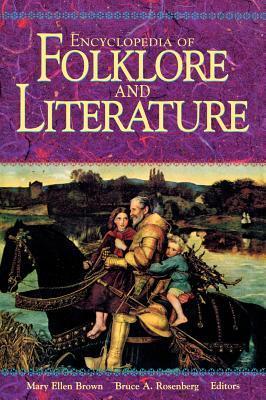
A reference encyclopedia with 350+ entries on the crossroads of folklore and literature, covering major authors and works, recurring motifs and characters, key concepts, and influential scholars, with a primary focus on European and Western traditions.
Myth and reality in Irish literature
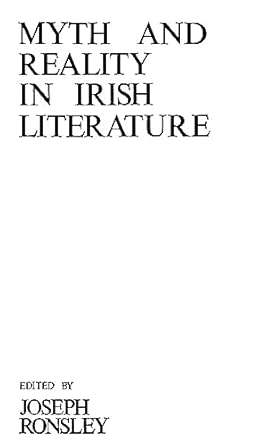
A collection of essays and panel discussions that traces how Irish writers draw on myth, history, and symbolism, moving from early Irish traditions through the literary revival and into modern drama and fiction. It includes critical perspectives on figures such as Yeats, Synge, Beckett, Joyce, O’Casey, and others.
Atlas of the great Irish famine
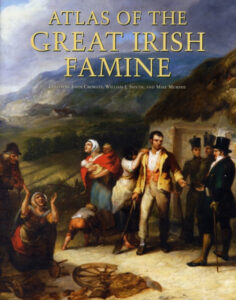
A wide-ranging, heavily illustrated atlas of the Great Irish Famine (1845-1852), combining scholarly essays with 150+ original maps, images, and firsthand accounts to examine causes, lived experience, population loss, workhouses, emigration, and the famine’s lasting cultural and global impact.
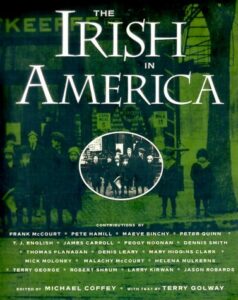
The companion volume to a PBS television series, a compendium of essays, photographs, and illustrations explores the social, cultural, and political history of Irish Americans through contributions by Pete Hamill, Frank McCourt, Peggy Noonan, and others.
Making the Irish American : history and heritage of the Irish in the United States
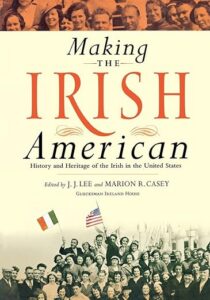
Explores the history of the Irish in America, offering an overview of Irish history, immigration to the United States, and the transition of the Irish from the working class to all levels of society.
The Disney version : the life, times, art and commerce of Walt Disney
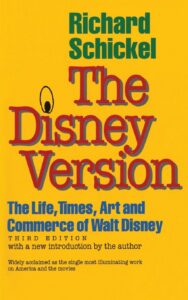
Richard Schickel’s classic history of Walt Disney’s life and times was the first to look behind the carefully nurtured avuncular image of the man. Some howled in protest at the criticism of their hero, but they failed to see that Mr. Schickel’s book acknowledge Disney’s profound influence on American popular culture. The Disney Version takes us from Walt’s wandering youth through the desperate gamble of opening his own animation studio, his daring decision to crash Hollywood, the sudden and inspired invention of Mickey Mouse – and on to the creation of a multimillion-dollar international entertainment empire. Throughout, Mr. Schickel asks penetrating questions about Disney’s achievements and shortcomings, and about the enormous popularity of the “Disney version. ”
Books for younger audiences:
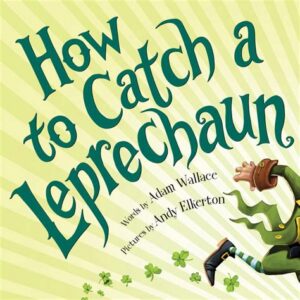
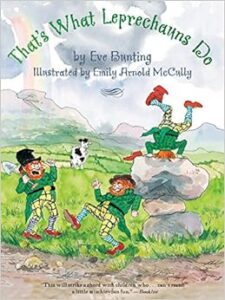
A rhyming tale of St. Patrick’s Day approaching and a leprechaun causing mischief while avoiding being caught in a trap.
When leprechauns Ari, Boo, and Col need to place the pot of gold at the end of the rainbow, they cannot help getting into mischief along the way.
Blog post by Christina Cavanaugh, Print Shop Manager
References
Cartwright, M. (2021, February 4). Leprechaun. World History Encyclopedia. https://www.worldhistory.org/Leprechaun/
Cointre, G. L. (2023, November 27). Irish Gaelic words used on St Patrick’s Day. Guide Irlande.com. https://www.go-to-ireland.com/culture/irish-gaelic-words-used-on-st-patricks-day/
Department of Culture, Communications & Sport. (n.d.). Irish emigration to America. National Museum of Ireland. https://www.museum.ie/en-IE/Collections-Research/Folklife-Collections/Folklife-Collections-List-(1)/Other/Emigration/Irish-Emigration-to-America
DeWitt, N. (2025, January 11). Irish Potato Famine [Video]. YouTube. https://youtu.be/PRloj_jb1xQ
Dhar, R. (2024, November 1). The leprechaun: A tiny, mischievous, and elusive creature of Irish folklore. History Cooperative. https://historycooperative.org/leprechaun/
Encyclopaedia Britannica Editors. (2024, August 5). Late blight. Encyclopaedia Britannica. https://www.britannica.com/science/late-blight
Fanning, J. (2019, June 26). Find out about 007’s lucky break and other magical facts from Darby O’Gill and the Little People. D23. https://d23.com/8-magical-facts-about-walt-disneys-darby-ogill-and-the-little-people/
Irish Independent. (2010, February 24). “Little people” are protected by EU. https://www.independent.ie/regionals/louth/dundalk-news/little-people-are-protected-by-eu/26941431.html
IrishCentral Staff. (2020, June 22). Leprechauns are protected under European law. IrishCentral. https://www.irishcentral.com/roots/leprechauns-protected-european-law
Kennedy, L. (2025, May 28). The jolly leprechaun’s sinister origins. History. https://www.history.com/articles/leprechauns-history-lucky-irish-gold
Liebman, S. (2022, April 2). Walt Disney’s 1946 visit to Ireland might have resulted in this movie. Disney Diary. https://disneydiary.com/2022/04/video-of-walt-disney-visiting-ireland/
Loftus, A. (2023a, October 17). Animation great Walt Disney’s Irish heritage as Disney celebrates 100 years. Irish Star. https://www.irishstar.com/culture/nostalgia/walt-disney-irish-100-years-31201611
Loftus, A. (2023b, October 21). Walt Disney’s “Leprechaun Hunt” inspired Darby O’Gill and the Little People. Irish Star. https://www.irishstar.com/culture/nostalgia/walt-disney-darby-ogill-ireland-31242081
McManus, B. (2022, July 12). How Bridget and Darby O’Gill subverted the myth of the henpecking Irish wife. The Irish Times. https://www.irishtimes.com/culture/books/2022/07/12/how-bridget-and-darby-ogill-subverted-the-myth-of-the-henpecking-irish-wife/
Mokyr, J. (2026, February 6). Great Famine. Encyclopaedia Britannica. https://www.britannica.com/event/Great-Famine-Irish-history
Mulraney, F. (2015, May 25). Walt Disney asked to meet Éamon de Valera while researching leprechauns. IrishCentral. https://www.irishcentral.com/culture/entertainment/walt-disney-asked-to-meet-eamon-de-valera-while-researching-leprechauns
Mulraney, F. (2025, March 14). Where is the oldest St. Patrick’s Day celebration in the world? IrishCentral. https://www.irishcentral.com/roots/history/oldest-st-patricks-day-world
National Museum of Ireland. (n.d.). Irish emigration to America, the journey. https://www.museum.ie/en-IE/Collections-Research/Folklife-Collections/Folklife-Collections-List-(1)/Other/Emigration/Irish-Emigration-to-America-The-Journey
O’Toole, F. (2009, June). How Darby O’Gill captured an Ireland rapidly fading. The Irish Times. https://www.irishtimes.com/news/how-darby-o-gill-captured-an-ireland-rapidly-fading-1.793541
Quigley, M. (2023, October 25). How Disney turned LITTLE PEOPLE into BIG BUSINESS: Walt’s Irish roots had much to do with his fascination with leprechauns, despite authorities’ attempts to interest him in our more heroic folklore [Eire Region]. Daily Mail. https://libproxy.highpoint.edu/login?url=https://www.proquest.com/newspapers/how-disney-turned-little-people-into-big-business/docview/2881159583/se-2
Sutelan, E. (2024, June 6). What is a Celtic? Explaining the origin of Boston’s nickname, NBA mascot history. Sporting News. https://www.sportingnews.com/us/nba/news/celtic-origin-boston-nickname-mascot-history/a595c9cd5cc66d4d874d6a88
Wikipedia contributors. (2025a, August 20). Fergus mac Léti. In Wikipedia. Retrieved March 4, 2026, from https://en.wikipedia.org/wiki/Fergus_mac_L%C3%A9ti
Wikipedia contributors. (2025b, October 30). Herminie Templeton Kavanagh. In Wikipedia. Retrieved March 4, 2026, from https://en.wikipedia.org/wiki/Herminie_Templeton_Kavanagh
Wikipedia contributors. (2026a, February 20). Darby O’Gill and the Little People. In Wikipedia. Retrieved March 4, 2026, from https://en.wikipedia.org/wiki/Darby_O%27Gill_and_the_Little_People
Wikipedia contributors. (2026b, February 26). Leprechaun (film series). In Wikipedia. Retrieved March 4, 2026, from https://en.wikipedia.org/wiki/Leprechaun_(film_series)