Research interests:
My lab researches physiological adaptations of plants to environmental stress, with a focus on plant pigments. Questions my students and I have been exploring lately recently include:
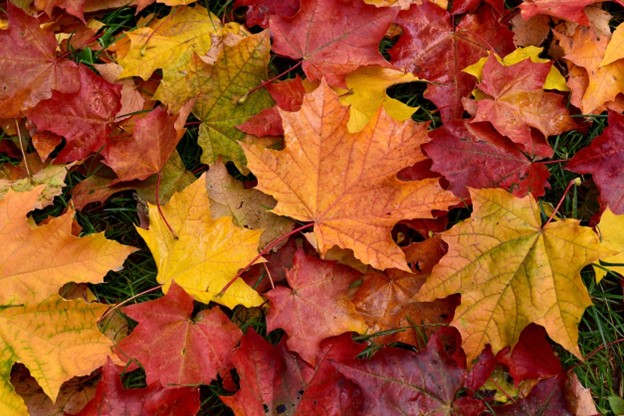
1) What factors influence autumn leaf color in temperate deciduous trees?
Why do some leaves turn red in autumn, and others yellow or orange? We are a part of a collaborative team on a second project headed by Dr. David Lee (Florida International University) seeking to determine which abiotic factors best predict autumn leaf color in North American deciduous trees. This project involves researchers at several institutions in the USA including Appalachian State University, Carnegie Museum of Natural History, and the University of Alaska Museum of the North.
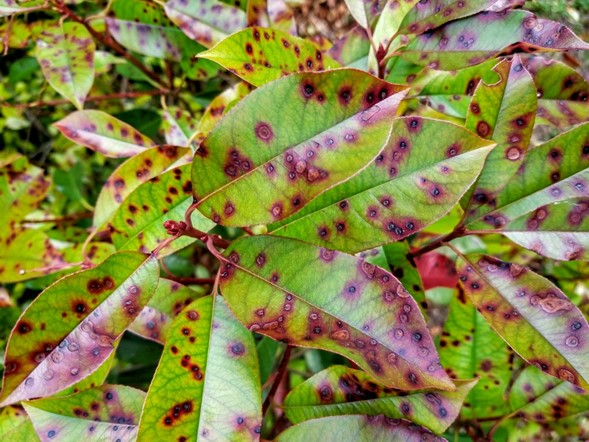
2) Why do plants make red spots around microbial infections?
It is well known that plants produce anthocyanin pigments in response to environmental stress. One conspicuous example is the red leaf spots which often occur around infections associated with fungi, bacteria, and viruses. Yet, despite their common use as diagnostic symptoms of foliar disease, no studies have explored the function of anthocyanins associated with red pathogenic leaf spots. My lab is currently collaborating with Dr. Mary Ann Lila (NCSU, Plants for Human Health Institute) and Dr. Dinene Crater (HPU Biology) to test several hypotheses to explain this common, but mysterious, trait.
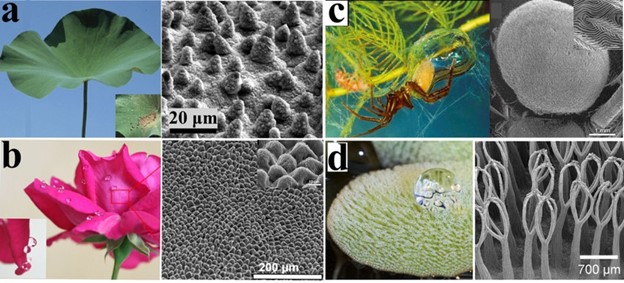
3) Can surface structures of superhydrophobic leaves help us design more water-repellant, biofilm-resistant, surfaces?
Plant lineages go through many different routes to solve the same problems, including water repellency. Water repellant surfaces are useful for a number of applications, including inhibiting the growth of biofilms. This project is a collaboration with HPU biophysicist Dr. Briana Fiser (Physics) to explore novel patterns used by plants to achieve superhydrophobicity. Students use scanning electron microscopy to image surface structures, and also take nano-imprints of fresh leaves in order to make 3D molds.
4) How do clouds impact plant water loss and carbon gain?
My lab also does field research to explore how plants have adapted to their local cloud regimes, to optimize carbon gain and minimize water loss. Field expeditions have involved travel with HPU students to mountain ranges around the world, including the Southern Alps (New Zealand), Rocky Mountains (USA), Appalachian Mountains (USA), and the Andes (Colombia). Research Gate profile: https://www.researchgate.net/profile/Nicole_Hughes
Google Scholar profile: https://scholar.google.com/citations?user=0JCLV4QAAAAJ&hl=en
Recent Publications:
* denotes HPU undergraduate student co-authors
Hughes NM, Sanchez A, Berry ZC, Smith WK. 2023. Clouds and plant ecophysiology: missing links for understanding climate change impacts (in review)
Hughes NM, Lev-Yadun, S. 2023. Why do some plants have red or purple leaf undersides? Environmental and Experimental Botany, 105126.
Hughes NM, *Gumpman C, George CO, Neufeld HS. 2022. Coevolution and photoprotection as complementary hypotheses for autumn leaf reddening: a nutrient-centered perspective. New Phytologist 233(1): 22-29.
Hughes NM, *Connors MK, Grace MH, Lila MA, *Willans BN, Wommack AJ. 2021. The same anthocyanins served four different ways: Insights into anthocyanin structure-function relationships from the wintergreen orchid, Tipularia discolor. Plant Science 303: 110793.
Hughes NM, *Gigantino G, *Hoffman K, *Willans B, Wommack A. 2019. Photosynthetic profiles of green, purple, and spotted-leaf morphotypes of Tipularia discolor (Orchidaceae) Southeastern Naturalist (in press)
*Forget SE, *Parker EM, Hughes NM. 2018. Effects of leaf prostration on microclimate and ecophysiology of the evergreen fern, Polystichum acrostichoides. Environmental and Experimental Botany 154: 80-88.
*Bayeur NM, *Carpenter KL, Hughes NM. 2018. Shade tolerance: an additional factor affecting the distribution of mountain beech and silver beech in New Zealand? TREES: Structure and Function 32: 539-547.
Segarra VA, Hughes NM, Ackerman K, Grider M, Lyda T, Vigueira PA. 2018. Student performance on the Test of Scientific Literacy Skills (TOSLS) does not change with assignment of a low-stakes grade. BMC Research Notes 11:422.
*Hernandez-Moreno, M, *Bayeur NM, *Coley HD, Hughes NM. 2017. Clouds homogenize shoot temperature, transpiration, and photosynthesis within crowns of Abies fraseri (Pursh.) Poiret. Oecologia 183(3): 667-676.
Full list of publications can be found here