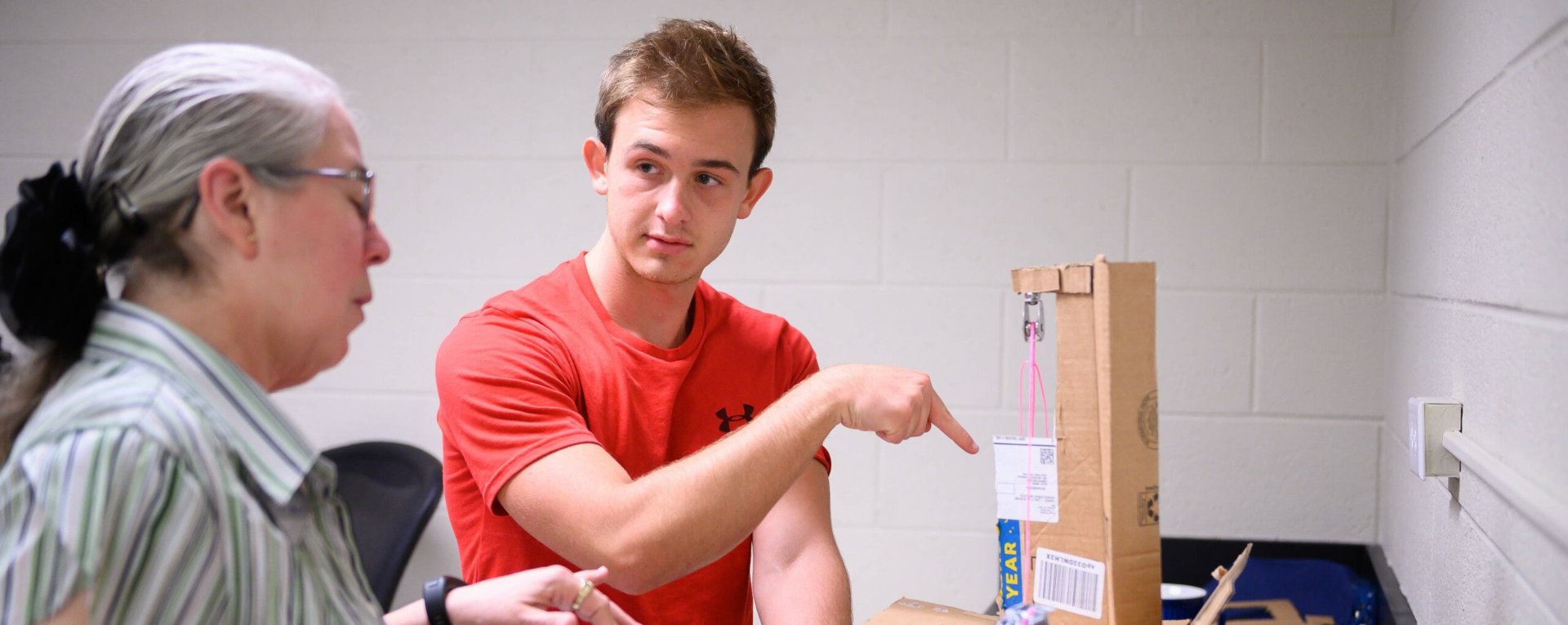
What Electrical Engineering Students Study
Students build the foundation in electronics, mathematics, physics, communications, control systems and computing needed to work on complex electrical systems, and learn to build, manufacture, operate, maintain and improve them. Students learn to solve real-world problems in an ethical and socially responsible manner, and every graduate is expected to work inside an interdisciplinary team.
Key Electrical Engineering Courses
- ECE 1012: Introduction to Engineering Design. Open-ended problem solving with the engineering design process and industry-standard technology and software.
- ECE 2605: Digital Logic and Computer Systems. Number representation, binary arithmetic and combinational and sequential logic, built on real hardware in the freshman year.
- ECE 3610: Circuits. Analysis of electrical circuits, continuing the circuit theory begun in Circuits I.
- ECE 4140: Power Systems. How electric power is generated, transmitted and distributed.
- ECE 4200: Electronics. Design of analog and digital electronic circuits using diodes, field effect transistors and bipolar transistors.
- ECE 4210: Communication Systems. How analog and digital communication systems encode, transmit and receive signals.
- ECE 4510: Controls. Analysis and design of feedback control systems.
- ECE 4630: Solid State Devices. The semiconductor physics behind diodes, transistors and other solid state devices.
B.S. in Electrical Engineering Degree Requirements
The B.S. in Electrical Engineering requires 128 to 129 credits: 85 credits of major requirements, 36 to 44 credits of University Core requirements and up to 7 elective credits.
Along with the key courses, the required sequence includes ECE 1015 Programming in MATLAB, ECE 2610 Circuits I, ECE 3105 Signals and Systems, ECE 3401 Engineering Electromagnetics and introductory programming in CSC 1710 and CSC 1720. Students finish with a two-semester senior design project, ECE 4900 and ECE 4910. Course offerings also include Advanced Control Systems, Instrumentation and Control Systems, and Economics for Engineers.
See the Electrical Engineering four-year plan and the ECE course descriptions.
Electrical Engineering Faculty
Electrical Engineering courses are taught by Webb School of Engineering faculty. Dr. Michael Oudshoorn is dean of engineering and chair of Computer Science and Electrical Engineering. Eve Klopf and Douglas Isenberg are associate professors of electrical and computer engineering. Geraldine Nicholas is an assistant professor of electrical and computer engineering, and Sean Johnson is an assistant professor of electrical engineering.
Where Electrical Engineering Students Work on Campus
Engineering students work in Couch Hall, in the circuits lab and the engineering maker spaces, in the Advanced Cybersecurity and Networking Lab and the Cybersecurity Engineering Learning Facility, and on a high performance computing cluster carrying more than 10,000 core processors.
The Webb School Makerspace is open to students 24/7 starting freshman year, with 3D printers, a laser cutter, a computer-controlled router, a vacuum former, a PCB mill, saws, soldering stations and a computer-controlled sewing machine. Makerspace Director Matt Eaton works one-on-one with students on their projects ([email protected]).
Working With Steve Wozniak
Apple co-founder Steve Wozniak has been High Point University’s Innovator in Residence since 2016 and has reviewed the Robotics Team’s lunar rover designs with students.
Undergraduate Research in Electrical Engineering
At the 14th annual High-PURCS symposium in April 2026, more than 410 undergraduates worked with 88 faculty mentors to deliver 260 presentations across 40 disciplines.
At the 2025 symposium, senior electrical engineering majors Emma Higgins and Dalia Widmer presented research on using triboelectric nanogenerators to produce sustainable power on the moon’s surface.
Jordan Destafino, a neuroscience and electrical engineering double major, used a $500 Scholarly Interdisciplinary Research Grant to build a brain scanner from scratch with lasers and artificial intelligence.
Program Contact
Dr. Michael Oudshoorn, [email protected]
From Lab Work to Engineering Jobs
Electrical Engineering coursework at High Point University leads directly into industry roles. Sarah Freeman interned as a project leader with ASSA ABLOY in Lake Forest, California. Ashley Phelps worked in controls engineering with Burns & McDonnell in Raleigh. Jenny Aguirre turned a Volvo Trucks internship into a full-time diagnostic engineering role in Greensboro.
“HPU helped me develop the life skills that are increasingly valuable in today’s technology-driven world.”
Freeman, Project Leader Intern, ASSA ABLOY
The Princeton Review gives High Point University a 95 out of 99 rating for professor accessibility, based on its student surveys.
Course requirements are published in the HPU undergraduate bulletin, and the Office of Career and Professional Development helps students prepare applications. The U.S. Bureau of Labor Statistics describes the work of electrical and electronics engineers. The Webb School of Engineering also offers the related computer engineering major.
Electrical Engineering in the News
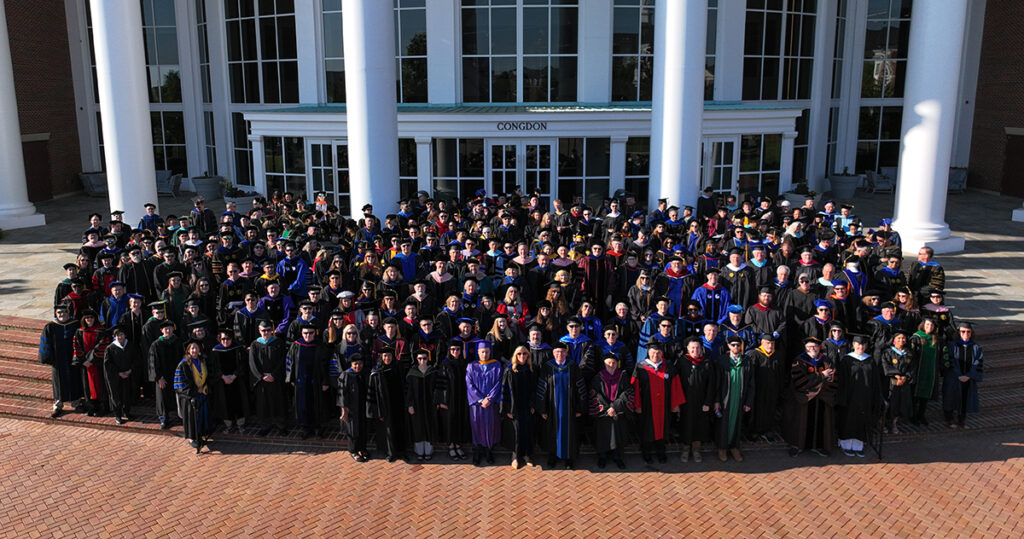
Dr. Douglas Isenberg
HPU Welcomes New Faculty
His research focus centers around multibody dynamics and control with applications in on-orbit space robots.
Explore Electrical Engineering at High Point University
See how HPU electrical engineering ranks and where its graduates go next.
Careers & Student Organizations Accreditation & Awards
Questions about the program? Email Dr. Michael Oudshoorn at [email protected].