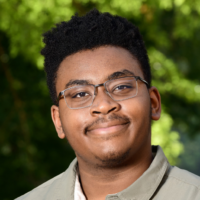
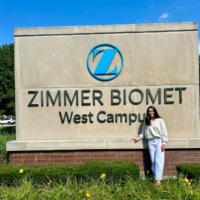
Our new facility is state-of-the-art and our faculty, internationally recognized. While designing experiments and working with cutting edge instrumentation may be a bit intimidating at first, our students gain skills and confidence that ensure success.
From field research to studying the physical adaptations of plants and the molecular microbiology of infectious diseases, biology majors gain a strong foundation in basic biology through interaction with faculty, inspiring courses, internships, and summer research.
Our new facility is state-of-the-art and our faculty, internationally recognized. While designing experiments and working with cutting edge instrumentation may be a bit intimidating at first, our students gain skills and confidence that ensure success.
Wanek School of Natural Sciences
One University Parkway High Point, NC 27268
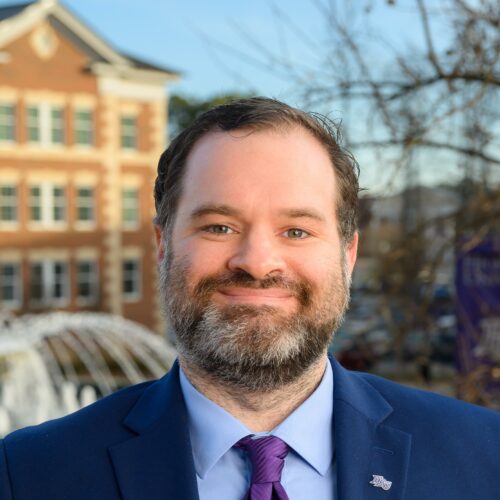
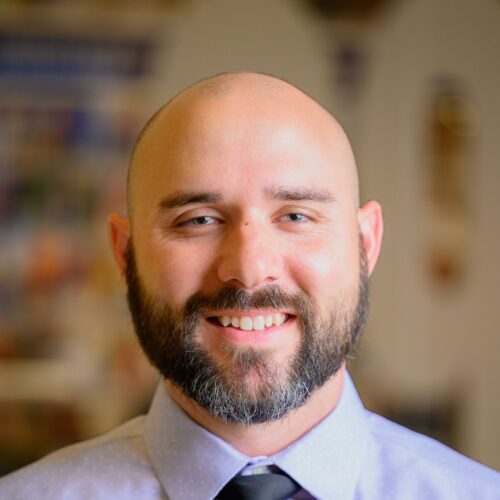
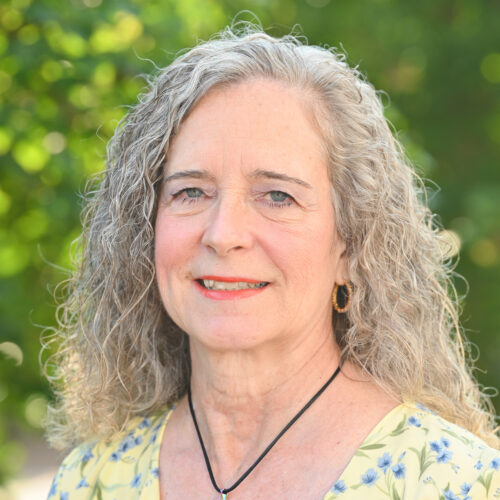
Faculty & Staff
Director of Environmental Studies and Assistant Professor of Biology
- Jobs in health care consistently rank among the highest in-demand jobs in the USA. Our Health Science track can prepare you with the coursework needed for these professional programs.
- In the midst of our planet’s 6th major mass extinction, the demand for citizens equipped with the knowledge and skill to solve current and future ecological and environmental challenges is greater than ever.
- Biology sharpens critical thinking and analytical skills, which are applicable to a variety of professional positions, even outside of the sciences.
- We are standing at the precipice of a DNA revolution—our Cellular and Molecular Biology track will prepare you for a future in these cutting-edge fields.
- Zika. Cancer. Climate Change. Through biology, you can be part of the solution to some of the world’s greatest challenges.
Research Opportunities
Students are invited to work with faculty on research projects in the following areas:
- Insect ecology and physiology
- Cancer biology
- Neurobiology
- Plant stress physiology
- Endocrine disrupting compounds and toxicology
- Microbiology of infectious disease
- Aquatic ecology
- Agricultural genetics
- Paleobiology
- Intracellular trafficking
- Mammalian hibernation
Students and faculty present research at prestigious academic conferences and symposia:
- Association of Southeastern Biologists Meeting
- International Congress of Entomology
- Keystone Symposia
- American Society for Cell Biology
- Cellular Biology of Eukaryotic Pathogens Symposium
- American Society for Microbiology Conference for Undergraduate Educators
- American Society for Microbiology Microbe
- Association of Biology Laboratory Educators
- Ecological Society of America
- International Workshop on Anthocyanins
- State of North Carolina Undergraduate Research and Creativity Symposium
- North Carolina Academy of Science
- American Society of Parasitologists
- Beta Beta Beta Biology Honor Society National Convention
- Annual Biomedical Research Conference for Minority Students
- North Carolina Branch of the American Society for Microbiology
Summer research opportunities on campus
The HPU Summer Research Program in the Sciences provides an opportunity for selected students and faculty in the Departments of Biology, Chemistry, and Physics to work together on research projects for eight weeks at High Point University. Housing, meals, and stipend are provided to participants.
Extramural grants
- National Science Foundation – Plant Adaptation to Regional Cloud Regimes
- United States Forest Service – Insect Response to Prescribed Fire and Fuel Reduction
- NC Biotechnology Center – Development of an Interdisciplinary Cell Culture Facility
- Association of Biology Laboratory Educators – Development of Inquiry-Based Laboratory Exercises
Clubs and Honors Societies
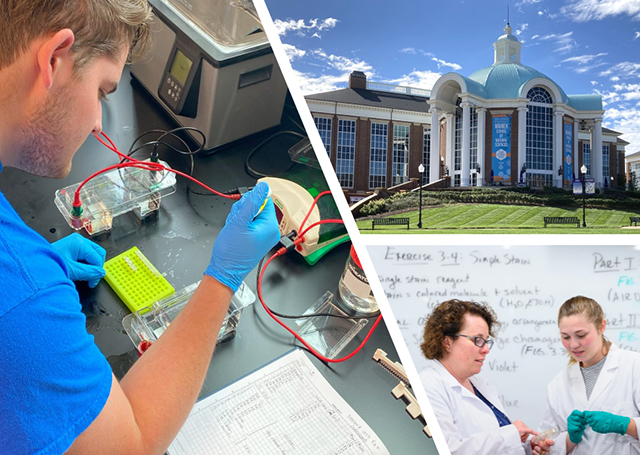
A diverse array of clubs and honor societies provides students with opportunities for extracurricular enrichment:
- Biology Club
- Health Occupations Students of America
- Beta Beta Beta Biological Honor Society
- Alpha Epsilon Delta PreMedical Honor Society
- Physicians Assistants Club
- Pre-Professionals Club
- Emergency Medical Technician Club
- STEM Club
- Green Team
Course Requirements 2024/2025
Bachelor of Arts in Biology
| Degree Requirements | Credits |
|---|---|
| Major Requirements | 41-42 |
| University Core Requirements | 36-44 |
| Electives | 42-51 |
| Total | 128 |
Bachelor of Science in Biology
| Degree Requirements | Credits |
|---|---|
| Major Requirements | 53-54 |
| University Core Requirement | 36-44 |
| Electives | 30-39 |
| Total | 128 |
Requirements for B.A. in Biology
| Course | Course Title | Credits |
|---|---|---|
| BIO 2001 | Principles of Genetics | 3 |
| BIO 2002 | Principles of Genetics Lab | 1 |
| BIO 2500 | Principles of Ecology, Evolution, and Biodiversity | 3 |
| BIO 2501 | Principles of Ecology, Evolution, and Biodiversity Lab | 1 |
| CHM 1010/1011 | General Chemistry I Lecture/Lab | (3/1) |
| CHM 1020/1021 | General Chemistry II Lecture/Lab | (3/1) |
| MTH 1400 | Pre-calculus | 4 |
| BIO 4990 | Senior Seminar | 2 |
| Select One Course From the Following List* | ||
| BIO 3110/3110L | General Botany | 4 |
| BIO 3120/3120L | Zoology | 4 |
| BIO 3061/3061L | Integrated Human Physiology | 4 |
| BIO 3071/3071L | Human Anatomy and Embryology | 4 |
| BIO 4010/4010L | Animal Physiology | 4 |
| BIO 4050/4050L | Comparative Vertebrate Anatomy | 4 |
| Select Four Upper-Level Elective Courses from the Following List** | ||
| BCH 3010 | Biochemistry I | 3 |
| Any Three Additional 3000- or 4000-level Biology Courses | Combined Total | 12-16 |
| Course Descriptions | ||
* The course selected from this list cannot be double-counted as an upper-level elective course.
** Two of the courses selected from this list must have a laboratory component. BCH 3010 must be one of the courses selected.
Requirements for B.S. in Biology
| Course | Course Title | Credits |
|---|---|---|
| BIO 2001 | Principles of Genetics | 3 |
| BIO 2002 | Principles of Genetics Lab | 1 |
| BIO 2500 | Principles of Ecology, Evolution, & Biodiversity | 3 |
| BIO 2501 | Principles of Ecology, Evolution, & Biodiversity Lab | 1 |
| CHM 1010/1011 | General Chemistry I Lecture/Lab | 4 |
| CHM 1020/1021 | General Chemistry II Lecture/Lab | 4 |
| CHM 2510/2511 | Organic Chemistry I Lecture/Lab | 4 |
| CHM 2520-2521 | Organic Chemistry II Lecture/Lab | 4 |
| MTH 1410 | Calculus I | 4 |
| STS 2020 or STS 2910 | Introduction to Statistics or Introduction to Statistical Analysis | 4 |
| BIO 4990 | Senior Seminar | 2 |
| Additional courses for the Organismal and Evolutionary Biology Concentration Select One Course From the Following List* |
||
| BIO 3110/3110L | General Botany | 4 |
| BIO 3120/3120L | Zoology | 4 |
| BIO 3061/3061L | Integrated Human Physiology | 4 |
| BIO 3071/3071L | Human Anatomy and Embryology | 4 |
| BIO 4010/4010L | Animal Physiology | 4 |
| BIO 4050/4050L | Comparative Vertebrate Anatomy | 4 |
| Select Four Upper-Level Elective Courses from the Following List** | ||
| BIO 3040 | Microbiology | 4 |
| BIO 3050 | Advanced Genetics | 4 |
| BIO 3061/3061L | Integrated Human Physiology | 4 |
| BIO 3071/3071L | Human Anatomy and Embryology | 4 |
| BIO 3080 | Vertebrate Natural History | 4 |
| BIO 3110/3110L | General Botany | 4 |
| BIO 3120/3120L | Zoology | 4 |
| BIO 3220 | Parasitology | 4 |
| BIO 3230 | Medical Entomology | 4 |
| BIO 3250 | Health and Ecology Applications of GIS | 4 |
| BIO/GBS/ENV 3300 | Global Change Ecology | 4 |
| BIO/GBS/ENV 3450 | The Hidden Face of Ecuador | 4 |
| BIO 3600 | Aquatic Biology | 4 |
| BIO 4010/410L | Animal Physiology | 4 |
| BIO 4020 | Ecological Plant Physiology | 4 |
| BIO 4030 | Developmental Biology | 4 |
| BIO 4040 | Ecology | 4 |
| BIO 4050/4050L | Comparative Vertebrate Anatomy | 4 |
| BIO 4090 | Molecular Biology | 4 |
| * The course selected from this list cannot be double-counted as an upper-level elective course. ** At least two of the courses selected from this list must have a laboratory component, and no more than one cross-listed BIO/GBS course may count toward the major. Additional courses for the Molecular/Cell and Biotechnology Concentration Select One Course From the Following List* |
||
| BIO 3110/3110L | General Botany | 4 |
| BIO 3120/3120L | Zoology | 4 |
| BIO 3061/3061L | Integrated Human Physiology | 4 |
| BIO 3071/3071L | Human Anatomy and Embryology | 4 |
| BIO 4010/4010L | Animal Physiology | 4 |
| BIO 4050/4050L | Comparative Vertebrate Anatomy | 4 |
| Select Four Upper-Level Elective Courses from the Following List** | ||
| BIO 3000 | Cell Biology | 4 |
| BIO 3040 | Microbiology | 4 |
| BIO 3050 | Advanced Genetics | 4 |
| BIO 3110/3110L | General Botany | 4 |
| BIO 3210 | Tools for Biotechnology | 4 |
| BIO 4030 | Developmental Biology | 4 |
| BIO 4060 | Immunology | 4 |
| BIO 4065 | Virology | 4 |
| BIO 4090 | Molecular Biology | 4 |
| BIO/BCH 4098 | Cancer Cell Biology | 4 |
| BCH 3010 | Biochemistry I | 3 |
| The course selected from this list cannot be double-counted as an upper-level elective course. ** At least two of the courses selected from this list must have a laboratory component, and no more than one cross-listed BIO/GBS course may count toward the major.) Additional courses for the Health Science Concentration Select One Course From the Following List* |
||
| BIO 3110/3110L | General Botany | 4 |
| BIO 3120/3120L | Zoology | 4 |
| BIO 3061/3061L | Integrated Human Physiology | 4 |
| BIO 3071/3071L | Human Anatomy and Embryology | 4 |
| BIO 4010/4010L | Animal Physiology | 4 |
| BIO 4050/4050L | Comparative Vertebrate Anatomy | 4 |
| Select Four Upper-Level Elective Courses from the Following List** | ||
| BIO 3000 | Cell Biology | 4 |
| BIO 3030 | Vertebrate Histology | 4 |
| BIO 3040 | Microbiology | 4 |
| BIO 3050 | Advanced Genetics | 4 |
| BIO 3061/3061L | Integrated Human Physiology | 4 |
| BIO 3071/3071L | Human Anatomy and Embryology | 4 |
| BIO 3120/3120L | Zoology | 4 |
| BIO 3220 | Parasitology | 4 |
| BIO 3230 | Medical Entomology | 4 |
| BIO 3250 | Health and Ecology Applications of GIS | 4 |
| BIO/GBS 3350 | Emerging Infectious Diseases: A World Perspective | 4 |
| BIO 4010/4010L | Animal Physiology | 4 |
| BIO 4030 | Developmental Biology | 4 |
| BIO 4050/4050L | Comparative Vertebrate Anatomy | 4 |
| BIO 4060 | Immunology | 4 |
| BIO 4065 | Virology | 4 |
| BIO 4070 | Endocrinology | 4 |
| BIO 4090 | Molecular Biology | 4 |
| BIO/BCH 4098 | Cancer Cell Biology | 4 |
| BCH 3010 | Biochemistry I | 3 |
| * The course selected from this list cannot be double-counted as an upper-level elective course. ** At least two of the courses selected from this list must have a laboratory component, and no more than one cross-listed BIO/GBS course may count toward the major. |
||
Career Opportunities
See what careers are offered within the various tracks of this major: Health Sciences Track (Pre-Professional), Cell, Molecular & Biotechnology Track and Organismal & Evolutionary Biology Track.
- Dentist or Orthodontist
- Medical Doctor
- Medical Scribe
- Osteopathic Medicine
- Pathologist Assistant
- Pharmacist
- Physician Assistant
- Public Health Educator
- Veterinary Doctor
- Cancer Biologist
- College Faculty
- Forensic Investigator
- Genetic Engineer
- Laboratory Technician
- Microbiologist
- Patent Examiner
- Quality Control Specialist
- Research Scientist
- Agriculture and Food Scientist
- Arborist
- Botanist
- Conservation Biologist
- Museum Curator
- Oceanographer
- Paleontologist
- Water Quality Specialist
- Wildlife Rehabilitation
- Zoologist
- Dentist or Orthodontist
- Medical Doctor
- Medical Scribe
- Osteopathic Medicine
- Pathologist Assistant
- Pharmacist
- Physician Assistant
- Public Health Educator
- Veterinary Doctor
- Cancer Biologist
- College Faculty
- Forensic Investigator
- Genetic Engineer
- Laboratory Technician
- Microbiologist
- Patent Examiner
- Quality Control Specialist
- Research Scientist
- Agriculture and Food Scientist
- Arborist
- Botanist
- Conservation Biologist
- Museum Curator
- Oceanographer
- Paleontologist
- Water Quality Specialist
- Wildlife Rehabilitation
- Zoologist