
The B.S. in Computer Engineering
The B.S. in Computer Engineering prepares students to apply mathematical and scientific principles to the design, development and operational evaluation of computer hardware, embedded systems and software systems. Graduates can design and implement a computer system for general purpose or embedded computing, and are trained to make the hardware and software trade-offs that sit at the interface between them.
Each engineering course includes a lab component. Students also learn to write well, speak well, work in teams and understand engineering ethics and entrepreneurship.
Computer engineering faculty include Eve Klopf and Dr. Douglas Isenberg, associate professors of electrical and computer engineering.
Degree Requirements
- Total credits: 128 to 129
- Major requirements: 85 to 86 credits
- University Core: 36 to 44 credits, with at least 16 core credits embedded in the major
- Senior design: ECE 4900 and ECE 4910, a two-semester capstone project
See the Computer Engineering four-year plan, the course descriptions and the HPU undergraduate bulletin.
Key Courses
- ECE 1012 Introduction to Engineering Design: open-ended problem solving with the engineering design process and industry-standard technology and software
- CSC 1720 Advanced Programming with Data Structures: problem-solving strategies, algorithms and basic data structures in an object-oriented language such as C++
- ECE 2605 Digital Logic and Computer Systems: number representation, binary arithmetic, and combinational and sequential logic
- ECE 3610 Circuits: Laplace transforms, transient circuit response and transformers
- ECE 3630 Microprocessor Applications: the fundamentals of microprocessor and microcontroller systems and how to design with them
- ECE 4200 Electronics: design of analog and digital electronic circuits using diodes, field effect transistors and bipolar transistors
- ECE 4650 Real-time and Embedded Systems: hardware and firmware design for embedded and real-time systems
- ECE 4805 Computer Architecture: the architectural techniques used to build high-performance processors and systems
More Required Courses
The required sequence also includes:
- CSC 1710 Introduction to Programming
- CSC 2342 Discrete Structures
- CSC 4210 Operating Systems
- ECE 1015 Programming in MATLAB
- ECE 2610 Circuits I
- ECE 3105 Signals and Systems
- ECE 4400 Digital Signal Processing
- ECE 4900 Engineering Senior Design Project I
- ECE 4910 Engineering Senior Design Project II
- PHY 2020 Fundamentals of Physics II
- STS 3005 Probability and Statistics for Engineers
Students also complete four semesters of engineering mathematics.
Hardware From the First Year
In the freshman Digital Logic course, students design and build real circuits with actual hardware. In that class, Emily Lattanzio wrote software she used to program a chip and then built a circuit. “That was really exciting,” Lattanzio said.
Each student has a success coach, and several projects throughout the program give students experience working in interdisciplinary teams.
Engineering Labs and Equipment
The labs are open outside class. Students use the equipment and spaces to complete coursework, explore their own ideas and build personal engineering projects.
In the Electronics Lab, every workstation has its own precision LCR meter.
“All core engineering classes have a lab section, so you immediately apply the knowledge you learn in class in a lab,” said Luke Schooley, a computer engineering major.
Engineering students also work in the circuits lab, the Advanced Cybersecurity and Networking Lab and the Cybersecurity Engineering Learning Facility.

Webb School Makerspace
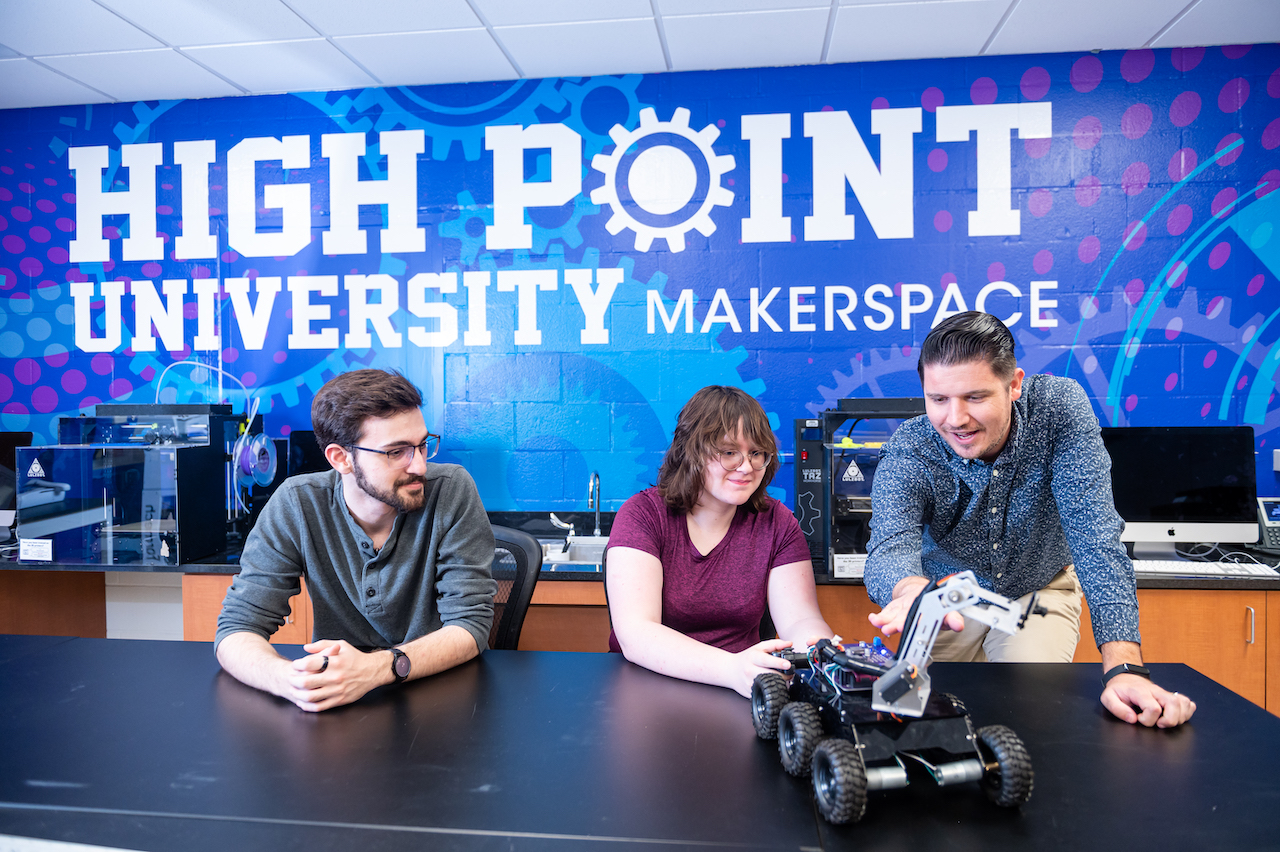
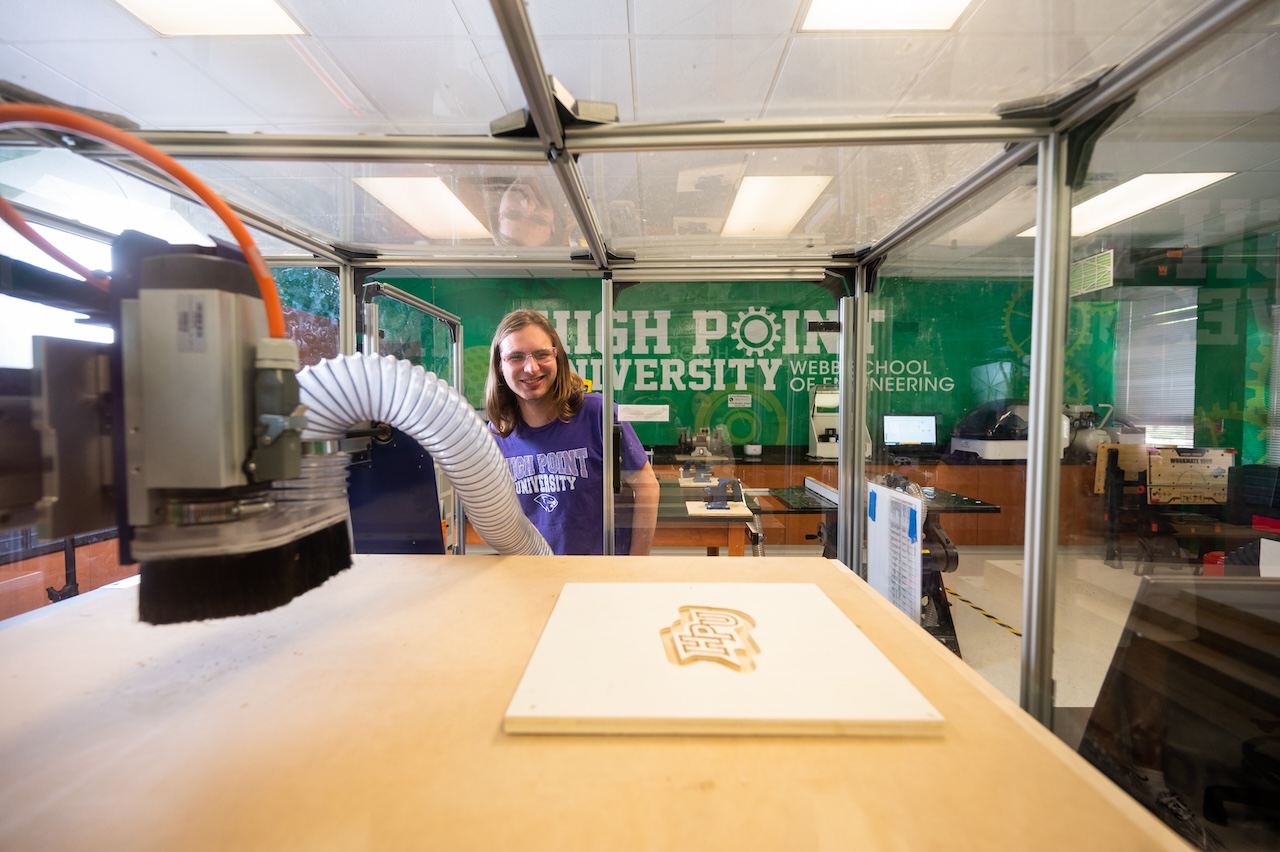
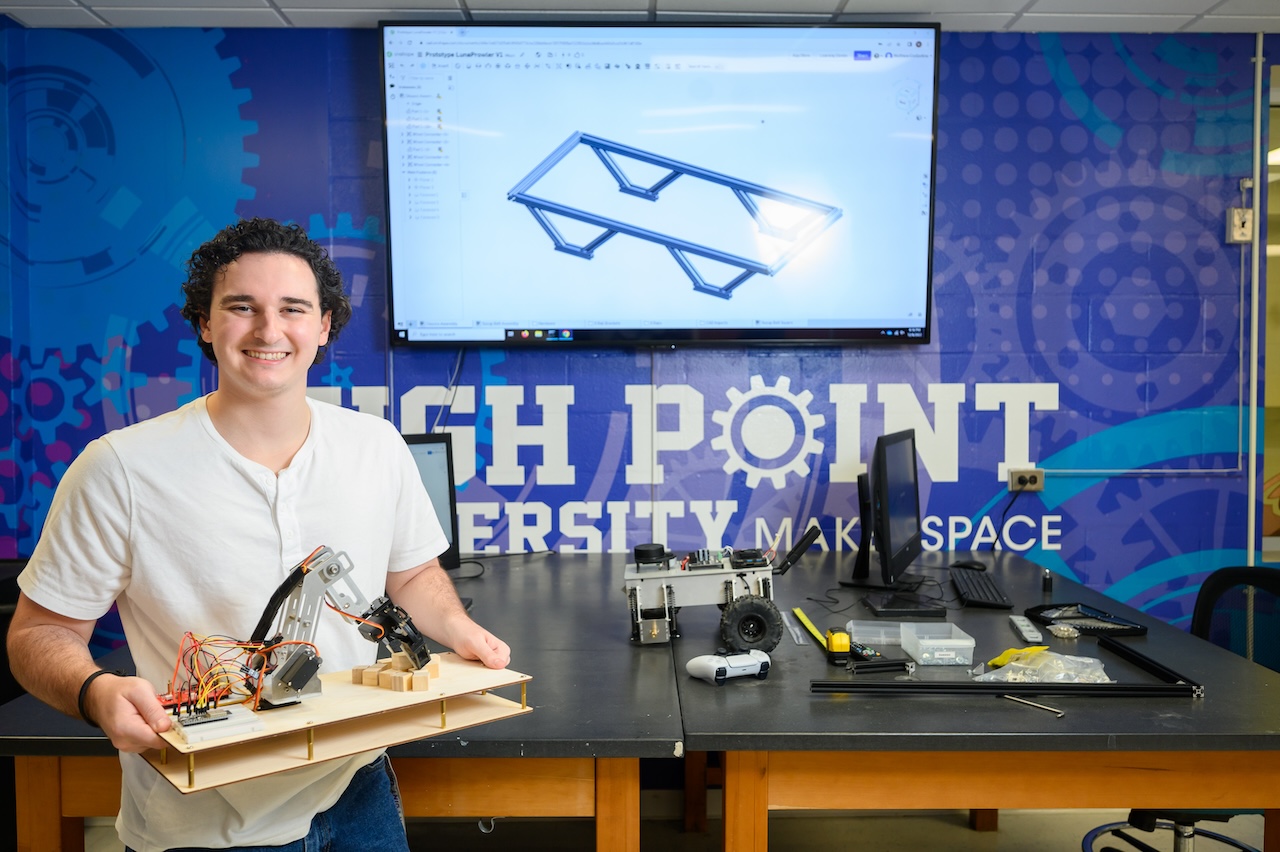
The Makerspace in the Webb School of Engineering is open to students 24/7, starting freshman year. Equipment includes 3D printers, a laser cutter, a computer-controlled router, a vacuum former, a PCB mill, saws, soldering stations and a computer-controlled sewing machine.
Matt Eaton, instructor and Makerspace director, maintains the equipment and works one-on-one with students on their projects.
Senior Design Capstone
Computer engineering majors finish with ECE 4900 and ECE 4910, a two-semester senior design project. Students propose a project approved by a faculty advisor, then study, analyze, design, build and test it.
Emily Lattanzio worked alongside two classmates in a year-long capstone project to build an electronics system for a smart walker that relays an alert if a person with disabilities experiences a fall.

Nanowire Research with Dr. Sean Johnson
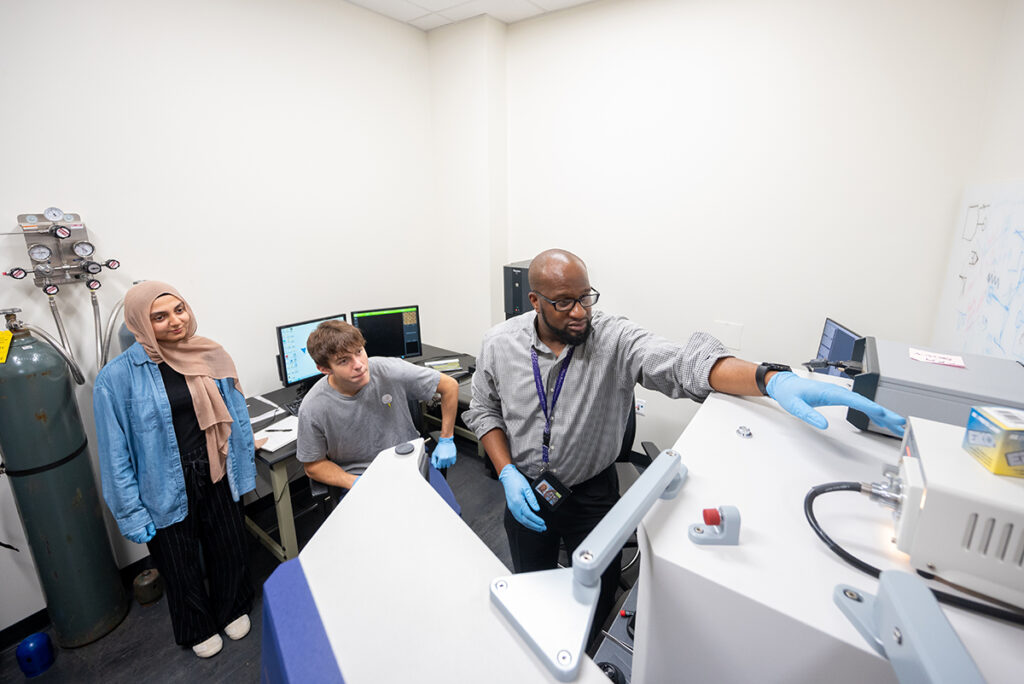
Students working with Dr. Sean Johnson, assistant professor of electrical engineering, study nanowire photo detectors and develop processes to fabricate patterned nanowires on graphene substrates that could be used in flexible electronics.
Computer engineering major Vladimir Lagutin and computer science and chemistry major Sara Hamidpour continued the project with an atomic force microscope and CMOS technology processes. “Lithography onto graphing substrates, having never been done before, and applying research methods and learning how to use various equipment to do that, I think, would be a valuable skill to have in my arsenal,” Lagutin said.
Morgan Abrams, a computer engineering major, studied semiconductor materials in summer research. “I joined summer research to see if this was a subsection of the field that I wanted to go into,” Abrams said.
Undergraduate Research and Conferences
Emily Lattanzio completed two National Science Foundation Research Experiences for Undergraduates, at the University of Missouri and the New Jersey Institute of Technology. That work led to three publications, including one as first author for the Institute of Electrical and Electronics Engineers.
Lattanzio presented research at the 13th International Green and Sustainable Computing Conference and the IEEE 19th Annual Consumer Communications & Networking Conference.
Luke Schooley, a computer engineering major, spent a summer researching biophysics in the HPU physics department. “I created a neural network that performs mathematical parameters from an EKG in order to predict if someone is going to start experiencing arrhythmias,” Schooley said.
Vladimir Lagutin presented research at High-PURCS, HPU’s Undergraduate Research and Creativity Symposium.
Computer Engineering Faculty
- Dr. Michael Oudshoorn, dean of engineering and chair of Computer Science and Electrical Engineering
- Eve Klopf, associate professor of electrical and computer engineering
- Dr. Douglas Isenberg, associate professor of electrical and computer engineering, who teaches courses and labs related to controls, systems and signal processing
- Geraldine Nicholas, assistant professor of electrical and computer engineering
- Dr. Sean Johnson, assistant professor of electrical engineering
- Matt Eaton, instructor and Makerspace director
The Princeton Review gives High Point University a 95 out of 99 rating for professor accessibility, based on its student surveys.
Computer Engineering in the News

Dr. Douglas Isenberg
HPU Welcomes New Faculty
Isenberg teaches courses and labs related to controls, systems and signal processing. He earned his BSEE in 2004, MSEE in 2006, and Ph.D. in Electrical Engineering from UNC Charlotte in 2009. His research focus centers around multibody dynamics and control with applications in on-orbit space robots.
Hands-On Engineering Labs
Family Friday Staff Feature: Matt Eaton
Electrical engineering and computer engineering are very hands-on majors. I’m so proud of the fact that each course we offer has a lab component and that I get to be a part of them! I think that hands-on engineering education through project-based learning is one of the best examples of experiential learning in the Webb School of Engineering. It’s also one that we practice and engage with students every day!
Webb School Makerspace
Engineering Excellence
Engineering students get their feet wet with a 3D printer, vacuum former, PCB mill, computer-controlled router, laser cutter and state-of-the-art soldering gear. Students will get hands-on experience with these cutting-edge tools starting their freshman year.
Explore Computer Engineering at High Point University
See how HPU computer engineering ranks and where its graduates go next.
Careers & Student Organizations Accreditation & Awards
Questions about the program? Email Dr. Michael Oudshoorn at [email protected].