The B.A. in Music
High Point University offers a Bachelor of Arts in Music, along with minors in voice, piano or organ, instrumental studies and musical theater.
Most music programs teach theory, history and aural skills as separate courses. HPU combines them. After a foundation year in aural skills and music theory, every major completes a four-semester Integrative Musicianship sequence, with analytical and historical projects tied to the repertoire students are performing in lessons and ensembles.
The degree totals 128 credits. The 48 credits in the major cover theory, history and aural skills (22), ensembles (4), private lessons (4), professional studies (14) and a capstone (4).
Foundation Courses
- Aural skills and music theory (MUS 1001, MUS 1002). Sight-singing, rhythm reading and dictation alongside the fundamentals of tonal music, counterpoint and diatonic harmony.
- Musicianship I, Improvisation (MUS 2001). Functional improvisation and keyboard harmony, from scales and arpeggios to lead sheet accompaniment.
- Musicianship II, Arranging (MUS 2101). Students read commercial chord symbols and write and perform arrangements for a range of ensembles.
Upper-Level Courses
- Musicianship III, Narratives (MUS 3000). Connects music and storytelling in instrumental, vocal, theater and dance works, from the Hero’s Journey to narrative tension.
- Musicianship IV, Communication (MUS 3100). Covers musical communication and leadership, from programming to rehearsal and performance, as students mentor Musicianship II peers.
- Vocal pedagogy (MUS 3400). Surveys vocal teaching concepts, with structured opportunities to teach studio lessons.
- Conducting (MUS 3410). Teaches basic conducting, score preparation and rehearsal technique, along with major choral and instrumental literature.
- Capstone research and senior capstone (MUS 4000, MUS 4100). Students build an ePortfolio and a capstone proposal, then complete and present a public-facing project.
Every major also keeps a Music Major ePortfolio (MUS 0999). Voice majors give a half recital at the 3000 level and a full recital at the 4000 level and pass a keyboard proficiency exam.
Read full course descriptions in the HPU Undergraduate Bulletin.
Pathways and Flexibility
Instead of choosing voice or instrumental study for all four years, music majors are encouraged to shift their focus periodically. Students build skills in areas such as composition, technology or business while continuing to study their own instrument or voice.
Secondary emphasis areas include:
- Music business
- Jazz studies
- Sacred music
- Musical theater
- Opera
- Music technology
- Music education
With 36 to 44 elective credits in the degree, a double major is workable. Recent students have paired music with neuroscience, biology and marketing.
Music Minors
The minors in voice, piano or organ, and instrumental studies each total 22 credits:
- Music theory and aural skills (6 credits)
- Ensembles (4 credits)
- Private lessons on a primary instrument or voice (4 credits)
- Performance studies such as conducting, pedagogy or diction
- Departmental electives
A minor in musical theater is also offered.
Private Lessons
Private lessons are offered in voice, piano, organ, strings, guitar, bass, brass, woodwinds, percussion and drum set, plus composition.
Music-Making in the 21st Century
The curriculum is built to give students a thorough understanding of the art of music-making in the 21st century. The Musicianship sequence moves from functional improvisation and lead sheet accompaniment to arranging with commercial chord symbols, storytelling across instrumental, vocal, theater and dance works, and leading rehearsals and performances.
Professional studies add World Music Survey, which looks at nonwestern music and its role in cultures around the world, and Developing an Artistic Career. Electives can reach outside the department into audio and video software, media production and entrepreneurship.
Every major finishes with a public-facing senior project designed in Capstone Research.
Technology and New Music
The Music Technology Lab gives students Mac workstations, 61-key MIDI keyboards and industry-standard software, including Finale, Sibelius and Pro Tools, with 24-hour access for projects.
Music majors and minors can tailor their studies toward specialized areas such as music business, sacred music and video game music composition.
New music is part of every season. The Fresh Picked concert series presents new works, and the Wind Ensemble’s spring 2026 concert, “Rising,” paired pieces by up-and-coming band composers with original compositions by HPU student composers.
Student research topics range from performance practice and composition to music history, music literature and music technology.
An American Celebration of Music in Italy
On the HPU Global Experience An American Celebration of Music in Italy, students take a 10-day tour through Italy and perform at some of its most renowned cathedrals and basilicas:
- St. Peter’s Basilica
- Santa Maria sopra Minerva
- Siena Cathedral
- Santa Maria de Ricci
- Florence Cathedral
- St. Mark’s Basilica
Students have also toured Hungary, Austria and the Czech Republic.

Performing Close to Home, Too
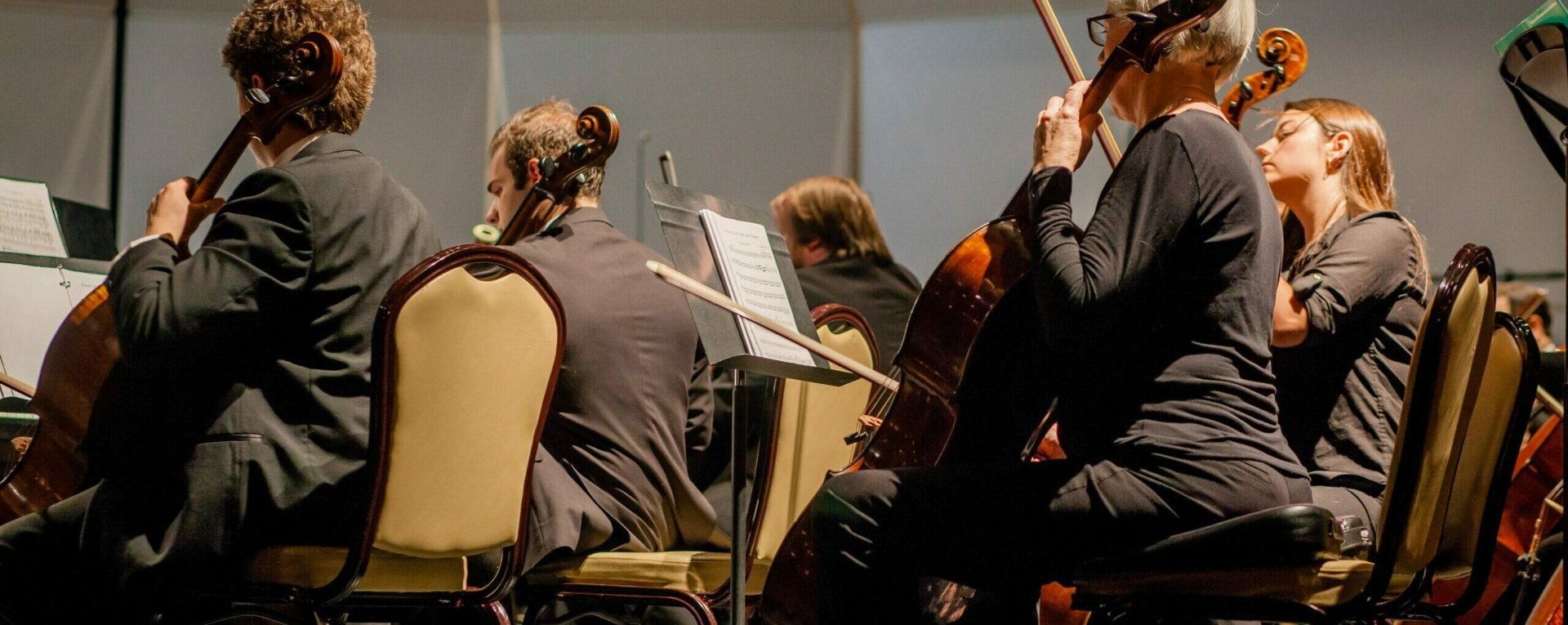
On campus, students perform in ensembles from the Chamber Singers and Wind Ensemble to the Jazz Ensemble and the HPU Community Orchestra. See them all on the Careers & Student Organizations page.
Undergraduate Research in Music
The department works with HPU’s Office of Undergraduate Research and Creative Works to support student projects and student and faculty collaborations. Its College Music Society chapter mentors research, writing and proposal submission inside the Musicianship courses, and HPU students have presented at CMS regional conferences since 2016.
At the 14th annual High-PURCS symposium in April 2026, more than 410 undergraduates worked with 88 faculty mentors to deliver 260 presentations across 40 disciplines.
Learning From Working Artists
Guest artists from the concert, opera, music theater, jazz and popular music stages work with students each year, and the department hosts an annual international piano competition.
The Randall Thomas Johnson Guest Artist Program Endowment sponsors residencies that bring artists to campus for masterclasses, lectures and concerts.
The Princeton Review gives High Point University a 95 out of 99 rating for professor accessibility, based on its student surveys.
How Music Students Describe the Coursework
Music students and graduates describe the classes and mentors behind their work.
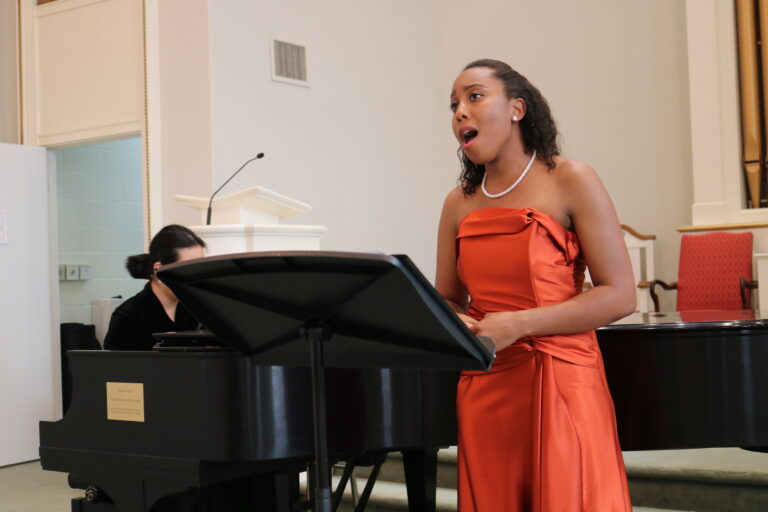
Brittney Meadors
Music major · Master of Music graduate program, Howard University
“Classes such as diction, opera scenes and vocal pedagogy, which were taught by knowledgeable professors, made me feel comfortable auditioning for master’s level music performance degrees.”
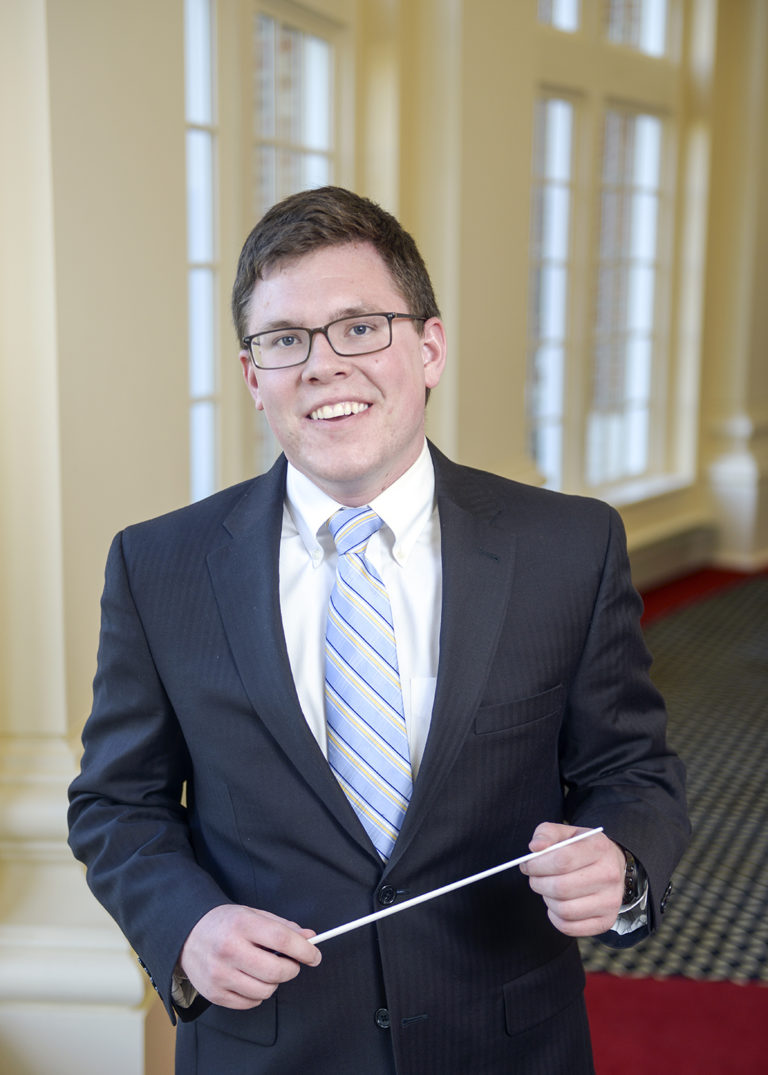
Nick Pierle
Music major · Choral Conducting graduate program, East Carolina University
“HPU helped me get to where I am now through the HPU Chamber Singers and other university choirs.”

Emma Longboat
Music major · Master’s in Choral Music Education, Virginia Tech
“Dr. Marc Ashley Foster, Chair and Professor of Music has been my most impactful mentor at HPU. He values hard work and dedication over talent and makes sure that he develops students into not only good musicians, but good people.”
Music students sing in choirs such as the Chamber Singers, University Singers, Chapel Choir and Women’s Chorus, and play in instrumental groups including the Wind Ensemble, Jazz Ensemble, the HPU Community Orchestra and chamber ensembles for strings, brass, woodwinds, guitar and percussion. Students also lead the Genesis Gospel Choir, the Off Beats, Petal Points and the Toccatatones.
Private lessons are offered in voice, piano, organ, strings, guitar, bass, brass, woodwinds, percussion and drum set, plus composition. Students in other majors can add a 22-credit minor in voice, piano or organ, or instrumental studies.
The B.A. in Music has 48 credits in the major within a 128-credit degree. After a foundation year in aural skills and music theory, you complete the four-semester Integrative Musicianship sequence: Improvisation, Arranging, Narratives and Communication. You also take ensembles, private lessons, professional studies such as World Music Survey and Developing an Artistic Career, and a public-facing senior capstone.
Read full course descriptions in the HPU Undergraduate Bulletin.
Yes. Music majors are encouraged to shift focus during the degree instead of committing to one track for four years. Secondary emphasis areas include music business, jazz studies, sacred music, musical theater, opera, music technology and music education. With 36 to 44 elective credits, a double major is workable, and HPU students have paired music with neuroscience, biology and marketing.
Through the HPU Global Experience An American Celebration of Music in Italy, students take a 10-day tour and perform in cathedrals and basilicas including St. Peter’s Basilica, Siena Cathedral, Florence Cathedral and St. Mark’s Basilica. Students have also toured Hungary, Austria and the Czech Republic.
Closer to home, HPU singers have performed with Andrea Bocelli in Raleigh and on FOX News’ “All-American Christmas Tree Lighting.”
HPU music majors have been accepted into graduate programs at Florida State University, Peabody Conservatory, the University of Michigan, Southern Methodist University and Howard University. Graduates have also earned call-backs for national tours and gone on to church music careers, regional musical theater performance and music teaching.
For questions, email Dr. Marc Foster, chair of the Department of Music, at [email protected].
Explore Music at High Point University
See how HPU music ranks and where its graduates go next.
Accreditation & Awards Careers & Student Organizations
Questions about the program? Email Dr. Marc Foster, chair of the Department of Music, at [email protected].