Briana Fiser
Dean of the Wanek School of Natural Sciences
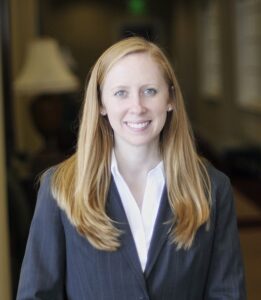 Briana Fiser joined HPU in 2011 as a faculty member in the Department of Physics to contribute to building an innovative physics major, which was initiated in 2010. She helped grow the department from three faculty to six and developed a curriculum that embeds project-based learning and computation throughout while also emphasizing communication and collaboration. In 2019, she became chair of the department.
Dr. Fiser’s research is in developing biology-inspired micro- and nanotechnologies for use in human health applications, more recently in the prevention of bacterial biofilm development on surfaces. She has received funding from the National Science Foundation and North Carolina Biotechnology Center. From her earlier work, Dr. Fiser has four patents related to the creation and use of an artificial cilia system to monitor properties of various biofluids, such as blood and mucus.
During her time at the University, Dr. Fiser has also been involved in educational research related to student identity in STEM fields and understanding how the Honors Scholar Program curriculum, which she helped develop in 2016, facilitates student growth in collaboration and communication skills, and critical thinking dispositions.
Education: B.S. in physics, B.S. in mathematics, University of Mississippi; M.S. and Ph.D. in physics, University of North Carolina at Chapel Hill
What she loves most about being Dean: I love the opportunity to support the colleagues I work with every day in their teaching and research; they are deeply committed to helping our students grow and develop into the next generation of scientific thinkers and leaders. 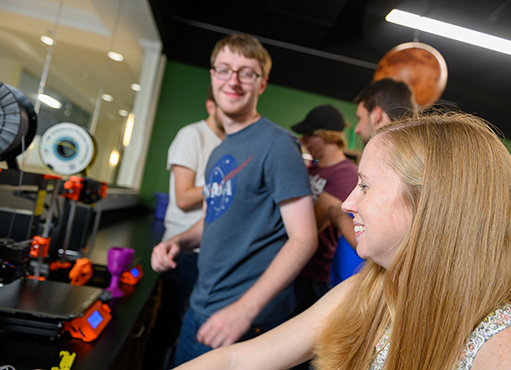
What sets HPU’s School of Natural Sciences apart: The Departments of Biology, Chemistry, Neuroscience, and Physics in HPU’s Wanek School of Natural Sciences all provide extensive opportunities for experiential learning, through their laboratories and classes and through undergraduate research. We have state of the art interdisciplinary facilities and instrumentation that are regularly used in laboratory activities and available for students to use in research. Through these opportunities, students are learning what it means to do science by being scientists, they gain problem solving and critical thinking skills, and they grow in their creativity, independence, and confidence. Along their journey, students are mentored and guided by our outstanding and internationally recognized faculty, and upon graduation, they are prepared for a plethora of future paths, including professional programs like medicine, dentistry, and pharmacy, and master’s and Ph.D. graduate programs across the sciences.