Learn more about the many ways the Wanek School of Natural Sciences helps students develop the academic, career, and life skills needed to thrive during their four years at HPU and beyond. Across biology, biochemistry, chemistry, neuroscience, and physics, students engage in innovative, hands-on, and research-driven learning experiences that transform the classroom into a place of discovery.
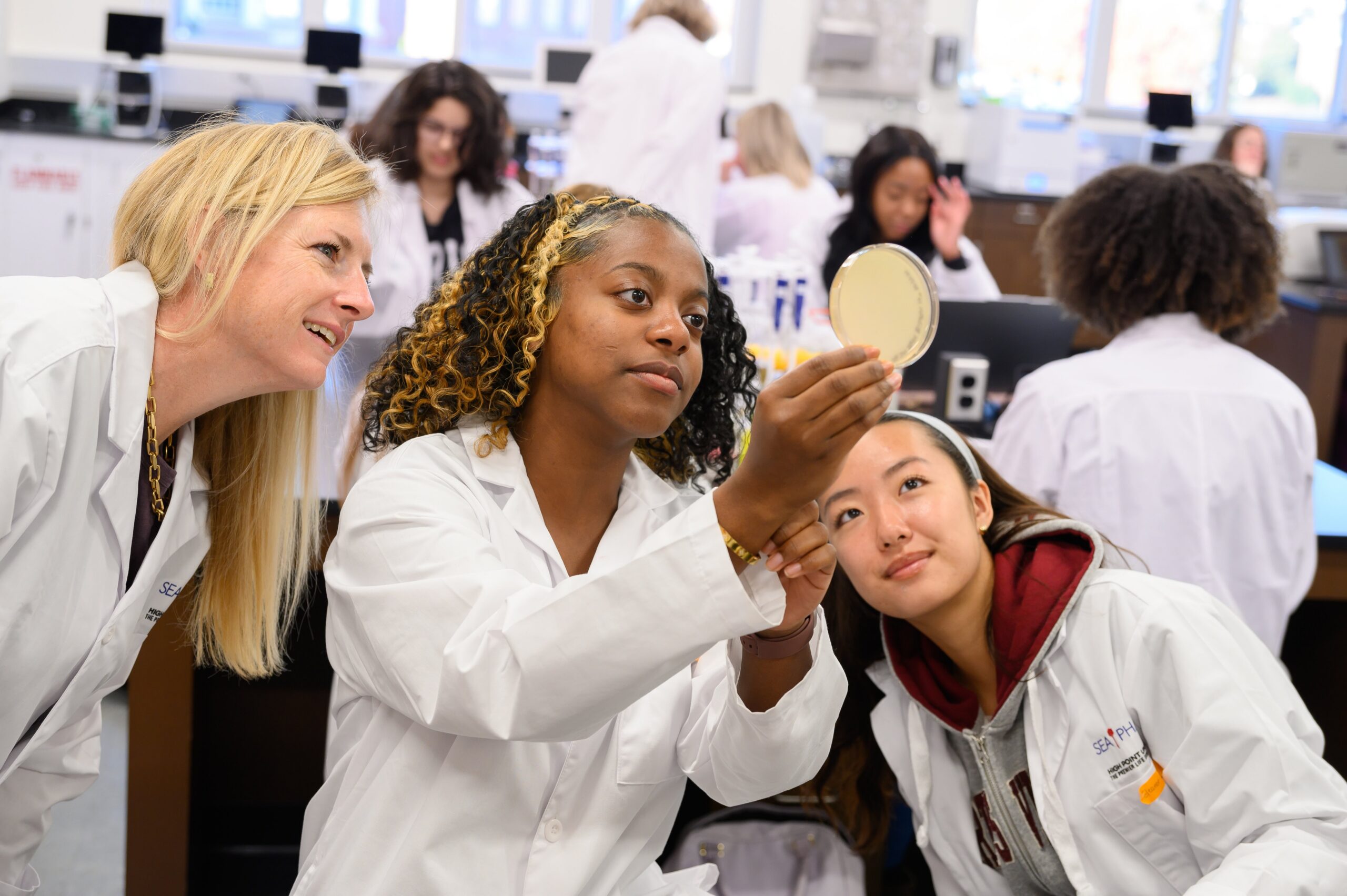
SEA-PHAGES Laboratory - BIO 1502 & 2003
First-year biology majors don't just learn about scientific discovery - they participate in it. Through the SEA-PHAGES program, in collaboration with Howard Hughes Medical Institute and the University of Pittsburgh, students collect soil samples, isolate previously undiscovered bacteriophages (viruses that infect bacteria), and investigate their genetics using the same research methods employed by professional scientists. Working through a year-long research experience, students contribute to the discovery, sequencing, and annotation of viral genomes while developing skills in experimental design, data analysis, and scientific communication. The experience culminates in a formal research poster presentation, giving students the opportunity to share their findings with the broader university community. Experiences like this immerse students in authentic research from their first semester, building confidence, curiosity, and the problem-solving skills that support success in science, healthcare, and beyond. To learn more about this new opportunity, check out the success of our first year!
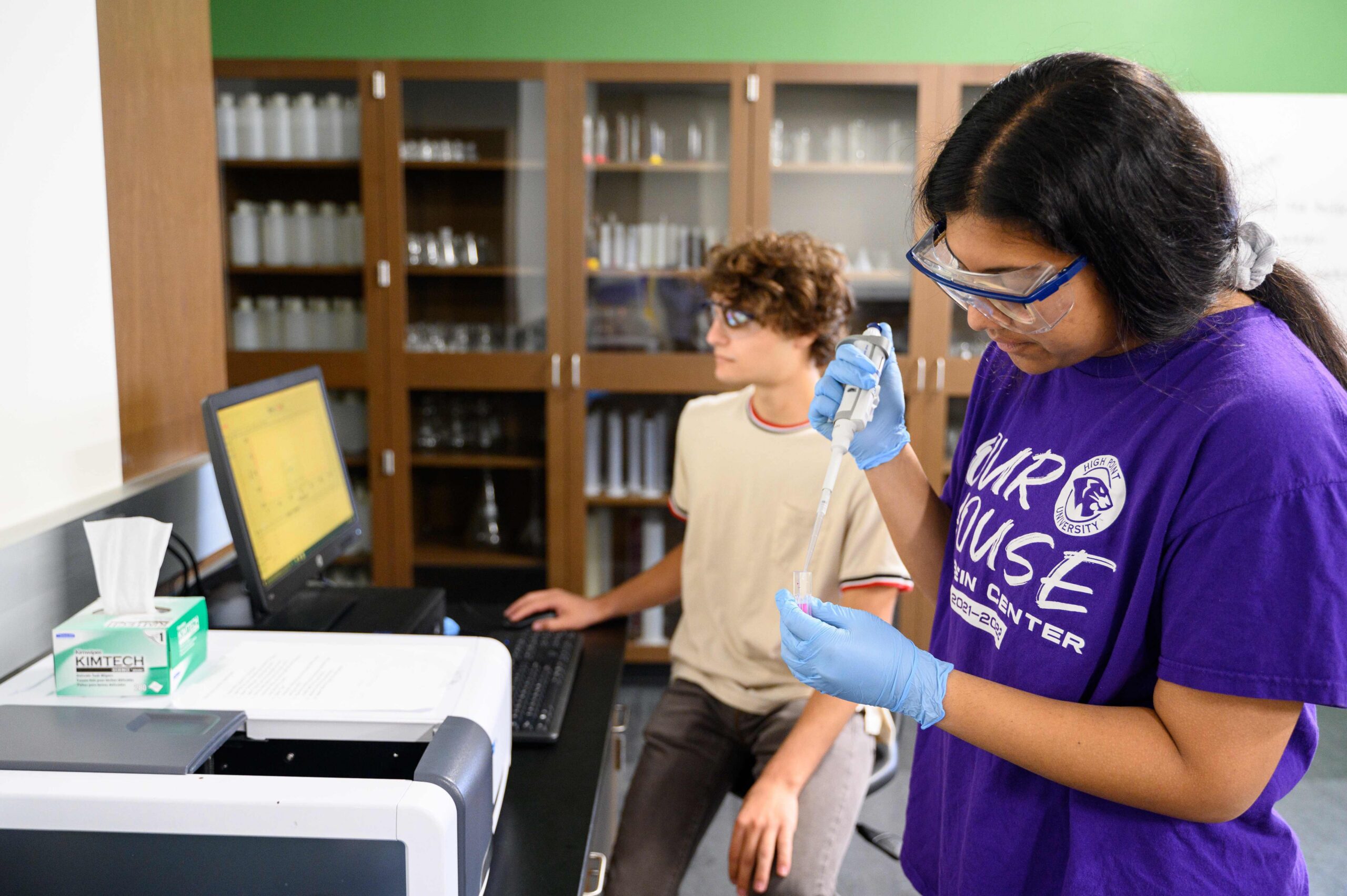
General Chemistry II Lab - CHM 1521
In General Chemistry II, biochemistry and chemistry majors move beyond traditional laboratory exercises and engage in authentic scientific discovery. After building foundational skills with a well-characterized enzyme, students design and conduct their own hypothesis-driven investigations using PETase, a recently discovered enzyme capable of breaking down PET plastic. Along the way, they use advanced research tools, including UV-Vis spectroscopy and scanning electron microscopy, to collect and analyze data. Rather than submitting a traditional lab report, students present their findings as professional research posters at High Point University's Research and Creativity Symposium. Experiences like this immerse students in the practice of modern science while developing critical thinking, teamwork, communication, and problem-solving skills that prepare them for success long after graduation.
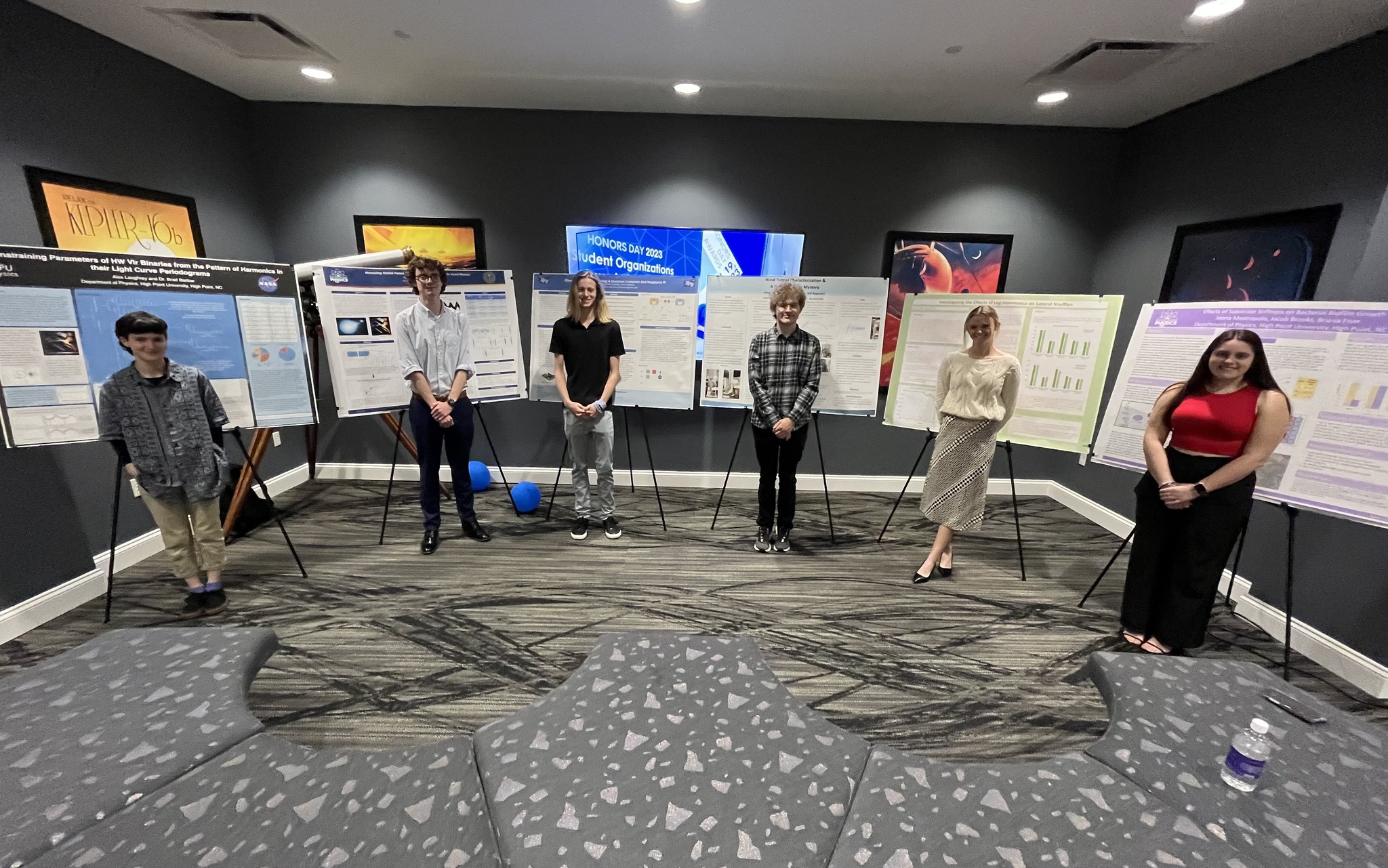
Research & Writing in Physics - PHY 2001 & 2002
This course sequence introduces students to the process of scientific discovery in their first or second year in the physics program. Through year-long research projects, students learn how to develop research questions, analyze data, explore scientific literature, and communicate their findings to different audiences. They are paired with a faculty mentor to apply these steps to an independent research project. As students progress through the sequence and their research journeys, they create research proposals, scientific articles, and professional presentations while using tools and techniques employed by practicing physicists. At the end of the year, they present their research in a formal poster session to physics faculty and students. By combining hands-on research with communication and critical thinking skills, this innovative course sequence helps students build the foundation needed for advanced research, graduate study, and careers in science and technology.
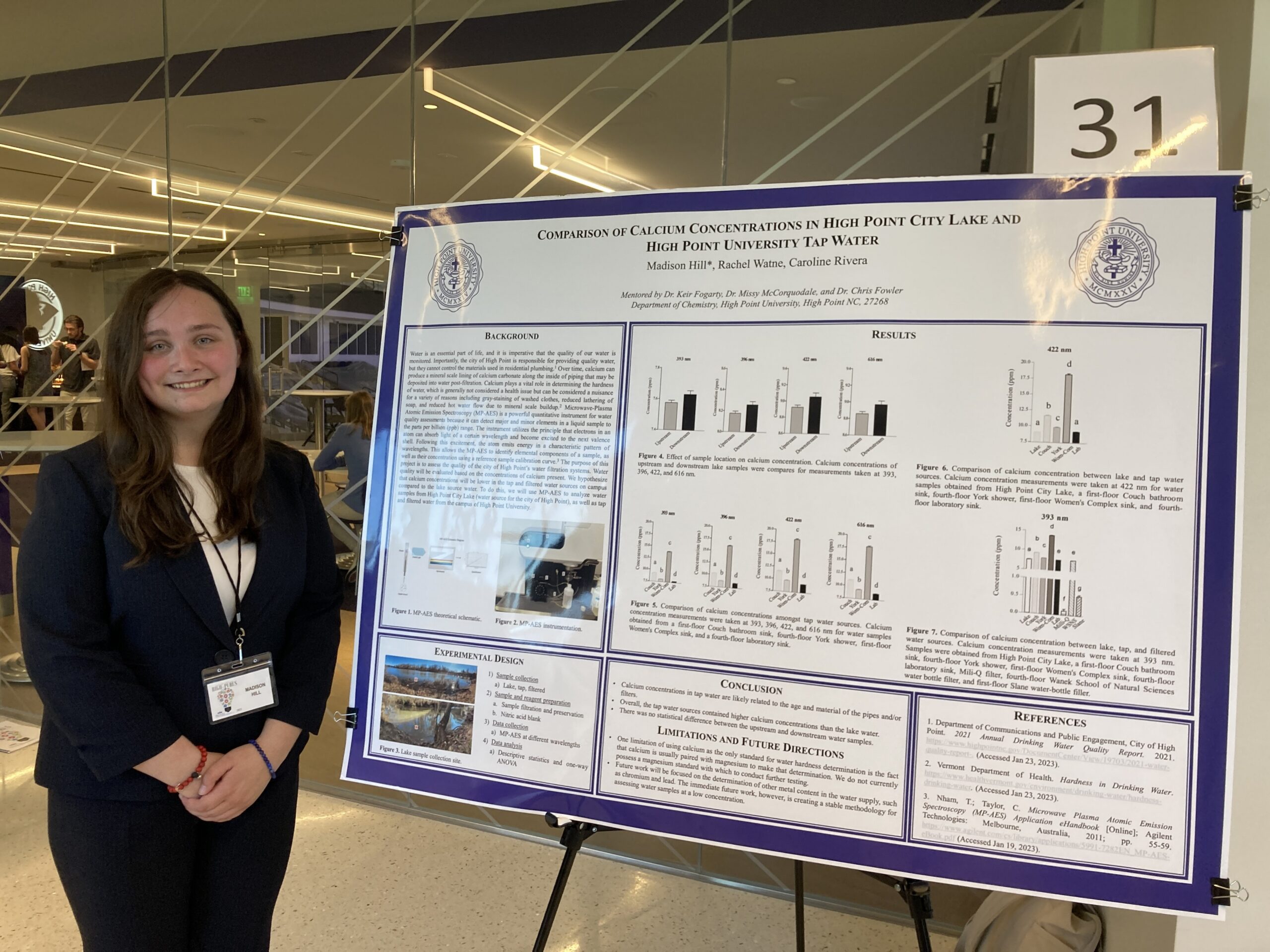
Instrumental Analysis - CHM 3030
Instrumental Analysis, a 3000-level lab-intensive course for chemistry majors, takes learning beyond the textbook by immersing students in the same sophisticated analytical techniques used by professional scientists. Students gain hands-on experience with spectroscopic, chromatographic, and electrochemical instrumentation as they investigate real-world chemical questions and develop solutions to authentic analytical challenges. Through collaborative projects, data analysis, and research-inspired laboratory experiences, students build both technical expertise and career-ready skills while learning how modern scientists use advanced instrumentation to understand the world around them. To help students translate their educational experiences into the language of career competencies desired by employers, the course ties learning outcomes directly to competencies such as communication, critical thinking, leadership, professionalism, teamwork, and self-development. Student teams present their projects as posters at HPU's annual Research and Creativity Symposium, and faculty teaching this course have presented on its innovative nature at the Biennial Conference on Chemical Education.
Current Techniques in Neuroscience - NEU 4210
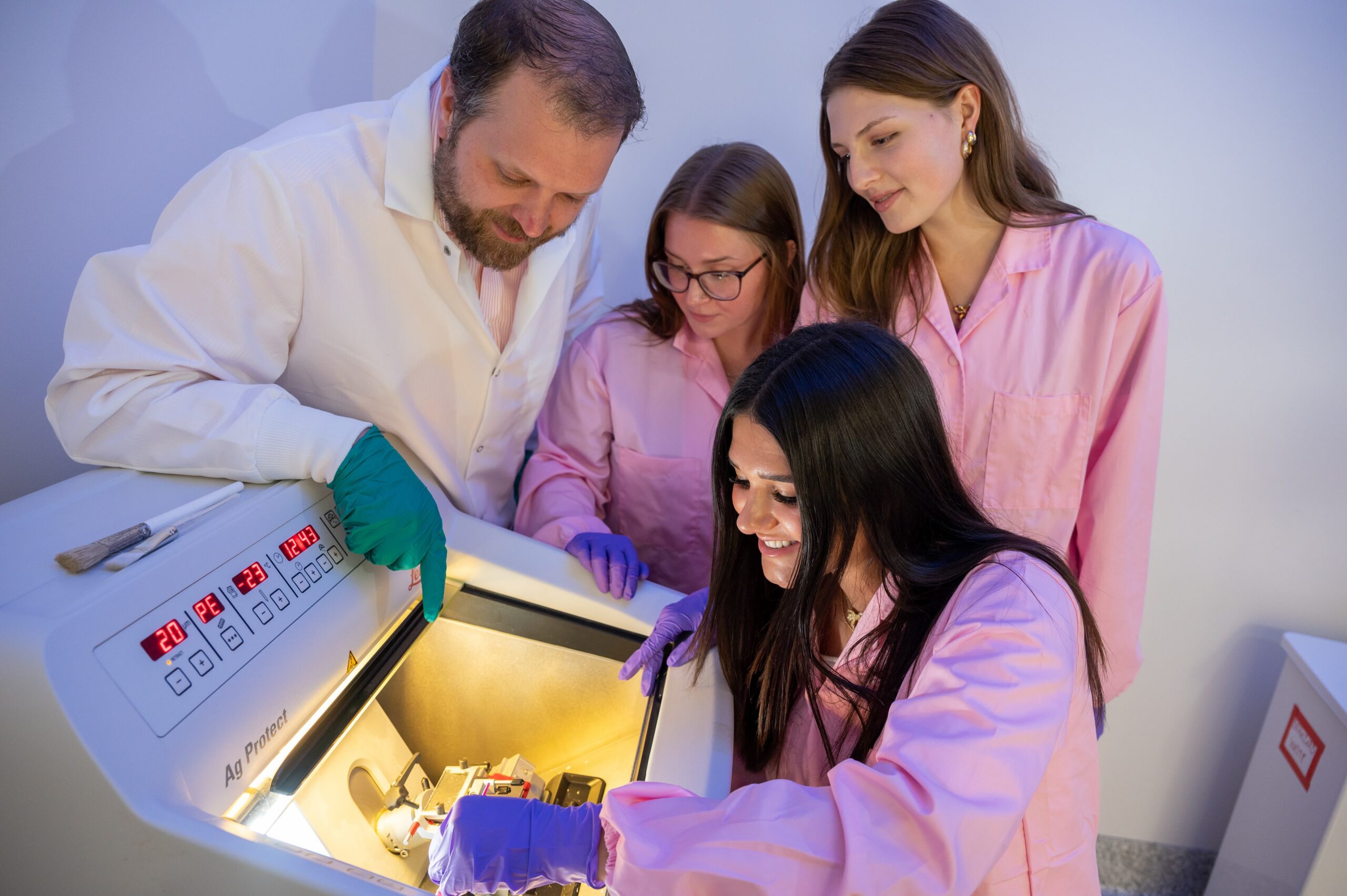
Current Techniques in Neuroscience gives students hands-on experience with the full arc of a real research project. Students begin by working with an in vivo model to trace neural pathways, using a labeling method that lights up specific pathways in the brain and spinal cord. After a period of behavioral observation, students learn how tissue is properly preserved and prepared for analysis, including thin-sectioning on specialized equipment designed for this purpose. From there, students apply a range of staining and labeling techniques to visualize different cell types and structures, and even explore molecular methods to detect and measure specific proteins. Blending lecture with direct lab experience, the course is built around a simple idea: the best way to learn a scientific technique is to use it. By the end of the semester, students have not just studied neuroscience methods, they have practiced them from start to finish.