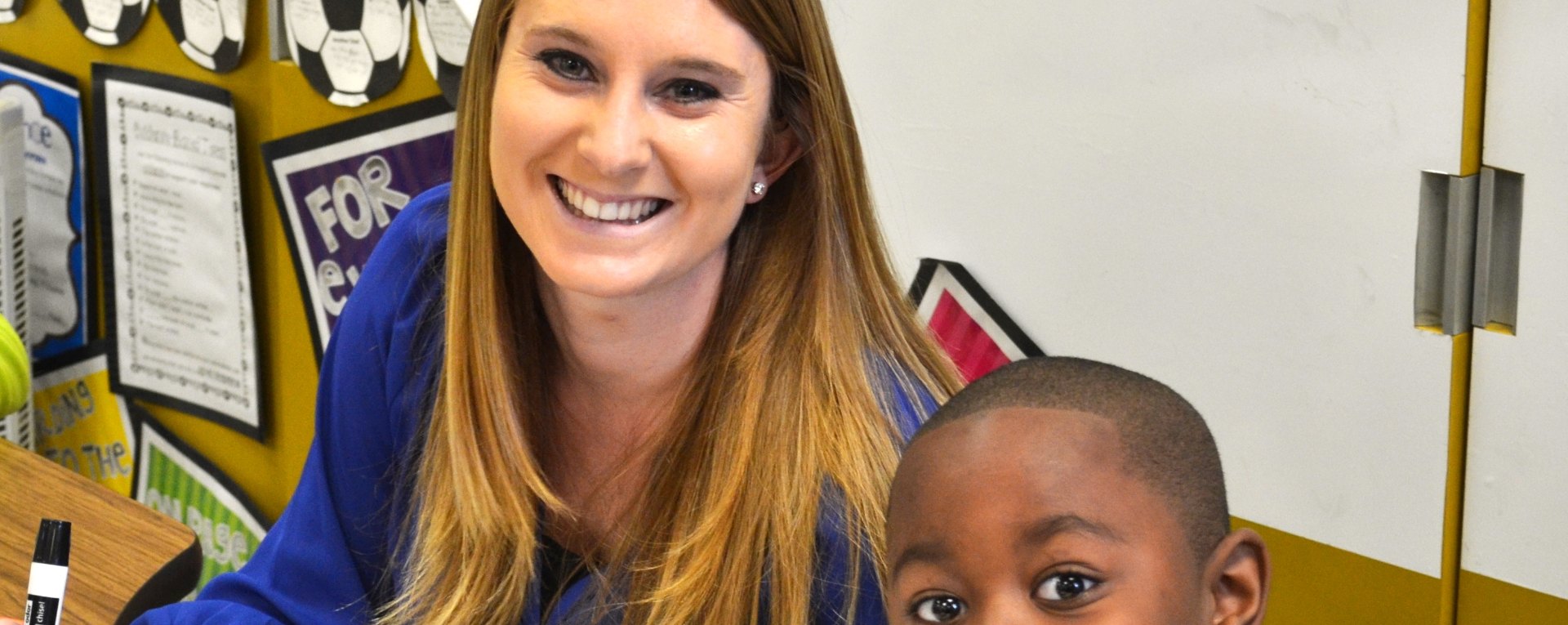
The B.A. in Elementary Education
The elementary education program is based within the liberal arts tradition. It is rigorous, field-centered and highly personalized, and it leads to North Carolina licensure to teach grades K-6.
Majors work in local schools all four years, starting with observations as freshmen and finishing with 16 weeks of full-time student teaching on the licensure track. Methods courses in foundational literacy, mathematics, science and social studies sit alongside a supervised practicum in an elementary classroom.
Students who want to keep going can finish a master’s degree within five years through HPU’s B.A. to M.Ed. program.
Coursework meets the standards of the Association for Advancing Quality in Educator Preparation (AAQEP) and the North Carolina State Board of Education.
Degree Requirements
The major totals 80 credits within the 128 credits needed to graduate.
- 54 credits of professional education courses, from Introduction to Teaching through student teaching
- 26 credits of required supporting courses in mathematics, science and Healthy Living for the Elementary Child (PEC 2130)
- Licensure courses: EDU 4000 Investigation of Teacher Performance Assessment I, EDU 4112 Independent Study for the edTPA portfolio and EDU 4230 Student Teaching Continuation
- University core requirements and electives
Licensure and Degree-Only Tracks
The licensure track includes 16 weeks of student teaching, the required licensure tests and the edTPA portfolio. The degree-only track replaces student teaching with a four-credit internship and university electives.
Key Courses
- EDU 1200 Introduction to Teaching. An overview of the K-12 teaching profession, with seminars and observations in elementary, middle and secondary schools.
- EDU 2100 Educational Psychology. How the social, psychological and physical development of K-12 students shapes learning.
- EDU 3100 Students with Disabilities: Characteristics and Service Delivery Models. An introduction to teaching students with disabilities in inclusive classrooms.
- EDU 3130 Methods of Teaching Foundational Literacy. Designing and teaching foundational reading and language arts instruction for emerging readers.
- EDU 3131 Integration of Fiction and Nonfiction Texts in the Elementary Classroom. Children’s literature across authors, illustrators and genres, used to build comprehension.
- EDU 3230 Methods of Teaching Reading and Writing in the Intermediate Grades. The foundations of reading and writing and the integrated practices of multimodal literacies.
- EDU 3232 Integrated Practicum for the Elementary Classroom. A supervised 30-hour field experience applying math and literacy strategies in an elementary classroom.
- EDU 3233 Methods of Teaching Mathematics. The second course in the mathematics methods series, rooted in the NCTM Principles and Standards for School Mathematics.
- EDU 4200 Diverse Learners and Culturally Relevant Pedagogy. Strategies for the diversity found in today’s school community.
- EDU 4233 Integrated Principles of Math and Science. Inquiry-based STEM instruction aligned to North Carolina standards and the Next Generation Science Standards.
Fieldwork in Local Schools All Four Years
Elementary education majors complete internships and fieldwork in local schools all four years of the program. Freshmen and sophomores observe teachers in local schools, juniors take on more classroom responsibilities, including some teaching, and seniors on the licensure track spend 16 weeks student teaching under a cooperating teacher and university supervisor.
More Courses in the Major
- EDU 2200 Critical Perspectives on Teaching and Learning
- EDU 3110 Educational Technology for Teachers
- EDU 3133 Methods of Teaching Mathematics I: Operation and Number
- EDU 3234 Behavioral Intervention and Supports in the Elementary Setting
- EDU 4110 Instructional Technology for Elementary K-6 Classrooms
- EDU 4130 Classroom and Behavior Management: Elementary Focus
- EDU 4133 Methods of Teaching Social Studies K-6
- EDU 4134 Introduction to Student Teaching
- EDU 4135 Integrated Arts in the Elementary School
- EDU 4166 Analyzing and Evaluating K-12 Assessment Data
- EDU 4230 Student Teaching Continuation
- PEC 2130 Healthy Living for the Elementary Child
The Stout School of Education Building
Elementary education majors learn in the 31,000-square-foot, LEED-certified Stout School of Education. The building includes a Teacher Resource Center, a children’s resource library, methods labs that simulate elementary classrooms for literacy and STEM, and the Sheehy Specialized Curriculum Learning Lab.
When Allison Patrick first walked into Room 266, the school’s simulated elementary classroom, she told her mom, “This is where I want to come.” She went on to become an HPU Extraordinary Leader.

Teaching in South Africa and Australia
Two professors and 14 Stout School of Education students spent two weeks teaching at Orange Grove Schools in Tarkastad, in South Africa’s Eastern Cape. They tutored children from preschool through 12th grade, graded papers, taught dance and math lessons, and read aloud from books they donated to each classroom.
“HPU students were able to apply skills they have developed in the education program by working one-on-one with students, reading aloud and donating their favorite book, teaching mathematics lessons and facilitating after school activities,” said Dr. Tara Shollenberger, assistant professor of leadership studies.
Education majors have also traveled to Australia with Dr. Leslie Cavendish to work in primary schools and see up close how the country educates its children. “It was a place I’d always wanted to go, but never thought I’d get the chance, and to have it relate to my major and eventual career made it an invaluable learning experience,” said Carleigh Luck.

EDU-Fellows
EDU-Fellows is a four-year cohort program for qualified education majors, with special activities, trips and scholarship opportunities. Fellows take select education courses together, join fellows-only seminars, serve local schools and the community, travel to see unique educational models in the Southeast and are mentored by students in HPU’s Doctor of Education program. Fellows who continue into the B.A. to M.Ed. program can complete student teaching through a residency with a local school district.
The program is directed by Rosemarie Tarara, senior instructor of educator preparation. First-year fellows read with kindergarten and first-grade students at local elementary schools. “This is the first chance they get to go into the schools, and I think it confirms to them that they do want to go into education,” Tarara said.

STEM Teaching and Outreach
Education majors have traveled to the U.S. Space and Rocket Center in Huntsville, Alabama, to learn strategies for teaching science, technology, engineering and mathematics. On campus, the Stout School of Education building includes a methods lab that simulates an elementary classroom for STEM, and EDU 4233 Integrated Principles of Math and Science prepares majors to teach inquiry-based STEM lessons.
The Stout School of Education and Guilford County Schools received a three-year, $180,000 grant from the Burroughs Wellcome Fund’s Student STEM Enrichment Program for HPU STEMtastic Adventures.
“This partnership brings together HPU students, educators, researchers and scientists to instill a love of STEM learning in elementary aged students,” said Dr. Amy Holcombe, dean of the Stout School of Education.

Faculty Mentors
Elementary education majors are advised and taught by the Stout School of Education’s Educator Preparation faculty, who have taught and led K-12 schools.
- Dr. Leslie Cavendish, associate professor of educator preparation, nominated Anna Tornovish for her Fulbright and helped Jessie Dietz through the interview and hiring process.
- Teresa Owens, instructor of educator preparation, is the mentor Dylan Raab credits with showing her “how every student deserves a classroom where they are accepted and heard for who they are, no matter the learning differences they might have.”
- Rosemarie Tarara, senior instructor of educator preparation, directs EDU-Fellows.
- Jordan Widelock is chair of Educator Preparation and director of the Teacher Residency Program.
Pair Elementary Education With a Minor or Master’s
B.A. to M.Ed.
Through HPU’s B.A. to M.Ed. program, qualified elementary education majors take 12 hours of graduate coursework in their senior year and finish a Master of Education in Elementary Education, Special Education or Curriculum and Instruction within five years.
Special Education Minor
Majors can add a special education minor to prepare for inclusive classrooms, as Kristin Salvatore and Dylan Raab did.
AIG Licensure
Undergraduates can add academically and intellectually gifted (AIG) licensure, a credential also offered to licensed North Carolina teachers.
Kappa Delta Pi
Education majors can join Kappa Delta Pi, the International Honor Society in Education.
How Elementary Education Courses Prepared Graduates
Practicums and field placements put majors in elementary classrooms from their first year.

Dylan Raab
Elementary Education major, Special Education minor · Graduate Student, Columbia University Teachers College
“The most impactful moment for me was when I left campus and worked first-hand in various elementary schools from my freshman to senior year. I was exposed to different levels of learning and provided a plethora of learning tools to use as a future educator. HPU made it easy for me to feel confident in knowing being a teacher was what I truly wanted to do.”

Taylor Niss
Elementary Education major, Special Education minor · B.A. to M.Ed. in STEM Education
“My advisor played an integral part in helping me be successful during my four years here. She saw my potential and is the one who encouraged me to take on a B.A. in Elementary Education, a minor in Special Education, to become certified in teaching AIG, and to finally go on to work towards my Master’s in STEM Education.”

Cecilie Holm
Elementary Education major, Spanish minor · Second-Grade Teacher, Maureen Joy Charter School
“During my junior year at HPU, I had the opportunity to complete an 80 hour internship in a 5th grade Spanish immersion classroom at a local elementary school. As an Education student with a minor in Spanish, it was the perfect chance for me to combine both my fields of study.”
Elementary Education in the News
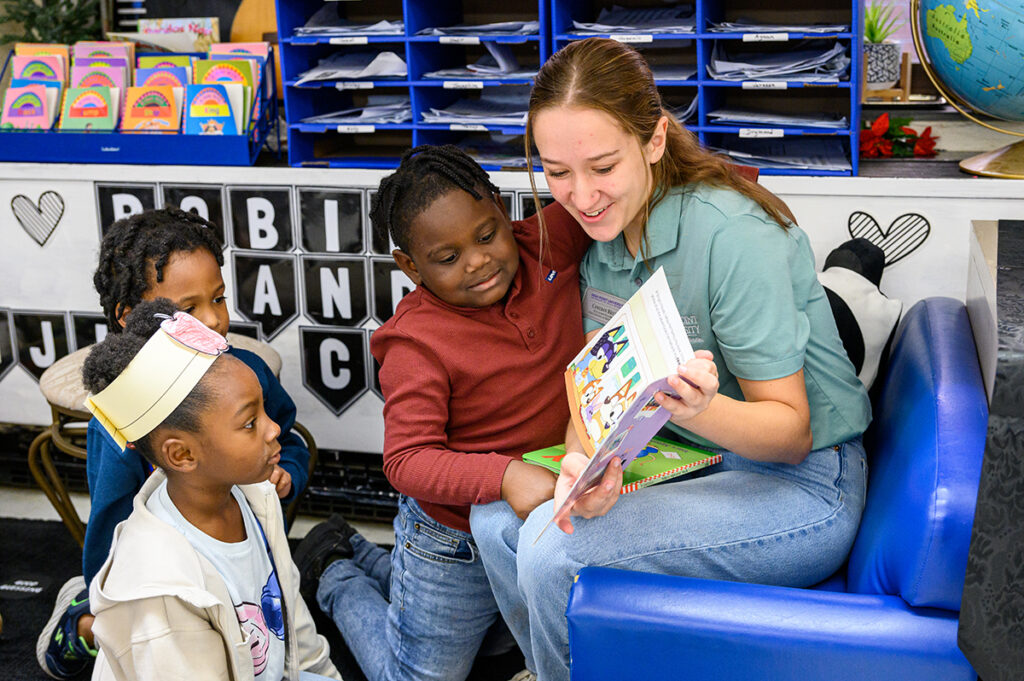
Education Fellows Share 500 Books
HPU Freshmen Share 500 Books with Local Elementary School Students
Freshman Education Fellows from HPU’s Stout School of Education read with kindergarten and first-grade students after they delivered the books.
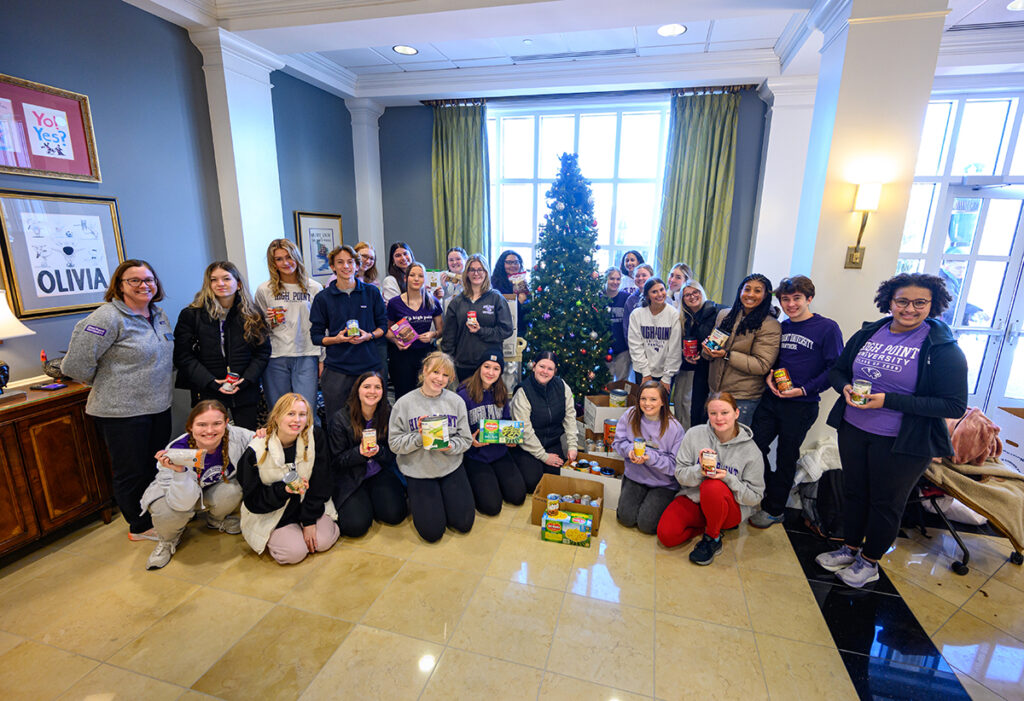
Education Fellows Food Drive
HPU Students Host Holiday Food Drive, Provide for Local Families
“We worked with the High Point Public Library Teaching Garden to learn how produce looks when it’s first grown,” said Samantha Tilton, an elementary education major from Tewksbury, Massachusetts.

Freshmen Build Bikes
HPU Freshmen Work in Teams to Build Bikes for Local Children
Rebecca Trapasso, a freshman elementary education major, said the bike-building exercise promoted connectivity as students worked together in teams.

Top 10% From NCTQ
National Rankings Place HPU School of Education in Top 10 Percent
The National Council on Teacher Quality (NCTQ), a non-partisan research and policy organization dedicated to ensuring every classroom has a high-quality teacher, found that HPU’s program scored in the top 10 percent of all programs across the country.

Allison Patrick
February Extraordinary Leader: Born to Teach
Patrick, a senior from Morgantown, West Virginia, will graduate in May with a degree in elementary education and a minor in mathematics from High Point University after spending the past three years observing and teaching in five different area schools.

Special Populations Valentine’s Dance
HPU Students Spread Love, Co-Host Special Populations Valentine’s Day Dance
“It’s important to show people in the community that these events highlight them, are for them and they have somewhere to belong,” said Robert Wallace, an elementary education major from Emerald Isle, North Carolina, who serves with Brick as co-vice president of HPU’s CEC.
Explore Elementary Education at High Point University
See how HPU elementary education ranks and where its graduates teach.
Accreditation & Awards Careers & Organizations
Questions about the program? Email Dr. Amy Holcombe at [email protected].