












Semester Abroad
Bangor University



How will this minor help you? The minor for Forensic Studies at High Point University provides two concentrations for students. One of those options is the Natural Sciences Track. Impress future employers with an interdisciplinary framework incorporating knowledge of ethics, methods of identification using bone samples, and an evolutionary context of anatomical structures. The other option is the Social Sciences Track. Show your value to your prospective employers by developing a rich understanding of the intersections of the social, biological, and political.
For more information click below:
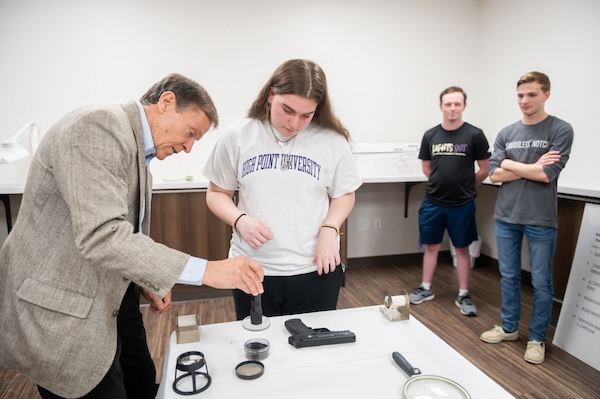
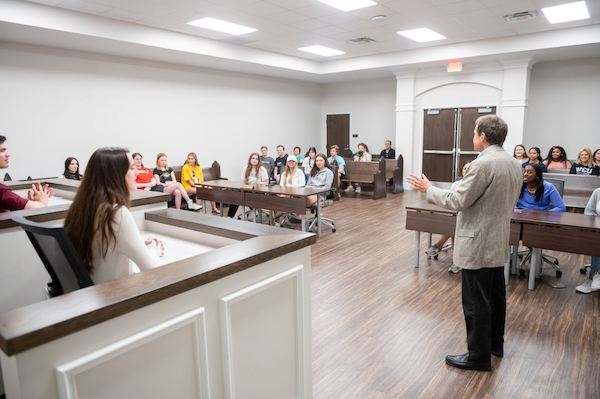
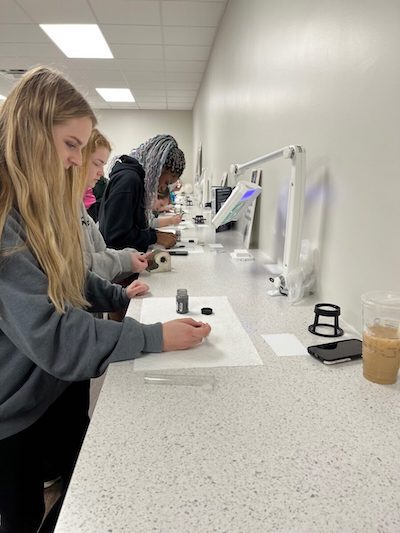
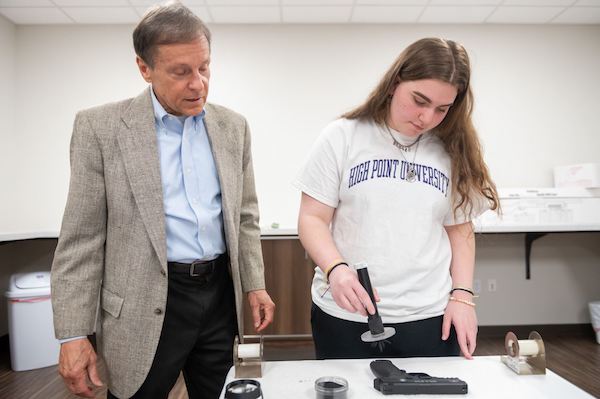
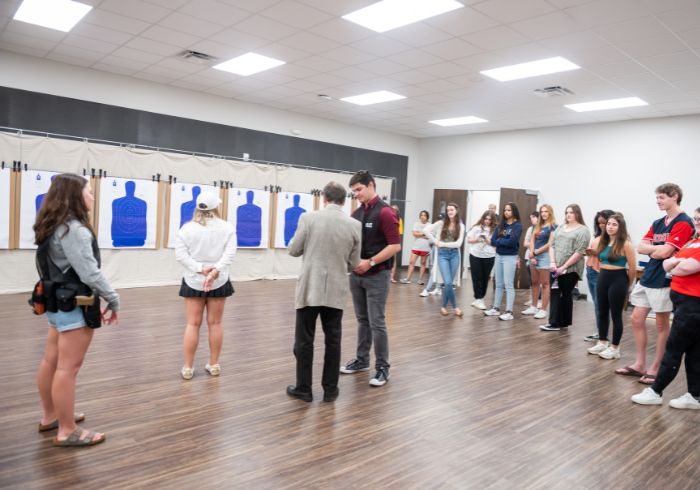
The Criminal Justice Learning Lab is a 9,000 square foot experiential learning facility used in justice related courses including Police Operations and Crime Scene Investigation. The Crime Lab is utilized to create mock crime scenarios for students to receive special investigative instruction and experience for processing a homicide scene as detectives, warrant-serving mock “busts” and “raids,” building searches for hidden and armed suspects, instruction on arrest procedures, and practicing officer safety, handcuffing and more. This Evidence Processing Room serves as an opportunity for students to: analyze physical evidence from a crime scene, such as fingerprints, footwear impression evidence, dust prints and blood splatter; learn investigational skills; interview witnesses, victims and suspects; learn basic law enforcement skills, like executing raids, approaching dangerous offenders, responding to emergency police calls; and appropriate use of force. The Lab includes a completely functional courtroom for use in teaching students about aspects of criminal trials, legal issues, and for students to play parts in mock trials.
| Degree Requirements | Credits |
|---|---|
| Major Requirements | 40 |
| University Core Requirements | 36-44 |
| Electives | 32-44 |
| Total | 128 |
| Minor Requirements | Credits |
|---|---|
| Course Requirements | 20 |
| Total | 20 |
| Course | Course Title | Credits |
|---|---|---|
| CRJ 1900 | Intro to the Justice System | 4 |
| CRJ 2000 | Criminology | 4 |
| CRJ 2800 | Police Operations | 4 |
| CRJ 3100 | Criminal Law | 4 |
| CRJ 3200 | Courts and Trials | 4 |
| CRJ 3400 | Research Methods | 4 |
| CRJ 4200, CRJ 4500 | Institutional Corrections or Probation, Parole, and Community Corrections | 4 |
| Choose three courses from the following list: | ||
| CRJ 1600 | Victimology | 4 |
| CRJ 1700 | Violent Crime | 4 |
| CRJ/WGS 1800 | Gender and Crime | 4 |
| CRJ 1950 | Homicide | 4 |
| CRJ 2100 | Cyber-Crime | 4 |
| CRJ 2500 | Controlled Substances | 4 |
| CRJ 2700 | Juvenile Justice | 4 |
| CRJ 2800 | Police Operations | 4 |
| CRJ 3350 | Criminal Evidence | 4 |
| CRJ 3500 | Crime Scene Investigation | 4 |
| CRJ 3750 | Sex Trafficking and Domestic Violence | 4 |
| CRJ 3800 | Comparative Criminal Justice Systems | 4 |
| CRJ 4000 | Terrorism | 4 |
| CRJ 4100 | The Death Penalty | 4 |
| CRJ 4200 | Institutional Corrections | 4 |
| CRJ 4300 | Crime, Law, and National Security | 4 |
| CRJ 4400 | Police Administration and Supervision | 4 |
| NPL 3300 | Counseling and the Helping Professions | 4 |
| PSC 3320 | The Constitution, Civil Liberties and the Courts | 4 |
| Course Descriptions | ||
| Course | Course Title | Credits |
|---|---|---|
| CRJ 1900 | Introduction to the Justice System | 4 |
| CRJ 3200 | Courts and Trials | 4 |
| CRJ 4200, CRJ 4500 | Institutional Corrections or Probation, Parole, and Community Corrections | 4 |
| Take any two other four-credit CRJ courses except CRJ 4810 Internship (4) | ||
| CRJ 1600 | Victimology | 4 |
| CRJ 1700 | Violent Crime | 4 |
| CRJ/WGS 1800 | Gender and Crime | 4 |
| CRJ 2000 | Criminology | 4 |
| CRJ 2100 | Cyber-Crime | 4 |
| CRJ 2200 | Forensic Anthropology | 4 |
| CRJ 2500 | Controlled Substances | 4 |
| CRJ 2700 | Juvenile Justice | 4 |
| CRJ 2800 | Police Operations | 4 |
| CRJ 2881 | Special Topics | Variable Credit |
| CRJ 3881 | Special Topics | Variable Credit |
| CRJ 4881 | Special Topics | Variable Credit |
| CRJ 2900 | Mock Trial | 4 |
| CRJ 3100 | Criminal Law | 4 |
| CRJ 3350 | Criminal Evidence | 4 |
| CRJ 3400 | Research Methods | 4 |
| CRJ 3500 | Crime Scene Investigation | 4 |
| CRJ 3600 | Citizens Police Academy | 4 |
| CRJ 3650 | Life Skills for Inmates | 4 |
| CRJ 3700 | Sex Trafficking and Domestic Violence | 4 |
| CRJ 3800 | Comparative Criminal Justice Systems | 4 |
| CRJ 4000 | Terrorism | 4 |
| CRJ 4100 | The Death Penalty | 4 |
| CRJ 4300 | Crime, Law, and National Security | 4 |
| CRJ 4400 | Police Administration and Supervision | 4 |
| Course Descriptions | ||
Here’s a quick glimpse at one of many impressive outcomes HPU graduates achieve. View More Graduate Profiles Name: Paris Glover, Class of 2026 Hometown: Stokesdale, North Carolina Major: Hospitality Management,…
Here’s a quick glimpse at one of many impressive outcomes HPU graduates achieve. View More Graduate Profiles Name: Khayla Gattison, Class of 2026 Hometown: Darlington, South Carolina Major: Sociology &…
Here’s a quick glimpse at one of many impressive outcomes HPU graduates achieve. View More Graduate Profiles Name: Caydan Brixius, Class of 2025 Hometown: Harrisburg, Pennsylvania Major: Criminal Justice; double…
Here’s a quick glimpse at one of many impressive outcomes HPU graduates achieve. View More Graduate Profiles Name: Faith Williams, Class of 2025 Hometown: Eatontown, New Jersey Major: Criminal Justice;…
Here’s a quick glimpse at one of many impressive outcomes HPU graduates achieve. View More Graduate Profiles Name: Dylan Pettes, Class of 2024 Hometown: Cranberry Township, Pennsylvania Major: Criminal justice,…
Here’s a quick glimpse at one of many impressive outcomes HPU graduates achieve. View More Graduate Profiles Name: Paris Glover, Class of 2026 Hometown: Greensboro, North Carolina Major: Hospitality with…
HPU graduates are leading prestigious career paths around the world at Fortune 500 companies, international service programs, public school systems, top-tier law, medical and graduate school programs, and many other…
HPU graduates are leading prestigious career paths around the world at Fortune 500 companies, international service programs, public school systems, top-tier law, medical and graduate school programs, and many other…
HPU graduates are leading prestigious career paths around the world at Fortune 500 companies, international service programs, public school systems, top-tier law, medical and graduate school programs, and many other…
Name: Natalee Huber Hometown: Hunt Valley, Maryland Year: Class of 2023 Major: Psychology with minors in Chinese and criminal justice Internship: Huber is interning for the Naval Criminal Investigative Service…
