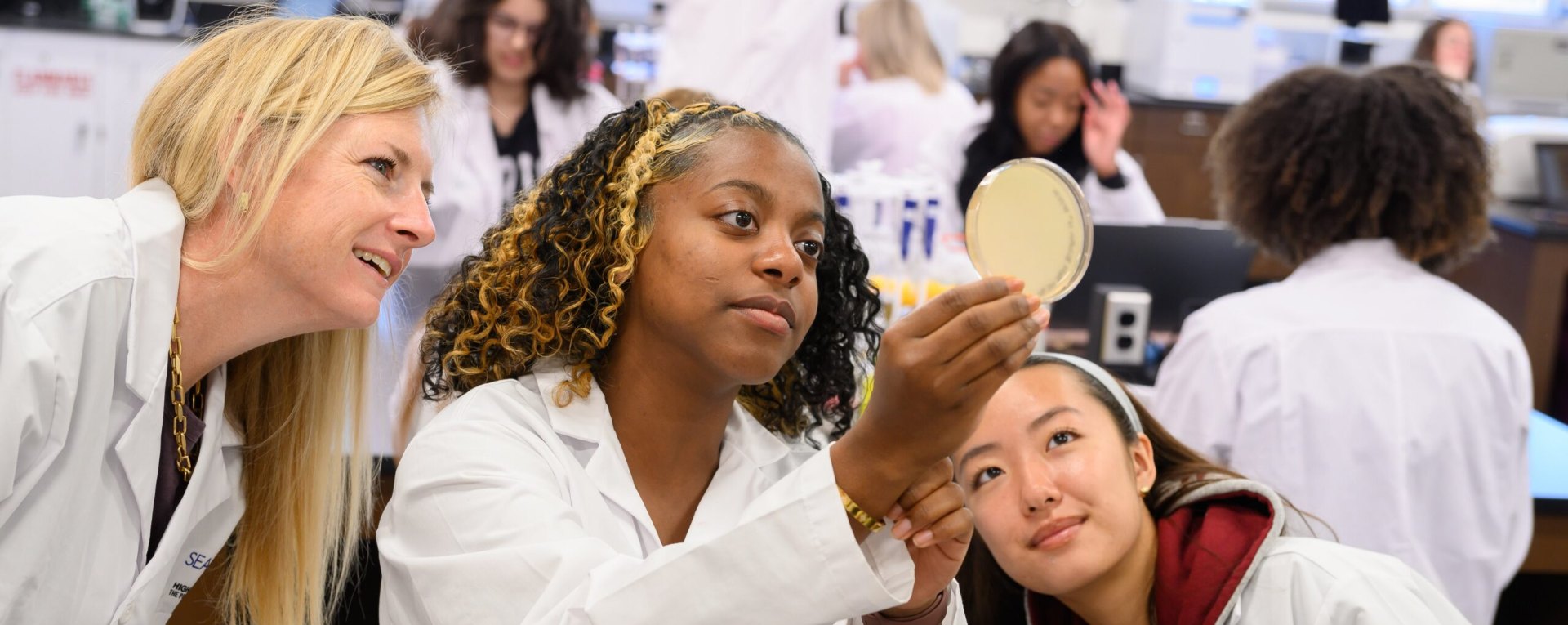
Molecular Biology and Cell Culture
The Biochemistry, Cellular and Molecular Biology Research Laboratory is one of the largest research spaces on campus. Working with faculty mentors, students use PCR thermal cyclers, UV-Vis spectrophotometers, gel electrophoresis equipment and fluorescent microscopes.
Cell Culture Facility
The Cell Culture Facility gives students a sterile, controlled space to grow and study living cells, with CO2 incubators, Class II Type A2 biological safety cabinets, inverted microscopes and a cryogenic freezer.
Research starts in the first year. Since fall 2025, freshman biology majors have taken part in SEA-PHAGES, a year-long program supported by the Howard Hughes Medical Institute’s Science Education Alliance. Students dig through soil to find new bacteriophages, then isolate and study them in the lab. Eleanor Lee discovered a new phage and named it “Youngsook” after her grandmother.

Students work at the biological safety cabinets in the Cell Culture Facility.
Ecology and Evolution Research Laboratory
In the Ecology and Evolution Research Laboratory, students study how organisms interact with each other and their environments and how they change over time. Fieldwork and lab work come together here, supported by a critical point dryer for scanning electron microscopy, a GIS workstation and a 3D modeling workstation.
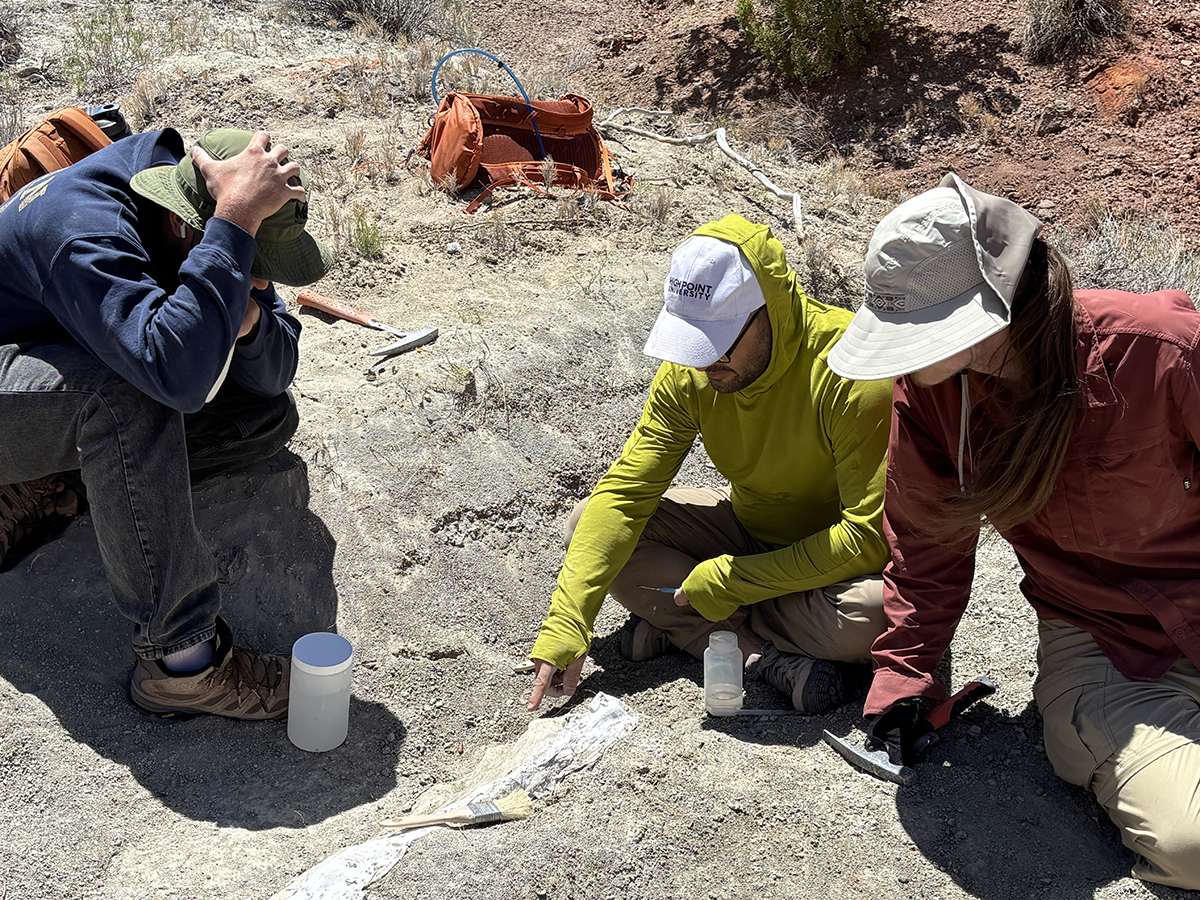
In summer 2026, biology students traveled to northern New Mexico with Dr. Josef Stiegler to collect vertebrate fossils from the Late Triassic, about 220 to 210 million years ago. Back on campus, they are cataloging the finds, including an unnamed crocodile species from the Early Jurassic, and building 3D models of each skull bone from CT scan data so the species can be named.
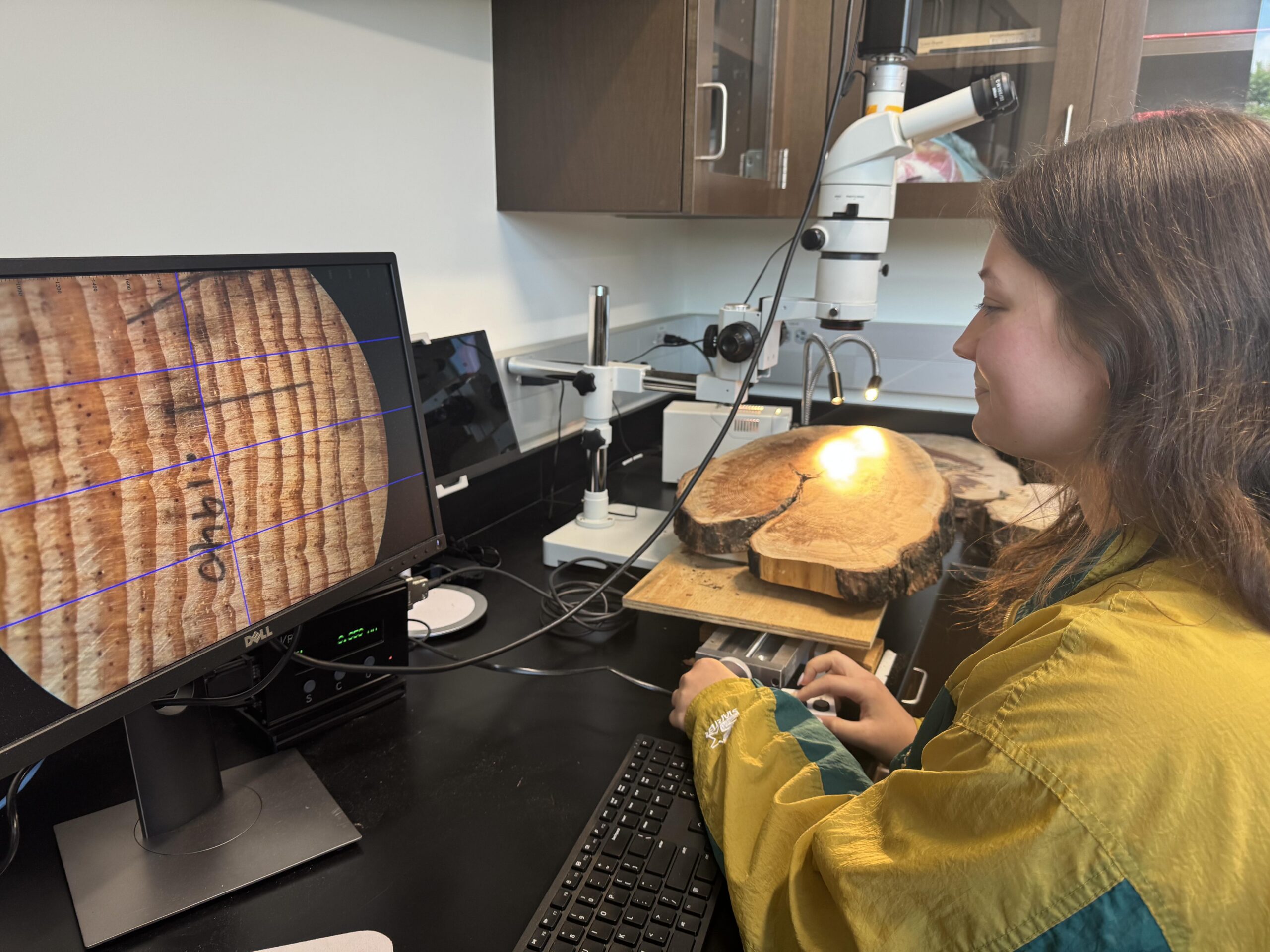
A student analyzes tree rings in the ecology lab during 2025 summer research.
What Student Researchers Say
Biology students and graduates on the research these labs made possible.

Marlo Hemerson
Neuroscience and Chemistry · Research Associate, KBI Biopharma
“HPU helped me develop confidence in my foundational knowledge and comfort working in state-of-the-art laboratory environments. Having access to modern facilities as a student made the transition to industry much smoother and taught me how to work professionally in advanced scientific settings.”
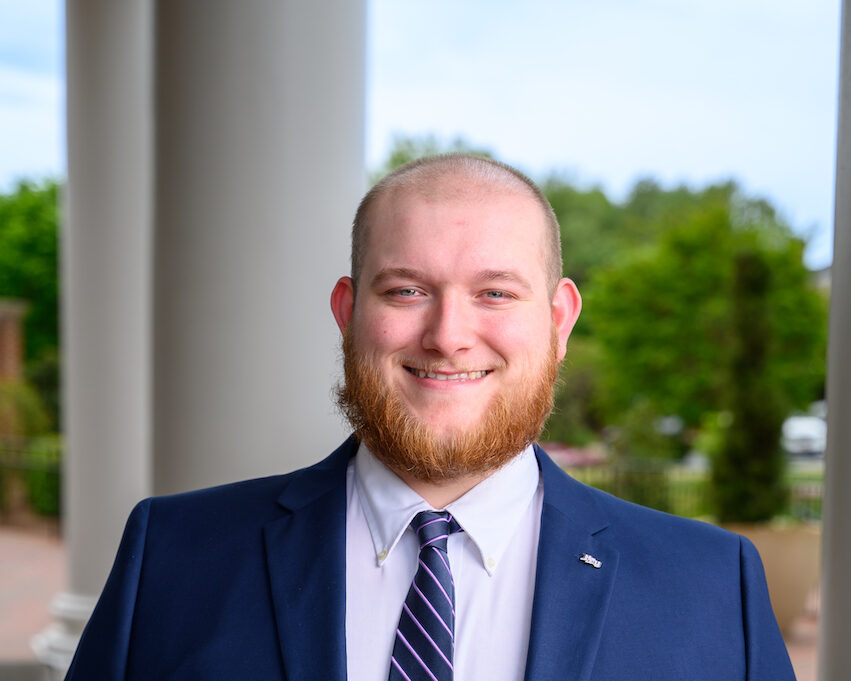
Grayson Mangum
Biology graduate · Accelerated BSN, Duke University School of Nursing
“HPU prepared me academically and helped me become a competitive applicant for accelerated nursing programs. The resources available to HPU students in the sciences are outstanding and allow undergraduates to use state-of-the-art equipment that many people who work in the industry don’t even have access to. HPU prepares students to enter the workforce at a level above their competition.”
Justin Allan
Biology major · Paleontology field research
“From detailed data collection during fieldwork to analyzing CT scan data for my upcoming presentation, my SURPS experience has allowed me to experience the full arc of a scientific project and deepened my appreciation for evidence-based thinking.”
Zebrafish Laboratory and Insectary
The Zebrafish Laboratory runs two independently maintained aquatic systems with Leica and Echo imaging. Students in biology and Honors Scholar courses use zebrafish as a model organism to study development, reproductive fitness and the effects of environmental stressors. Students also help manage the aquaculture facility, and some start gene editing research in their first semesters.
Insectary
The Insectary keeps live insect species and transgenic strains of Drosophila melanogaster in circadian incubators that control temperature, light and humidity on programmed cycles. Students use insects as model systems to study the molecular mechanisms behind aging, obesity, diabetes and development. Biology students also bring live insects to community science events, including an insect petting zoo for children at the Nido and Mariana Qubein Children’s Museum.
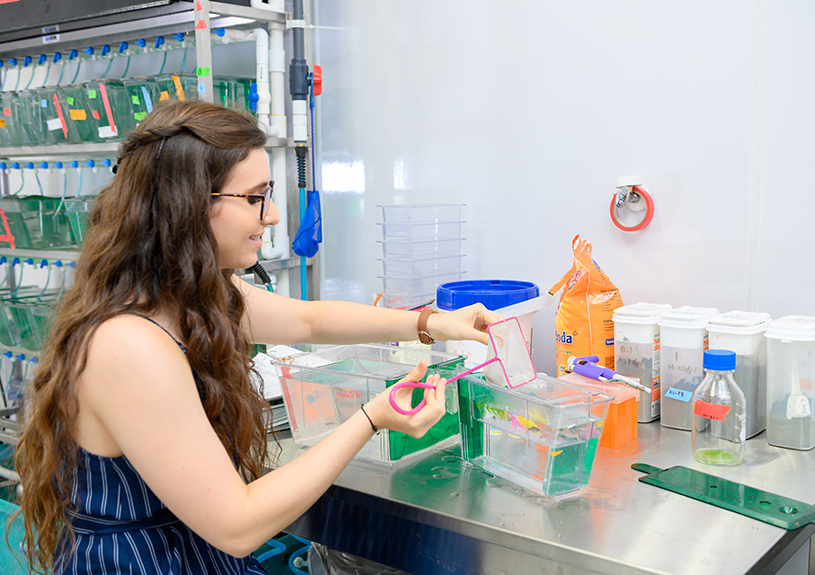
A student works with zebrafish in the Zebrafish Laboratory.
Research Biology at HPU
Biology, biochemistry and neuroscience students work in these labs from their first year. Explore the programs.
Biology Curriculum Biochemistry Curriculum Neuroscience Curriculum
Questions? Email Dr. Matthew Talbert, chair of the Department of Biology, at [email protected].